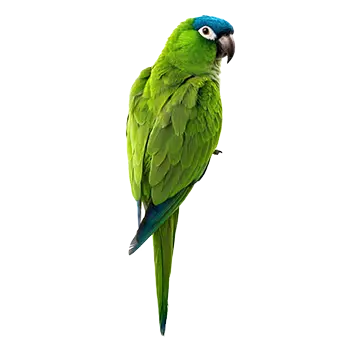

Nutrition for the Adult Bird

An adult Blue-Crowned Conure's dietary needs shift from the growth-oriented demands of the juvenile stage to a maintenance-focused regimen that prioritizes sustained energy, immune function, and long-term organ health. The transition into adulthood, generally occurring around 18 to 24 months of age, is an appropriate time to evaluate and refine the bird's diet to ensure it supports a lifespan that can reach 30 years in optimal conditions.

A high-quality pellet formulated for conures or small to medium parrots should remain the dietary foundation, comprising approximately 60 to 70 percent of the daily food intake. Pellets deliver consistent, balanced nutrition and eliminate the selective feeding that makes seed-based diets nutritionally unreliable. If the bird was transitioned to pellets during the juvenile stage, maintaining this habit is straightforward. If the bird is still primarily seed-fed, a gradual conversion is worth pursuing, though adult conversions require more patience and creativity than juvenile introductions.

Fresh produce should account for 25 to 30 percent of the daily diet. Rotate through a broad variety of vegetables and fruits to ensure comprehensive micronutrient coverage. Emphasize dark, leafy greens and orange or red vegetables rich in beta-carotene, as vitamin A deficiency is one of the most common nutritional problems in captive conures. Favorites for many Blue-Crowned Conures include bell pepper strips, cooked sweet potato, steamed broccoli, and diced mango. Introduce new foods by offering them alongside established favorites, and present produce in different preparations to maintain interest.

Seeds and nuts should be limited to no more than 5 to 10 percent of the diet and are best used as training rewards or foraging enrichment rather than a dietary staple. Sunflower seeds and peanuts are high in fat and can contribute to obesity and hepatic lipidosis if consumed in excess. Healthier options include small quantities of almonds, walnuts, and pine nuts, which provide beneficial fatty acids without the excessive fat content of sunflower seeds. Fresh, clean water must be available at all times, and water dishes should be changed at least twice daily to prevent bacterial contamination.

Enrichment & Mental Stimulation

Blue-Crowned Conures are intelligent, socially complex birds that require consistent mental stimulation to remain psychologically healthy throughout their adult lives. In the wild, these parrots spend their days foraging across large territories, navigating complex social dynamics within their flock, and solving the endless variety of challenges that a natural environment presents. In captivity, the absence of these stimuli can lead to boredom, frustration, and the development of behavioral problems including feather-destructive behavior, excessive screaming, and stereotypic movements.

Foraging enrichment is one of the most effective ways to engage an adult conure's natural problem-solving instincts. Instead of placing food in a simple open dish, use foraging toys that require the bird to manipulate, shred, or disassemble an object to access its food. Wrapping treats in paper, hiding pellets inside wiffle balls, threading vegetables onto skewers, and using commercially available foraging boxes all transform feeding time from a passive activity into an engaging challenge. Rotate foraging devices regularly to prevent habituation.

Physical enrichment should include a variety of textures, materials, and interactive elements within the cage and play area. Shreddable toys made from untreated wood, palm leaves, and vegetable-tanned leather satisfy the bird's natural urge to chew and destroy. Swings, ladders, and rope perches encourage physical activity and coordination. Puzzle toys that require the bird to slide, lift, or unscrew components to retrieve a reward challenge cognitive function and can occupy a conure for extended periods.

Social enrichment is equally important and cannot be replaced by toys alone. Blue-Crowned Conures are flock-oriented birds that need regular, meaningful interaction with their human companions. Dedicate time each day for direct engagement, whether through training sessions, supervised exploration outside the cage, or simply being present in the same room during your daily activities. Many Blue-Crowned Conures enjoy being included in household routines and will happily perch nearby while their owners cook, work, or read. The quality of social interaction matters more than the quantity; a focused, interactive 30-minute session is more enriching than hours of being in the same room with a distracted owner.

Exercise & Physical Health

Physical fitness is a critical but often overlooked component of adult Blue-Crowned Conure care. In the wild, these birds fly considerable distances daily, climb through dense canopy, and engage in physically demanding foraging activities. Captive conures that are confined to a cage without adequate opportunities for movement are at elevated risk for obesity, muscle atrophy, cardiovascular weakness, and a range of secondary health problems that reduce both quality and length of life.

Flight is the most complete form of exercise for any parrot, engaging the cardiovascular system, the respiratory system, and nearly every major muscle group simultaneously. If the bird is flighted, provide supervised flight time in a safe, enclosed space daily. A room with closed windows, covered mirrors, no ceiling fans, and cleared hazards allows the bird to fly freely and build stamina. Start with shorter sessions and gradually increase the duration as the bird's fitness improves. For birds that have been clipped, encourage climbing, wing-flapping exercises on a perch, and active play to maintain muscle tone while the flight feathers regrow.

The cage itself should be large enough to allow meaningful movement. For a Blue-Crowned Conure, the minimum recommended cage size is 24 inches wide by 24 inches deep by 30 inches tall, though larger is always better. The cage should be equipped with multiple perches of varying diameters and materials, including natural wood branches, rope perches, and flat platform perches, positioned at different heights and angles to encourage climbing and foot exercise. Perch diameter variety is important for foot health, as a single uniform diameter can contribute to pressure sores and bumblefoot.

Outdoor time in an avian-safe enclosure or harness provides benefits that indoor environments cannot fully replicate. Natural sunlight enables the synthesis of vitamin D3, which is essential for calcium metabolism and bone health. Full-spectrum indoor lighting provides some benefit but does not completely substitute for unfiltered sunlight. Even brief periods of supervised outdoor exposure, weather permitting, contribute to the bird's physical and psychological well-being. Ensure the outdoor area is secure against predators, including hawks, cats, and snakes, and never leave the bird unattended outside.

Behavioral Maturity & Relationship Dynamics

As a Blue-Crowned Conure matures into full adulthood, its behavioral patterns stabilize but also become more complex. The impulsive, boundary-testing energy of adolescence gives way to a more predictable personality, but the adult bird's increased intelligence and social awareness introduce new dynamics into the human-bird relationship. Understanding these shifts helps caregivers maintain a healthy, rewarding bond.

One of the most significant behavioral changes in adult conures is the development of stronger pair-bonding tendencies. Blue-Crowned Conures are monogamous in the wild, and in captivity, many will select a preferred person within the household and direct the majority of their social attention toward that individual. This can manifest as heightened affection toward the chosen person and territorial or aggressive behavior toward others. While flattering, an unbalanced bond creates practical problems, including difficulty with handling by other family members and escalating jealousy behaviors.

To prevent excessive one-person bonding, ensure that multiple household members participate in the bird's daily care, feeding, and training from the juvenile stage onward. If a strong preference has already developed, the favored person should step back slightly while other family members increase their positive interactions with the bird. This does not mean ignoring the bird but rather distributing the rewarding aspects of the relationship more evenly. The bird may resist initially, but consistent, positive interactions with multiple people gradually broaden its social comfort zone.

Hormonal behavior becomes more pronounced in adult Blue-Crowned Conures, typically peaking during the spring breeding season. Signs include increased territorial aggression, regurgitation directed at a favored person or object, nest-seeking behavior such as burrowing into dark enclosed spaces, and heightened vocalization. Manage hormonal behavior by maintaining a consistent 10 to 12 hours of darkness for sleep, avoiding warm mushy foods that mimic regurgitated nesting food, discouraging access to dark enclosed spaces, and limiting physical contact to head scratches only, as stroking the back and body can stimulate hormonal responses.

Maintaining training as a lifelong practice keeps the adult conure mentally engaged and reinforces the cooperative dynamic established during the juvenile stage. Introduce new tricks and behaviors periodically to prevent stagnation. Many adult Blue-Crowned Conures enjoy learning complex behaviors including retrieving objects, identifying colors, and performing sequences of actions on cue. The training relationship is not just about teaching tricks but about sustaining a dialogue of communication and mutual reinforcement between bird and caregiver.

Annual Health Maintenance

Proactive veterinary care is the cornerstone of long-term health in an adult Blue-Crowned Conure. Because parrots are prey species that instinctively mask signs of illness until disease is advanced, routine wellness examinations are essential for detecting problems before they become critical. An adult conure in apparent good health should receive a comprehensive veterinary examination at least once per year.

The annual wellness visit should include a thorough physical examination covering body condition, feather quality, beak and nail condition, eye and nare clarity, and joint mobility. A complete blood panel, including a chemistry profile and complete blood count, establishes and updates baseline values against which future results can be compared. Fecal analysis screens for parasitic, bacterial, and yeast infections. Depending on the bird's history and the veterinarian's clinical judgment, additional diagnostics such as radiographs, crop culture, or disease-specific PCR panels may be warranted.

At home, daily monitoring provides early warning data that complements veterinary care. Observe the bird's droppings each morning, noting the relative proportions of the fecal component, urate component, and liquid urine. Changes in color, consistency, volume, or odor can indicate digestive, renal, or hepatic dysfunction. Monitor food and water consumption, as a sudden decrease in appetite or an increase in water intake can be early signs of illness. Track the bird's weight weekly on a gram-accurate scale, noting any trends in either direction.

Beak and nail maintenance is an ongoing responsibility. Provide natural wood perches and cuttlebone to promote natural beak wear, and supply concrete or mineral perches for nail conditioning. If the beak or nails become overgrown despite these provisions, have them trimmed by a qualified avian veterinarian or experienced groomer rather than attempting it at home, as the blood supply within the beak and nails can be difficult to identify and accidental cuts can cause significant bleeding.

Vaccination protocols for pet parrots are limited compared to those for dogs or cats, but your avian veterinarian may recommend polyomavirus vaccination depending on the bird's risk profile and exposure history. Discuss parasite prevention, particularly if the bird has outdoor exposure, and review the bird's diet annually with the veterinarian to ensure nutritional adequacy. Maintaining a detailed health journal that you bring to each visit gives the veterinarian valuable longitudinal data that a single examination cannot provide.

Housing & Environmental Management

An adult Blue-Crowned Conure's living environment has a profound impact on its physical health, psychological well-being, and behavioral stability. The cage and surrounding area constitute the bird's territory, and thoughtful management of this space is one of the most impactful things a caregiver can do to promote a thriving, contented companion.

Cage placement matters as much as cage size. Position the cage in a room where the family spends time, as Blue-Crowned Conures are social birds that suffer psychologically when isolated. At least one side of the cage should be against a wall to provide a sense of security. Avoid placing the cage in direct sunlight where the bird cannot escape the heat, in the kitchen where fumes from heated cookware, particularly nonstick coatings, can be lethal, or in high-traffic hallways where constant movement creates stress. The cage should be at a height that places the bird approximately at the owner's chest or eye level, which promotes a comfortable social dynamic.

The interior of the cage should be arranged to maximize usable space and encourage natural behavior. Position perches at varying heights, using a combination of natural wood branches of different diameters, rope perches, and at least one flat platform perch. Place food and water dishes away from perches to prevent contamination from droppings. Provide multiple foraging stations and rotate toy selections weekly to maintain novelty. Remove toys that become excessively soiled, frayed to the point of entanglement risk, or small enough to be swallowed.

Air quality is a frequently underestimated environmental factor. Blue-Crowned Conures have highly efficient respiratory systems that make them extremely sensitive to airborne toxins. Never use aerosolized sprays, scented candles, air fresheners, or cleaning products with strong fumes in the bird's vicinity. Nonstick cookware coated with PTFE releases fumes at high temperatures that are rapidly fatal to birds. Replace all nonstick pans with stainless steel, cast iron, or ceramic alternatives. Cigarette smoke, incense, and essential oil diffusers also pose respiratory hazards. Maintain good ventilation in the bird's room without creating drafts directly on the cage.

Lighting and sleep schedules directly influence hormonal regulation, immune function, and behavioral stability. Adult Blue-Crowned Conures need 10 to 12 hours of uninterrupted darkness each night for proper rest. Cover the cage at a consistent time each evening, or move the bird to a dedicated sleep cage in a quiet, dark room. During the day, provide access to full-spectrum lighting if natural sunlight is not available, as the ultraviolet component is important for vitamin D synthesis and psychological well-being.

Always consult a qualified professional before making any health-related decisions. This content is provided for informational reference only and should not replace professional guidance specific to your animal.