
Black Moor Goldfish Care Guide - Furry Critter Network

Black Moor Goldfish

Quick Facts

🔬 Scientific Name
Carassius auratus (Black Moor)
⭐ Care Level
Beginner
😊 Temperament
Peaceful
📏 Adult Size
6-8 inches
⏱️ Lifespan
10-15 years
🐟 Tank Size Minimum
20 gallons
🌡️ Temperature Range
65-75°F
⚗️ Ph Range
6.5-7.5
🍽️ Diet Type
Omnivore
🌍 Origin
China (Domesticated)

Black Moor Goldfish - Names & Recognition

The Black Moor Goldfish represents one of the most distinctive and recognizable varieties within the diverse world of fancy goldfish, all of which belong to the species Carassius auratus. This variety has acquired numerous common names throughout its long history in the aquarium hobby, with Black Moor serving as the predominant designation in Western markets. The name evokes the fish's deep black coloration, reminiscent of the dark appearance associated with the historical term.

Alternate names for this variety include Black Telescope, Black Telescope Goldfish, and Demekin (the Japanese name meaning "protruding eyes"). In Chinese, where the variety originated, names translate roughly to "dragon eyes" or "dragon goldfish," referencing the prominent telescope eye characteristic. Some hobbyists simply refer to them as Telescope Goldfish, though this term more broadly encompasses all telescope-eyed varieties regardless of color.

The scientific classification places all goldfish varieties, regardless of their dramatically different appearances, within the single species Carassius auratus. The Black Moor does not constitute a distinct species but rather a selectively bred variety developed through centuries of careful cultivation in China and later Japan. The variety designation "Black Moor" indicates the specific combination of telescope eyes and solid black coloration that defines this fish.

Historical records suggest the Black Moor variety emerged in China during the 1700s, developed through selective breeding of telescope-eyed goldfish for consistent black coloration. The variety later spread to Japan and eventually Western countries during the 1800s, where it quickly became one of the most popular fancy goldfish varieties. Today, Black Moors remain widely available and represent an excellent introduction to fancy goldfish keeping.

Black Moor Goldfish Physical Description

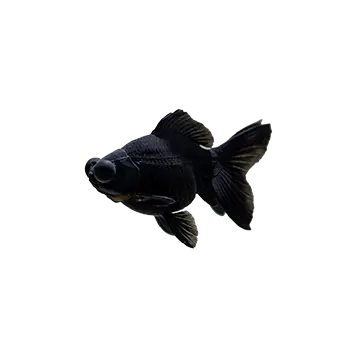
The Black Moor Goldfish presents a rounded, egg-shaped body characteristic of fancy goldfish varieties, departing significantly from the streamlined torpedo shape of wild carp ancestors. Adult Black Moors typically reach 6 to 8 inches in total length when properly housed and maintained, with some exceptional specimens exceeding this size under optimal conditions. The body depth approximately equals the body length in well-developed specimens, creating the compact, rotund appearance valued by goldfish enthusiasts.

The defining characteristic of the Black Moor remains its prominent telescope eyes, which project outward from the head on distinctive conical stalks. These protruding eyes begin developing when fish are approximately six months old, gradually extending further from the head as the fish matures. The eye development continues throughout life, with older specimens often displaying the most dramatic eye protrusion. This anatomical feature significantly impacts vision, limiting the fish's ability to see directly ahead and judge distances accurately.

The coloration of quality Black Moors presents as a deep, velvety black that covers the entire body, fins, and eyes uniformly. This black coloration results from the presence of melanin pigment combined with a matte, non-metallic scale type that absorbs rather than reflects light. Juvenile Black Moors often appear bronze or brownish, with the characteristic black coloration developing fully over the first one to two years of life. High-quality specimens maintain their black color throughout life, though some individuals may develop orange or gold patches with age, particularly when kept in very warm water.

The finnage of Black Moors follows the double-tailed fancy goldfish pattern, with paired caudal fins flowing gracefully behind the rounded body. The dorsal fin stands tall and erect, while paired pectoral, pelvic, and anal fins provide stability and maneuverability. All fins display the same velvety black coloration as the body, creating a unified dark appearance. The flowing fins combined with the rounded body shape contribute to the relatively slow swimming speed characteristic of this variety.

Temperament
Black Moors are exceptionally peaceful fish that never display aggression toward tank mates. Their gentle disposition and slow swimming make them ideal companions for other fancy goldfish varieties with similar capabilities.
Care Level
Hardy and forgiving of beginner mistakes, Black Moors adapt well to various conditions. Their telescope eyes require smooth decorations and careful feeding to prevent injury, adding minor considerations to otherwise simple care.
Diet
Black Moors eagerly consume virtually any food offered, including flakes, pellets, vegetables, and live foods. Their enthusiastic appetite makes feeding simple, though their poor vision may require targeted feeding techniques.
Water Conditions
Tolerating a wide range of temperatures and parameters, Black Moors prove adaptable to various water conditions. They thrive in cooler water without heaters and handle moderate parameter fluctuations well.
Tank Size
Starting at 20 gallons for a single fish with 10-15 additional gallons per extra goldfish, Black Moors need substantial space. Their waste production and eventual size demand adequate volume for long-term health.
Compatibility
Best housed with other slow-moving fancy goldfish varieties like Orandas, Ryukins, and Fantails. Fast-swimming goldfish and tropical fish should be avoided as they outcompete Black Moors for food.
Activity Level
Black Moors swim slowly and deliberately due to their rounded body shape and poor vision. They explore their environment methodically but lack the speed and agility of streamlined goldfish varieties.
Hardiness
Generally robust fish that tolerate varied conditions well. Their telescope eyes represent a vulnerability requiring injury prevention, but otherwise Black Moors resist disease and adapt readily to aquarium life.

Natural Habitat & Range

The Black Moor Goldfish, like all goldfish varieties, descends from wild Prussian carp (Carassius auratus) native to East Asia, but this specific variety has no natural habitat in the wild. Black Moors exist exclusively as a domesticated variety created through centuries of selective breeding in China, representing human artistic expression through the medium of living fish. Understanding the wild origins of their ancestor species, however, provides insight into their environmental tolerances and care requirements.

Wild Carassius auratus originated in the slow-moving waters of eastern China, inhabiting lakes, ponds, sluggish rivers, and floodplain habitats. These environments typically featured soft substrates, abundant aquatic vegetation, and variable water conditions that changed seasonally. The wild fish tolerated significant temperature fluctuations, from near-freezing winter conditions to warm summer temperatures, developing the cold-hardiness that makes their domesticated descendants suitable for unheated aquariums and outdoor ponds.

The transformation from wild carp to ornamental goldfish began in China over one thousand years ago, with selective breeding gradually producing fish with increasingly elaborate colors, fin shapes, and body forms. The telescope eye mutation appeared spontaneously and was selectively preserved and enhanced by Chinese breeders who valued unusual physical characteristics. The Black Moor variety emerged from this centuries-long breeding effort, combining telescope eyes with the black coloration derived from melanistic individuals.

Modern Black Moors are bred commercially in facilities across Asia, particularly in China, Japan, and Thailand, as well as in fish farms in the United States and Europe. These fish have been removed from any natural selective pressures for many generations, developing characteristics that would be disadvantageous in wild conditions. Their poor vision, reduced swimming ability, and conspicuous appearance make Black Moors entirely dependent on human care for survival, thriving only in the protected environment of aquariums and garden ponds.

Black Moor Goldfish Temperament & Behavior

The Black Moor Goldfish exemplifies the gentle, peaceable temperament that characterizes fancy goldfish varieties. These fish display absolutely no aggression toward tank mates, never engaging in fin nipping, territorial defense, or competitive behavior beyond mild food competition. Their docile nature makes them ideal community fish when housed with appropriately matched companions sharing similar swimming abilities and environmental requirements.

Social behavior in Black Moors reflects their gregarious nature, as these fish clearly enjoy the company of their own kind and compatible goldfish varieties. Groups of Black Moors swim together, rest near each other, and often synchronize their movements through the aquarium. While not true schooling fish in the technical sense, they demonstrate social preferences that make keeping them in groups rewarding for both fish and keeper. Solitary Black Moors may appear less active and engaged than those kept with companions.

The activity patterns of Black Moors differ markedly from slim-bodied goldfish due to their rounded body shape and compromised vision. They swim slowly and deliberately, exploring their environment through methodical movements rather than the quick darting seen in common goldfish. This reduced activity level represents normal behavior rather than illness, though Black Moors should still show interest in their surroundings and respond to feeding cues.

Vision impairment from the telescope eyes significantly influences Black Moor behavior. These fish often approach objects and food by swimming past them first, then circling back once they've located items through their limited visual field. They may startle more easily than clear-sighted fish, reacting to sudden movements or shadows near the tank. Consistent tank placement and gradual approaches help minimize stress responses.

Feeding behavior in Black Moors demonstrates enthusiastic food interest despite visual challenges. They learn to associate keeper presence with feeding time, often coming to the front of the tank in anticipation of meals. However, their poor vision means they may struggle to compete with faster-sighted tank mates, requiring consideration when selecting companions and feeding methods to ensure adequate nutrition.

Tank Setup & Requirements

Creating an appropriate habitat for Black Moor Goldfish requires attention to their specific needs while accommodating their visual limitations and vulnerability to injury. A minimum tank size of 20 gallons provides adequate space for a single Black Moor, with an additional 10 to 15 gallons recommended for each additional goldfish. Goldfish produce substantial waste and grow larger than many aquarists expect, making generous tank sizing essential for long-term health and water quality management.

Tank shape matters significantly for Black Moor welfare. Longer, wider tanks provide more swimming space and surface area for gas exchange than tall, narrow designs. The increased surface area improves oxygenation, which goldfish require in greater amounts than many tropical species. Avoid tall tanks with small footprints, as these limit both swimming space and oxygen exchange while concentrating waste.

Filtration demands for goldfish exceed those of most tropical fish due to their hearty appetites and prolific waste production. Select filters rated for at least twice the actual tank volume, such as a filter rated for 40 gallons on a 20-gallon tank. Hang-on-back filters, canister filters, and sponge filters all work effectively, with many keepers combining multiple filtration types. Ensure filter intakes are screened to prevent injury to flowing fins.

Substrate and decoration selection requires special consideration for Black Moors due to their protruding eyes. Avoid sharp rocks, rough decorations, or plastic plants with pointed edges that could damage the delicate telescope eyes. Smooth river rocks, rounded decorations, and silk or live plants provide safe alternatives. Some keepers prefer bare-bottom tanks for ease of cleaning, adding only smooth structures for visual interest.

Lighting needs remain modest, as Black Moors neither require nor particularly benefit from intense illumination. Standard aquarium lighting adequate for viewing the fish and supporting any live plants suffices. Provide a consistent photoperiod of 8 to 12 hours daily to maintain normal behavioral patterns. Avoid placing tanks in direct sunlight, which promotes excessive algae growth and can cause temperature fluctuations.

Aeration supplements filtration in providing adequate oxygen for these oxygen-demanding fish. Air stones or bubble wands increase surface agitation and water movement, enhancing gas exchange. This proves particularly important in warmer weather when dissolved oxygen levels naturally decrease.

Water Parameters

Black Moor Goldfish thrive in cooler water conditions that reflect their temperate origins, distinguishing them from tropical species that require heated tanks. The optimal temperature range spans 65 to 75 degrees Fahrenheit, with room temperature water often falling perfectly within this range without supplemental heating. Black Moors tolerate temperatures outside this range, surviving brief exposure to temperatures from the low 50s to the low 80s, though prolonged extremes stress the fish and may trigger health problems.

Warmer temperatures within the tolerance range tend to increase metabolism, appetite, and growth rate but may also reduce the intensity of black coloration in some individuals. Many serious Black Moor keepers maintain temperatures toward the cooler end of the range to preserve deep black coloration and promote longevity. However, avoid sudden temperature changes of more than a few degrees within 24 hours, as rapid fluctuations stress fish more than consistent temperatures outside the optimal range.

The pH tolerance of Black Moors spans a relatively wide range from 6.5 to 7.5, with neutral pH around 7.0 representing ideal conditions. Most municipal water supplies fall within this acceptable range without modification. Black Moors adapt to stable pH values somewhat outside this range better than they handle fluctuating conditions, making consistency more important than achieving perfect target values.

Water hardness preferences lean toward moderate levels, with general hardness (GH) between 5 and 15 dGH working well for most specimens. Extremely soft water may stress goldfish, while very hard water typically causes no problems. Carbonate hardness (KH) of 4 to 10 dKH provides adequate buffering to maintain stable pH levels between water changes.

Water quality maintenance demands consistent attention due to the substantial waste production of goldfish. Weekly water changes of 25 to 30 percent help dilute accumulated nitrates and replenish trace minerals. More frequent changes may benefit heavily stocked tanks or those with inadequate filtration. Always match replacement water temperature to tank temperature and remove chlorine or chloramine with appropriate water conditioner.

Ammonia and nitrite must remain at zero in established aquariums, as even low levels damage goldfish health over time. Test water parameters regularly, particularly in newly established tanks or after adding new fish. Nitrate levels should stay below 40 ppm, with lower values preferred for optimal health and coloration.

Black Moor Goldfish Health & Lifespan

Black Moor Goldfish are generally hardy fish capable of living 10 to 15 years or longer with proper care, though some exceptional individuals have reached 20 years. Their robustness makes them suitable for beginners, but their telescope eyes represent a vulnerability requiring protective measures and careful observation. Most health issues affecting Black Moors relate to water quality problems, injury to their protruding eyes, or conditions common to fancy goldfish in general.

With appropriate care addressing their specific vulnerabilities, Black Moors reward keepers with years of engaging companionship and striking visual appeal. Monitor fish daily for signs of eye injury, abnormal swimming, or behavioral changes that may indicate developing health concerns. Early intervention for common problems typically produces better outcomes than delayed treatment.

Common Health Issues

  • Eye injuries from sharp decorations - Aggressive tank mates, or rough handling can damage the protruding telescope eyes, potentially causing cloudy eye, infection, or permanent blindness requiring smooth tank furnishings and gentle handling.
  • Swim bladder disorder causes floating - Sinking, or difficulty maintaining normal position, commonly affecting fancy goldfish due to their compressed body shape, often improved through dietary adjustments and fasting periods.
  • Ich (white spot disease) appears as white spots covering body and fins - A parasitic infection commonly triggered by temperature stress or poor water quality, treatable with salt or medication and temperature management.
  • Fin rot presents as ragged - Deteriorating fin edges progressing toward the body if untreated, typically resulting from bacterial infection secondary to poor water quality requiring water changes and antibacterial treatment.
  • Dropsy causes severe abdominal swelling and raised scales creating a pinecone appearance - Indicating internal bacterial infection or organ failure with often poor prognosis despite treatment attempts.
  • Constipation affects goldfish fed exclusively dry foods - Causing lethargy, bloating, and potential swim bladder problems, prevented through varied diet including vegetable matter and occasional fasting.

Preventive Care & Health Monitoring

  • Remove all sharp decorations - Rough rocks, and pointed plastic plants from the tank, replacing with smooth surfaces that cannot injure the protruding telescope eyes during normal swimming activity.
  • Maintain excellent water quality through robust filtration - Regular testing, and consistent weekly water changes of 25-30 percent to prevent stress-related illness and bacterial infections.
  • Provide varied diet including sinking pellets - Blanched vegetables, and occasional protein sources while avoiding exclusive reliance on floating foods that cause air ingestion.
  • House only with compatible slow-swimming fancy goldfish varieties that won't outcompete Black Moors for food or accidentally injure their delicate eyes during feeding frenzies. - House only with compatible slow-swimming fancy goldfish varieties that won't outcompete Black Moors for food or accidentally injure their delicate eyes during feeding frenzies.

Black Moor Goldfish Feeding & Diet

Feeding Black Moor Goldfish accommodates their enthusiastic appetites while addressing the challenges posed by their poor vision and vulnerability to digestive issues common in fancy goldfish. These omnivorous fish readily accept a wide variety of foods, making dietary provision straightforward, but their compressed body shape predisposes them to swim bladder problems that careful feeding can help prevent.

Commercial goldfish foods form the dietary foundation, with high-quality sinking pellets generally preferred over floating flakes for Black Moors. Sinking foods reduce air ingestion associated with surface feeding, potentially decreasing swim bladder issues. Select products formulated specifically for goldfish, which have different nutritional requirements than tropical fish. Smaller pellet sizes suit younger fish, while adults can handle medium-sized pellets appropriate to their mouth size.

Vegetable matter plays an essential role in the Black Moor diet, supporting digestive health and providing fiber that helps prevent constipation. Blanched peas with the skins removed serve as an excellent regular offering, while blanched zucchini, cucumber, spinach, and lettuce provide variety. Some keepers offer vegetables daily, while others include them two to three times weekly. Many commercially prepared goldfish foods include spirulina or other plant ingredients that contribute to vegetable intake.

Protein-rich foods supplement the basic diet, supporting growth and overall condition. Frozen or live bloodworms, brine shrimp, daphnia, and tubifex worms all appeal to goldfish. These high-protein foods should comprise a smaller portion of the overall diet than plant matter and prepared foods, offered once or twice weekly rather than daily. Excessive protein may contribute to water quality problems and potential health issues.

Feeding frequency typically involves two to three small meals daily rather than one large feeding. Goldfish lack true stomachs and process food relatively quickly, making frequent small meals more appropriate than infrequent large ones. Offer only as much as fish consume within two to three minutes, removing uneaten food to prevent water quality degradation.

The visual impairment of Black Moors requires feeding technique adaptations. Feeding in the same location consistently helps fish learn where to expect food. Sinking pellets that fall near the fish rather than scattering across the tank surface improve feeding success. Target feeding with tongs or droppers may help ensure visually impaired individuals receive adequate nutrition, particularly in community tanks with faster-sighted fish.

Tank Mates & Breeding

Selecting appropriate tank mates for Black Moor Goldfish requires careful consideration of their slow swimming speed, poor vision, and specific environmental requirements. The ideal companions share these characteristics, creating a harmonious community where all inhabitants can thrive without competitive disadvantage. Incompatible tank mates create stress, cause injury, or simply outcompete Black Moors for resources.

Other fancy goldfish varieties with similar body shapes and swimming abilities make the best companions. Fantails, Ryukins, Orandas, Ranchus, Lionheads, and Pearlscales share the rounded body form and deliberate swimming pace of Black Moors, allowing peaceful coexistence without significant competitive imbalances. These varieties also share temperature preferences and environmental requirements, simplifying tank management.

Avoid housing Black Moors with slim-bodied goldfish varieties including Common Goldfish, Comets, and Shubunkins. These streamlined fish swim much faster than fancy varieties, easily outcompeting Black Moors for food and potentially causing stress through their more active swimming patterns. The speed differential becomes particularly problematic during feeding, when faster fish consume available food before slower tank mates can reach it.

Tropical fish should not share tanks with Black Moors due to incompatible temperature requirements. Species requiring warm water above 75 degrees Fahrenheit will stress in the cooler conditions Black Moors prefer, while heating the tank to tropical temperatures may harm the goldfish and fade their black coloration. This temperature incompatibility makes goldfish-only tanks the best approach.

Tank mates of any species with aggressive or fin-nipping tendencies pose unacceptable risk to Black Moors. The flowing fins and compromised vision of these fish make them extremely vulnerable to harassment they cannot escape or defend against. Even mildly nippy species that might be tolerated by faster fish should be avoided.

Some keepers successfully maintain Black Moors with certain coldwater companions like Weather Loaches or White Cloud Mountain Minnows. These species tolerate similar temperatures and generally ignore goldfish, though the activity level of some may create feeding competition. Research any potential tank mate thoroughly before introduction, and monitor carefully for compatibility issues.

Breeding Black Moors typically occurs naturally when healthy males and females are kept together in appropriate conditions, with spawning triggered by spring-like temperature increases and abundant food. Eggs scatter among plants or spawning mops and hatch within days, though parents readily consume both eggs and fry, making separate breeding tanks necessary for raising young.