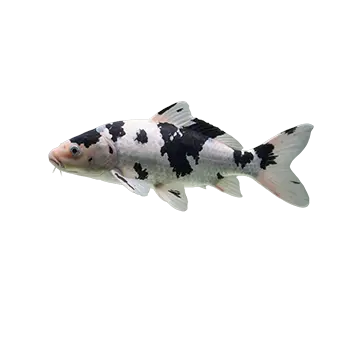

The Bekko variety takes its name from the Japanese word for "tortoiseshell," referencing the scattered pattern of black markings that adorn their solid-colored base. This evocative name perfectly captures the aesthetic these koi present, with dark markings distributed across lighter backgrounds much like natural tortoiseshell material. Within the koi community, Bekko is pronounced "BEH-koh" and remains the universal designation for this variety group.
Scientifically, all koi varieties including Bekko belong to the species Cyprinus rubrofuscus, the domesticated Asian carp distinguished from European carp through recent taxonomic revision. Bekko emerged from the same foundational breeding populations that produced Sanke and other varieties featuring sumi (black) markings. In competitive classification, Bekko belongs to its own variety grouping for judging purposes, evaluated against standards specific to the type.
Three primary sub-varieties exist within the Bekko classification, distinguished by their base coloration. Shiro Bekko, meaning "white tortoiseshell," features a white base with black markings and represents the most popular and commonly available form. Aka Bekko displays a red base with black markings, creating a bold, striking appearance. Ki Bekko shows yellow base coloration with black markings and remains the rarest of the three forms. Each sub-variety is evaluated according to consistent standards regarding sumi quality and placement, though base color preferences vary among enthusiasts and regions.