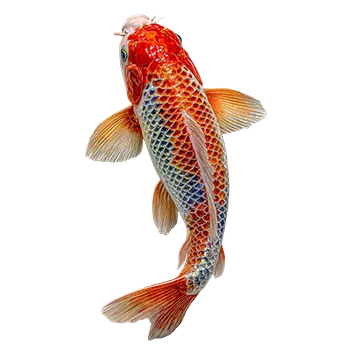

The Asagi holds a position of historical importance as one of the oldest recognized koi varieties, with its lineage tracing back to the earliest days of Japanese ornamental carp development. The name "Asagi" translates roughly to "light blue" or "pale blue" in Japanese, directly referencing the distinctive coloration that defines this classic variety. Within the koi community, Asagi is pronounced "ah-SAH-gee" and requires no alternate naming as it remains universally recognized by this designation worldwide.
Scientifically, all koi varieties belong to the species Cyprinus rubrofuscus, previously classified as Cyprinus carpio before recent taxonomic revision separated Asian domesticated carp from their European relatives. The Asagi variety represents one of the original types from which many other varieties were subsequently developed, making it foundational to koi history. Koi enthusiasts and judges recognize Asagi as belonging to the Asagi/Shusui classification group in competitive showing.
Within the Asagi variety, several sub-classifications describe variations in pattern and coloration. Konjo Asagi displays deeper, almost purple-blue coloration, while Narumi Asagi features the most highly prized pale blue shade with clear, distinct scale reticulation. Mizu Asagi appears very light, almost silvery-blue. Hi Asagi shows extended red coloration spreading beyond typical areas. Taki Asagi displays a white line dividing the blue dorsal area from lateral red coloration. These variations offer collectors options within the variety while maintaining the essential Asagi characteristics that define the type.