
African Butterfly Fish Care Guide - Furry Critter Network

African Butterfly Fish

Quick Facts

🔬 Scientific Name
Pantodon buchholzi
⭐ Care Level
Intermediate
😊 Temperament
Semi-Aggressive
📏 Adult Size
4-5 inches
⏱️ Lifespan
5-8 years
🐟 Tank Size Minimum
30 gallons
🌡️ Temperature Range
75-86°F
⚗️ Ph Range
6.0-7.5
🍽️ Diet Type
Carnivore
🌍 Origin
West and Central Africa

African Butterfly Fish - Names & Recognition

The African Butterfly Fish carries its common name from the distinctive wing-like pectoral fins that spread horizontally when viewed from above, creating an unmistakable butterfly silhouette. This aptly descriptive name has become universal in the aquarium trade, immediately identifying this singular species that has no close relatives or look-alikes among aquarium fish.

Alternative names include the Freshwater Butterflyfish, distinguishing it from the unrelated marine butterflyfish family, and the Pantodon, derived directly from its genus name. Regional African names vary across its broad native range but are rarely encountered in the international aquarium trade. Some older literature references it as the African Flying Fish, though this name has fallen from common use.

Scientifically classified as Pantodon buchholzi, this species holds a unique taxonomic position as the sole member of both its genus Pantodon and its family Pantodontidae. The genus name combines Greek roots meaning "all" and "tooth," referencing the extensive dentition that equips this predator for capturing prey. The species epithet honors German explorer Reinhold Wilhelm Buchholz, who collected the type specimens.

This species represents a genuine living fossil, belonging to an ancient lineage that has persisted essentially unchanged for over 100 million years. Fossil records confirm that Pantodon's ancestors swam African waterways during the Cretaceous period when dinosaurs still roamed the Earth. This extraordinary evolutionary stasis makes every African Butterfly Fish a direct window into prehistoric aquatic ecosystems, adding profound significance to their keeping.

African Butterfly Fish Physical Description

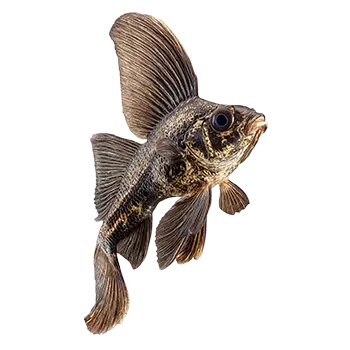
The African Butterfly Fish reaches an adult size of 4 to 5 inches in length, though exceptional specimens may slightly exceed these dimensions. Their unique body form immediately distinguishes them from all other aquarium fish, combining features of both swimming fish and surface-adapted specialists into a thoroughly alien yet beautiful appearance.

The body is robust and somewhat compressed laterally, with the dorsal profile flat to slightly concave. The ventral surface is deeply keeled, creating a distinctive boat-hull shape when viewed head-on. This form positions the large eyes at the waterline while keeping the wide mouth ready to engulf surface prey. The head is broad and flat-topped, dominated by enormous upward-facing eyes that scan the surface for prey.

The most striking feature is undoubtedly the greatly enlarged pectoral fins that extend horizontally like wings. When fully spread, these fins create the butterfly appearance that inspired the common name. The fins contain elongated fin rays that may extend beyond the membrane, creating a feathered appearance. These specialized fins serve not for powered flight but for gliding short distances when the fish leaps from the water to escape predators or capture aerial prey.

Coloration is subdued but elegant, designed for camouflage when viewed from above against dark, debris-laden waters. The dorsal surface displays brown to olive coloration with irregular darker mottling that breaks up the body outline. The ventral surface is paler, often silvery or cream-colored. Fins are semi-transparent with brownish tones and darker markings.

The caudal fin is unique in shape, with the central rays shorter than the upper and lower rays, creating a distinctive profile. The dorsal fin is positioned far back on the body near the tail. Pelvic fins are elongated and thread-like, often trailing behind as the fish rests at the surface. Sexual dimorphism is subtle, with males displaying a slightly convex anal fin while females show a straight posterior edge.

Temperament
African Butterfly Fish are ambush predators that remain still for extended periods before striking at prey. They are generally peaceful toward fish too large to eat but will consume anything that fits in their large mouths. Territorial toward conspecifics in limited space.
Care Level
This species requires specific conditions including floating plant cover, calm water surface, and live or frozen foods to thrive. While not demanding regarding water parameters, their feeding preferences and specialized habitat needs place them at intermediate care level.
Diet
African Butterfly Fish strongly prefer live foods and may refuse all other options initially. Conditioning to frozen foods requires patience, while pellets and flakes are rarely accepted. Success depends on providing appropriately sized floating or surface-moving prey items.
Water Conditions
These fish prefer soft, slightly acidic water mimicking their West African origins but adapt to moderate variations. They require absolutely calm water surface without current or turbulence, which is essential for their feeding and natural behavior.
Tank Size
A minimum 30-gallon tank provides adequate surface area for a single African Butterfly Fish. Their sedentary nature means tank depth matters less than surface footprint. Larger tanks allow keeping multiple individuals with reduced territorial conflict.
Compatibility
Tank mates must be too large to eat, avoiding surface competition. Bottom and mid-water species work best. Avoid fin nippers that may damage their delicate pectoral fins. Their slow movements and specialized needs limit compatible species choices.
Activity Level
African Butterfly Fish are exceptionally sedentary, remaining motionless at the surface for hours while waiting to ambush prey. Brief bursts of movement occur during feeding strikes or occasional tank exploration. Their stillness is a key aspect of their hunting strategy.
Hardiness
Once established in appropriate conditions, these fish prove reasonably resilient. Initial acclimation requires care, and feeding challenges can cause issues for unprepared keepers. Long-term success depends on meeting their specialized environmental and dietary needs.

Natural Habitat & Range

The African Butterfly Fish inhabits the slow-moving and standing waters of West and Central Africa, with populations documented across Nigeria, Cameroon, Democratic Republic of Congo, Chad, and surrounding regions. This broad geographic distribution spans diverse river systems including the Congo, Niger, and their tributaries, where suitable microhabitats support stable populations.

Typical habitats include forest pools, swamps, backwaters, and slow-flowing stream sections where current is minimal or absent. These fish demonstrate an absolute requirement for calm surface conditions, avoiding any waters with significant flow that would disrupt their surface-film lifestyle. They favor heavily shaded waters beneath dense forest canopy where their camouflage coloration provides effective concealment from aerial predators.

The water in these habitats is typically soft and acidic, stained dark with tannins released by decomposing vegetation. Fallen leaves, branches, and other organic debris accumulate in these quiet waters, creating the blackwater conditions that define their environment. The pH commonly ranges from 5.5 to 7.0, with extremely low mineral content. Temperature remains relatively stable in the tropical range of 75 to 86°F.

Surface vegetation plays a crucial role in their natural environment. Floating plants including water lettuce, water hyacinth, and duckweed cover portions of the water surface, providing shade and concentrating the invertebrate prey these fish depend upon. The fish position themselves among floating vegetation, using plant cover as both hunting blinds and refuge from birds and other predators.

The surface film zone these fish inhabit represents a specialized ecological niche. Here, where water meets air, insects, spiders, and other invertebrates become trapped or venture for water access. The African Butterfly Fish has evolved specifically to exploit this narrow habitat, developing the specialized features that make it such a successful ambush predator. Their entire existence centers on this boundary layer just millimeters thick.

Seasonal flooding influences population dynamics, with rising waters during wet seasons allowing dispersal into flooded forest areas. These temporary habitats offer rich feeding opportunities as terrestrial invertebrates encounter rising water. Dry season contraction concentrates fish in permanent water bodies where their sedentary energy-conserving lifestyle allows survival on reduced prey availability.

African Butterfly Fish Temperament & Behavior

The African Butterfly Fish exhibits a fascinating behavioral repertoire centered on patient ambush predation, representing one of the most specialized hunting strategies found in the freshwater aquarium hobby. Understanding their unique temperament is essential for providing appropriate care and selecting compatible tank mates that complement rather than conflict with their lifestyle.

Patience defines this species more than any other trait. African Butterfly Fish spend the vast majority of their time completely motionless at the water's surface, often positioned among floating plant roots or beneath overhanging leaves. This stillness is not lethargy but rather an active hunting strategy—they are constantly alert, eyes scanning the surface for prey while expending minimal energy. Hours may pass without visible movement beyond occasional gill movements.

When prey is detected, the explosion of speed is startling. The fish launches forward with powerful thrust from the caudal fin, mouth gaping wide to engulf the target. In nature, they can leap from the water to snatch flying insects, demonstrating the power contained in their seemingly inactive bodies. After a strike, successful or not, they typically return to motionless waiting.

Predatory behavior makes tank mate selection critical. Anything small enough to fit in their large mouths will eventually become food, including small fish that have coexisted for weeks before the butterfly fish suddenly strikes. Their patient waiting game means that even cautious small fish eventually let down their guard with fatal consequences. Only tank mates clearly too large to swallow are truly safe.

Territorial behavior emerges when multiple African Butterfly Fish share limited surface space. In nature, individuals maintain personal territories and avoid each other. In aquariums, dominant fish may claim favored positions, pushing subordinates to less preferred areas. Adequate surface area with multiple floating plant clusters reduces such conflicts by providing separate territories.

Toward non-prey tank mates, African Butterfly Fish are generally indifferent. They ignore fish swimming below the surface and show no aggression toward species that don't compete for their specific niche. This tolerance makes community keeping feasible with appropriate species selection.

Their sedentary nature requires mental adjustment from keepers accustomed to active species. The fish is not sick or unhappy when motionless—this is simply their natural state. Active swimming typically indicates stress, disturbance, or hunting activity rather than good health. Learning to appreciate their stillness as a behavioral adaptation rather than a problem enhances the keeping experience.

Tank Setup & Requirements

Creating an appropriate environment for African Butterfly Fish requires understanding their extreme specialization for surface living. Unlike most aquarium fish that utilize the entire water column, these predators exist in a narrow horizontal zone just beneath the water surface. Tank design must accommodate this unique lifestyle while meeting their specific requirements.

Tank size for a single specimen starts at 30 gallons, with surface footprint mattering more than depth. A standard 20-gallon long tank provides adequate surface area despite lower total volume, making it a viable option for single specimens. Tanks measuring 36 inches or longer provide the horizontal space these fish appreciate when they do move. Pairs or groups require proportionally larger tanks, with 55 gallons or more recommended for multiple individuals.

The water surface represents the most critical aspect of tank design. Absolutely calm conditions are essential—any current, turbulence, or strong filtration output disrupts their feeding behavior and causes chronic stress. Filter outputs should be baffled, directed toward the glass, or positioned to create circulation below the surface without disturbing the top layer. Spray bars positioned vertically or sponge filters provide filtration without surface disturbance.

Floating plants are not optional but essential for African Butterfly Fish welfare. Amazon frogbit, water lettuce, dwarf water lettuce, red root floaters, and salvinia all work well, providing the surface cover that makes these fish feel secure. Aim for sixty to eighty percent surface coverage, leaving open areas for feeding and observation. The root systems of floating plants provide additional structure where fish position themselves.

A secure lid is absolutely critical. African Butterfly Fish are capable jumpers that will escape through any opening, however small. Their jumping ability evolved for catching aerial prey and escaping predators, making them expert escape artists. Every potential gap must be covered, and the lid should fit tightly against tank edges. Many experienced keepers add foam strips around equipment openings for complete security.

Substrate choice has minimal impact on these surface dwellers but influences overall aesthetics and plant health. Dark sand or fine gravel creates attractive contrast and supports rooted plants if desired. Bare-bottom tanks work functionally but lack visual appeal.

Lighting should be subdued, replicating the shaded forest waters these fish inhabit naturally. Intense lighting causes stress and washes out their subtle coloration. Floating plants naturally create the dappled shade they prefer, but avoid excessively bright fixtures even with plant coverage. A standard planted tank light on timer provides consistent photoperiod without excessive intensity.

Water Parameters

Maintaining appropriate water conditions supports African Butterfly Fish health while replicating aspects of their West African forest habitats. While more adaptable than their specialized appearance suggests, these fish thrive best when parameters approximate their natural environment. The most critical water condition is not chemical but physical—an absolutely calm surface.

Temperature preferences lean warmer than many tropical fish, with the ideal range spanning 75 to 86°F. The optimal range falls between 78 and 82°F for long-term maintenance. Higher temperatures within the range promote more active feeding behavior and may be particularly important for newly acquired specimens requiring conditioning. Reliable heating maintains consistency essential for immune function.

The pH range these fish tolerate extends from 6.0 to 7.5, with slightly acidic conditions between 6.5 and 7.0 representing ideal parameters. Wild fish come from distinctly acidic blackwater environments, but captive-bred specimens adapt to moderate conditions. Extremely alkaline water should be avoided, but precise pH targets are less critical than stability.

Water hardness should remain on the soft side, with general hardness between 1 and 12 dGH proving acceptable. Very hard water can be problematic long-term, potentially affecting scale and membrane health. Softened tap water or RO water remineralized appropriately works well in areas with hard municipal supplies.

Tannin-stained blackwater conditions replicate their natural habitat and offer genuine benefits. Indian almond leaves, peat filtration, or commercial blackwater extracts darken water, lower pH naturally, and provide antibacterial and antifungal properties. The fish often display enhanced coloration in these conditions while showing more natural behavior.

Water changes of twenty to thirty percent every one to two weeks maintain quality without dramatic parameter shifts. Fresh water should be temperature-matched and treated for chlorine before addition. Avoid pouring new water directly at the surface—either add slowly through tubing positioned below the surface or pour against tank glass to prevent disturbance.

The calm surface requirement cannot be overemphasized. Even minor rippling from filter outputs or airstones interferes with their feeding and causes ongoing stress. Test surface calmness by observing whether floating plants remain stationary or drift continuously. Motionless floating plants indicate adequately calm conditions for these specialized surface dwellers.

African Butterfly Fish Health & Lifespan

African Butterfly Fish demonstrate reasonable hardiness once established in appropriate environments, though their specialized needs can create challenges for unprepared keepers. With proper care, these ancient fish live 5 to 8 years or occasionally longer, rewarding patient keepers with years of fascinating observation. Their primary health risks relate to feeding difficulties and stress from inappropriate tank conditions rather than particular disease susceptibility. Successful long-term maintenance requires meeting their environmental requirements consistently and providing appropriate nutrition.

African Butterfly Fish that survive the initial adjustment period and accept available foods typically prove long-lived and resilient in appropriate conditions. Warning signs of health problems include fin clamping, visible wasting, refusal of previously accepted foods, or unusual activity levels (either increased or decreased from their normally sedentary baseline). Prompt attention to environmental factors often resolves early issues before medical intervention becomes necessary.

Common Health Issues

  • Starvation from feeding difficulties represents the most common health crisis in newly acquired specimens. Fish that refuse prepared foods and lack access to appropriate live prey may starve over weeks to months - Showing gradual wasting before death.
  • Bacterial infections including fin rot may affect the delicate pectoral fins when water quality deteriorates or physical damage occurs - Early intervention with improved conditions and appropriate medication prevents progression.
  • Fungal infections appear as cottony growths on fins or body - Typically secondary to injury or chronic stress. The large pectoral fins are particularly vulnerable to fungal colonization following mechanical damage.
  • Parasitic infections including ich and velvet may occur following the stress of transport or introduction to new environments. Standard treatments prove effective when caught early - Though elevated temperature preferences may naturally suppress ich development.
  • Stress-related illness from inappropriate tank conditions including excessive surface movement - Bright lighting, or incompatible tank mates suppresses immune function and leads to secondary infections.
  • Jump injuries occur when startled fish leap against the lid or escape through uncovered openings - Proper jump prevention eliminates this entirely preventable cause of injury and death.

Preventive Care & Health Monitoring

  • Provide absolutely calm water surface conditions without current or turbulence - Allowing natural feeding behavior and reducing chronic stress that compromises immune function.
  • Establish reliable live food sources or condition fish to accept frozen alternatives before acquiring specimens - Ensuring nutritional needs can be met consistently from the beginning.
  • Maintain soft, slightly acidic water with regular changes and consistent parameters that support their long-term health without subjecting them to chemical stress. - Maintain soft, slightly acidic water with regular changes and consistent parameters that support their long-term health without subjecting them to chemical stress.
  • Secure all potential escape routes with tight-fitting lids and covered openings - Preventing the jumping escapes that represent a leading cause of mortality in this species.

African Butterfly Fish Feeding & Diet

Feeding African Butterfly Fish presents the most significant challenge of their care, requiring commitment to providing appropriate foods that satisfy their predatory instincts and nutritional needs. Their strong preference for live prey and surface-feeding specialization means standard aquarium foods often fail to elicit feeding responses, particularly in newly acquired specimens.

In nature, these ambush predators consume a variety of invertebrates that venture onto the water's surface. Insects, spiders, small crustaceans, and even small fish become prey when they enter striking range. The fish position themselves motionlessly, waiting for prey to approach before explosive strikes capture victims. This hunting style requires prey that floats or moves at the surface—sinking foods pass by unnoticed.

Live foods represent the gold standard for African Butterfly Fish nutrition and may be essential for conditioning new specimens to captive feeding. Crickets of appropriate size represent perhaps the ideal food, triggering dramatic feeding strikes when placed on the water surface. Small feeder insects, wingless fruit flies, mealworms, and waxworms all work well. Larger specimens may take small feeder fish, though this practice raises ethical considerations.

Culturing live foods provides reliable supply for dedicated keepers. Fruit fly cultures are easily maintained and produce continuous supplies of nutritious prey. Cricket colonies can be established for larger specimens. These investments pay dividends through guaranteed food availability regardless of local pet store stock.

Frozen foods may be accepted by established specimens conditioned through patient training. Frozen bloodworms, frozen mysis shrimp, and frozen brine shrimp can work when presented at the surface with feeding tongs or tweezers. Movement of the tongs may trigger strikes even when the food itself is dead. Some keepers use feeding rings to concentrate floating frozen foods at the surface.

Dry foods including pellets and flakes are rarely accepted and should not be considered viable options. Even hungry fish typically ignore non-moving dry foods that lack the triggers their hunting instincts respond to. Time spent attempting to train these fish to dry foods is usually better spent establishing live or frozen food regimens.

Feeding frequency of every two to three days works well for adult specimens, mimicking the feast-or-famine pattern of wild feeding. Young fish require more frequent feeding for growth. Their sedentary lifestyle means caloric requirements are lower than for active species of similar size. Obesity from overfeeding can occur with excessive feeding frequency.

Tank Mates & Breeding

Selecting appropriate tank mates for African Butterfly Fish requires careful consideration of their predatory surface lifestyle and specific environmental needs. Successful community keeping is possible but demands thoughtful species selection that accounts for size, activity level, and habitat zone to create peaceful coexistence.

The fundamental rule is that any fish small enough to swallow will eventually become prey. African Butterfly Fish possess surprisingly large mouths relative to body size, and their patient hunting style means small tank mates that seem safe may suddenly disappear weeks or months after introduction. Only fish clearly too large to swallow are truly safe from predation.

Excellent tank mate options include medium to large peaceful species that occupy mid-water and bottom zones. Congo tetras, larger rainbowfish, angelfish, and geophagus cichlids work well, providing activity in water levels the butterfly fish ignores while being too large for predation. Their active swimming contrasts nicely with the surface dweller's stillness.

Bottom-dwelling species make particularly compatible companions. Medium to large Corydoras species, Synodontis catfish, plecos, and loaches utilize tank regions the butterfly fish never visits. These species also tolerate the calm water conditions required by their surface-dwelling tank mate.

Species to avoid include any small fish regardless of speed or wariness—patience is the butterfly fish's greatest weapon, and all small species eventually become vulnerable. Surface-dwelling fish that compete for the same niche may face territorial aggression or stress from proximity. Active species that disturb surface calm through vigorous swimming can stress butterfly fish requiring still water.

Multiple African Butterfly Fish can coexist in adequately sized tanks with sufficient surface territory for each individual. A 55-gallon tank might house two or three specimens with appropriate floating plant clusters creating separate territories. Watch for aggression during establishment and be prepared to separate incompatible individuals.

Breeding African Butterfly Fish in aquariums is challenging but documented. Pairs may spawn among floating plant roots after conditioning with heavy live food feeding and slight water level drops mimicking seasonal changes. Eggs float at the surface and hatch in approximately one week. Fry are surface feeders requiring tiny live foods like wingless fruit flies and small crickets. Parental care is absent, and adults may consume eggs and fry, so separate rearing tanks are necessary for success.