West Australian Terrier
The West Australian Terrier is a cross between the Australian Terrier and the West Highland White Terrier. Because each hybrid inherits a unique combination of traits from both parents, we recommend thoroughly researching both breeds before choosing a West Australian Terrier. Pay special attention to temperament, health issues, and care requirements, as your dog may express characteristics from either parent breed.
Australian Terrier
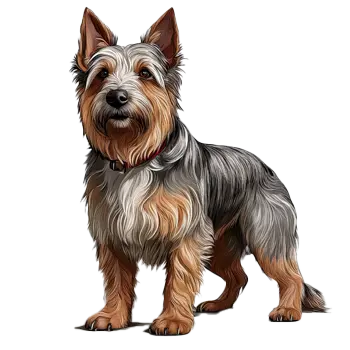
The Australian Terrier is a small, sturdy working terrier with a distinctive low-set build that served them well in their original role hunting vermin across the rugged Australian terrain. Standing 10 to 11 inches at the shoulder and ideally weighing around 14 pounds according to breed standards, though they may range from 15 to 20 pounds, they present a compact, well-proportioned silhouette. The body is notably longer than it is tall, with the length from withers to tail base being approximately one to one and a half inches longer than the height at withers. This elongated build combined with short, strong legs gave them the ability to navigate burrows and rocky terrain while pursuing prey. The Australian Terrier's coat is one of their defining characteristics. It consists of a harsh, straight outer coat approximately two and a half inches in length that provides protection from both weather and wildlife, combined with a soft, dense undercoat for insulation. The breed appears in three accepted color patterns: blue and tan, solid sandy, and solid red. Blue and tan dogs display a deep, rich blue body color with distinct tan markings on the face, ears, underbody, lower legs, and feet. Sandy and red dogs present uniform coloring throughout. A distinctive soft, silky topknot crowns the head, contrasting with the harsher body coat and adding to the breed's unique appearance. The head is long and strong with a flat skull of moderate width and a powerful muzzle. Small, dark, oval-shaped eyes convey a keen, intelligent expression characteristic of the breed's alert nature. Small, erect, pointed ears are set high on the head and covered with short, soft hair. A distinctive feature described in the breed standard is an inverted V-shaped area of bare skin extending from the nose up the bridge of the muzzle. The neck features a prominent ruff of longer hair that was developed to protect against snake bites, a practical consideration in the Australian Outback. The tail is set high and typically carried erect at a twelve to one o'clock position, traditionally docked but increasingly left natural.
Key Characteristics
Temperament Temperament Temperament Temperament Temperament Temperament Their strong prey drive remains active, making them excellent at their original job of hunting rodents and small animals but unsuitable companions for smaller pets like rabbits, guinea pigs, or hamsters. They are avid diggers who will enthusiastically excavate yards in pursuit of real or imagined quarry. Regular exercise and mental stimulation are essential to prevent boredom-related behaviors such as excessive barking, digging, and destructive chewing. Despite their high energy, Australian Terriers adapt well to various living situations including apartments, provided they receive adequate daily exercise. They are generally good with children, especially when raised together, displaying patience and playfulness with young family members. Their moderate size and sturdy build make them more resilient than many toy breeds during play with children.
Health Considerations Health Considerations Health Considerations Health Considerations Health Considerations Health Considerations The breed is known to be susceptible to Vogt-Koyanagi-Harada-like syndrome, an autoimmune condition that can affect the eyes, skin, and nervous system. This condition causes inflammation and can lead to vision problems, skin depigmentation, and neurological symptoms if not properly managed. Regular veterinary monitoring helps detect early signs of this condition. Australian Terriers may also experience allergies, thyroid disorders, and diabetes mellitus. Their minimal grooming requirements and hardy coat provide some protection against skin issues, though they can still develop allergic dermatitis. Recommended health screenings include patella evaluation, ophthalmologist examination, and thyroid evaluation. Genetic testing for certain conditions may also be available through breed health registries.
West Highland White Terrier

The West Highland White Terrier, affectionately known as the Westie, is a small but sturdy terrier with a distinctive all-white coat and confident bearing. Standing 10 to 11 inches at the shoulder, with males typically at the higher end and females slightly shorter, they weigh between 13 and 22 pounds with males being heavier than females. The breed presents a compact, well-balanced appearance with substantial bone and muscle that belies their small size. Their body is slightly shorter than the height at withers, creating a squared-off silhouette that suggests both strength and agility. The Westie's pure white double coat is one of their most recognizable features. The outer coat is straight, hard, and weather-resistant, measuring approximately two inches in length, while the undercoat is soft, dense, and provides excellent insulation against harsh Scottish weather. This functional coat was developed to protect the breed while working in the rough terrain of the Scottish Highlands. Proper grooming maintains the coat's characteristic texture and includes regular brushing, hand-stripping for show dogs, or clipping for pet dogs. The coat sheds minimally but requires consistent care to prevent matting and maintain its bright white appearance. The head gives a round appearance when viewed from the front, achieved through careful grooming of the facial furnishings. Dark, almond-shaped eyes are set wide apart and convey an alert, intelligent expression that reflects the breed's keen terrier personality. Small, erect, pointed ears are set wide apart on the outer edge of the skull and are covered with short, velvety hair. The nose is large and black, providing a striking contrast to the white coat. The tail is relatively short, measuring five to six inches, shaped like a carrot, and carried jauntily upright but never curled over the back. Overall, the Westie projects cheerful confidence and hardy capability in a charming, compact package.
Key Characteristics
Temperament Temperament Temperament Temperament Temperament Temperament Westies have high energy levels and require substantial daily exercise and mental stimulation to remain happy and well-behaved. They enjoy walks, play sessions, and opportunities to explore, ideally including some off-leash time in secure areas. Their intelligence makes them capable learners, though their stubborn, independent streak means they may choose whether a command suits them before complying. Patient, consistent, positive training methods work best. While generally good with children when raised together, they may not tolerate rough handling from toddlers and are better suited to families with older, respectful children. Their prey drive makes them unreliable around small pets, and they can be territorial or assertive with other dogs, particularly those of the same sex.
Health Considerations Health Considerations Health Considerations Health Considerations Health Considerations Health Considerations More serious conditions associated with the breed include pulmonary fibrosis, also called Westie lung disease, a progressive condition affecting breathing capacity. Craniomandibular osteopathy, sometimes called Westie jaw or lion's jaw, causes abnormal bone growth in the skull of puppies and typically resolves as the dog matures but can be painful during active phases. Patellar luxation, where the kneecap slips out of position, and hip dysplasia both occur in the breed. Eye conditions including cataracts, glaucoma, and keratoconjunctivitis sicca, commonly known as dry eye, require monitoring. Legg-Calve-Perthes disease affecting the hip joint and globoid cell leukodystrophy, a neurological condition, are also associated with the breed. Recommended health testing includes patella evaluation, hip evaluation, and ophthalmologist examination.
Important to Remember
Each hybrid dog is unique and may inherit any combination of traits from either parent breed. The information above represents the characteristics of the purebred parent breeds. Your West Australian Terrier may favor one parent over the other or display a blend of both. We strongly encourage you to read the complete breed profiles for both the Australian Terrier and West Highland White Terrier to fully understand the range of possible temperaments, health concerns, and care requirements.