Vizsla Staff
The Vizsla Staff is a cross between the Vizsla and the American Staffordshire Terrier. Because each hybrid inherits a unique combination of traits from both parents, we recommend thoroughly researching both breeds before choosing a Vizsla Staff. Pay special attention to temperament, health issues, and care requirements, as your dog may express characteristics from either parent breed.
Vizsla
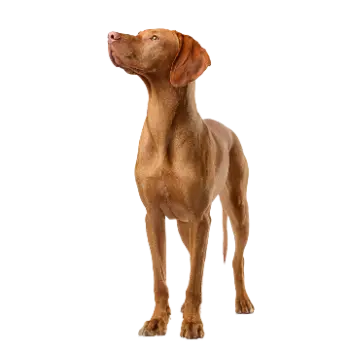
The Vizsla is a medium-sized Hungarian sporting dog with an elegant, athletic build designed for endurance and speed in the field. Males typically stand between 22.5 to 25 inches at the shoulder and weigh 55 to 60 pounds, while females measure 21 to 23.5 inches and weigh 45 to 55 pounds. The breed possesses a lean, muscular frame with well-defined proportions, featuring a body that is slightly longer than it is tall. The Vizsla has a distinctive square muzzle and a head that tapers slightly from skull to nose, giving the breed an aristocratic appearance that reflects its noble Hungarian heritage as a prized hunting companion of the Magyar nobility. The coat is one of the Vizsla's most distinguishing features, being short, smooth, dense, and close-lying with a slightly greasy texture that provides water resistance during field work. The breed comes exclusively in a beautiful russet gold or golden rust color, ranging from light sandy yellow to deep copper red. A small amount of white on the chest and feet is acceptable but not desirable according to breed standards. The nose is always liver-colored, harmonizing perfectly with the coat, and the eyes are medium-sized with colors that blend with the coat tone, typically appearing amber or golden brown. The absence of an undercoat means the breed feels temperature extremes more acutely than double-coated breeds. The Vizsla's ears are thin and silky with rounded ends, hanging close to the cheeks and set moderately low on the head. The tail is traditionally docked to about two-thirds of its original length in countries where this practice is permitted, carried horizontally when the dog is moving with purpose. The breed's overall expression is one of intelligence and alertness, with an eager, bright demeanor that reflects its centuries of hunting heritage. The Vizsla's feet are compact and cat-like with well-arched toes, enabling the breed to move with exceptional grace and efficiency across varied terrain during long days in the field. The gait is smooth and ground-covering, demonstrating the breed's remarkable athletic ability.
Key Characteristics
Temperament Temperament Temperament Temperament Temperament Temperament Vizslas are typically excellent with children when properly socialized, displaying a gentle and patient demeanor with younger family members who treat them respectfully. The breed is generally friendly toward strangers once introduced and gets along well with other dogs when raised together, though individual personalities vary. However, their strong prey drive, inherited from centuries of hunting breeding, means caution is advised around small pets such as rabbits and rodents. The Vizsla is absolutely not suited to kennel life or extended periods of isolation, truly thriving only when fully integrated as a family member with access to close human interaction throughout the day.
Health Considerations Health Considerations Health Considerations Health Considerations Health Considerations Health Considerations Gastric dilatation-volvulus, commonly known as bloat, is a life-threatening emergency that can affect Vizslas due to their deep chest conformation. Owners should learn to recognize the signs and take preventive measures such as avoiding exercise immediately after meals. Other health concerns include von Willebrand's disease, a bleeding disorder, skin allergies, and certain types of cancer including lymphoma. Regular veterinary checkups, maintaining a healthy weight, and purchasing from breeders who perform recommended health screenings can help ensure a long, healthy life for a Vizsla.
American Staffordshire Terrier

The American Staffordshire Terrier, affectionately known as the AmStaff, is a medium-sized, powerfully built dog that combines remarkable strength with surprising agility in a compact, muscular frame. Males typically stand 18 to 19 inches at the shoulder and weigh 50 to 70 pounds, while females measure 17 to 18 inches and weigh 40 to 55 pounds. The breed's most striking feature is its broad, powerful head with pronounced cheek muscles and strong jaws that give the face a determined, confident expression reflecting the breed's courageous nature. The body is stocky and muscular with a broad chest, well-sprung ribs, and a sturdy bone structure that suggests great strength without appearing bulky, coarse, or overdone. The AmStaff's coat is short, stiff, and glossy, lying close to the body and highlighting the breed's impressive musculature with every movement. Nearly any color is acceptable according to breed standards, including solid colors, parti-colors, and patched patterns, though all-white dogs, those more than 80 percent white, and liver or black-and-tan colorations are discouraged for showing. The skin is tight-fitting without wrinkles, and the coat requires minimal grooming beyond regular brushing to remove loose hair and maintain its healthy, gleaming sheen. The breed carries itself with confidence and alertness at all times. The head is medium in length with a broad skull and distinct stop, leading to a medium-length muzzle that is rounded on the upper side and powerful in appearance. The ears may be cropped or left natural, with uncropped ears being preferred as half-pricked or rose ears that add to the breed's alert expression. The eyes are dark, round, set low and wide apart, contributing to the breed's alert and intelligent expression that reflects keen awareness. The neck is heavy, slightly arched, and tapers from shoulders to back of skull with no loose skin. The tail is short compared to body size, set low, tapering to a fine point, and carried level rather than curled over the back. The AmStaff moves with a springy, confident gait that demonstrates both power and athletic agility, reflecting its heritage as a versatile working breed.
Key Characteristics
Temperament Temperament Temperament Temperament Temperament Temperament The American Staffordshire Terrier has moderate to high energy levels and requires regular physical exercise and mental stimulation to remain balanced and well-behaved. The breed excels in various dog sports including weight pulling, agility, and obedience, channeling their athleticism and desire to work. While protective of their families, AmStaffs are generally friendly with strangers once properly introduced and are not naturally aggressive toward people. Their loyalty and devotion make them excellent companions for active families who can provide firm, loving leadership and plenty of positive interaction throughout the day.
Health Considerations Health Considerations Health Considerations Health Considerations Health Considerations Health Considerations Heart disease affects some AmStaffs, with pulmonic stenosis and dilated cardiomyopathy being conditions of concern in the breed. Regular cardiac screening is recommended, especially for dogs used in breeding programs. Progressive retinal atrophy, an inherited eye disease causing gradual vision loss, occurs in the breed and can be identified through genetic testing. Cerebellar ataxia and wobbler syndrome are neurological conditions that have been documented in American Staffordshire Terriers, affecting coordination and gait. Regular veterinary checkups, maintaining a healthy weight, and purchasing from breeders who perform comprehensive health testing help ensure the best outcomes for this devoted breed.
Important to Remember
Each hybrid dog is unique and may inherit any combination of traits from either parent breed. The information above represents the characteristics of the purebred parent breeds. Your Vizsla Staff may favor one parent over the other or display a blend of both. We strongly encourage you to read the complete breed profiles for both the Vizsla and American Staffordshire Terrier to fully understand the range of possible temperaments, health concerns, and care requirements.