Vizsla

Vizsla

Quick Facts

🐕 Breed Group
Sporting Group
📏 Size Category
Medium
📏 Height
Males: 22-24 inches, Females: 21-23 inches
⚖️ Weight
Males: 55-60 pounds, Females: 44-55 pounds
⏱️ Life Expectancy
12-14 years
🧣 Coat Type
Short, smooth, dense, close-lying; no undercoat
🎨 Coat Colors
Golden rust, russet gold, dark sandy gold; small white on chest or tail permissible but not preferred
😀 Temperament
Affectionate, Energetic, Gentle, Loyal, Trainable, Sensitive
🏃 Exercise Needs
Very High
🎓 Training Difficulty
Easy
👶 Good with Children
Excellent with children of all ages
🐾 Good with Other Pets
Good with dogs; some prey drive with cats

Other Names & Breed Recognition

The name Vizsla is Hungarian and translates approximately to 'pointer' or 'alert' - a reference to the breed's pointing function in the field. The correct pronunciation is VEEZH-la or VEESH-la, with the 'zs' combination producing a sound similar to the 's' in 'measure.' English speakers frequently mispronounce it, and Hungarian enthusiasts have learned to be patient about it.

The breed's full formal name in Hungarian is Magyar Vizsla - Magyar being the Hungarian word for 'Hungarian.' The FCI uses the designation Hungarian Pointer alongside Vizsla in some formal contexts. In informal use throughout the English-speaking world, 'Vizsla' alone is universally understood and used. The breed is also occasionally called the Hungarian Vizsla or Smooth-Haired Vizsla - the latter to distinguish it from the Wirehaired Vizsla, which is a separate breed developed from the Smooth Vizsla crossed with German Wirehaired Pointers in the twentieth century.

The Vizsla holds recognition from every major kennel club. The AKC recognized the breed in 1960 and places it in the Sporting Group. The FCI recognized the breed in Group 7 (Pointing Dogs), Section 1 (Continental Pointing Dogs). The UKC places it in the Gun Dog Group. The Kennel Club in the UK classifies it in the Gundog Group. The Canadian Kennel Club also recognizes the breed in its Sporting Group. This breadth of recognition reflects the Vizsla's international presence and the consistency of its type across breeding programs in multiple countries.

The Vizsla Club of America is the AKC parent club for the breed in the United States. Founded in the 1950s alongside the breed's arrival in America, the VCA participates in the AKC's Canine Health Information Center program, maintains health testing requirements for breeders, and promotes the breed's working heritage through hunt test programs. The VCA's CHIC requirements - the minimum health testing a breeder must complete to receive a CHIC number - include OFA hip evaluation, OFA thyroid evaluation, and CERF eye examination.

In hunting contexts, the breed is sometimes referred to simply as the 'golden pointer' or 'Hungarian pointer,' particularly in European field trial circles where pointing breeds from different countries compete. The AKC's Field Dog Stud Book registered early American Vizslas, and the breed has competed in AKC hunt tests, AKC field trials, and AKC conformation shows since formal recognition. The Wirehaired Vizsla, while related, is registered separately and has its own breed standard and club.

Vizsla Organizations & Standards

The Vizsla Club of America is the primary breed organization in the United States and the AKC parent club for the breed. The VCA was instrumental in gaining AKC recognition in 1960 and has maintained active programs in health, working trials, and breed promotion since its founding. The VCA's health committee oversees the breed's participation in the CHIC program and maintains awareness of emerging health research relevant to the Vizsla.

CHIC requirements for the Vizsla as maintained through the VCA and AKC include three mandatory tests: OFA hip evaluation (radiographs evaluated for dysplasia), OFA thyroid evaluation (blood test for hypothyroidism), and CERF or OFA eye examination (evaluation for progressive retinal atrophy and other heritable eye conditions). Optional recommended tests include OFA elbow evaluation, OFA cardiac evaluation, and OFA evaluation for sebaceous adenitis. Breeders who complete all required tests and agree to have all results - positive or negative - published in the CHIC database receive a CHIC number for their dog, which gives prospective buyers a verified record of health testing.

The AKC breed standard for the Vizsla describes a medium-sized, lean, well-muscled dog of distinguished appearance and bearing. The standard specifies a short, smooth, dense coat with no undercoat. The permitted color is described as golden rust in various shadings - the coat, nose, eye color, and nails should all blend into the same warm, golden-rust tone. Small amounts of white on the forechest, neck, or tail are permissible but not preferred. Black, brown, light pink, or contrasting-colored noses are penalized as indications of impure breeding.

The Vizsla is the smallest of the versatile continental hunting breeds - smaller than the Weimaraner, German Shorthaired Pointer, and German Wirehaired Pointer. The standard's height range of 21 to 24 inches and weight of 45 to 65 pounds places it in a practical medium size that is large enough for serious field work but compact enough to be manageable as a household companion.

In the FCI system, the Vizsla is classified as a Continental Pointing Dog and evaluated under the FCI standard for the breed, which reflects input from Hungarian breed authorities and aligns with the Kennel Club of Hungary's requirements. International breed type is notably consistent across AKC, FCI, and other registries - the Vizsla is a breed where the type held by American breeders and European breeders is recognizably the same dog, a consistency that not all internationally recognized breeds can claim.

The Hungarian Vizsla Club in the United Kingdom and equivalent organizations in European countries work in coordination with the FCI and their respective national kennel clubs to maintain breed health programs. The UK Hungarian Vizsla Club's Code of Conduct requires breeders to complete hip scoring, elbow scoring, and glaucoma evaluation before mating - requirements that reflect the breed's specific health profile, particularly the documented concern around glaucoma that has emerged in UK breeding populations.

Kennel Club Recognition

  • American Kennel Club (AKC): Recognized in 1960, Sporting Group
  • United Kennel Club (UKC): Recognized, Gun Dog Group
  • Canadian Kennel Club (CKC): Recognized, Sporting Group
  • FCI: Recognized, Group 7 Pointing Dogs
  • The Kennel Club (UK): Recognized, Gundog Group

Vizsla Physical Description

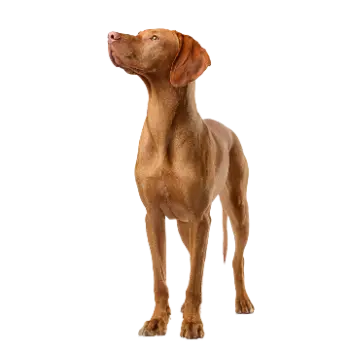
The Vizsla's appearance is one of the most distinctive in the sporting dog world, defined above all else by color. The coat is a warm, saturated golden rust - variously described as russet gold, dark sandy gold, or copper - and it is matched by a nose, eye color, and nails in the same tonal family. There is no contrasting black mask, no white blaze, no dark saddle. The dog is one color from nose to tail, and that monochromatic warmth gives it an elegant, sculpted quality that photographs beautifully and is striking in person.

The body is lean and athletic without being light-framed or delicate. The impression is of a dog built for sustained work in the field - enough bone and muscle to handle terrain and retrieve game, lean enough to move efficiently for hours without carrying excess mass. The Vizsla is the smallest of the versatile continental pointing breeds, but it does not read as a small dog in the field. It reads as precisely the right size for what it does.

The head is lean and muscular, with a moderately wide skull and a pronounced median line running along the skull's length. The foreface is equal in length to the skull, giving the head a balanced, rectangular profile. The muzzle is square and well-developed, with a blunt end. The jaws are strong with a scissors bite. The nose is self-colored - the same golden-rust tone as the coat rather than black. This self-coloring nose is one of the breed's most immediately recognizable features and one of the first things judges check in the show ring.

The eyes are medium-sized and almond-shaped, set at a slight angle. The iris color should be as dark as possible while remaining in the brown family, ideally blending with the coat color. Light yellow eyes are a fault. The expression is alert, gentle, and intelligent - the soft warmth of the eye is part of what gives the Vizsla its characteristic sensitive, expressive face. Long, silky ears frame the face, hanging close to the cheeks and giving the head a gentle, almost elegant appearance.

The ears are thin, silky, and rounded at the tip, set relatively low and hanging close to the cheeks. When drawn forward, they reach approximately to the middle of the muzzle. The ear leather is soft and fine-textured - notably thinner and more refined than many sporting breeds.

The neck is long, muscular, and arched - a feature that contributes significantly to the breed's elegant overall outline. It flows cleanly into well-laid-back shoulders without a pronounced crest. The withers are moderately high. The topline is level and strong. The chest is moderately broad and deep, with the sternum reaching to the level of the elbows. Ribs are moderately sprung. The tuck-up is slight, giving the body a clean profile without the extreme waist of some sporting breeds.

The tail is set just below the level of the topline and is docked to approximately two-thirds of its natural length in countries where docking is permitted. In countries where docking is prohibited, the natural tail is carried horizontally or slightly raised - never curled over the back. The tail carriage when the dog is alert or working is an important visual indicator of the breed's condition and attitude.

The coat is the Vizsla's most discussed grooming attribute: short, smooth, dense, and close-lying with no significant undercoat. This is a self-cleaning coat that repels surface dirt and dries extremely quickly after water exposure. The breed rarely needs bathing and is described by owners as having remarkably little of the typical 'dog smell' that characterizes many sporting breeds. The warmth and gloss of the coat in good condition is striking.

Males stand 22 to 24 inches at the withers and weigh 55 to 65 pounds. Females stand 21 to 23 inches and weigh 44 to 55 pounds. The breed is notably similar in size between sexes - the sexual dimorphism is present but modest. Weimaraners, which are sometimes confused with Vizslas, are consistently larger and grey rather than the Vizsla's golden rust.

The overall silhouette of the Vizsla in motion is one of the breed's most striking qualities. In a field trot or a gallop, the dog moves with ground-covering efficiency and a fluid quality that reflects the careful breeding for a versatile hunting dog capable of ranging wide and working hard for extended periods. Head up, tail horizontal, the hunting Vizsla shows a natural pointing posture when game is located - a freeze of total concentration that experienced bird dog people find deeply satisfying to watch.

The combination of the self-colored coat, the refined but substantial build, and the warm, intelligent expression gives the Vizsla an overall aesthetic that stands apart from other sporting breeds. It is not a showy dog in the way that setters are showy, nor a substantial working machine in the way that German Shorthaired Pointers read. It occupies its own visual space - elegant and capable at once, in the same warm tone throughout.

Affectionate With Family
The Vizsla's nickname is 'the velcro dog' for good reason. This breed wants to be physically close to its people at all times and is genuinely unhappy with distance. It is one of the most demonstrably affectionate of all sporting breeds.
Good With Young Children
Gentle-natured and patient, the Vizsla is an excellent family dog with children of all ages. It matches a child's energy for play and has the temperament to tolerate normal childhood interaction without becoming anxious or reactive.
Good With Other Dogs
Generally sociable and friendly with other dogs. The Vizsla's pack-oriented nature means it usually integrates well into multi-dog households, particularly when properly introduced.
Shedding Level
Moderate, manageable shedding from the short, smooth coat. The Vizsla is not a heavy shedder. Weekly brushing handles the loose hair effectively.
Coat Grooming Frequency
Among the simplest sporting breed coats. Weekly brushing, occasional baths, and routine ear cleaning cover the full grooming needs. No professional grooming required.
Drooling Level
Minimal to no drooling. The Vizsla has a clean, dry mouth and is one of the tidier large breed dogs in this regard.
Coat Type
Short, smooth, dense, and close-lying without an undercoat. The coat is self-cleaning to a remarkable degree and rarely needs bathing unless the dog has been in muddy water.
Openness To Strangers
Typically warm and welcoming with new people once initial greetings are made. The Vizsla is not a suspicious breed - it is protective enough to alert to strangers but genuinely friendly enough to win people over quickly.
Playfulness Level
Playful, enthusiastic, and joyful about activity. The Vizsla approaches games with the same energy it brings to the field - full commitment, genuine enthusiasm, and more endurance than most people can match.
Watchdog/Protective Nature
Alert and will announce unfamiliar people, but the Vizsla's friendly nature with people limits its effectiveness as a protection dog. It is a reliable alarm; it is not a reliable deterrent.
Adaptability Level
Adapts to different living situations provided exercise needs are genuinely met. The non-negotiable requirement is human company and vigorous daily exercise; the specific living environment is secondary to those two needs.
Trainability Level
One of the most trainable sporting breeds - intelligent, eager to please, responsive to positive reinforcement, and capable of advanced work in hunting, obedience, and dog sports. The combination of intelligence and desire to cooperate makes training a genuine pleasure.

Vizsla History & Development

The Vizsla's history in Hungary is one of the longest documented for any pointing breed. Stone etchings from the eighth century depict what appear to be Magyar hunters working alongside a pointer-type dog and a falcon - an image that Vizsla Club of America historians cite as evidence of the breed's presence during the Magyar tribal period before the Hungarian state was formally established. Whether those specific dogs were the direct ancestors of the modern Vizsla is a matter of interpretation, but the hunting culture of the Magyar people clearly included working dogs of this functional type long before modern breed registries existed.

By the medieval period, the Vizsla had become a favored hunting companion of Hungarian nobility and landed gentry. The breed's versatility - it could hunt, point, and retrieve upland game, wildfowl, and hare - made it valuable across the range of game available in the Pannonian Plain and the Hungarian highlands. Aristocratic families maintained breeding records and treated their Vizslas as valuable assets. This aristocratic patronage provided the breed with protection and consistent selective breeding through the medieval and early modern periods.

The breed nearly disappeared twice. The first near-extinction came in the aftermath of World War I, when the political and economic upheaval of the Austro-Hungarian Empire's collapse devastated the Hungarian aristocracy that had sustained the breed. Dedicated breeders worked through the 1920s and 1930s to rebuild the population. Then World War II brought a second catastrophic disruption. Soviet occupation of Hungary following the war prompted Vizsla owners who feared for the breed's survival to smuggle dogs out of the country. Some dogs went to Austria, others to Western Europe, and several made their way to North America.

The breed arrived in the United States in the early 1950s through these refugee breeding efforts. American hunters who encountered Vizslas recognized immediately that they were looking at something exceptional: a versatile bird dog with a distinguished appearance, a tractable temperament, and working ability that held up in American upland game conditions. The AKC recognized the Vizsla in 1960, and the Vizsla Club of America was established to promote the breed's working heritage alongside its show career.

Today the Vizsla is one of the more popular sporting breeds in the United States and internationally. It holds a dual identity as a working hunting dog and a devoted family companion - a combination that the breed has always offered. The challenge for the breed today is maintaining the working ability and sound health that defined the best specimens while managing the health concerns that have emerged as the gene pool has been characterized more carefully. The Vizsla Club of America's active participation in health research reflects the breed community's serious engagement with these challenges.

The breed's arrival in America in the 1950s is itself an interesting Cold War footnote: dogs smuggled out of a Soviet-occupied country by people who loved them enough to take significant personal risk. The families who brought those first Vizslas to the West were not just saving a breed - they were preserving a piece of Hungarian cultural heritage that would otherwise have been absorbed into the disruption of the post-war reorganization of Eastern Europe. American hunters who received those early dogs became the foundation of the US Vizsla community, and the gratitude they felt for the breed's preservation is still audible in how longtime Vizsla people talk about its history.

Vizsla Temperament & Personality

The Vizsla is, without much competition, the most velcro of the major sporting breeds. This is not a dog that does its own thing in another room. It is a dog that needs to know where you are, prefers to be touching you when possible, and treats your lap as a natural extension of its habitat despite being fifty-plus pounds. This quality - the need for close physical and emotional connection with its people - is the central fact of the Vizsla's personality and the first thing any prospective owner must honestly evaluate their capacity for.

With their families, Vizslas are deeply affectionate and genuinely joyful. They greet returns home with the kind of enthusiasm that makes you feel like you have been missed enormously regardless of whether you were gone for five minutes or five hours. They follow household members through the house, settle on or against people whenever possible, and have a quality of emotional attunement to their people's moods that owners describe as remarkable. This is a breed that notices when you are sad, and does something about it.

The same attachment that makes the Vizsla such a rewarding companion creates its most significant behavioral risk: separation anxiety. Vizslas left alone for extended periods - particularly those that have not been gradually conditioned to tolerate time alone - can develop severe anxiety responses. Destructive behavior, prolonged vocalization, escape attempts, and self-injurious behaviors have all been reported in Vizslas with separation anxiety. This is not a breed for people whose lifestyle involves long periods of daily absence, unless serious effort has been invested in teaching the dog to tolerate being alone through gradual conditioning and appropriate management tools.

With children, the Vizsla is an excellent choice. The breed is gentle-natured, patient, and energetic enough to keep up with active children through years of play. It is not so large as to be physically intimidating, and its temperament does not incline it toward anxiety or over-reaction to the unpredictability of children. Families with active children who want a dog that will genuinely participate in family life will find the Vizsla a natural fit.

With strangers, Vizslas are typically warm and welcoming after an initial assessment. This is not a suspicious or territorial breed - it has the bird dog's friendly openness with people rather than the guardian breed's wariness. It will alert to unfamiliar arrivals, but the alerting is followed by friendly investigation rather than sustained protectiveness. The Vizsla makes a reliable alarm dog; it does not make a reliable guard dog.

The Vizsla's energy profile is high and consistent. This is a dog that needs at least one to two hours of vigorous daily exercise to be a manageable household companion. A Vizsla that has not been adequately exercised will find its own activities - and they will typically involve digging, chewing, or the kind of restless pacing that makes clear that the dog is not okay. What distinguishes the Vizsla's energy from some other high-energy breeds is its emotional component: the Vizsla is not just physically restless when under-exercised. It becomes emotionally unsettled. Meeting this dog's exercise needs is also meeting its emotional needs.

Sensitivity is a defining characteristic of the breed's training profile. The Vizsla reads its handler carefully and responds intensely to praise, correction, and emotional tone. Heavy-handed training methods produce anxiety and shutdown in this breed. Positive reinforcement with clear communication produces a dog that is genuinely among the most capable and willing in the sporting group.

Vizsla Family Life & Living Requirements

The Vizsla works best in a home where people are present for the majority of the day and where vigorous outdoor activity is a genuine daily commitment. These are the two non-negotiables. Everything else - apartment versus house, city versus suburb versus rural - is secondary to the question of whether the dog will have company and exercise.

Exercise requirements for an adult Vizsla are substantial: one to two hours of vigorous activity daily is the realistic minimum. This means running, not walking. Swimming, trail running, active fetch in a large space, or actual field work all qualify. The breed has genuine athletic capacity - it can run with a cyclist for miles, keep up with an endurance runner, or spend a full day hunting in the field without flagging. On a rainy day when exercise gets cut short, a Vizsla will let you know about it through restlessness, increased attention-seeking, and the kind of indoor activity that tests your patience.

Fencing is important. The Vizsla's bird dog heritage includes a tendency to range widely when hunting, and a dog that catches a bird scent at the fence line will want to investigate. Standard residential fencing of at least five or six feet contains most Vizslas. The breed is not a systematic fence-digger or climber, but it should not be left unsupervised in an unsecured area when it can get far enough to be at risk from traffic.

One of the Vizsla's most appealing practical qualities is its coat. The short, dense, self-cleaning coat requires almost no maintenance. Owners regularly note that the breed has remarkably little dog odor, that the coat sheds dirt when it dries, and that bathing is needed infrequently even for dogs that spend time in the field. Shedding is moderate and manageable. The coat does not create the grooming burden of double-coated sporting breeds.

The Vizsla's indoor life is, to put it plainly, on the couch. This is not a breed that lives happily in an outdoor kennel or that tolerates being separated from the household. It does not have the undercoat of a cold-weather breed and is genuinely more physically comfortable in warm household environments. More fundamentally, its emotional need to be with its people means that isolation from the family is genuinely distressing for the dog. A Vizsla kept in a kennel or backyard while the family is inside is not a happy Vizsla.

For families with children, the Vizsla is one of the most naturally compatible sporting breeds. Its energy matches a child's energy for play, its gentleness means it handles normal childhood interaction without anxiety, and its affectionate nature means it genuinely bonds with the children in the household as part of its family unit. Children should still be taught appropriate dog interaction, and very young children should be supervised with any dog, but the Vizsla's temperament makes it an easier-than-average family companion.

Vizsla Training & Exercise Needs

Training a Vizsla is one of the most rewarding experiences in the sporting breed world. The combination of genuine intelligence, eagerness to cooperate, sensitivity to handler communication, and physical capability means that a Vizsla with good early training can reach a high level of skill in obedience, field work, agility, and virtually any other dog sport it is asked to try. This is a dog that wants to work with you, not around you or despite you.

The sensitivity that makes the Vizsla so rewarding to train also makes the method matter enormously. This breed responds to positive reinforcement with an enthusiasm that makes training feel like play. It reads correction with an intensity that other breeds might shrug off - a sharp correction that a Labrador takes in stride can genuinely set back a Vizsla's confidence. The training philosophy that works: clear communication, generous reinforcement of correct behavior, redirection rather than punishment, and patience during the learning phase. What does not work: repeated harsh corrections, yelling, or methods that rely on creating fear or discomfort.

Socialization during puppyhood is essential for producing the confident adult dog that the breed is capable of being. The Vizsla's sensitivity means that undersocialized individuals can develop anxiety responses to unfamiliar situations that are difficult to remediate in adulthood. Exposing puppies to a wide variety of people, dogs, environments, sounds, and situations during the critical window from eight to sixteen weeks produces a dog that meets the world with confidence rather than anxiety.

For exercise, the honest target for an adult Vizsla is one to two hours of vigorous daily activity. This is not negotiable for a behaviorally manageable dog. Running alongside a bicycle, trail running with an active owner, swimming in summer, or field work in hunting season all provide the intensity this breed needs. Mental exercise through training sessions, nose work, puzzle feeders, or dog sports adds a layer beyond the physical that genuine athletic working breeds need to feel complete. A Vizsla that has been both physically and mentally worked in a day is a genuinely calm, settled companion in the evening. One that has only been physically exercised may still be restless.

Hunt tests and field trials are natural competitive homes for the Vizsla's working abilities. The breed excels in AKC Junior Hunter, Senior Hunter, and Master Hunter tests, as well as the North American Versatile Hunting Dog Association (NAVHDA) evaluation programs that assess versatile hunting breeds. AKC obedience, rally, and agility competitions are also accessible and enjoyable for Vizslas with appropriate foundation training. The breed's physical capability and trainability make it competitive across these disciplines.

Puppies should be exercised with restraint until growth plates close - typically around eighteen months. Long runs and high-impact jumping should wait until the dog is physically mature. Short, frequent sessions with plenty of play and socialization are appropriate during the puppy period. The mental training and early learning that happens during puppyhood pays dividends throughout the dog's life.

Vizsla Health Concerns

The Vizsla's health profile requires honest attention from anyone considering the breed. It is a generally healthy dog with a good lifespan of 12 to 14 years, but it carries documented elevated risk for several serious conditions that prospective owners should understand before purchasing a puppy. The breed community, through the Vizsla Club of America and parallel organizations in Europe, has invested significantly in health research and breeding protocols that give buyers meaningful tools for identifying lower-risk breeding stock.

For prospective buyers: ask breeders for the CHIC numbers of both parents, verify results in the OFA database, and ask specifically about any history of cancer, epilepsy, or VIP in close relatives of the puppies. No breeder can guarantee a cancer-free dog, but a breeder who has done the work and is honest about the breed's health challenges is a significantly better starting point than one who is not.

Common Health Issues

  • Hemangiosarcoma: A bleeding tumor with significantly elevated incidence in the Vizsla breed compared to the general dog population, confirmed by a 2025 veterinary oncology study. Most commonly originates in the spleen or heart - Often detected only when it ruptures and causes sudden internal bleeding. No screening test exists; twice-yearly blood panels for older dogs and owner vigilance for sudden weakness or collapse are the primary monitoring tools.
  • Epilepsy (idiopathic): Heritable seizure disorder documented as a significant breed concern and the subject of ongoing genetic research. Seizures typically begin between six months and three years of age. Manageable with medication in most cases - But a lifelong condition. No DNA screening test currently available.
  • Lymphoma: Cancer of the lymphatic system occurring at elevated rates in the breed. Often treatable with chemotherapy with a reasonable prognosis. Regular blood counts can detect early signs - Swollen lymph nodes are a common first indicator.
  • Vizsla Inflammatory Polymyopathy - VIP, : A breed-specific immune-mediated muscle disorder causing progressive weakness, swallowing difficulty, and voice changes. Identified and studied specifically in the Vizsla beginning in the early 2000s.
  • Hip dysplasia: Abnormal hip socket formation causing joint instability and progressive arthritis - OFA hip radiograph evaluation is required for CHIC certification and should be confirmed for both parents of any puppy.
  • Hypothyroidism: Underactive thyroid function causing weight gain - Lethargy, skin and coat changes, and chronic ear and skin infections. Manageable with daily oral medication. OFA thyroid evaluation required for CHIC certification.
  • Progressive retinal atrophy - PRA, : Inherited retinal degeneration causing gradual vision loss. OFA eye evaluation required for CHIC certification.
  • Von Willebrand's disease: Blood clotting disorder documented in the breed - DNA testing is available and can identify carriers and affected individuals before surgery is planned.

Preventive Care & Health Monitoring

  • CHIC verification for both parents: Before purchasing a puppy, verify that both parents have CHIC numbers in the OFA database - Confirming completion of hip evaluation, thyroid evaluation, and eye examination. Request documentation from the breeder.
  • Twice-yearly blood panels for dogs over seven: Given the breed's elevated cancer risk - Particularly hemangiosarcoma and lymphoma, regular complete blood counts allow earlier detection of changes that may indicate emerging disease.
  • Von Willebrand's DNA testing: Ask whether the puppy's parents have been tested - Affected individuals may bleed excessively from routine procedures. Testing identifies carriers and affected dogs before a surgical emergency occurs.
  • Weekly ear inspection and cleaning: Check for redness - Odor, or discharge. Clean with a veterinarian-recommended ear cleaner and dry ears thoroughly after water exposure. Vizslas that swim regularly need more frequent monitoring.
  • Annual wellness veterinary exams with thyroid screening: Hypothyroidism is documented in the breed and detectable through routine blood testing - Annual wellness exams allow early identification and treatment before quality of life is significantly affected.

Vizsla Grooming & Maintenance

The Vizsla's grooming is one of the most practical aspects of owning the breed. The short, smooth, dense coat is legitimately self-maintaining in most normal conditions. It sheds surface dirt when it dries, repels mud to a remarkable degree, and has very little of the typical dog odor that other sporting breeds carry. Owners who take their Vizslas hunting regularly report that the dogs often need only a wipe-down with a damp cloth after a field session rather than a full bath.

Weekly brushing with a rubber hound mitt or soft bristle brush removes loose hair and distributes the natural oils that keep the coat healthy and glossy. The golden rust coat is at its most striking when it is clean and well-maintained - the color deepens and the sheen becomes pronounced with regular brushing. Shedding is moderate and steady throughout the year without the dramatic seasonal coat blowing seen in double-coated breeds. A weekly five-minute brush-out handles it adequately under normal circumstances.

Bathing should happen when the dog genuinely needs it - after a particularly unpleasant field encounter, after extended swimming in water that leaves a residue, or every four to six weeks as part of a general routine. Because the coat lacks a significant undercoat, it dries very quickly after bathing. The Vizsla does not hold moisture the way double-coated breeds do. Use a mild dog shampoo and rinse thoroughly - the short coat makes thorough rinsing simple.

The ears require regular attention. The long, pendant ears hang close to the cheeks and, as with most drop-eared breeds, trap moisture and create conditions favorable to yeast and bacterial infection. Check ears weekly for redness, unusual odor, or discharge. Clean with a veterinarian-recommended ear cleaner when debris or odor is present. After swimming or bathing, dry the ear flap and accessible canal as thoroughly as possible. Dogs that swim frequently are at higher risk for ear infections than those that do not.

Dental care is the most commonly neglected aspect of dog care across all breeds and sizes, and the Vizsla is no exception to the statistics: dental disease is the most common chronic problem in domestic dogs. Tooth brushing three to four times weekly with dog-appropriate toothpaste prevents the tartar accumulation that leads to periodontal disease, which in turn can affect kidney, liver, and cardiac health when bacteria enter the bloodstream from infected gums. Starting this habit during puppyhood prevents the resistance that develops in adult dogs when dental care is introduced for the first time.

Nail trimming every three to four weeks maintains appropriate length and prevents the gait disturbances and discomfort that overgrown nails cause. Active Vizslas that run regularly on hard surfaces may wear their nails down partially, but they should still be checked and trimmed as needed. A full grooming session for a Vizsla - coat brush, ear check, teeth brushing, nail trim - takes under twenty minutes and can be done entirely at home without professional assistance.