Toy Rat Doxie
The Toy Rat Doxie is a cross between the Dachshund and the American Rat Terrier. Because each hybrid inherits a unique combination of traits from both parents, we recommend thoroughly researching both breeds before choosing a Toy Rat Doxie. Pay special attention to temperament, health issues, and care requirements, as your dog may express characteristics from either parent breed.
Dachshund

The Dachshund is instantly recognizable by their famously long, low silhouette that has made them one of the most distinctive breeds in the canine kingdom. The breed comes in two sizes: Standard Dachshunds stand 8 to 9 inches at the shoulder and weigh between 16 and 32 pounds, while Miniature Dachshunds measure around 5 to 6 inches in height and weigh 11 pounds or less. Both sizes share the characteristic elongated body with short, sturdy legs that originally allowed them to pursue badgers and other burrowing prey into underground dens. The body is muscular with a deep chest providing ample lung capacity for their original work. The Dachshund's head is elongated and tapers uniformly toward the nose when viewed from above, appearing conical from the front. The skull is slightly arched, neither too broad nor too narrow, sloping gradually without a prominent stop into the slightly arched muzzle. Medium-sized, almond-shaped eyes are set obliquely and dark in color, though lighter eyes are permitted in chocolate and dapple varieties. The ears are set high on the head, of moderate length, rounded, and frame the face attractively. The tail extends as a continuation of the spine and is carried in line with the back, curving slightly upward without curling over. Dachshunds display remarkable variety in their three coat types. The Smooth variety has a short, dense, shiny coat that lies flat against the body. The Wirehaired variety features a tight, short, thick, rough outer coat with a finer undercoat and distinctive facial furnishings including a beard and eyebrows. The Longhaired variety possesses sleek, gently wavy hair that is longest under the neck, on the chest and underside of the body, behind the legs, and on the ears. All three varieties come in an impressive array of colors and patterns including red, cream, black and tan, chocolate and tan, wild boar, dapple, brindle, piebald, and sable.
Key Characteristics
Temperament Temperament Temperament Temperament Temperament Temperament The breed's intelligence is well-documented, though it often manifests as independent thinking rather than eager-to-please obedience. Dachshunds can be challenging to train and housebreak, requiring patient, consistent methods and strong motivation. Food rewards typically work well given their hearty appetites. They possess a strong prey drive inherited from their hunting heritage and may chase small animals. Their digging instincts remain strong, and they may excavate gardens or burrow under bedding. Despite these challenges, Dachshunds reward their owners with unwavering loyalty, entertaining antics, and genuine affection that makes them beloved companions worldwide.
Health Considerations Health Considerations Health Considerations Health Considerations Health Considerations Health Considerations Heart disease, particularly dilated cardiomyopathy, has been documented in Dachshunds, and cardiac screening is recommended for breeding dogs. Patellar luxation occurs in some Dachshunds, particularly Miniatures, causing intermittent lameness. Hypothyroidism can develop, causing weight gain, lethargy, and skin problems. Cushing's disease, where the adrenal glands produce excessive cortisol, affects some Dachshunds and requires medical management. Responsible breeders screen for eye conditions and cardiac issues. Owners should work with veterinarians familiar with the breed's specific health needs and focus on weight management and spine protection throughout their Dachshund's life.
American Rat Terrier
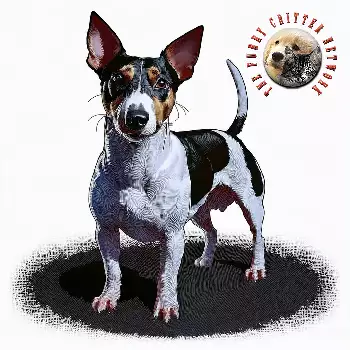
The American Rat Terrier is a sturdy, compact, and versatile American breed that presents an appearance of elegance and fitness, denoting speed, power, and balance. The breed comes in two size varieties: Miniature Rat Terriers stand between 10 and 13 inches at the withers, while Standard Rat Terriers measure over 13 inches up to 18 inches. Weight varies proportionally with height and bone structure, typically ranging from 10 to 25 pounds depending on size. The body is slightly longer than tall, creating a rectangular outline with well-developed muscle and moderate bone that is proportional to size, presenting a well-balanced, hard-muscled dog with smooth lines under taut skin. The head resembles a smooth, blunt wedge from front and profile views, widening gradually toward the base of the ears in an unbroken line. The expression is intelligent, alert, and full of interest. Oval-shaped eyes are obliquely set and moderately sized, ranging from dark brown to hazel depending on coat color. The ears may be erect, semi-erect, tipped, or button, provided both ears match. The neck is in proportion to the head, strong, arched along the crest, and blending smoothly into flat shoulder blades. The back is level and firm from withers to the slightly arched loin, with a gently rounded croup. The Rat Terrier possesses a short, smooth, shiny, close-lying coat with dense texture. Whiskers are left intact. The breed displays remarkable color variety in pied patterns, with large patches of one or more colors in combination with white. White typically comprises 10 to 90 percent of the body. Acceptable colors include black, chocolate, red, apricot, blue, fawn, tan, and lemon, with or without tan points. Clear, intense colors with well-defined delineation are preferred. The tail may be naturally bobbed, docked, or left full length, carried from slightly below horizontal to nearly erect depending on the dog's mood and activity level.
Key Characteristics
Temperament Temperament Temperament Temperament Temperament Temperament Rat Terriers are highly trainable and eager to please, responding well to positive reinforcement methods. Their intelligence means they can become bored with repetitive training and may benefit from varied activities. They excel in dog sports including agility, obedience, and earthdog trials. These dogs require regular physical exercise and mental stimulation to prevent destructive behaviors like excessive barking, chewing, or digging that develop from boredom. They are adaptable to various living situations including apartments when adequately exercised, and they make excellent companions for active individuals and families who appreciate an energetic, interactive companion.
Health Considerations Health Considerations Health Considerations Health Considerations Health Considerations Health Considerations Von Willebrand's disease, an inherited bleeding disorder, is documented in Rat Terriers and should be tested for before surgical procedures. Dental disease is common in small breeds, making regular dental care essential. The breed may be susceptible to allergies causing skin problems that require management. Responsible breeders perform health testing including patella evaluation, cardiac examination, hip screening, and DNA testing for inherited conditions. Maintaining a healthy weight, providing appropriate exercise, and scheduling regular veterinary checkups help ensure Rat Terriers enjoy their characteristically long, healthy lives.
Important to Remember
Each hybrid dog is unique and may inherit any combination of traits from either parent breed. The information above represents the characteristics of the purebred parent breeds. Your Toy Rat Doxie may favor one parent over the other or display a blend of both. We strongly encourage you to read the complete breed profiles for both the Dachshund and American Rat Terrier to fully understand the range of possible temperaments, health concerns, and care requirements.