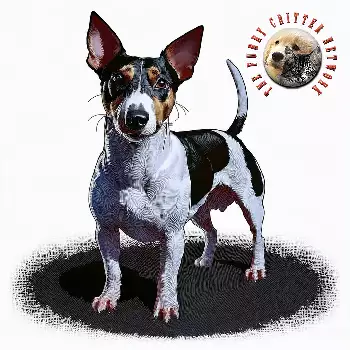
The American Rat Terrier is generally a healthy, long-lived breed with an expected lifespan of twelve to eighteen years, making it one of the longer-lived breeds in the terrier group. The breed's genetic diversity, a product of the regular outcrossings that characterized its development on American farms, has contributed to overall vigor and resilience. However, as the breed has gained popularity and the breeding population has become more closed, certain inherited conditions have become more prevalent and require attention from breeders and owners.
Patellar luxation is one of the most commonly documented orthopedic conditions in the breed. This condition occurs when the kneecap slides out of its normal groove in the femur, causing intermittent or chronic lameness depending on severity. Grading ranges from one, where the kneecap can be manually displaced but returns on its own, to four, where the kneecap is permanently displaced. Mild cases are often managed with weight control, joint support supplements, and activity modification, while more severe cases may require surgical correction to restore normal function. Because the condition has a hereditary component, OFA patellar evaluation is a required CHIC screening test for the breed.
Primary lens luxation is an inherited eye condition that deserves particular attention from Rat Terrier owners. In this condition, the zonular fibers that hold the lens of the eye in its proper position degenerate, allowing the lens to dislocate. This displacement can obstruct fluid drainage from the eye, leading to secondary glaucoma and potentially blindness if not treated promptly. The gene responsible for primary lens luxation has been found with significant frequency across many Rat Terrier bloodlines, making DNA testing of breeding stock essential. A DNA test identifies dogs as clear, carrier, or affected, and responsible breeders use this information to avoid producing affected puppies.
Hip dysplasia and Legg-Calve-Perthes disease represent additional orthopedic concerns in the breed. Hip dysplasia involves abnormal development of the hip joint, while Legg-Calve-Perthes disease involves avascular necrosis of the femoral head, typically developing in young dogs between five and eight months of age. Both conditions are addressed through required CHIC screening tests. Legg-Calve-Perthes typically presents as progressive hindlimb lameness and muscle wasting, and surgical removal of the affected femoral head generally produces good functional outcomes in small breeds.
Skin allergies and demodectic mange are among the most commonly reported non-orthopedic health issues in the breed. Environmental allergies, food sensitivities, and contact dermatitis can produce chronic itching, redness, hair loss, and secondary skin infections. Demodectic mange, caused by Demodex mites that proliferate when immune function is compromised, is considered to have a heritable component. Cardiac screening rounds out the required CHIC testing protocol, as various congenital and acquired heart conditions have been documented in the breed. Regular veterinary examinations, adherence to the recommended health testing protocol, and selection of breeders who participate in the CHIC program significantly improve the odds of acquiring a healthy dog with a long, comfortable life ahead of it.
Common Health Issues
- Patellar luxation - A common orthopedic condition in which the kneecap displaces from its normal groove in the femur, causing intermittent lameness, skipping gaits, or persistent lameness in severe cases. This is a required CHIC screening test for the breed, and severity is graded from one to four. Mild cases are managed conservatively with weight control and joint support, while severe cases may require surgical correction.
- Hip dysplasia - Abnormal development of the hip joint that leads to laxity, arthritis, and pain over time. While more commonly associated with large breeds, hip dysplasia occurs in the Rat Terrier at sufficient frequency to warrant inclusion as a required CHIC screening test. Radiographic evaluation through OFA or PennHIP identifies affected dogs before breeding.
- Legg-Calve-Perthes disease - Avascular necrosis of the femoral head caused by interrupted blood supply to the hip joint, typically developing in young dogs between five and eight months of age. Symptoms include progressive hindlimb lameness and muscle wasting. Surgical removal of the affected femoral head generally produces good outcomes in small breeds like the Rat Terrier.
- Primary lens luxation - An inherited eye condition in which the zonular fibers holding the lens in place degenerate, allowing the lens to displace within the eye. This can lead to secondary glaucoma and blindness if untreated. A DNA test identifies carriers and affected dogs, and the gene has been found with significant frequency across many Rat Terrier bloodlines.
- Cardiac abnormalities - Various congenital and acquired heart conditions have been documented in the breed, making cardiac evaluation a required CHIC screening test. A standard congenital cardiac examination by a cardiologist can identify murmurs and structural defects that might otherwise go undetected until they produce clinical symptoms.
- Allergies and skin conditions - Skin allergies, including contact dermatitis, food allergies, and environmental atopy, are among the most commonly reported health issues in the breed. Symptoms include itching, redness, hair loss, and recurrent ear infections. Management involves identifying and eliminating triggers, dietary modification, and in some cases immunotherapy or medication.
- Demodectic mange - A skin condition caused by Demodex mites that proliferate when the immune system is compromised, considered to have a heritable component in the breed. Localized cases in puppies often resolve on their own, while generalized cases require veterinary treatment and affected dogs should not be bred.
Preventive Care & Health Monitoring
- OFA or PennHIP hip evaluation - A required CHIC screening test. Radiographic evaluation identifies hip dysplasia before clinical signs develop, allowing informed breeding decisions and early management through weight control and joint support.
- OFA patellar luxation evaluation - A required CHIC screening test. A veterinarian manually evaluates both knees for stability and proper tracking, with results registered in the OFA database.
- Legg-Calve-Perthes disease screening - A required CHIC screening test using radiographic imaging of the hip joints to detect early avascular necrosis of the femoral head before clinical lameness develops.
- Cardiac evaluation by a cardiologist - A required CHIC screening test. A standard congenital cardiac examination detects murmurs and structural abnormalities. Results are registered with the OFA to support breed-wide health tracking.
- DNA test for primary lens luxation from an approved laboratory - A required CHIC screening test that identifies dogs as clear, carrier, or affected for this inherited eye condition. Given the gene's prevalence across many bloodlines, testing all breeding stock is essential to reducing incidence.
- Maintain lean body weight throughout life - Weight management reduces mechanical stress on the knees and hips, which is particularly important for a breed with documented risk for patellar luxation and hip dysplasia. Regular weigh-ins and body condition scoring help prevent the gradual weight creep that accelerates joint deterioration.
- Daily dental care and annual professional cleanings - The breed's smaller jaw size can contribute to dental crowding and accelerated periodontal disease. Daily tooth brushing with enzymatic dog toothpaste and regular professional dental cleanings preserve oral health and prevent systemic complications from chronic dental infection.