Nekita
The Nekita is a cross between the Akita and the Neapolitan Mastiff. Because each hybrid inherits a unique combination of traits from both parents, we recommend thoroughly researching both breeds before choosing a Nekita. Pay special attention to temperament, health issues, and care requirements, as your dog may express characteristics from either parent breed.
Akita
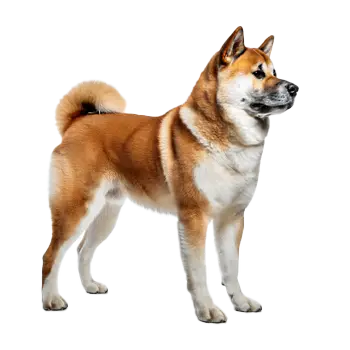
The Akita is a large, powerful dog with a commanding presence that reflects its origins as a versatile working breed in Japan. Males typically stand between 26 and 28 inches at the shoulder and weigh between 100 and 130 pounds, while females range from 24 to 26 inches in height with weights between 70 and 100 pounds. The body is slightly longer than it is tall, with proportions of approximately 10 to 9 in males and 11 to 9 in females. The breed displays substantial bone structure and well-developed musculature throughout, creating an impression of strength, balance, and dignified bearing. The Akita's head is massive and broad, forming a blunt triangle when viewed from above, with a well-defined stop and a muzzle that is broad, full, and approximately the same length as the skull. The small, triangular eyes are deep-set and dark brown in color, conveying an intelligent and alert expression. The ears are thick, small relative to the head, and stand firmly erect, tilting slightly forward over the eyes in a characteristic pose. The neck is thick and muscular, carrying the head proudly without excessive dewlap. The tail is one of the breed's most distinctive features, being large and full, curling over the back in a full or double curl that reaches to or below the level of the back. The Akita's double coat is essential to its survival in cold climates and consists of a dense, soft undercoat beneath a coarse, straight outer coat. The coat is shorter on the head, legs, and ears, while longer on the tail and rear areas. American Akitas come in any color including white, brindle, and pinto patterns, while Japanese Akitas are limited to red, brindle, and white colorings. Many individuals display a distinctive mask on their face, highlighting their expressive eyes. The breed moves with a vigorous, powerful gait that covers ground efficiently while maintaining level topline stability.
Key Characteristics
Temperament Temperament Temperament Temperament Temperament Temperament The Akita is an intelligent, independent breed that can be stubborn and challenging to train. They do not respond well to harsh training methods and require a confident, experienced owner who can provide firm, consistent leadership without being heavy-handed. This is not a breed that aims to please in the way some other breeds do; instead, they often seem to consider whether commands are worth following. Akitas are sometimes described as cat-like in their independence and fastidious grooming habits. They have moderate exercise needs and can adapt to various living situations, though they do best with owners who understand and respect their complex personality.
Health Considerations Health Considerations Health Considerations Health Considerations Health Considerations Health Considerations Progressive retinal atrophy can cause gradual vision loss and eventual blindness in affected dogs, though it progresses slowly and dogs often adapt well to reduced vision. Gastric dilatation-volvulus, or bloat, is a life-threatening condition that can affect deep-chested breeds like the Akita, requiring immediate emergency treatment. The breed may also be affected by von Willebrand disease, a bleeding disorder, and myasthenia gravis, a neuromuscular condition. Various cancers, including lymphoma and osteosarcoma, occur in the breed at notable rates. Prospective owners should seek breeders who conduct comprehensive health testing to minimize the risk of inherited conditions.
Neapolitan Mastiff

The Neapolitan Mastiff is a massive, heavy-boned dog that commands attention with its imposing size and distinctive appearance. Males typically stand between 26 and 31 inches at the shoulder and weigh around 150 pounds on average, though greater weight is common and acceptable as long as proper proportion is maintained. Some exceptional males may approach or exceed 200 pounds. Females are somewhat smaller, ranging from 24 to 29 inches in height with an average weight of 110 pounds. The breed displays a rectangular body structure, with the length being 10 to 15 percent greater than the height at the withers. This substantial frame features large, well-rounded bones that contribute to an overall impression of tremendous strength and power. The chest is broad and well-developed, descending to the level of the elbows. The most striking feature of this ancient breed is its abundant loose skin and wrinkles, particularly prominent on the head and face. The head is large in proportion to the body, covered with extensive wrinkles and folds that extend from the outer margin of the eyelids down to the voluminous dewlap. Required folds include those extending from the outside margin of the eyelids to the dewlap and from under the lower lids to the outer edges of the lips. The muzzle is broad and approximately one-third the length of the head, giving it a squared appearance with parallel top lines between the skull and muzzle. The deep-set eyes appear almost hidden beneath drooping upper lids, conveying a wistful expression at rest that becomes intimidating when alert. The large nose features well-open nostrils coordinating in color with the coat. The coat is short, dense, and uniform across the body, requiring minimal grooming despite the breed's size. Accepted colors include blue (gray), black, mahogany, and tawny, with lighter and darker shades of these colors occurring within the breed. The tail is set on slightly lower than the topline, thick at the root, and tapers gradually toward the tip. The movement of the Neapolitan Mastiff is characteristically rolling and lumbering rather than elegant, reflecting the breed's massive structure and guardian heritage developed over centuries in southern Italy as protectors of home and family.
Key Characteristics
Temperament Temperament Temperament Temperament Temperament Temperament Despite their imposing presence, these dogs are relatively low-energy compared to many other breeds. They are content with moderate exercise and often prefer lounging near their family rather than engaging in vigorous activity. Their movement is characteristically lumbering, and they are prone to drooling significantly, especially after eating or drinking. When properly trained and socialized, the Neapolitan Mastiff becomes a loving, loyal companion who is surprisingly gentle with children and other family members. However, supervision is always recommended due to their substantial size, as they may inadvertently knock over small children during normal movement.
Health Considerations Health Considerations Health Considerations Health Considerations Health Considerations Health Considerations Cardiomyopathy and other heart conditions can affect Neapolitan Mastiffs, making regular cardiac screenings important. Progressive retinal atrophy may cause vision deterioration over time, and hypothyroidism can impact metabolism and energy levels. Cancer occurs at elevated rates in this breed, as it does in many large and giant breeds. Prospective owners should seek reputable breeders who conduct thorough health testing and be prepared for the potentially significant veterinary costs associated with caring for a giant breed dog.
Important to Remember
Each hybrid dog is unique and may inherit any combination of traits from either parent breed. The information above represents the characteristics of the purebred parent breeds. Your Nekita may favor one parent over the other or display a blend of both. We strongly encourage you to read the complete breed profiles for both the Akita and Neapolitan Mastiff to fully understand the range of possible temperaments, health concerns, and care requirements.