Min Pin Shepherd
The Min Pin Shepherd is a cross between the Miniature Pinscher and the German Shepherd. Because each hybrid inherits a unique combination of traits from both parents, we recommend thoroughly researching both breeds before choosing a Min Pin Shepherd. Pay special attention to temperament, health issues, and care requirements, as your dog may express characteristics from either parent breed.
Miniature Pinscher
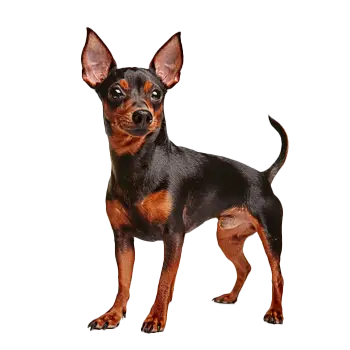
The Miniature Pinscher is a compact, elegant toy breed that stands ten to twelve and a half inches tall at the shoulder and typically weighs between eight and ten pounds. Despite frequent confusion, this breed is not a miniaturized version of the Doberman Pinscher but rather an older breed with its own distinct lineage dating back several centuries in Germany. The body is square-proportioned, with the length equal to the height at the withers, presenting a sleek, athletic silhouette that reflects the breed's energetic nature. The chest is moderately deep with well-sprung ribs, and the topline is level or slightly sloping toward the rear, with a graceful neck that flows smoothly into the shoulders. The Miniature Pinscher has a smooth, short coat that lies close to the body and requires minimal grooming beyond occasional brushing to remove loose hair and maintain shine. The coat lacks an undercoat, which means these dogs are sensitive to cold weather and may need protective clothing in winter months or in air-conditioned environments. Accepted coat colors include solid red in various shades from clear stag red to dark brownish red, black with sharply defined rust markings, and chocolate with rust markings. The rust markings appear in specific, well-defined locations: above the eyes, on the cheeks, lips, lower jaw, throat, chest, legs, feet, and below the tail base. One of the most distinctive features of the Miniature Pinscher is its high-stepping hackney gait, similar to that of a hackney horse, where the front legs lift high at the wrist with each step, creating an animated, prancing movement that is unique to this breed. The head is elongated and wedge-shaped with a flat skull, strong muzzle, and a black nose in most color varieties. The eyes are dark, oval-shaped, and express a sharp, alert intelligence that reflects the breed's watchful nature. The ears are set high and can be naturally erect or cropped, carried erect when alert. The tail is set high and typically docked short, though natural tails are increasingly common where docking is prohibited. The overall appearance conveys elegance, alertness, and spirited confidence.
Key Characteristics
Temperament Temperament Temperament Temperament Temperament Temperament The Miniature Pinscher's terrier-like tenacity can manifest as aggression toward other dogs if not properly socialized, particularly with dogs of the same sex. They require significant mental and physical stimulation to prevent destructive behaviors and boredom-related issues. Their independent streak can make training challenging, though they respond well to positive reinforcement methods that engage their intelligence. Despite their sometimes challenging personality, well-trained and socialized Min Pins are loyal, entertaining companions that form strong bonds with their owners and provide endless entertainment with their playful antics and spirited nature.
Health Considerations Health Considerations Health Considerations Health Considerations Health Considerations Health Considerations Hypothyroidism, a condition where the thyroid gland produces insufficient hormones, can affect Miniature Pinschers, causing weight gain, lethargy, skin problems, and coat changes. Heart defects, including mitral valve disease, have been documented in the breed and require regular veterinary monitoring. Hip dysplasia, while less common than in larger breeds, can occur and cause mobility issues. The breed's short coat and lack of undercoat make them susceptible to cold temperatures, requiring protection in winter weather. Their small size also makes them prone to injuries from jumping off furniture or rough handling, so care should be taken to prevent accidental trauma.
German Shepherd

The German Shepherd is a large, athletic breed that stands twenty-two to twenty-six inches tall at the shoulder and typically weighs between fifty-five and ninety-five pounds, with males being notably larger than females. Widely regarded as one of the finest all-purpose working dogs, this breed presents a picture of muscular fitness, agility, and power without appearing bulky or clumsy. The body is longer than it is tall, with an ideal proportion of approximately ten to eight and a half, presenting smooth curves rather than angles. The deep chest extends to the elbows, and the well-sprung ribs provide ample heart and lung capacity for sustained endurance work. The back is strong and level between the withers and croup, flowing into a gently sloping croup. The German Shepherd has a double coat consisting of a dense, straight outer coat and a thick undercoat that provides excellent protection in various weather conditions. The coat comes in medium or long varieties, with the medium length being more common and preferred in show rings. Most colors are permissible, with the most recognized being black and tan, black and red, sable, solid black, and bi-color patterns. Strong, rich colors are preferred, while pale, washed-out colors, blues, and livers are considered faults. The coat requires regular brushing, especially during the heavy shedding seasons in spring and fall when these dogs blow their undercoat profusely and require more intensive grooming. The head is noble and distinctive, with a slightly domed forehead, a long, square-cut muzzle with powerful jaws, and a black nose. The eyes are medium-sized, almond-shaped, and dark brown, conveying an intelligent, confident, and alert expression that reflects the breed's keen awareness. The large ears stand erect and are open at the front, parallel to each other and giving the dog an attentive appearance. The bushy tail reaches to the hock and hangs in a gentle curve when at rest, rising when the dog is excited or in motion but never curling forward. The breed moves with a smooth, far-reaching trot that covers ground efficiently, reflecting its heritage as a herding and working dog.
Key Characteristics
Temperament Temperament Temperament Temperament Temperament Temperament Early socialization and consistent training are essential for German Shepherds to develop into well-adjusted adults. Without proper guidance, their protective instincts can become over-guarding behavior, and their intelligence may be directed toward mischief. They generally get along well with children and other pets when raised with them, though supervision is recommended due to their size and energy. The breed can be prone to separation anxiety due to their strong attachment to family and does not do well when isolated in a backyard or left alone for extended periods. German Shepherds require committed owners who can provide leadership, training, exercise, and companionship.
Health Considerations Health Considerations Health Considerations Health Considerations Health Considerations Health Considerations German Shepherds are prone to exocrine pancreatic insufficiency, where the pancreas fails to produce adequate digestive enzymes, leading to malnutrition despite normal eating. Allergies, both environmental and food-related, commonly affect the breed, manifesting as skin problems, ear infections, and digestive issues. Von Willebrand's disease, a bleeding disorder caused by deficient clotting proteins, occurs in the breed. Eye problems including pannus, a condition affecting the cornea, and cataracts can develop. Cancer, particularly hemangiosarcoma and osteosarcoma, affects German Shepherds at higher rates than many other breeds. Regular veterinary care, maintaining a healthy weight, and obtaining puppies from health-tested parents can help minimize these risks.
Important to Remember
Each hybrid dog is unique and may inherit any combination of traits from either parent breed. The information above represents the characteristics of the purebred parent breeds. Your Min Pin Shepherd may favor one parent over the other or display a blend of both. We strongly encourage you to read the complete breed profiles for both the Miniature Pinscher and German Shepherd to fully understand the range of possible temperaments, health concerns, and care requirements.