Akita-Poodle
The Akita-Poodle is a cross between the Akita and the Poodle. Because each hybrid inherits a unique combination of traits from both parents, we recommend thoroughly researching both breeds before choosing a Akita-Poodle. Pay special attention to temperament, health issues, and care requirements, as your dog may express characteristics from either parent breed.
Akita
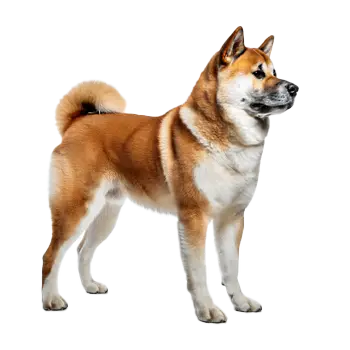
The Akita is a large, powerful spitz-type dog that presents a commanding and dignified appearance. Males typically stand between 26 to 28 inches at the shoulder and weigh 100 to 130 pounds, while females are slightly smaller at 24 to 26 inches and 70 to 100 pounds. The breed possesses a substantial, well-balanced frame with a broad head that resembles a bear, featuring small, deep-set triangular eyes and small erect triangular ears that sit forward in line with the neck. The muscular body is slightly longer than tall with a level back, strong legs, and webbed feet that provide excellent support for their considerable size. The Akita carries a dense double coat that consists of a thick, soft undercoat beneath a straight, harsh outer coat that stands off from the body. The coat is shorter on the head and lower legs but longer on the tail and rear portions of the body. Acceptable colors include all solid shades such as white, brindle, and pinto, with rich and brilliant markings preferred. The Japanese Akita Inu variety tends toward more restricted coloring including red, fawn, sesame, brindle, and pure white. A distinctive feature is the large, curled tail that is carried proudly over the back or against the flank in a three-quarter, full, or double curl. The breed's physical structure reflects its origins as a hunting and guard dog in the mountainous regions of Japan. The powerful jaws, muscular neck, and compact feet equipped for traversing snow and rough terrain demonstrate the breed's working heritage. The Akita moves with a brisk, powerful gait that showcases the breed's agility despite its substantial size. The overall impression is one of substance, dignity, and alertness, with a noble bearing that has made the Akita a symbol of good health, happiness, and long life in its native Japan.
Key Characteristics
Temperament Temperament Temperament Temperament Temperament Temperament Early and extensive socialization is absolutely essential for this breed, particularly regarding interactions with other dogs and animals. Akitas can display same-sex aggression and may not tolerate challenges from other canines, requiring careful management in multi-pet households. They are typically patient and gentle with family children but may be less tolerant of unfamiliar children's unpredictable behavior. The breed thrives best with experienced owners who understand the importance of establishing themselves as calm, confident pack leaders while providing the mental stimulation and companionship these devoted dogs require.
Health Considerations Health Considerations Health Considerations Health Considerations Health Considerations Health Considerations Progressive retinal atrophy poses a serious concern, as Akitas are genetically predisposed to this degenerative eye disease. The condition causes the photoreceptor cells in the retina to gradually deteriorate, typically beginning with night blindness and progressing to complete blindness. Myasthenia gravis, a neuromuscular disease that causes muscle weakness and fatigue, also occurs in the breed. Bloat and gastric dilatation-volvulus (GDV) present life-threatening emergencies that require immediate veterinary intervention. Other conditions include elbow dysplasia, patellar luxation, and von Willebrand disease. Regular veterinary checkups, appropriate screening tests, and purchasing from reputable breeders who conduct health testing can help minimize these risks.
Poodle

The Standard Poodle is an elegant, well-proportioned dog of medium to large size that presents an appearance of intelligence, grace, and dignified composure. Males and females both stand at least 15 inches at the shoulder according to breed standards, though most Standard Poodles measure between 18 to 24 inches and weigh 45 to 70 pounds, with males typically toward the larger end of this range. The breed standard calls for a squarely built dog, meaning the length from the breastbone to the point of the buttocks should approximately equal the height at the withers. This balanced proportion contributes to the breed's characteristic athletic elegance. The head is refined and moderately rounded with a slight but definite stop, presenting an impression of intelligence and alertness. The muzzle is long, straight, and fine with a chiseled appearance beneath the eyes. The dark, oval-shaped eyes are set far apart and convey a keen, intelligent expression that has become a hallmark of the breed. The ears are set at or slightly below eye level and hang close to the head, featuring long, wide, heavily feathered leather. The neck is well-proportioned, strong, and long enough to carry the head with dignity, rising from strong, smoothly muscled shoulders. The Poodle's coat is perhaps its most distinctive feature, consisting of naturally curly, dense hair of harsh texture that is uniform throughout the body. This unique coat continues to grow rather than shedding and is often described as hypoallergenic, though individual reactions vary. Acceptable colors include solid shades of black, white, brown, gray, apricot, red, cream, silver, blue, and cafe-au-lait, with even coloring preferred. The breed's coat requires regular professional grooming to maintain its appearance, with various traditional clips developed for show and practical purposes. The tail is set on high and carried up, traditionally docked in countries where the practice remains legal. The overall impression is one of an active, intelligent, elegantly built dog carrying itself with an air of distinction and dignity.
Key Characteristics
Temperament Temperament Temperament Temperament Temperament Temperament The Standard Poodle thrives on human companionship and does not do well when isolated or left alone for extended periods. They can be reserved with strangers initially, though they warm up quickly once introductions are made. Some individuals may be inclined to bark at unusual sounds or visitors, though this tendency can be managed through training. Sensitivity is a notable characteristic of the breed, and they respond poorly to harsh training methods or tense household environments. The ideal Poodle owner provides consistent mental challenges, regular physical exercise, abundant social interaction, and the close companionship these intelligent, affectionate dogs crave. With proper care and attention, the Standard Poodle makes an outstanding family companion that combines beauty, brains, and devotion in equal measure.
Health Considerations Health Considerations Health Considerations Health Considerations Health Considerations Health Considerations Progressive retinal atrophy threatens vision in Standard Poodles, causing gradual deterioration of the photoreceptor cells in the retina that eventually leads to blindness. DNA testing can identify carriers of the genetic mutations responsible for this condition. Bloat and gastric dilatation-volvulus (GDV) present life-threatening emergencies that require immediate veterinary intervention, and some owners of large breeds like Standard Poodles choose prophylactic gastropexy surgery to prevent stomach rotation. Additional health concerns include hypothyroidism, epilepsy, von Willebrand disease affecting blood clotting, and various eye conditions including cataracts and optic nerve hypoplasia. Patellar luxation may occur, though it is more common in smaller Poodle varieties. Regular veterinary care and selection of puppies from health-tested parents help minimize these risks.
Important to Remember
Each hybrid dog is unique and may inherit any combination of traits from either parent breed. The information above represents the characteristics of the purebred parent breeds. Your Akita-Poodle may favor one parent over the other or display a blend of both. We strongly encourage you to read the complete breed profiles for both the Akita and Poodle to fully understand the range of possible temperaments, health concerns, and care requirements.