Virelade

Gascon Saintongeois

Quick Facts

🐕 Breed Group
Hound Group
📏 Size Category
Large
📏 Height
Males: 25-28 inches, Females: 24-26 inches
⚖️ Weight
Males: 66-71 lbs, Females: 60-66 lbs
⏱️ Life Expectancy
10-14 years
🧣 Coat Type
Short, dense, close-fitting
🎨 Coat Colors
White with black patches and ticking, tan markings above eyes, cheeks, and legs
😀 Temperament
Gentle, Pack-Oriented, Determined, Calm, Independent
🏃 Exercise Needs
High
🎓 Training Difficulty
Moderate
👶 Good with Children
Yes, with supervision for young children
🐾 Good with Other Pets
Good with dogs, caution with small animals

Other Names & Breed Recognition

The name Virelade carries with it the atmosphere of southwestern France, where for centuries hound breeds were refined and crossed to produce some of the finest scenthounds in Europe. If you have encountered the name Virelade in reference to a large, elegant hound with a powerful nose and a deep, resonant voice, you are looking at the Gascon Saintongeois, a breed that traces its lineage to two of France's most distinguished regional hound types. The Virelade name specifically references the Chateau de Virelade in the Gironde department, which played a central role in the development of this breed during the 19th century. It was at this estate that Baron Joseph de Carayon-Latour undertook the deliberate crossing of Saintongeois hounds with Grand Bleu de Gascogne hounds to create a new type that combined the best qualities of both ancestral lines.

The primary registered name for this breed is the Gascon Saintongeois, which directly acknowledges both parent breeds in its title. The Gascon element refers to the Grand Bleu de Gascogne, a scenthound from the Gascony region known for its striking blue-mottled coat and exceptional nose. The Saintongeois element refers to the hound of Saintonge, a now-extinct breed from the Saintonge region that was prized for its elegance, speed, and aristocratic bearing. The Virelade name is an older designation that references the specific location where this cross was perfected, and while it is less commonly used in formal registry contexts today, it persists among French hunting enthusiasts and breed historians as a nod to the breed's origin story.

The Gascon Saintongeois exists in two size varieties. The Grand Gascon Saintongeois stands 24 to 28 inches at the shoulder and is used primarily for hunting large game including deer and wild boar. The Petit Gascon Saintongeois is a smaller version standing 21 to 24 inches, developed for hunting hare and smaller game. Both varieties carry the Virelade heritage equally. The breed is recognized by the Federation Cynologique Internationale under Group 6, Scenthounds and Related Breeds, and by the United Kennel Club under Scenthound. Recognition by the American Kennel Club has not yet been granted, though the breed has a following among American hound enthusiasts who appreciate its French hunting heritage.

Virelade Organizations & Standards

The Gascon Saintongeois, known historically as the Virelade, holds its most significant recognition through the Federation Cynologique Internationale, which classifies the breed under Group 6, Scenthounds and Related Breeds. Within that group, the Grand Gascon Saintongeois is classified in Section 1.1, Large-Sized Hounds, while the Petit Gascon Saintongeois falls under Section 1.2, Medium-Sized Hounds. This distinction reflects the fact that the FCI treats the two size varieties as closely related but separate breeds, each with its own standard number. The Grand carries FCI standard number 21, and the Petit carries standard number 22. Both standards describe the same essential type, a well-built scenthound of French origin with a noble head, long ears, and a tricolor or blue-mottled coat, differing primarily in size and the game they were developed to pursue.

The FCI standard for the Grand Gascon Saintongeois describes a dog of great distinction and substance. The ideal male stands between 63 and 72 centimeters at the shoulder, with females slightly smaller. The head should be lean and elongated with a slightly domed skull, a well-defined occipital protuberance, and long, thin ears that reach at least to the tip of the nose when drawn forward. The coat is short and dense, predominantly white with black patches and ticking that can create the blue-mottled appearance inherited from the Grand Bleu de Gascogne ancestor. Tan markings appear above the eyes, on the cheeks, inside the ears, and on the legs. The standard emphasizes elegance combined with strength, a hound built for endurance across varied terrain.

The United Kennel Club recognizes the Gascon Saintongeois in its Scenthound group, providing another avenue for registration outside Europe. In France, the breed falls under the Societe Centrale Canine, and breed-specific clubs oversee breeding programs, field trials, and hunting evaluations. French hunting trials remain the most important proving ground for the Virelade, as the breed's value has always been measured primarily by field performance rather than show ring appearance.

Breeding protocols for the Gascon Saintongeois emphasize preserving working ability alongside structural soundness. Health testing recommendations include hip and elbow evaluations, as large hound breeds can be susceptible to orthopedic issues. The breed's relatively small population outside France means genetic diversity is a concern, and responsible breeders work to maintain a broad gene pool while preserving the essential type that Baron de Carayon-Latour established at the Chateau de Virelade over a century and a half ago. For those who know this breed by its Virelade name, the connection to that original breeding program remains the heart of the breed's identity.

Kennel Club Recognition

  • United Kennel Club (UKC): Recognized, Scenthound
  • FCI: Recognized, Group 6: Scenthounds and Related Breeds

Virelade Physical Description

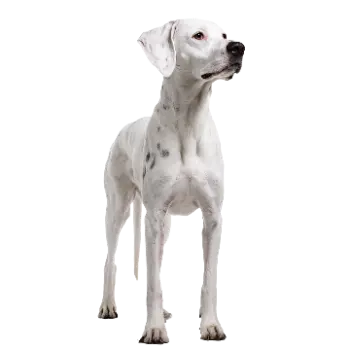
The Virelade is a large and imposing scenthound that communicates nobility and athletic purpose in every aspect of its physical construction. The Grand Gascon Saintongeois stands between 24 and 28 inches at the shoulder, with males typically at the upper end of that range, and carries a lean but powerful frame that is built for sustained work over long distances across demanding terrain. This is not a heavy, lumbering hound. The overall silhouette is one of elegance and balance, with clean lines and well-defined musculature that suggest both speed and stamina.

The head is one of the breed's most distinctive features and reflects the aristocratic Saintongeois influence in the cross. It is long, lean, and refined, with a slightly domed skull and a well-developed occipital protuberance at the back. The stop is moderate, and the muzzle is long and strong with a broad, black nose that has wide-open nostrils built for maximum scenting efficiency. The lips are moderately pendulous, giving the lower face a dignified appearance without the excessive flews seen in some other hound breeds. The eyes are oval and dark brown, set with an expression that conveys both gentleness and intelligence. There is a calm confidence in the Virelade's gaze that distinguishes it from more excitable hound types.

The ears are a hallmark of the breed and a direct inheritance from both parent lines. They are set low, thin, and remarkably long, reaching at least to the tip of the nose when pulled forward, and often extending beyond it. They hang in graceful folds close to the cheeks and are slightly curled inward at the tips. These long ears serve a practical purpose for a scenthound, helping to funnel scent particles toward the nose when the dog is working with its head down.

The body of the Virelade is well-proportioned and built for endurance. The neck is of good length, slightly arched, and blends smoothly into well-laid-back shoulders. The chest is deep and long, reaching to or slightly below the elbow, providing ample capacity for the heart and lungs that power sustained pursuit. The ribs are long and moderately sprung, creating a body that is deep rather than wide. The back is firm and level, the loin is muscular and slightly arched, and the croup slopes gently toward the tail set. The tail is long, tapering, and carried in a gentle saber curve, reaching at least to the hock.

The limbs are straight, strong, and well-boned without being coarse. The forelegs are set well under the body with firm pasterns, and the hindquarters show good angulation at the stifle and hock, providing the driving power necessary for a hound that may work for hours at a stretch. The feet are oval and compact with tight, well-arched toes. Movement is free, smooth, and ground-covering, with good reach in front and corresponding drive from behind. At a trot, the Virelade moves with an effortless efficiency that reflects centuries of selective breeding for functional locomotion.

The coat is short, dense, and close-fitting, providing protection without adding unnecessary weight or maintenance burden. The base color is white, with black patches of varying size distributed across the body and head. Black ticking on the white areas can create the distinctive blue-mottled appearance that the breed inherited from its Grand Bleu de Gascogne ancestry. Tan markings are present above the eyes, on the cheeks, at the base of the ears, and on the legs. The overall color pattern creates a striking and immediately recognizable appearance that sets the Virelade apart from other French hound breeds.

Affectionate With Family
The Virelade forms strong bonds with its household and enjoys being near its people. Their affection is steady and genuine rather than demanding or clingy.
Good With Young Children
Patient and gentle by nature, the Virelade tolerates children well, though its large size means supervision is wise around smaller kids who could be accidentally bumped.
Good With Other Dogs
Bred for generations to work cooperatively in hunting packs, the Virelade is naturally sociable with other dogs and integrates smoothly into multi-dog households.
Shedding Level
The short coat sheds moderately throughout the year without dramatic seasonal blowouts, keeping hair management relatively straightforward for a dog of this size.
Coat Grooming Frequency
The Virelade's short, close-fitting coat requires minimal grooming effort. Weekly brushing and occasional bathing are sufficient to keep it in good condition.
Drooling Level
Moderate drooling is common, particularly around mealtimes or after drinking. The pendulous lips contribute to some messiness but it is manageable.
Coat Type
A short, dense coat that lies flat against the body, providing practical protection during fieldwork without requiring elaborate maintenance.
Openness To Strangers
Generally friendly and approachable with unfamiliar people, the Virelade lacks the territorial suspicion of guarding breeds and typically greets visitors with calm interest.
Playfulness Level
Moderately playful with a preference for scent-based games and exploration over repetitive fetch or tug activities. Their play style reflects their working heritage.
Watchdog/Protective Nature
The Virelade will announce arrivals with its deep voice but has little protective or guarding instinct. They are hunters, not sentries.
Adaptability Level
Best suited to rural or spacious suburban environments with room to move. Apartment living and confined spaces are poor fits for this large, active scenthound.
Trainability Level
Intelligent but independently minded, the Virelade learns well with patient, reward-based methods but will never display the snap-to-attention obedience of herding breeds.

Virelade History & Development

The name Virelade is inseparable from the Chateau de Virelade in the Gironde department of southwestern France, where the breed we now call the Gascon Saintongeois was deliberately created during the mid-19th century. The driving force behind this creation was Baron Joseph de Carayon-Latour, a passionate hunter and hound breeder who recognized that two of France's great regional hound types were each declining in numbers and that a deliberate cross between them could preserve the best qualities of both while producing a superior hunting dog.

The two parent breeds were the Saintongeois and the Grand Bleu de Gascogne. The Saintongeois, also known as the Hound of Saintonge, was a tall, elegant scenthound from the Saintonge region in western France that was prized for its speed, refined build, and aristocratic appearance. By the mid-1800s, the Saintongeois was in serious decline, with only a handful of purebred specimens remaining. The Grand Bleu de Gascogne was a robust scenthound from the Gascony region known for its extraordinary nose, distinctive blue-mottled coat, and deep, melodious voice. Baron de Carayon-Latour began crossing these two breeds at his Virelade estate, and the resulting hounds combined the Saintongeois elegance and speed with the Gascogne endurance and scenting power.

The name Virelade was the original designation for these crossbred hounds, and it remained in common use throughout the late 19th and early 20th centuries, particularly among hunting circles in southwestern France. As the breed became more standardized, the name Gascon Saintongeois gradually replaced Virelade in official registry contexts because it more clearly communicated the breed's dual heritage. However, the Virelade name never fully disappeared and continues to surface in French hunting literature and among breed historians who value the connection to the specific estate where the breed originated.

The breed's development continued through the early 20th century, with breeders selecting for consistency while maintaining the working qualities that made the original cross so successful. The Grand Gascon Saintongeois was developed as the larger variety for hunting deer, wild boar, and other large game in packs. The Petit Gascon Saintongeois emerged later as a smaller variety suited to hare hunting and work in smaller groups. Both varieties carry the Virelade heritage, though the Grand is considered closer to the original type produced at the Chateau de Virelade.

Today the Gascon Saintongeois remains primarily a hunting breed in France, valued for its nose, voice, pack temperament, and endurance in the field. The Virelade name persists as a historical marker that connects the modern breed to its specific origin story, a story not of ancient mystery but of documented, deliberate breeding decisions made at a particular estate by a particular man who saw the future of French hound breeding in the combination of two distinguished regional types.

Virelade Temperament & Personality

The Virelade possesses the classic temperament of a well-bred French scenthound, combining a calm and gentle disposition in the home with fierce determination and drive in the field. This duality is one of the breed's most appealing characteristics and one that often surprises people who expect a large hunting hound to be boisterous or difficult to live with. In reality, the Gascon Saintongeois is among the more even-tempered of the French hound breeds, carrying itself with a quiet dignity that reflects its Saintongeois heritage while retaining the enthusiastic working spirit of its Gascogne ancestry.

In the home, the Virelade is a relaxed and affectionate companion that bonds closely with its family. These are dogs that enjoy human company and are generally content to lounge near their people when not working. They are not hyperactive or demanding of constant attention, but they do appreciate being included in the household's daily rhythm. Their calm indoor demeanor makes them surprisingly manageable house dogs for their size, provided they receive adequate exercise and mental stimulation to satisfy their working instincts.

The pack mentality runs deep in this breed. The Gascon Saintongeois was developed to work in organized hunting packs, and this heritage has produced a dog that is naturally sociable with other dogs and generally non-aggressive in group settings. They understand canine social dynamics intuitively and tend to integrate smoothly into multi-dog households. This pack orientation also means they can be prone to separation anxiety if left alone for extended periods, as their nature is to be part of a group rather than isolated.

With strangers, the Virelade is typically friendly and approachable, lacking the suspicion or territorial aggression seen in guarding breeds. They may announce visitors with their deep, resonant voice, but this is more a function of their alert nature than any protective instinct. The breed's voice itself is worth noting. The Gascon Saintongeois possesses a deep, musical bay that carries over long distances, a trait that was prized in the hunting field but that can be challenging in suburban or urban environments where neighbors may not appreciate the performance.

Intelligence in the Virelade is practical rather than flashy. These dogs were bred to solve real problems in the field, following complex scent trails over varied terrain, working cooperatively with other hounds, and making independent decisions when the pack spread out during a chase. This produces a dog that is thoughtful and capable but not necessarily eager to perform parlor tricks. They learn well when motivated but can show the independent streak common to scenthound breeds, preferring to follow their nose rather than obey a command that conflicts with what their senses are telling them.

Virelade Family Life & Living Requirements

The Virelade can make a surprisingly good family companion for households that understand and accommodate the needs of a large scenthound. The Gascon Saintongeois was not developed as a pet breed, and approaching ownership with realistic expectations is essential for a successful relationship. These dogs need space, exercise, and an owner who appreciates hound temperament rather than expecting the eager-to-please responsiveness of a retriever or herding breed. When those conditions are met, the Virelade rewards its family with loyal, gentle, and genuinely pleasant companionship.

Space requirements are significant. This is a large dog that was bred to range across open countryside, and it is not suited to apartment living or homes without adequate outdoor access. A securely fenced yard is highly recommended, as the Virelade's powerful nose can lead it on extended unauthorized excursions if given the opportunity. The fence needs to be robust and tall enough to contain a determined hound, and electronic fences are generally ineffective with scenthound breeds whose prey drive can override the deterrent. Rural and suburban properties with generous yard space provide the best environment for this breed.

With children, the Virelade is generally patient and tolerant. Their calm indoor temperament and lack of aggression make them safe companions for older children who understand how to interact respectfully with a large dog. Younger children should be supervised, not because the Virelade is likely to be aggressive but because a dog of this size can accidentally knock over a small child simply through normal movement. The breed's gentle nature extends to its interactions with kids, and many Gascon Saintongeois develop particularly close bonds with the younger members of their household.

Other dogs are usually welcomed readily, consistent with the breed's pack heritage. Cats and smaller pets require more careful consideration. The Virelade's hunting instincts are deeply ingrained, and a dog bred to pursue game may view smaller animals as quarry rather than housemates. Early socialization with cats can help, but some individuals will never be reliable around small animals. Prospective owners with existing small pets should evaluate this carefully before bringing a Virelade into the home.

Virelade Training & Exercise Needs

Training a Virelade requires patience, consistency, and a genuine understanding of scenthound psychology. The Gascon Saintongeois is an intelligent breed, but its intelligence was shaped by centuries of fieldwork rather than by obedience trials. These dogs were bred to make independent decisions while following scent trails across miles of terrain, and that heritage produces a dog that thinks for itself rather than waiting for direction. This is not stubbornness in the way that word is usually applied to dogs. It is a functional independence that served the breed well in its working role but that can frustrate owners who expect immediate compliance with every command.

Positive reinforcement methods work best with the Virelade. Food rewards are particularly effective, as most Gascon Saintongeois are highly food-motivated and will work enthusiastically for treats. Harsh corrections or punishment-based training methods are counterproductive with this breed, as they tend to shut down or become avoidant rather than more compliant when subjected to pressure. Keep training sessions short, varied, and rewarding, and accept that a scenthound will never perform with the crisp precision of a Border Collie. The goal is a well-mannered companion that responds reliably to essential commands, not a competition obedience champion.

Recall training deserves special emphasis with this breed. A Virelade that catches an interesting scent can become single-minded in its pursuit, and calling a scenthound off a hot trail is one of the most difficult challenges in dog training. Building a strong recall foundation from puppyhood is essential, using high-value rewards and consistent practice. Even with excellent training, many Virelade owners find that off-leash exercise is only safe in securely enclosed areas, as the risk of the dog following its nose into danger is simply too high in open environments.

Exercise needs for the Virelade are substantial. This is a breed built for endurance, and it requires daily physical activity that goes beyond a casual walk around the block. Long walks, jogging, hiking, and opportunities to explore in safe environments will keep a Gascon Saintongeois physically satisfied. Scent-based activities are particularly valuable, as they engage the breed's primary talent and provide deep mental satisfaction. Nosework games, tracking exercises, and even simple hide-and-seek with treats scattered around the yard can tire a Virelade more effectively than twice the amount of purely physical exercise.

Virelade Health Concerns

The Virelade is a generally robust breed that benefits from the genetic diversity introduced by its dual ancestry, but like all large hound breeds, it carries predispositions to certain health conditions that prospective owners should understand. The Gascon Saintongeois has a life expectancy of approximately 10 to 14 years, which is respectable for a dog of its size, and many individuals enjoy active, healthy lives well into their senior years when properly cared for.

Ear infections are a practical health concern for any breed with long, pendulous ears. The Virelade's remarkably long ears create a warm, enclosed environment within the ear canal that can promote bacterial and yeast growth. Regular ear cleaning, thorough drying after swimming or bathing, and routine inspection for redness or odor are essential maintenance practices. Beyond these specific concerns, the Virelade benefits from standard preventive veterinary care including regular checkups, vaccinations, parasite prevention, dental maintenance, and weight management to protect joint health throughout life.

Common Health Issues

  • Hip dysplasia, abnormal development of the hip joint leading to pain and progressive arthritis - Hip dysplasia, abnormal development of the hip joint leading to pain and progressive arthritis
  • Elbow dysplasia - A developmental condition affecting the front limb joints that can cause chronic lameness
  • Gastric dilatation-volvulus - A life-threatening stomach torsion condition common in deep-chested breeds
  • Ear infections due to the breed's long pendulous ears trapping moisture and promoting bacterial growth - Ear infections due to the breed's long pendulous ears trapping moisture and promoting bacterial growth
  • Obesity, which compounds orthopedic issues and reduces overall vitality in this large breed - Obesity, which compounds orthopedic issues and reduces overall vitality in this large breed

Preventive Care & Health Monitoring

  • Hip and elbow radiographic screening for all breeding stock to reduce orthopedic disease incidence - Hip and elbow radiographic screening for all breeding stock to reduce orthopedic disease incidence
  • Feeding multiple smaller meals daily and avoiding exercise after eating to reduce bloat risk - Feeding multiple smaller meals daily and avoiding exercise after eating to reduce bloat risk
  • Weekly ear cleaning and inspection with veterinarian-recommended ear cleaning solution - Weekly ear cleaning and inspection with veterinarian-recommended ear cleaning solution
  • Regular veterinary wellness examinations at least annually - Increasing to twice yearly for senior dogs
  • Weight management through portion control and regular exercise to protect joint health - Weight management through portion control and regular exercise to protect joint health
  • Dental care including regular tooth brushing and professional cleanings as recommended - Dental care including regular tooth brushing and professional cleanings as recommended

Virelade Grooming & Maintenance

The Virelade's short, dense coat is one of the more low-maintenance aspects of owning this breed, requiring far less grooming effort than longer-coated hound types while still providing effective protection against brush, brambles, and weather during fieldwork. The Gascon Saintongeois was developed as a practical working dog, and its coat reflects that function, lying close to the body and shedding dirt readily once dry. For owners accustomed to breeds that require regular professional grooming, the Virelade will feel refreshingly simple in this department.

Weekly brushing with a hound glove or a firm bristle brush is sufficient to remove loose hair, distribute skin oils, and keep the coat looking its best during most of the year. Shedding is moderate and relatively consistent throughout the year rather than concentrated in dramatic seasonal blowouts. During periods of heavier shedding, increasing brushing frequency to two or three sessions per week will help manage loose hair in the home. A rubber curry comb can be particularly effective for removing dead undercoat without irritating the skin.

Bathing should be done only when necessary, as the Virelade's coat has natural oils that help repel dirt and maintain skin health. Most owners find that a bath every six to ten weeks is sufficient unless the dog has gotten into something particularly messy during outdoor adventures. A gentle hound-appropriate shampoo that does not strip natural oils is the best choice. Thorough rinsing and complete drying are important, especially around the ears where trapped moisture can lead to infections.

The ears require the most consistent grooming attention of any aspect of the Virelade's care. Those long, beautiful ears need to be checked and cleaned at least weekly, and more frequently during warm or humid weather when bacterial growth is more likely. Lifting the ear flap, inspecting for redness or discharge, and gently wiping the visible portion of the ear canal with a veterinarian-recommended ear cleaner will prevent most infections before they start. Nail trimming every two to three weeks, regular dental care, and routine inspection of the foot pads round out the grooming regimen for this practical and handsome French hound.