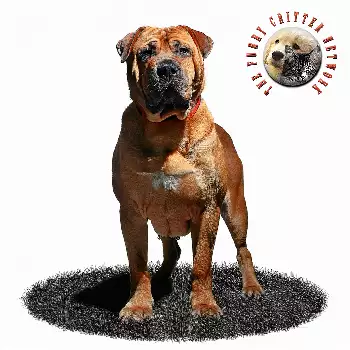
The Tosa is a large, powerful Molossoid of considerable presence. The first impression is of size and substance - this is a genuinely massive dog, with males commonly reaching 150 to 200 pounds and standing over two feet at the shoulder. But what distinguishes the Tosa from simply a big dog is its bearing. The breed carries its weight with a certain quiet dignity that makes it seem even more substantial than the scale numbers suggest. There is no flailing energy, no unnecessary movement. The Tosa moves deliberately and holds itself with a composure that experienced dog people find immediately striking.
The head is the defining feature of Tosa type. It is large, broad, and deep, with a slightly arched skull and a moderate but distinct stop. The muzzle is moderately long and deep, with a square, powerful jaw. The lips are moderately pendulous without being excessive. Loose flews are associated with more drooling, and the tightness of the lips varies somewhat among individual dogs and lines. The forehead carries visible furrows, and facial wrinkles in the Molossoid style are present around the head and may extend to the neck. The nose is large and black. The teeth are strong and close in a scissors bite.
The eyes are small relative to the head, dark brown in color, with a deep, steady expression that projects confidence and assessment in equal measure. The eyes should not appear sunken or prominent. The ears are thin and drop to the sides of the head close to the cheeks. They are small relative to the skull, set at approximately eye level, and covered with short hair. The ears are not cropped in the modern breed.
The neck is short and muscular, heavily developed, and carries a dewlap of skin that is a characteristic feature of the correct Molossoid head and neck. The dewlap should be present but not excessive. The neck is set into powerful, well-laid shoulders. The chest is broad and deep, reaching well to the elbow, with a pronounced forechest. The ribs are well-sprung and carried well back. The back is straight, level, and strongly muscled. The loin is short and broad. The croup is slightly sloped. The abdomen is moderately tucked.
The forelegs are straight, heavily boned, and vertical when viewed from the front. The pasterns are slightly sloping and strong. The hindquarters are broad and muscular, with well-angulated stifles and low, parallel hocks. The feet are round and compact with thick, well-padded toes. The tail is thick at the base, tapers toward the tip, and reaches to the hock. It is carried low in repose and rises to horizontal or slightly above when the dog is alert, but does not curl over the back.
The coat is short, dense, and hard-textured - a single coat without undercoat. It lies flat and tight against the body and requires minimal maintenance. The skin overall is thick and loose, particularly around the head and neck, which is part of the functional Molossoid physique. Accepted colors include red, which is the traditional and most prized color in Japan, along with fawn, apricot, brindle, and black. White markings on the chest and feet are permissible. The overall color impression should be rich and clear.
Sexual dimorphism is pronounced in this breed. Males are dramatically larger and more massive than females in frame, head size, and overall weight. A well-developed male Tosa is among the heaviest dogs in the world by breed average. Females are substantially built in their own right but lighter and more refined than males. Movement in correct specimens is powerful and ground-covering, with a measured, balanced stride that conveys capability without excess effort.
One of the Tosa's most striking qualities when you are standing next to one is the combination of sheer physical mass and complete composure. This is not a dog that fidgets, bounces, or redirects nervous energy through constant movement. It stands with a stillness that most dogs of any size never achieve. That stillness, combined with the size, is what gives the Tosa such an imposing presence. A person meeting a well-bred Tosa for the first time often remarks that they have never felt quite so assessed by a dog - which is exactly what is happening. The breed's gaze is direct, intelligent, and unhurried, and the physical package that gaze lives in ensures that assessment is taken seriously.
The skin over the body is thick and loose in the Molossoid tradition, contributing to the breed's characteristic substantial feel. The musculature beneath that skin is dense and powerful, particularly across the chest, shoulders, and hindquarters. The overall body impression is of power held in reserve rather than power on display - which is, again, entirely consistent with the breed's working character. This is a dog built to perform decisively when the moment requires it and to carry that capability invisibly the rest of the time.
Affectionate With Family
★★★★☆
The Tosa is deeply devoted to the family it considers its own, expressing that devotion in a calm, dignified way rather than through exuberant behavior. This is a dog that wants to be near its people and takes the role of household protector with quiet seriousness.
Good With Young Children
★★☆☆☆
The Tosa's sheer size creates risk with young children regardless of temperament - an accidental knock from a 150-pound dog has consequences. Older, calm children raised in the household do better, but this breed should never be left unsupervised with any child.
Good With Other Dogs
★★☆☆☆
Dog-to-dog aggression, particularly between same-sex males, is a documented reality in this breed with a dog-fighting heritage. Careful management, early socialization, and honest assessment of each individual are required when other dogs are present in the household.
Shedding Level
★★☆☆☆
The short, dense coat sheds moderately year-round without the heavy seasonal blows of a double-coated breed. Regular brushing manages most of the shedding effectively.
Coat Grooming Frequency
★☆☆☆☆
The Tosa's short coat is one of its most practically low-maintenance features. Weekly brushing, occasional bathing, and attention to the wrinkled facial skin when present is essentially the entire coat care routine.
Drooling Level
★★★☆☆
Drooling varies by individual - dogs with looser flews drool more than those with tighter lips. Tosas are not Saint Bernard-level droolers, but a drool rag at the water bowl is a practical accessory in many households.
Coat Type
★☆☆☆☆
Short, dense, and flat-lying - the Tosa's coat is as low-maintenance as a large dog's coat gets. The simplicity of the coat is in sharp contrast to the complexity of everything else about owning this breed.
Openness To Strangers
★★☆☆☆
The Tosa is reserved with strangers and will assess unfamiliar people carefully before deciding how to respond. This reserve is functional and deliberate, not fearful, and improper strangers will receive a clear signal that they are unwelcome.
Playfulness Level
★★☆☆☆
The Tosa is a dignified, serious breed that does not engage in frivolous or exuberant play behavior as a default. It can be playful with family members it trusts but does so on its own terms and in its own time.
Watchdog/Protective Nature
★★★★★
The Tosa is among the most formidable natural guard dogs in the world - calm, non-hysterical, and completely committed to its family's protection. It does not bark without reason, but when it decides action is required, it is fully capable of carrying through.
Adaptability Level
★★☆☆☆
The Tosa needs space proportionate to its size, an owner with the experience and confidence to manage a dog of this power, and a living situation that allows for its territorial nature without creating ongoing management conflicts.
Trainability Level
★★★☆☆
The Tosa is intelligent and trainable with consistent, respectful handling, but it does not yield to pressure or heavy-handed methods. Earning the dog's trust first is not optional - it is the prerequisite for any meaningful training relationship.