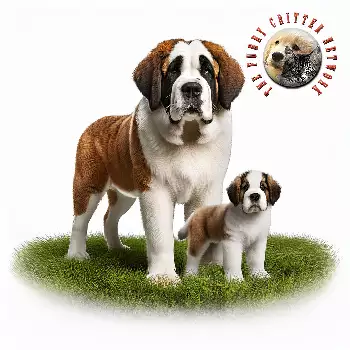
The St. Bernard is one of the largest dog breeds in the world, a genuinely massive animal whose physical presence makes an immediate impression on anyone encountering the breed for the first time. Males stand a minimum of 27.5 inches at the shoulder and frequently exceed 30 inches, with weights ranging from 140 to 180 pounds or more. Females are slightly smaller but still formidable, standing at least 25.5 inches and weighing 120 to 140 pounds. The overall silhouette conveys power and substance without appearing clumsy or lethargic, though the modern show-bred St. Bernard is considerably heavier and less athletic than the working dogs the monks used for mountain rescue.
The head is the breed's most commanding feature and arguably the most recognizable head in all of dogdom. The skull is massive, broad, and slightly arched, with a pronounced stop where the forehead meets the muzzle. Deep wrinkles form across the forehead when the dog is alert, contributing to the thoughtful, slightly worried expression that St. Bernard owners find endearing. The muzzle is short relative to the skull length, broad, and deep, with heavy flews that hang well below the lower jaw. This lip structure is directly responsible for the breed's legendary drooling, which is a practical reality that no amount of wishful thinking will eliminate. The nose is broad with wide-open nostrils, always black regardless of coat color. Eyes are medium-sized, set moderately deep, and dark brown in color, carrying an expression of intelligence and benevolence. The ears are medium-sized, set high, and hang close to the cheeks with a slight forward edge.
The neck is thick, muscular, and set high, with a pronounced dewlap that adds to the breed's imposing appearance. The body is broad and deep through the chest, with well-sprung ribs and a strong, level back that flows into a broad, slightly sloping croup. The chest reaches well below the elbows, providing the lung capacity needed for sustained effort at altitude. The loin is broad and powerfully muscled. The tail is heavy and long, reaching at least to the hock, carried low when relaxed and rising with a gentle upward curve when the dog is active but never curling over the back.
The limbs are heavily boned and straight, with the forelegs set wide to accommodate the broad chest. Hindquarters are well-angulated with strong thighs and well-developed hocks. The feet are large, broad, and compact, with strong toes that provide stable footing. Movement should be smooth and ground-covering, with good reach in front and balanced drive from behind, though many modern St. Bernards move with less efficiency than the standard ideally describes due to excessive weight and substance.
The breed comes in two coat varieties. The shorthaired coat is dense, smooth, and close-lying with slight feathering on the thighs and tail. The longhaired coat is medium length, straight to slightly wavy, with more pronounced feathering on the thighs, forelegs, and tail. Both varieties have a dense undercoat. Color is white with red markings or red with white markings, with the red varying from a light brownish-yellow to deep mahogany. Required white markings include the chest, feet, tail tip, noseband, and a collar or spot on the neck. The dark facial mask with white blaze running up the forehead is a hallmark of the breed. The combination of massive size, distinctive head structure, and characteristic coloration makes the St. Bernard one of the most instantly identifiable breeds in the world.
Affectionate With Family
★★★★★
The St. Bernard thrives on family connection and expresses devotion through calm, steady presence rather than hyperactive attention-seeking. It positions itself near family members and offers quiet physical comfort.
Good With Young Children
★★★★★
Legendary patience with children defines this breed, though the dog's immense size requires supervision to prevent accidental injury from a wagging tail or an enthusiastic turn in tight quarters.
Good With Other Dogs
★★★☆☆
Generally tolerant of other dogs with a low tendency toward aggression, though some individuals may display same-sex assertiveness. The size differential can create unintentional problems during play with smaller breeds.
Shedding Level
★★★★☆
Both coat varieties shed consistently throughout the year with heavy seasonal blowouts in spring and fall. The sheer volume of hair produced by a dog this large makes shedding a significant household management issue.
Coat Grooming Frequency
★★★☆☆
Regular brushing two to four times weekly depending on coat type, with additional drool and facial fold management that adds a unique grooming dimension not found in most other breeds.
Drooling Level
★★★★★
Heavy drooling is an unavoidable breed characteristic caused by the deep flews and heavy lip structure. Saliva management becomes a daily routine involving towels, face wiping, and acceptance.
Coat Type
★★★☆☆
Available in two varieties: a dense, smooth shorthaired coat and a medium-length longhaired coat that may be straight or slightly wavy. Both types feature a thick undercoat for weather protection.
Openness To Strangers
★★★★☆
The breed is naturally welcoming toward unfamiliar people, greeting visitors with tail wagging and a desire for attention. The breed standard and parent club emphasize that all St. Bernards should be friendly and outgoing.
Playfulness Level
★★★☆☆
Moderately playful, especially during puppyhood and young adulthood, but settling into a more dignified calm as maturity sets in. Play tends to be gentle and brief rather than sustained and intense.
Watchdog/Protective Nature
★★★☆☆
The breed's deep bark and imposing size provide natural deterrent value, but the St. Bernard is not a guard dog by temperament. It will alert to unusual activity but is unlikely to display sustained protective aggression.
Adaptability Level
★★☆☆☆
Limited by the breed's massive size and heat sensitivity. The St. Bernard requires adequate indoor space, access to cool environments, and careful management during warm weather months.
Trainability Level
★★★☆☆
Willing to learn and generally eager to please, but operates at a deliberate pace that should not be mistaken for defiance. Early training is essential due to the rapid growth that quickly makes physical correction impossible.