Silky Toy Terrier

Silky Terrier

Quick Facts

🐕 Breed Group
Toy Group
📏 Size Category
Small
📏 Height
Males: 9-10 inches, Females: 9-10 inches
⚖️ Weight
Males: 8-11 pounds, Females: 8-11 pounds
⏱️ Life Expectancy
13-15 years
🧣 Coat Type
Long, straight, silky single coat parting down the center of the back
🎨 Coat Colors
Blue and tan, gray and tan, silver and tan, silver-black and tan
😀 Temperament
Alert, friendly, spirited, quick, keenly observant, confident, joyful
🏃 Exercise Needs
Moderate
🎓 Training Difficulty
Moderate - intelligent but can be willful
👶 Good with Children
Better with older children who handle gently
🐾 Good with Other Pets
Can be assertive with other dogs; high prey drive with small animals

Other Names & Breed Recognition

The Silky Toy Terrier is an alternate name for the Silky Terrier, a small Australian breed developed from crosses between the Yorkshire Terrier and the Australian Terrier in the late nineteenth and early twentieth centuries. The name Silky Toy Terrier highlights both the breed's luxurious coat texture and its classification within the toy group, distinguishing it from larger terrier breeds. In Australia, the breed is officially known as the Australian Silky Terrier, while in the United States and Canada it is registered simply as the Silky Terrier.

The breed has carried several names throughout its relatively short history. During its early development in Australia, it was variously called the Sydney Silky, the Sydney Silky Terrier, and the Australian Silky Terrier before standardization of the name occurred. The term Silky Toy Terrier emerged as a descriptive designation emphasizing the breed's toy status and distinguishing it from the Australian Terrier, which is a somewhat larger and more robust dog with a different coat texture.

Major kennel clubs worldwide recognize this breed, though under slightly different names. The American Kennel Club registers it as the Silky Terrier within the Toy Group, while the Federation Cynologique Internationale places it in the Terrier Group under the Toy Terriers section. The Kennel Club of the United Kingdom and the Canadian Kennel Club both recognize the breed within their respective Toy Groups. This broad international recognition reflects the breed's established status and the consistency of its type across different breeding populations.

Despite the variation in official names across registries, all designations refer to the same breed: a small, elegant terrier with a distinctively fine, silky coat, an alert expression, and a personality that combines the spirited confidence of the terrier family with the companionable nature of the toy group. The name Silky Toy Terrier captures both aspects of this dual identity particularly well.

Silky Toy Terrier Organizations & Standards

The breed standard for the Silky Toy Terrier is maintained by multiple kennel clubs, with the Australian National Kennel Council holding authority as the breed's country-of-origin registry. The standard describes a small, compact dog of refined build with a flat, silky coat that distinguishes it clearly from both the Yorkshire Terrier and the Australian Terrier. In the United States, the Silky Terrier Club of America serves as the AKC parent club and is the primary organization responsible for breed education, health initiatives, and the promotion of responsible breeding practices.

The breed standard emphasizes a dog that is slightly longer than tall, with a wedge-shaped head, small almond-shaped eyes, and erect V-shaped ears set high on the skull. The expression should be keen and alert, reflecting the breed's terrier heritage. The body should be moderately low-set with a level topline and sufficient depth of chest to indicate stamina. The overall appearance should convey the impression of a small dog with substance and purpose, not a fragile ornamental pet.

Coat specifications are particularly detailed in the standard, as the coat is the breed's most distinguishing characteristic. The hair must be flat-lying, fine, and glossy with a silky rather than woolly texture. The standard specifies that the coat should be long enough to provide an elegant appearance but not so long that it reaches the ground or impedes movement. Color requirements are specific: blue and tan is the breed standard color, with the blue ranging from silver blue to slate blue and the tan being deep and rich.

Breed organizations internationally have made significant efforts to address health concerns through recommended screening protocols. The Silky Terrier Club of America advocates for testing of breeding stock for patellar luxation, eye diseases, and Legg-Calve-Perthes disease. These health testing recommendations represent a collaborative commitment between breed clubs and veterinary researchers to improve the long-term health and vitality of the Silky Toy Terrier population.

Kennel Club Recognition

  • American Kennel Club (AKC): Recognized in 1959, Toy Group
  • United Kennel Club (UKC): Recognized, Companion Dog Group
  • FCI: Recognized, Terriers
  • The Kennel Club (UK): Recognized, Toy Group
  • Canadian Kennel Club (CKC): Recognized, Toy Group

Silky Toy Terrier Physical Description

The Silky Toy Terrier is a small, fine-boned dog that stands approximately 9 to 10 inches at the shoulder and weighs between 8 and 11 pounds. Despite its diminutive size, this breed presents a picture of refined strength rather than fragility. The body is slightly longer than it is tall, creating a low-set rectangular silhouette that is distinctive among toy breeds. The overall structure should suggest a dog capable of sustained activity and agile movement, consistent with its terrier heritage.

The head is moderately long with a flat skull that is slightly longer than the muzzle. The stop is shallow but defined, and the muzzle tapers gently to a black nose. The eyes are small, almond-shaped, and dark in color, conveying an expression of keen intelligence and alertness. The ears are small, V-shaped, and set high on the skull, carried erect with fine leather. The ears contribute significantly to the breed's characteristic alert, inquisitive expression and should be free of long hair that would obscure their clean outline.

The breed's coat is its most celebrated feature. Long, straight, and silky in texture, the hair parts naturally along the center line of the back and falls flat on either side of the body. The coat should be fine and glossy, with a luminous quality that catches the light. The breed standard calls for blue and tan coloring, with a clear demarcation between the two colors. Puppies are born black and tan, with the blue color developing gradually as the dog matures, typically reaching its final shade by around 18 months of age. The hair on the face and ears is short, while a topknot of longer hair adorns the crown of the head.

The legs are fine-boned and straight with compact, cat-like feet and dark toenails. The tail is traditionally docked in countries where this practice remains legal, set high and carried erect. In countries where docking is prohibited, the natural tail is carried in a slight curve above the level of the back. Movement should be free, light, and springy, with good reach and drive that reflects the breed's terrier energy. The overall impression is of a small but purposeful dog whose elegant appearance belies a tough, spirited nature.

Affectionate With Family
The Silky Toy Terrier is deeply devoted to its family and thrives on being at the center of household activity. This breed forms strong bonds with all family members and expresses affection enthusiastically through tail wagging, following people around the house, and seeking physical closeness. Unlike some toy breeds that attach exclusively to one person, the Silky Toy Terrier distributes its loyalty generously, though it may show a slight preference for the person who spends the most time with it. Separation from its family is poorly tolerated, and prolonged isolation can lead to anxiety and distress behaviors.
Good With Young Children
The Silky Toy Terrier's small size and terrier temperament make it a less-than-ideal match for households with very young children. This breed does not tolerate being grabbed, squeezed, or handled roughly, and it may snap or nip in self-defense if it feels threatened by unpredictable toddler behavior. The dog's small frame also puts it at risk of injury from accidental drops or being stepped on. Families with older, gentler children who understand how to interact respectfully with small dogs will find the Silky Toy Terrier a much more compatible companion.
Good With Other Dogs
The Silky Toy Terrier approaches other dogs with a confidence that far exceeds its physical size. This breed does not back down from confrontations and may challenge dogs many times its size if it feels provoked or if its territory is threatened. Early and thorough socialization helps moderate this assertiveness and teaches the Silky Toy Terrier to interact appropriately with canine companions. When raised alongside other dogs from puppyhood, this breed can coexist peacefully, though its bold personality means it will often attempt to establish itself as the dominant member of a multi-dog household.
Shedding Level
The Silky Toy Terrier sheds minimally thanks to its single-layered coat, which lacks the dense undercoat responsible for heavy seasonal shedding in many other breeds. The hair that is lost tends to remain caught in the coat rather than falling freely onto furniture and clothing, which is an advantage for owners concerned about household cleanliness. Regular brushing removes this trapped hair and prevents it from forming mats or tangles. While no dog is truly non-shedding, the Silky Toy Terrier produces far less loose hair than the vast majority of breeds.
Coat Grooming Frequency
The Silky Toy Terrier's beautiful coat comes with a significant grooming commitment. The long, fine, silky hair requires brushing at least three to four times per week to prevent tangles and mats from forming, particularly in the areas behind the ears, under the legs, and along the belly. Many owners choose to keep the coat trimmed to a shorter, more manageable length for ease of maintenance, while show dogs are maintained in full coat that requires daily attention. Regular bathing every two to three weeks keeps the coat clean and maintains its characteristic luster and texture.
Drooling Level
The Silky Toy Terrier is essentially a non-drooling breed. Its small, well-structured muzzle and tight lip conformation prevent any accumulation or escape of saliva. Owners will never need to contend with drool spots on furniture, clothing, or floors under normal circumstances. Even during meals or when anticipating treats, the breed shows virtually no tendency to drool. This characteristic makes the Silky Toy Terrier particularly appealing to owners who value cleanliness in their living environment.
Coat Type
The Silky Toy Terrier's coat is its crowning glory and one of its most distinguishing features. The hair is long, straight, and fine with a glossy, silky texture that gives the breed its name. The coat parts naturally along the center of the back and falls flat on either side of the body. Unlike the Yorkshire Terrier's coat, which grows to floor length, the Silky Toy Terrier's coat conforms more closely to the body and should not reach the ground. The hair on the head is long enough to form a topknot but should not obscure the eyes. The coat texture is human-hair-like rather than woolly or cottony.
Openness To Strangers
The Silky Toy Terrier is alert and initially cautious with unfamiliar people, often announcing their arrival with sharp, enthusiastic barking. Once the initial introduction is made and the dog perceives no threat, it typically warms up reasonably quickly and can become quite friendly and sociable. However, this breed does not indiscriminately seek attention from strangers in the way some toy breeds do. Its terrier heritage gives it a discerning quality, and it prefers to assess newcomers on its own terms before deciding to engage. Consistent socialization from an early age broadens the breed's comfort zone with new people.
Playfulness Level
The Silky Toy Terrier maintains a high level of playfulness well into its adult years. This breed approaches play with terrier enthusiasm, throwing itself into games of fetch, tug, and chase with infectious energy. It is inventive in its play, often creating its own games with household objects or engaging in spontaneous bursts of zooming around the house. The breed particularly enjoys interactive play with its owners and will actively solicit games when it feels the household has been too quiet for too long. This playful nature makes the Silky Toy Terrier an entertaining and lively household companion.
Watchdog/Protective Nature
The Silky Toy Terrier is an exceptionally alert watchdog that takes its role as household sentinel very seriously. This breed has keen hearing and a sharp awareness of its surroundings, and it will bark promptly and vigorously at any unusual sound, approaching visitor, or perceived disturbance. The breed's protective instinct is strong for its size, and it will position itself between its family and a perceived threat without hesitation. While its small stature limits its effectiveness as an actual deterrent, the Silky Toy Terrier's vocal alarm system ensures that nothing goes unnoticed in its territory.
Adaptability Level
The Silky Toy Terrier adapts well to a wide range of living environments thanks to its compact size and moderate exercise requirements. This breed is an excellent apartment dog, requiring relatively little space to be comfortable and content. It handles changes in routine with reasonable flexibility and can adjust to new living situations without prolonged adjustment periods. The breed tolerates moderate temperatures well but is sensitive to extreme cold due to its lack of undercoat. Travel is generally well tolerated, and the Silky Toy Terrier's portable size makes it a practical companion for owners with active lifestyles.
Trainability Level
The Silky Toy Terrier is intelligent and capable of learning a wide variety of commands and tricks, but its terrier independence means that training requires creativity and persistence. This breed has its own ideas about what constitutes a worthwhile activity and may choose to ignore commands it finds uninteresting or unrewarding. Positive reinforcement training with varied rewards, including treats, toys, and praise, produces the best results. Repetitive, drill-style training sessions bore the Silky Toy Terrier quickly and lead to disengagement. Keeping sessions short, upbeat, and varied is the key to unlocking this breed's considerable learning potential.

Silky Toy Terrier History & Development

The Silky Toy Terrier's history begins in late nineteenth-century Australia, where breeders sought to create a refined companion dog that combined the silky coat of the Yorkshire Terrier with the hardier constitution and more balanced temperament of the Australian Terrier. The exact timeline and specific crosses used in the breed's development are not comprehensively documented, but it is generally accepted that systematic crossbreeding between Yorkshire Terriers and Australian Terriers in the Sydney and Victoria regions of Australia produced the foundation stock for the modern breed.

The development of the Silky Toy Terrier was not without controversy. During the early twentieth century, considerable debate arose within Australian dog breeding circles about whether the offspring of Yorkshire Terrier and Australian Terrier crosses should be classified as a distinct breed or merely as variants of one of the parent breeds. For a period, puppies from the same litter could be registered as either breed depending on their coat type and overall appearance, a practice that complicated breed identity and record-keeping.

Clarity came gradually through the efforts of dedicated fanciers who worked to establish consistent breed type. A breed standard was first drawn up in 1906 in New South Wales, and a separate standard was developed in Victoria in 1909. These two standards were unified into a single national standard in 1926 under the name Australian Silky Terrier. The consolidation of the standard was a pivotal moment in the breed's history, providing a clear blueprint for breeders and establishing the Silky Toy Terrier as a breed distinct from both of its parent breeds.

The breed arrived in the United States following World War II, brought back by American servicemen who had been stationed in Australia and had become enamored with the small, spirited dogs. The AKC granted official recognition in 1959 under the name Silky Terrier, placing it in the Toy Group. Since then, the breed has maintained a modest but dedicated following in North America and across the world, valued primarily as a companion dog that offers the lively personality of a terrier in a convenient, apartment-friendly package.

Silky Toy Terrier Temperament & Personality

The Silky Toy Terrier possesses a personality that is far larger than its small frame would suggest. This breed is confident, energetic, and keenly alert, approaching life with the bold self-assurance characteristic of the terrier family. Unlike many toy breeds that were developed solely for companionship, the Silky Toy Terrier retains genuine terrier instincts, including a strong prey drive, a willingness to investigate every unusual sound and movement, and a fearless disposition that can occasionally lead it into confrontations with much larger dogs.

Despite its spirited terrier nature, the Silky Toy Terrier is deeply affectionate with its family. This breed wants to be involved in every household activity and will follow its owners from room to room, offering commentary in the form of its characteristically high-pitched bark. The breed forms strong emotional bonds and does not tolerate prolonged periods of isolation well. Dogs left alone for extended periods without companionship or stimulation may develop separation anxiety, excessive barking, or destructive behaviors as expressions of their distress.

The Silky Toy Terrier is a notably vocal breed. It uses its voice freely to announce visitors, express excitement, demand attention, and comment on anything it finds interesting or suspicious. While this alertness makes it an excellent watchdog, the tendency toward frequent barking can be challenging in close living quarters and may require deliberate training to manage. Teaching the dog a reliable quiet command and providing adequate mental stimulation to prevent boredom-driven barking are important aspects of living successfully with this breed.

Intellectually, the Silky Toy Terrier is quick and curious, with a problem-solving aptitude that can be both a delight and a challenge for its owners. This breed learns rapidly from its environment and is adept at figuring out how to get what it wants, whether that means opening cabinet doors, finding hidden treats, or engineering an escape from a yard that seemed secure. Channeling this intelligence into structured activities and training exercises is essential for keeping the Silky Toy Terrier mentally satisfied and out of mischief.

Silky Toy Terrier Family Life & Living Requirements

The Silky Toy Terrier is ideally suited to households that can provide consistent companionship, moderate exercise, and the mental engagement this intelligent breed requires. This dog thrives as a central member of the family rather than a peripheral pet, and it does best in homes where it is included in daily activities and routines. Single individuals, couples, and families with older children are typically the best match for the Silky Toy Terrier's temperament and care requirements.

Apartment living suits the Silky Toy Terrier well, provided the dog receives adequate daily exercise and stimulation. The breed's compact size, moderate energy level, and relatively clean habits make it a practical choice for smaller living spaces. However, the breed's tendency toward vocal alertness must be considered in multi-unit housing situations, as its enthusiastic barking at every hallway sound can generate complaints from neighbors. Training to manage barking and providing adequate enrichment to prevent boredom are essential strategies for successful apartment living.

The Silky Toy Terrier can coexist with other dogs, particularly when raised together from an early age, but introductions should be managed carefully due to the breed's assertive nature. This dog does not recognize its size limitations and may attempt to dominate much larger dogs, creating potentially dangerous situations. Its strong prey drive makes it a poor match for households with very small pets such as hamsters, birds, or rabbits, as the breed's terrier instincts may override its training around these animals.

The home environment should include a secure outdoor area if possible, though this is not strictly necessary if the owner provides regular leashed walks and opportunities for off-leash play in enclosed spaces. Fencing must be checked carefully for gaps, as the Silky Toy Terrier's small size allows it to squeeze through surprisingly narrow openings. The breed appreciates warm, comfortable sleeping quarters and is not well suited to outdoor living. It is an indoor companion that requires access to the warmth and security of its home and the company of its people.

Silky Toy Terrier Training & Exercise Needs

Training the Silky Toy Terrier requires an approach that balances firmness with positive reinforcement. This breed is intelligent enough to learn quickly but independent enough to question the value of compliance. The most successful training programs use high-value rewards, keep sessions brief and varied, and maintain a cheerful, upbeat tone throughout. The Silky Toy Terrier responds poorly to harsh corrections or heavy-handed techniques, which can provoke stubbornness, avoidance, or anxiety rather than cooperation.

Housetraining can be more challenging with the Silky Toy Terrier than with some other breeds. Small dogs in general tend to take longer to housetrain, and the Silky Toy Terrier's independent streak can compound this challenge. Consistent scheduling, frequent access to appropriate elimination areas, and generous praise for correct behavior are the keys to success. Crate training is a valuable tool in the housetraining process, as most dogs will avoid soiling their sleeping area. Patience and consistency are essential, as setbacks are common and should be treated as training opportunities rather than failures.

Exercise requirements for the Silky Toy Terrier are moderate but should not be underestimated. This breed needs at least 30 to 45 minutes of physical activity daily, which can be divided between walks, play sessions, and opportunities for exploration. The breed's terrier energy means it benefits from activities that engage both body and mind, such as interactive fetch games, puzzle toys, and even small-dog agility courses. Despite its small size, the Silky Toy Terrier is not a sedentary lapdog and will become restless and potentially destructive if its exercise needs are chronically unmet.

Socialization is a critical component of the Silky Toy Terrier's training program. Early and ongoing exposure to a wide variety of people, animals, environments, and experiences helps the breed develop the confidence and social skills it needs to navigate the world without excessive fear or aggression. Puppy socialization classes, regular outings to dog-friendly environments, and controlled introductions to new stimuli all contribute to producing a well-adjusted, sociable adult dog that is a pleasure to live with and take out in public.

Silky Toy Terrier Health Concerns

The Silky Toy Terrier is a generally healthy breed with a lifespan of 13 to 15 years, placing it among the longer-lived dog breeds. However, like all purebred dogs, it is predisposed to certain hereditary and acquired health conditions that owners and breeders should monitor for throughout the dog's life. Understanding these potential health concerns allows for early detection and intervention, which often significantly improves outcomes and quality of life.

Orthopedic conditions are among the most common health concerns in the Silky Toy Terrier. Patellar luxation, in which the kneecap slides out of its normal position, affects a notable percentage of the breed and can range from a minor intermittent issue to a debilitating condition requiring surgical repair. Legg-Calve-Perthes disease, involving degeneration of the femoral head, is another orthopedic concern that typically appears in young dogs. Both conditions benefit from early diagnosis, and responsible breeders screen their stock to reduce the incidence of these problems in future generations.

Tracheal collapse is a significant concern for the Silky Toy Terrier and other small breeds. This progressive condition weakens the cartilage rings that support the windpipe, leading to a characteristic dry, honking cough that worsens with excitement, exercise, or pressure on the throat. Management strategies include using a harness instead of a collar, maintaining an ideal body weight, avoiding environmental irritants, and in mild to moderate cases, medication to reduce coughing and inflammation. Severe cases may require surgical intervention to support the compromised airway.

Endocrine disorders, particularly diabetes mellitus and Cushing's disease, occur with higher frequency in the Silky Toy Terrier than in the general dog population. Both conditions require lifelong management and can significantly impact quality of life if not detected and treated promptly. Annual blood screening panels are recommended beginning in middle age to catch early hormonal imbalances before clinical signs become advanced. Eye conditions including cataracts and progressive retinal atrophy should also be monitored through regular ophthalmic examinations.

Dental disease deserves special mention as a health priority for the Silky Toy Terrier. The breed's small jaw often results in crowded teeth that trap food debris and promote bacterial plaque accumulation at an accelerated rate. Without diligent home dental care and periodic professional cleanings, periodontal disease can advance quickly, potentially leading to tooth loss, bone destruction, and systemic health consequences as oral bacteria enter the bloodstream. Prioritizing dental health from puppyhood is one of the most impactful preventive measures an owner can take.

Common Health Issues

  • Patellar Luxation - A common condition in small breeds where the kneecap slips out of its normal groove, causing intermittent skipping or lameness. The Silky Toy Terrier is predisposed to this condition, and moderate to severe cases may require surgical correction to restore normal joint function.
  • Legg-Calve-Perthes Disease - A condition involving the degeneration of the femoral head due to insufficient blood supply, leading to hip joint pain and lameness. This condition typically manifests in young Silky Toy Terriers between five and eight months of age and usually requires surgical treatment.
  • Tracheal Collapse - A progressive condition in which the cartilage rings supporting the trachea weaken and flatten, causing a characteristic honking cough and breathing difficulty. The Silky Toy Terrier's small airway makes it susceptible to this condition, which is managed with medication and weight control in mild cases.
  • Diabetes Mellitus - The Silky Toy Terrier has a higher-than-average predisposition to diabetes, a condition in which the body cannot properly regulate blood sugar levels. Early signs include increased thirst, frequent urination, and weight loss despite a normal appetite. Lifelong insulin therapy and dietary management are required.
  • Cataracts - Opacity of the lens of the eye that can develop at various ages in the Silky Toy Terrier. Progressive cataracts lead to diminished vision and eventual blindness if left untreated. Surgical removal of the affected lens can restore functional vision in many cases.
  • Cushing's Disease - Hyperadrenocorticism, or Cushing's disease, involves the overproduction of cortisol by the adrenal glands. The Silky Toy Terrier is among the breeds with increased susceptibility. Symptoms include increased drinking, hair loss, a pot-bellied appearance, and lethargy. Treatment depends on the underlying cause.
  • Epilepsy - Idiopathic epilepsy has been reported in the Silky Toy Terrier, causing recurrent seizures with no identifiable underlying structural cause. The condition is typically managed with long-term anticonvulsant medication, and affected dogs can often live normal lives with proper treatment and monitoring.

Preventive Care & Health Monitoring

  • Dental Care Program - The Silky Toy Terrier is highly prone to dental disease due to its small jaw and crowded teeth. Daily brushing with canine toothpaste is strongly recommended, along with annual professional dental cleanings. Dental chews and water additives can supplement but should not replace brushing.
  • Weight Management - Maintaining a lean body condition is critical for the Silky Toy Terrier to prevent exacerbation of patellar luxation, tracheal collapse, and joint problems. Monitor food intake carefully, limit treats to no more than ten percent of daily calories, and weigh the dog regularly to catch weight gain early.
  • Coat and Skin Care - The silky coat requires consistent care to prevent matting that can trap moisture and cause skin irritation. Regular brushing, periodic bathing with a gentle shampoo and conditioner, and thorough drying after baths help maintain skin health. Check for signs of allergic dermatitis, which can affect this breed.
  • Tracheal Health Precautions - Use a harness rather than a collar for walks to reduce pressure on the trachea. Avoid exposing the dog to environmental irritants such as cigarette smoke, strong perfumes, and excessive dust. Maintain a healthy weight to minimize respiratory stress on the airway.
  • Regular Blood Screening - Annual blood panels are recommended to monitor for early signs of diabetes and Cushing's disease, both of which the breed is predisposed to. Early detection allows for prompt intervention and significantly improves long-term management outcomes and quality of life.
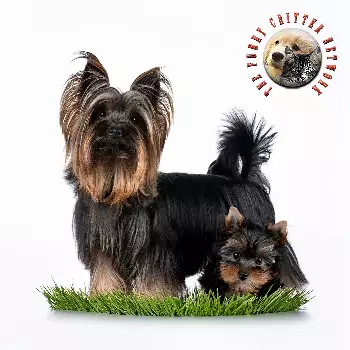

Silky Toy Terrier Grooming & Maintenance

The Silky Toy Terrier's stunning coat is its signature feature, but maintaining that coat in good condition requires a consistent grooming commitment. The long, fine, silky hair tangles and mats readily if neglected, particularly in the high-friction areas behind the ears, under the front legs, and along the inner thighs. A thorough brushing with a pin brush or slicker brush three to four times per week is the minimum required to keep the coat free of tangles and looking its best. For dogs kept in full show coat, daily brushing is necessary.

Bathing should be performed every two to three weeks using a high-quality dog shampoo formulated for silky or fine coats, followed by a lightweight conditioner that helps prevent tangling without weighing down the hair. Thorough rinsing is essential, as residual shampoo or conditioner can dull the coat and irritate the skin. After bathing, the coat should be blown dry on a low heat setting while being brushed straight to prevent kinks or waves from forming. Many owners find that a routine professional grooming appointment every four to six weeks supplements their home grooming efforts effectively.

Many pet owners opt for a shorter maintenance trim that reduces grooming time significantly while preserving the breed's general outline and silky coat texture. A popular option is a modified puppy cut that keeps the coat at two to three inches in length, short enough to resist matting but long enough to retain the characteristic silky appearance. This practical trim is especially sensible for active dogs that spend time outdoors, as it reduces the amount of debris the coat picks up and simplifies post-walk cleanup.

Beyond coat care, the Silky Toy Terrier's grooming routine should include nail trimming every two to three weeks, ear cleaning weekly with a gentle veterinarian-approved solution, and daily dental care. The hair between the paw pads should be trimmed regularly to prevent slipping on smooth surfaces and to stop foreign objects from becoming embedded. The topknot hair, if grown long, can be kept out of the eyes with a small elastic band or clip, or trimmed to a manageable length if the owner prefers a lower-maintenance look. Establishing these grooming habits early in the dog's life ensures that it accepts handling calmly and makes the grooming process a pleasant bonding experience rather than a struggle.