Shih Tzu Kou

Shih Tzu

Quick Facts

🐕 Breed Group
Toy Group
📏 Size Category
Small
📏 Height
Males: 9-10.5 inches, Females: 9-10.5 inches
⚖️ Weight
Males: 9-16 pounds, Females: 9-16 pounds
⏱️ Life Expectancy
10-18 years
🧣 Coat Type
Dense, long, flowing double coat
🎨 Coat Colors
All colors and markings acceptable
😀 Temperament
Affectionate, playful, outgoing, confident, loyal
🏃 Exercise Needs
Low to moderate
🎓 Training Difficulty
Moderate - willing but can be stubborn
👶 Good with Children
Yes, especially with older children
🐾 Good with Other Pets
Yes, generally sociable with other animals

Other Names & Breed Recognition

Shih Tzu Kou is the Mandarin Chinese name for the breed most English speakers know simply as the Shih Tzu. The added word "kou" is a Chinese term for dog, making the full name translate roughly to "lion dog" with the species identifier attached. In Chinese usage, including the "kou" is a natural way to specify that you are referring to the dog breed rather than using the phrase "shih tzu" in its broader cultural context, where it can simply mean lion. For English speakers who encounter this name in breed literature, import documentation, or Chinese-language sources, the essential point is straightforward: a Shih Tzu Kou is a Shih Tzu.

The breed has accumulated an impressive collection of names across its long history. In its homeland, variations include Shi Zi Gou and Xi Shi Quan, the latter referencing Xi Shi, one of the legendary Four Beauties of ancient China. The Chrysanthemum Dog is a well-known English nickname that describes the way the hair grows outward from the center of the face, resembling the petals of a chrysanthemum flower. In Tibet, where the breed's ancestors are believed to have originated before being gifted to Chinese imperial courts, the dogs were associated with the mythological Snow Lion and held sacred significance. The formal English name Shih Tzu was standardized when Western kennel clubs began registering the breed in the mid-twentieth century, drawing from the Wade-Giles romanization of the Chinese characters.

The breed holds recognition from every major international kennel organization. The American Kennel Club registered the Shih Tzu in the Toy Group beginning in 1969. The Kennel Club in the United Kingdom places it in the Utility Group, the United Kennel Club classifies it as a Companion Dog, and the Federation Cynologique Internationale assigns it to Group 9, Companion and Toy Dogs, under Section 5 for Tibetan breeds. The American Shih Tzu Club serves as the AKC parent club and coordinates breed education, national specialties, and health research efforts. Regardless of which name you use, you are referring to the same ancient companion breed with roots stretching back centuries in the palaces of imperial China.

Shih Tzu Kou Organizations & Standards

The organizational structure supporting the Shih Tzu Kou reflects a breed whose cultural significance spans continents and centuries. In China, the breed's historical importance as a palace companion of the imperial court lends it a prestige that extends beyond simple registry classification. The breed nearly disappeared during the Chinese Revolution, and its survival depended on a small number of dogs that had been exported to England and other Western countries before the upheaval. Every Shih Tzu alive today traces its ancestry to those surviving dogs, a genetic reality that shapes breeding decisions and health considerations across all registries.

The American Kennel Club recognized the Shih Tzu in 1969, placing it in the Toy Group where its compact size and companion temperament fit naturally among other small breeds bred primarily for human companionship. The American Shih Tzu Club, founded in 1963, serves as the AKC parent club and has been instrumental in establishing breed standards, coordinating health research, and educating the public about responsible ownership and breeding practices. The United Kennel Club classifies the breed within its Companion Dog Group. In the United Kingdom, the Kennel Club places the Shih Tzu in the Utility Group, reflecting the British system's different organizational philosophy. The Federation Cynologique Internationale assigns the breed to Group 9, Companion and Toy Dogs, under Section 5 for Tibetan breeds, acknowledging the breed's deep roots in Tibetan Buddhist culture.

The breed standard describes a sturdy, well-built little dog that carries itself with a distinctly arrogant carriage. Height ranges from approximately 9 to 10.5 inches at the shoulder, with weight falling between 9 and 16 pounds. The standard emphasizes a broad, round head with a warm, wide-eyed expression, a short muzzle, and a luxurious double coat that reaches the ground in show condition. The undershot bite is correct for the breed, with the lower jaw slightly wider than the upper. All colors and markings are acceptable, giving the Shih Tzu one of the most diverse color palettes of any recognized breed.

Health testing for the Shih Tzu follows the CHIC program through the Orthopedic Foundation for Animals. The American Shih Tzu Club requires two tests for CHIC certification: an eye examination through the Companion Animal Eye Registry performed by a board-certified veterinary ophthalmologist, and a patellar luxation evaluation registered with OFA. Cardiac evaluation and hip certification are recommended as optional additional tests. The parent club also encourages breeders to be aware of renal dysplasia, portosystemic liver shunt, and other conditions documented in the breed, and to make informed breeding decisions based on the health history of their lines.

Kennel Club Recognition

  • American Kennel Club (AKC): Recognized in 1969, Toy Group
  • United Kennel Club (UKC): Recognized, Companion Dog
  • Canadian Kennel Club (CKC): Recognized, Group 5 - Toys
  • FCI: Recognized, Group 9: Companion and Toy Dogs
  • The Kennel Club (UK): Recognized, Utility

Shih Tzu Kou Physical Description

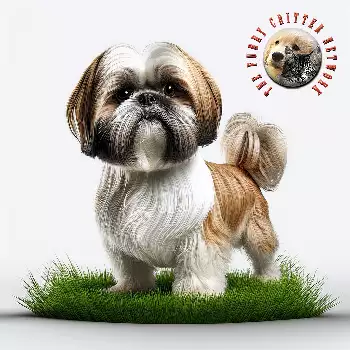
The Shih Tzu Kou is a dog designed from the ground up for one purpose: to be an irresistible companion. Everything about its physical construction serves that goal, from the warm, trusting expression to the flowing coat that invites touch to the sturdy little body that fits perfectly in a lap or tucked under an arm. Standing 9 to 10.5 inches at the shoulder and weighing between 9 and 16 pounds, this is a compact dog with more substance than its size suggests. The body is slightly longer than it is tall, giving a rectangular outline when viewed from the side.

The head is the breed's most immediately recognizable feature and the source of the expression that has charmed people for centuries. It is broad and round, with considerable width between the eyes. The muzzle is short, square, and unwrinkled, set no more than an inch from the tip of the nose to the stop. The large, dark, round eyes are set wide apart and look directly forward with a warm, trusting expression that is central to correct breed type. The nose is broad with well-open nostrils, and the pigment is typically black though liver-colored dogs carry liver noses. The ears are large, set slightly below the crown of the skull, and hang heavily due to the dense, long hair that covers them.

The bite is distinctly undershot, with the lower jaw slightly wider than the upper. This is not a fault in the Shih Tzu but rather a defining characteristic of the breed's head structure. The teeth should not be visible when the mouth is closed, and the jaw should be broad enough to accommodate the teeth without excessive crowding, though dental crowding remains a practical reality in many individuals of the breed given the compact skull structure.

The body is solid and compact with good depth of chest and well-sprung ribs. The back is level, and the overall impression is one of sturdiness rather than fragility despite the small size. Legs are short, strong, and well boned, with the front legs being straight when viewed from the front. The feet are firm, well padded, and tend to point slightly outward. The tail is set high and carried in a curve well over the back, heavily plumed, creating a teapot handle silhouette that is characteristic of the breed in motion.

The coat is the Shih Tzu Kou's crowning feature and the element that demands the most significant time investment from owners. It is a dense, flowing double coat with a long outer layer and a good undercoat. In full show coat, the hair reaches the ground and creates the impression of a dog gliding across the floor. The topknot is typically tied up to keep hair out of the eyes, a practical necessity that has become part of the breed's signature look. All colors are acceptable in the breed standard, including solid, parti-color, and various combinations of black, white, gold, liver, red, silver, and brindle. A white blaze on the forehead and a white tip on the tail are considered highly prized in many breeding programs. The coat texture varies somewhat between individuals, with some carrying a silkier coat that tangles more readily and others having a slightly coarser texture that is more manageable.

The breed's movement should be smooth and effortless, with good reach and drive despite the short legs. The long coat adds a flowing quality to the gait that enhances the overall impression of elegance. The Shih Tzu Kou carries itself with what the standard describes as a distinctly arrogant carriage, head held high and tail curving proudly over the back. The brachycephalic face structure that gives the breed its distinctive expression also creates practical considerations around breathing efficiency, particularly during exercise or warm weather, that owners should understand as part of the breed's physical reality.

Affectionate With Family
The Shih Tzu Kou was bred for centuries as a palace lap dog and its devotion to family reflects that heritage completely. This breed lives for human companionship and thrives on close physical contact with its people.
Good With Young Children
Generally patient and playful with children, though its small size means interactions with very young toddlers require supervision. The breed is sturdier than many toy breeds but can still be injured by rough handling.
Good With Other Dogs
The breed's social confidence and low aggression tendencies make it one of the more agreeable toy breeds in multi-dog settings. Most Shih Tzu Kou welcome canine companionship readily.
Shedding Level
Despite its long coat, the Shih Tzu Kou sheds relatively little compared to many double-coated breeds. Hair that does come loose tends to get caught in the coat rather than falling freely around the home.
Coat Grooming Frequency
The long, dense coat demands daily brushing in full coat or every-other-day maintenance in a shorter pet trim. This is one of the most grooming-intensive breeds, and the commitment is non-negotiable.
Drooling Level
Drooling is not a significant concern with this breed. The Shih Tzu Kou is a clean-mouthed dog that does not produce excessive saliva under normal circumstances.
Coat Type
The luxurious, flowing double coat reaches the ground in full show condition and requires extensive daily maintenance. Most pet owners maintain a practical shorter trim that preserves the breed's charm while reducing grooming demands.
Openness To Strangers
Unlike many small breeds, the Shih Tzu Kou typically greets strangers with warmth and curiosity rather than suspicion. This friendly disposition makes it a poor guard dog but an excellent social companion.
Playfulness Level
The breed maintains a playful, lively disposition throughout much of its life. Short bursts of energetic play alternating with long rest periods on a comfortable lap represent the ideal Shih Tzu Kou day.
Watchdog/Protective Nature
The Shih Tzu Kou will alert to unusual activity with a bark but lacks the suspicion and territorial drive that make an effective watchdog. Its primary instinct is to greet rather than to guard.
Adaptability Level
The breed's small size, modest exercise needs, and people-oriented nature make it one of the most adaptable dogs for any living situation. Apartments, condos, and houses all suit this breed equally well.
Trainability Level
Intelligent enough to learn a wide range of behaviors but possessed of a regal independence that makes compliance a matter of negotiation. Positive methods and patience produce the best results.

Shih Tzu Kou History & Development

The name Shih Tzu Kou connects this breed directly to its Chinese linguistic roots in a way that the shortened English name Shih Tzu does not fully convey. The "kou" suffix explicitly identifies the animal as a dog, which matters because "shih tzu" in Chinese refers to a lion, and the breed's name in full describes a lion dog. This naming reflects the breed's ancient association with the Buddhist concept of the lion as a sacred guardian, and the dogs themselves were bred and maintained as living symbols of that association within the Chinese imperial court and Tibetan monasteries.

The breed's deep history stretches back centuries into the palaces of imperial China, where small lion dogs were kept as treasured companions of the royal family. The precise origins are debated, but the most widely accepted theory holds that the breed descended from crosses between Tibetan breeds, likely the Lhasa Apso or similar Tibetan temple dogs, and Chinese court dogs such as the Pekingese. Tibetan monks are believed to have sent these dogs as gifts to Chinese emperors, where they were further refined through selective breeding into the distinct type recognized today. The Dowager Empress Cixi maintained an extensive breeding program for lion dogs during the late Qing Dynasty, and her kennels are often credited with producing dogs that closely resemble the modern Shih Tzu.

The Chinese Revolution of 1949 proved catastrophic for the breed within its homeland. The communist government viewed the keeping of ornamental palace dogs as a symbol of imperial excess, and breeding programs within China were effectively destroyed. The breed's survival depended entirely on the small number of dogs that had already been exported to England and continental Europe during the 1930s. A handful of foundation dogs, numbering no more than about fourteen individuals, formed the genetic basis for the entire modern breed. This extreme genetic bottleneck has shaped the breed's health landscape ever since and makes careful breeding decisions particularly important for maintaining the population's overall vitality.

The English name Shih Tzu became standardized as the breed gained recognition in the West. The Kennel Club in the United Kingdom recognized the breed in 1946, initially grouping it with the Lhasa Apso before separating them as distinct breeds. The American Kennel Club followed with recognition in 1969. Throughout this Western expansion, the full Chinese name Shih Tzu Kou gradually fell out of common use, replaced by the shorter Shih Tzu that English speakers found more manageable.

Today, Shih Tzu Kou appears primarily in breed histories, Chinese-language kennel documentation, and among enthusiasts with a particular interest in the breed's cultural and linguistic heritage. The name carries a weight and specificity that the abbreviated English version lacks, linking the modern companion dog directly to the lion dog tradition that gave it both its name and its place in the cultural history of China and Tibet. For readers who encountered this name and came looking for answers, the connection is simple and the heritage behind it is anything but.

Shih Tzu Kou Temperament & Personality

The Shih Tzu Kou was bred for centuries with a single overriding purpose: to be the ideal companion. Unlike breeds shaped by hunting, herding, or guarding work, this dog's temperament was refined in palace chambers and royal laps, and every behavioral trait it carries reflects that history. The result is a breed that is genuinely oriented toward human connection in a way that feels qualitatively different from dogs whose companionship is a secondary function layered over working instincts. A Shih Tzu Kou wants to be with you, near you, preferably on you, and it will arrange its day around achieving that goal with a persistence that is both charming and occasionally inconvenient.

The breed's social confidence is one of its most distinctive qualities. Unlike many small breeds that compensate for their size with nervous energy or defensive aggression, the Shih Tzu Kou moves through the world with a calm assurance that the standard describes as an arrogant carriage. This is not aloofness. It is a dog that simply assumes it belongs wherever it happens to be and that everyone present is delighted by its arrival. Most Shih Tzu Kou are genuinely friendly with strangers, a trait that makes them poor watchdogs but excellent therapy dogs and social companions. They tend to greet new people with interest and warmth rather than suspicion.

Stubbornness is the temperament trait that catches most new owners by surprise. The same independence of spirit that makes the Shih Tzu Kou so confident also means it has its own ideas about what it should be doing at any given moment. When those ideas conflict with yours, the dog will not throw a tantrum or become aggressive. It will simply ignore your request with a serene composure that suggests it never heard you in the first place. This is not defiance in the way a working breed might challenge authority. It is the quiet self-assurance of a dog that has never been expected to take orders and sees no reason to start now.

Within the family, the Shih Tzu Kou tends to distribute its affection generously rather than bonding exclusively to one person. It is typically good with children, other dogs, and even cats, provided introductions are handled reasonably. The breed's low prey drive and general sociability make it one of the easier small breeds to integrate into a multi-pet household. Its exercise needs are modest enough that it adapts well to life with elderly owners or people with limited mobility, while still being playful and energetic enough to entertain active families.

The emotional sensitivity of the Shih Tzu Kou is real but manifests differently than in more reactive breeds. These dogs pick up on household mood and will often position themselves close to a person who seems upset or unwell, offering quiet companionship rather than demanding attention. They do not thrive in environments with frequent conflict or harsh treatment, but they are generally resilient enough to handle normal household activity without becoming anxious or withdrawn.

Shih Tzu Kou Family Life & Living Requirements

The Shih Tzu Kou fits into family life with a naturalness that reflects centuries of breeding specifically for that purpose. This is a dog that was designed to live in close quarters with people, and it shows in every aspect of the breed's behavior and physical needs. Apartment living suits the Shih Tzu Kou perfectly. Its small size, moderate exercise requirements, and generally quiet demeanor make it one of the most apartment-friendly breeds available. Houses with yards are fine too, though the yard is more of a bonus than a necessity for a breed that gets most of its satisfaction from being in the same room as its people.

The breed's relationship with children is generally positive, particularly with children who are old enough to handle a small dog appropriately. The Shih Tzu Kou is sturdier than many toy breeds, which gives it some resilience in the face of the unpredictable movements of young children, but it is still a small dog that can be injured by rough handling or accidental falls. Teaching children to sit on the floor when interacting with the dog and to avoid picking it up without adult supervision prevents most problems. The breed's playful nature and tolerance for attention make it a natural companion for school-aged children.

Multi-pet households work well for most Shih Tzu Kou. The breed's low prey drive means it is unlikely to chase cats or other small animals, and its social nature generally extends to other dogs without the territorial aggression that complicates life with some other toy breeds. Individual temperaments vary, but as a breed the Shih Tzu Kou tends toward harmony rather than conflict in its relationships with other animals.

Heat sensitivity is a practical consideration that affects daily life with this breed. The brachycephalic face structure means the Shih Tzu Kou cannot cool itself as efficiently as longer-muzzled breeds, and overheating is a genuine risk during warm weather or vigorous exercise. Air conditioning is not a luxury for this breed in summer climates. It is a necessity. Walks should be scheduled for cooler parts of the day, and owners need to recognize the signs of heat stress, including excessive panting, drooling, and reluctance to move, and respond immediately by moving the dog to a cool environment.

Shih Tzu Kou Training & Exercise Needs

Training a Shih Tzu Kou is a process best approached with humor, patience, and a complete absence of ego. This breed was not developed to follow commands, herd livestock, or retrieve anything for anyone. It was bred to be a palace companion, and that heritage shows in a temperament that views human requests as interesting suggestions worthy of consideration rather than directives requiring immediate compliance. The good news is that Shih Tzu Kou are motivated by food, praise, and attention, all of which can be leveraged effectively by a trainer who understands that success with this breed is measured in cooperation rather than obedience.

Housetraining is the area where the Shih Tzu Kou's stubbornness most frequently tests owner patience. The breed is not inherently difficult to housetrain, but it requires more consistency and more repetitions than many other breeds before the lessons become reliable. Crate training and a strict schedule of outdoor trips produce the best results. Expecting the dog to signal you when it needs to go outside is optimistic in the early months. Taking the dog outside at predictable intervals and rewarding success enthusiastically is the approach that works. Harsh corrections for accidents are counterproductive and will only teach the dog to avoid eliminating in your presence, which makes the problem worse rather than better.

Exercise needs are genuinely modest. A short daily walk of 20 to 30 minutes combined with some indoor playtime meets the physical activity requirements of most adult Shih Tzu Kou. This is not a breed that needs to run, hike, or engage in vigorous athletic activity to remain healthy and content. In fact, overexertion is more of a concern than underexertion because the brachycephalic facial structure limits the breed's ability to cool itself through panting, making heat exhaustion a real risk during warm weather or extended physical activity.

Mental stimulation is valuable but does not need to be elaborate for this breed. Simple puzzle toys, short training sessions focused on tricks rather than formal obedience, and interactive play with family members provide adequate mental engagement. The Shih Tzu Kou is not a dog that will become destructive from boredom in the way that a working breed might. Its needs are social rather than intellectual. A Shih Tzu Kou that spends the day alone with no human interaction will be unhappy, but one that spends the day on the couch beside its owner doing absolutely nothing will consider that a perfect day.

Shih Tzu Kou Health Concerns

The Shih Tzu Kou is generally a long-lived breed with a lifespan commonly ranging from 10 to 16 years, though some individuals surpass even that upper bound. However, the breed carries several documented health conditions that prospective owners should understand, many of them directly related to its brachycephalic skull structure and compact body type. Brachycephalic obstructive airway syndrome encompasses a cluster of anatomical abnormalities including narrowed nostrils, an elongated soft palate, and a narrowed trachea that collectively make breathing less efficient than in longer-muzzled breeds. Severity varies widely between individuals, with some dogs showing minimal symptoms and others experiencing significant respiratory compromise that requires surgical correction.

Renal dysplasia is a hereditary kidney condition that affects Shih Tzu more than any other breed. The disease causes abnormal kidney development that compromises the organ's ability to filter waste from the blood. Severity ranges from mild cases where the dog lives a normal lifespan with minimal symptoms to severe cases where progressive kidney failure occurs in puppyhood. Portosystemic liver shunt is another condition documented with elevated frequency in the breed, causing blood to bypass the liver and allowing toxins to accumulate in the bloodstream. Patellar luxation affects the breed at rates higher than the general dog population, causing the kneecap to dislocate from its normal position and resulting in intermittent to chronic lameness. Intervertebral disc disease occurs because the Shih Tzu is a chondrodystrophic breed, meaning its cartilage development is altered in ways that affect the spine. Dental disease is nearly universal due to the crowded tooth arrangement that results from fitting a full set of adult teeth into a shortened jaw.

Common Health Issues

  • Brachycephalic Obstructive Airway Syndrome (BOAS) - A cluster of upper airway abnormalities including narrowed nostrils, elongated soft palate, and narrowed trachea that compromise breathing efficiency. Severity ranges from mild snoring to significant respiratory distress requiring surgical intervention.
  • Brachycephalic Ocular Syndrome - The breed's prominent eyes and shallow orbits create vulnerability to corneal ulceration, pigmentary keratitis, exposure keratopathy, and proptosis. Constant vigilance and regular ophthalmologic care are essential to prevent painful complications.
  • Keratoconjunctivitis Sicca (Dry Eye) - Insufficient tear production causes chronic irritation, inflammation, and potential corneal damage. The condition requires lifelong management with topical medications to maintain adequate eye moisture.
  • Renal Dysplasia - A hereditary developmental defect of the kidneys that affects Shih Tzu more than any other breed, causing abnormal nephron formation and progressive kidney dysfunction ranging from asymptomatic to fatal kidney failure.
  • Portosystemic Liver Shunt - An abnormal blood vessel allows blood to bypass the liver, preventing proper filtration of toxins from the bloodstream. Symptoms include stunted growth, neurological signs, and gastrointestinal problems, often requiring surgical correction.
  • Patellar Luxation - The kneecap dislocates from its normal position in the femoral groove, causing intermittent to chronic lameness. The condition is graded on a severity scale of one to four, with higher grades often requiring surgical repair.
  • Intervertebral Disc Disease (IVDD) - The breed's chondrodystrophic body type predisposes it to disc degeneration and herniation that can cause pain, weakness, and in severe cases paralysis. Early recognition of symptoms is critical for the best treatment outcomes.
  • Progressive Retinal Atrophy - A degenerative condition of the retina that causes progressive vision loss leading to blindness. The breed carries a late-onset form that may not become apparent until middle age.
  • Dental Disease - The shortened jaw structure causes severe tooth overcrowding that leads to accelerated tartar accumulation, gum disease, and tooth loss at rates far exceeding those of longer-muzzled breeds.

Preventive Care & Health Monitoring

  • Eye examination through the Companion Animal Eye Registry by a board-certified veterinary ophthalmologist is a CHIC-required test that screens for the multiple inherited and conformation-related ocular conditions prevalent in the breed. - Eye examination through the Companion Animal Eye Registry by a board-certified veterinary ophthalmologist is a CHIC-required test that screens for the multiple inherited and conformation-related ocular conditions prevalent in the breed.
  • Patellar luxation evaluation registered with OFA is a CHIC-required test that grades kneecap stability and informs breeding decisions while alerting owners to orthopedic issues that may require monitoring or surgical intervention. - Patellar luxation evaluation registered with OFA is a CHIC-required test that grades kneecap stability and informs breeding decisions while alerting owners to orthopedic issues that may require monitoring or surgical intervention.
  • Cardiac evaluation by a veterinary cardiologist is an optional but recommended screening that checks for congenital heart defects and acquired cardiac conditions - Providing important baseline health information.
  • Daily eye care including cleaning around the eyes - Monitoring for signs of irritation or injury, and keeping facial hair trimmed away from the corneal surface helps prevent the corneal damage that the breed's prominent eyes are vulnerable to developing.
  • Regular dental care including daily tooth brushing and periodic professional cleanings is essential for managing the severe dental overcrowding inherent to the brachycephalic jaw structure and preventing the periodontal disease that affects virtually all individuals. - Regular dental care including daily tooth brushing and periodic professional cleanings is essential for managing the severe dental overcrowding inherent to the brachycephalic jaw structure and preventing the periodontal disease that affects virtually all individuals.
  • Kidney function monitoring through periodic blood work and urinalysis helps detect early signs of renal dysplasia or other kidney conditions before they progress to clinical kidney failure. - Kidney function monitoring through periodic blood work and urinalysis helps detect early signs of renal dysplasia or other kidney conditions before they progress to clinical kidney failure.
  • Temperature management during warm weather is critical for this brachycephalic breed - Including limiting exercise during hot periods, ensuring access to air conditioning, and recognizing early signs of heat stress before they escalate to heat stroke.
  • Regular veterinary wellness examinations at least annually - And twice yearly for senior dogs, provide opportunities to detect the multiple conditions this breed is predisposed to before they become advanced or difficult to manage.

Shih Tzu Kou Grooming & Maintenance

The grooming demands of the Shih Tzu Kou are the single most important practical consideration for anyone thinking about adding this breed to their household. In full coat, the Shih Tzu Kou requires daily brushing to prevent the dense, long hair from matting into solid tangles that become painful and eventually require shaving to remove. This is not an exaggeration or a worst-case scenario. It is the baseline reality of owning a dog whose coat grows continuously and will reach the floor if left uncut. Most pet owners opt for a shorter trim, often called a puppy cut, that keeps the coat at a manageable length of one to two inches and reduces daily grooming to a more reasonable every-other-day brushing schedule.

Whether in full coat or a practical trim, the facial hair requires special attention. The hair around the eyes needs to be kept clean and free of debris to prevent the eye irritation and staining that can develop quickly in a breed with prominent eyes and a short muzzle. The topknot should be tied up or trimmed back to keep hair out of the eyes. The area around the mouth and chin tends to accumulate food and moisture that can cause staining and skin irritation if not cleaned regularly. Many owners find that a daily wipe of the face with a damp cloth prevents most of these issues.

Bathing should occur every three to four weeks for most Shih Tzu Kou, with thorough brushing before each bath to remove any tangles that would tighten into mats when wet. The coat should be dried completely after bathing because damp hair close to the skin creates an environment conducive to bacterial and fungal skin infections. A high-velocity dryer or careful blow-drying on a cool setting is preferable to air drying for this reason.

Routine maintenance beyond coat care includes regular nail trimming, ear cleaning, and dental hygiene. The Shih Tzu Kou's pendant ears trap moisture and debris, making weekly ear checks and cleaning important for preventing infections. Dental care deserves particular emphasis given the breed's predisposition to periodontal disease. Daily tooth brushing combined with periodic professional cleanings helps manage the overcrowding and tartar buildup that are nearly unavoidable in a breed with this jaw structure.