SBT

Staffordshire Bull Terrier

Quick Facts

🐕 Breed Group
Terrier Group
📏 Size Category
Medium
📏 Height
Males: 14-16 inches, Females: 14-16 inches
⚖️ Weight
Males: 28-38 pounds, Females: 24-34 pounds
⏱️ Life Expectancy
12-14 years
🧣 Coat Type
Smooth, short, close-lying
🎨 Coat Colors
Red, fawn, white, black, blue, brindle, or any of these with white
😀 Temperament
Courageous, affectionate, loyal, intelligent, tenacious
🏃 Exercise Needs
Moderate to High
🎓 Training Difficulty
Moderate
👶 Good with Children
Yes
🐾 Good with Other Pets
Requires supervision and socialization

Other Names & Breed Recognition

If you have ever heard someone refer to their dog simply as an SBT, they are talking about the Staffordshire Bull Terrier. The abbreviation SBT has become a standard shorthand among breed enthusiasts, kennel clubs, rescue organizations, and veterinary professionals who work with the breed regularly. It appears in pedigree documents, health clearance databases, breed-specific legislation discussions, and across countless online communities where owners share their experiences. For anyone encountering this abbreviation for the first time, it serves as a compact identifier for one of the most widely recognized bull-and-terrier breeds in the world.

The abbreviation gained traction as the breed's popularity grew beyond its traditional strongholds in the United Kingdom and Australia. In countries where the Staffordshire Bull Terrier competes for attention alongside its similarly named cousin, the American Staffordshire Terrier, the abbreviation SBT provides a quick way to distinguish between the two breeds without confusion. Breed clubs, including the Staffordshire Bull Terrier Club of America and various regional organizations in the UK, routinely use SBT in their publications, health databases, and correspondence. The Orthopedic Foundation for Animals and the Canine Health Information Center both list the breed under its full name but the abbreviation is universally understood in those contexts.

The Staffordshire Bull Terrier also answers to several other informal names. Stafford is the traditional short form used by serious fanciers and breeders who prefer a dignified alternative to the full breed name. Staffy and Staffie are the most common pet-owner nicknames, used affectionately across the UK, Australia, and increasingly in the United States. The breed is sometimes grouped under the broader umbrella term of bull breed or bully breed, though this informal category encompasses several distinct breeds with separate histories and standards. In parts of the United States, the Staffordshire Bull Terrier is occasionally mistaken for or conflated with the American Pit Bull Terrier, a different breed entirely despite shared ancestry in the old bull-and-terrier crosses of nineteenth-century England.

Across all major registries, the breed is classified within the Terrier group. The American Kennel Club, United Kennel Club, Canadian Kennel Club, and The Kennel Club in the United Kingdom all place the Staffordshire Bull Terrier among their terrier breeds. The Federation Cynologique Internationale classifies it under Group 3, Section 3, specifically within the Bull type Terriers subdivision. Regardless of which name or abbreviation someone uses, they are all referring to the same compact, muscular, and unmistakably spirited breed that has earned devoted followings on multiple continents.

SBT Organizations & Standards

The Staffordshire Bull Terrier Club of America serves as the AKC parent club and the primary organizational voice for the breed in the United States. Founded in 1974 alongside the breed's acceptance into the AKC registry, the club has spent decades promoting responsible breeding, educating prospective owners, and organizing specialty shows where SBTs are evaluated against the breed standard. The SBTCA also manages the breed's CHIC program requirements, ensuring that breeders who participate in the health certification process are testing for the conditions most relevant to the Staffordshire Bull Terrier specifically.

In the United Kingdom, the breed holds a far deeper organizational presence. The original Staffordshire Bull Terrier Club was established in 1935, the same year The Kennel Club granted the breed official recognition. Multiple regional breed clubs operate across England, and the breed consistently ranks among the most registered terrier breeds in the KC's annual statistics. The UK standard, which predates the American version by nearly four decades, established the foundational expectations for the breed's appearance and temperament that all subsequent standards have drawn from.

The AKC breed standard describes the SBT as a smooth-coated dog of great strength for its size that should be muscular yet active and agile. Height at the shoulder falls between 14 and 16 inches, with dogs weighing 28 to 38 pounds and bitches weighing 24 to 34 pounds. The standard places significant emphasis on proportionality, requiring that the length of back from withers to tail set equal the distance from withers to ground. The head is described as short, deep through, and broad in skull, with very pronounced cheek muscles and a distinct stop. Acceptable colors include red, fawn, white, black, blue, any of these with white, and any shade of brindle with or without white markings. Black-and-tan, liver, and merle are disqualifying colors.

The United Kennel Club recognized the SBT in 1975 and maintains a standard that closely mirrors the AKC version while placing particular emphasis on the breed's functional athleticism. The Canadian Kennel Club accepted the breed in the early 1950s, predating American recognition by two decades, a reflection of strong ties between British and Canadian breed communities. The Federation Cynologique Internationale catalogues the breed under Standard Number 76 within Group 3, Section 3, classifying it among the Bull type Terriers without a working trial requirement.

Health testing requirements established through the CHIC program call for five mandatory evaluations before a Staffordshire Bull Terrier can receive a CHIC number. These include an ophthalmologist evaluation performed by a board-certified ACVO specialist, hip radiographs evaluated by OFA or PennHIP, elbow radiographs evaluated by OFA, a DNA test for L-2-Hydroxyglutaric Aciduria, and a DNA test for Hereditary Cataracts. These testing requirements reflect the breed-specific conditions that have been identified through decades of health data collection and represent the minimum standard that responsible breeders are expected to meet before producing litters.

Kennel Club Recognition

  • American Kennel Club (AKC): Recognized in 1974, Terrier Group
  • United Kennel Club (UKC): Recognized, Terrier Group
  • Canadian Kennel Club (CKC): Recognized, Terrier Group
  • FCI: Recognized, Group 3
  • The Kennel Club (UK): Recognized, Terrier Group

SBT Physical Description

The SBT is a dog that looks like it was assembled from spare parts intended for a much larger animal. Everything about its frame communicates density and compactness. Standing just 14 to 16 inches at the shoulder, this breed packs between 24 and 38 pounds of muscle into a body that appears coiled and ready to spring at any moment. The overall silhouette is square and balanced, with the back length from withers to tail set equaling the height from withers to ground.

The head is arguably the most distinctive feature of the breed and the element that most clearly separates the SBT from its various bull-and-terrier relatives. It is short and deep through the skull, broad and flat on top, with cheek muscles so pronounced they create visible bulges along the sides of the face. The stop between skull and muzzle is well defined, and the foreface is short but not so compressed as to cause breathing impairment in well-bred specimens. The nose is always black. The jaws are strong with clean, tight lips, and the teeth meet in a scissors bite. The overall impression of the head is one of considerable strength packed into a surprisingly compact space.

The eyes are round, medium-sized, and set to look straight ahead. Dark eyes are preferred by the standard, though some variation relative to coat color is acceptable. The expression produced by these forward-set eyes is one of keen alertness, giving the SBT that characteristic look of focused attention that owners find so endearing. The ears are rose or half-pricked, small relative to the skull, and never cropped. Their set and carriage add to the breed's attentive and inquisitive expression.

The neck is muscular, relatively short, and widens gradually as it sweeps into the shoulders. The shoulders themselves are well laid back, and the forelegs are straight, set rather wide apart to accommodate the broad chest. Bone substance in the legs is considerable for a dog of this size. The pasterns are strong and the feet compact with well-padded soles. The overall front assembly gives the SBT its trademark stance of confident, wide-chested solidity.

The body carries a broad, deep chest with well-sprung ribs. The topline is level, and the underline shows a modest tuck-up through the loin. Despite the heavy musculature, the SBT should never appear cloddy or ponderous. The breed standard explicitly requires that the dog be active and agile, and correct specimens move with a free, powerful gait that shows drive from behind and parallel tracking when viewed from either end. The impression in motion should be one of effortless ground-covering ability, not lumbering weight.

The hindquarters are well muscled with hocks let down and stifles well bent. The hind legs are parallel when viewed from behind, providing the propulsive power that makes the SBT surprisingly quick and athletic for its build. The tail is medium length, low set, and tapers to a point. It is carried fairly low and should not curl over the back.

The coat is smooth, short, and lies close to the skin. It requires no trimming and should not be de-whiskered. This low-maintenance jacket comes in a range of colors that includes red, fawn, white, black, and blue, any of these combined with white, and any shade of brindle with or without white markings. The coat has a natural gloss when the dog is in good condition, shedding dirt and drying quickly after exposure to water. Black-and-tan and liver are disqualifying colors, as is the merle pattern, which does not exist genetically in the breed.

Affectionate With Family
The SBT bonds to its household with an intensity that borders on velcro behavior, following family members from room to room and seeking constant physical contact.
Good With Young Children
This breed has a well-earned reputation for patience and gentleness with children, though its stocky build and exuberant play style require adult supervision with very young kids.
Good With Other Dogs
Individual SBTs vary widely in dog tolerance, and the breed carries a documented predisposition toward dog-directed aggression that requires ongoing socialization and management.
Shedding Level
The short coat sheds moderately year-round with seasonal increases, producing fine hairs that embed themselves into fabrics despite their small size.
Coat Grooming Frequency
Weekly brushing with a rubber mitt or soft bristle brush is all the SBT's smooth coat demands, making this one of the easier breeds to maintain.
Drooling Level
The SBT is not a notable drooler, keeping its tight-lipped composure in most situations outside of particularly exciting meal anticipation.
Coat Type
The smooth, short coat lies flat against the skin and carries a natural sheen when the dog is in good health, requiring no trimming or professional grooming.
Openness To Strangers
Most SBTs greet unfamiliar people with enthusiastic friendliness rather than suspicion, though individual temperaments range from openly social to mildly reserved.
Playfulness Level
The SBT approaches play with wholehearted enthusiasm, particularly favoring tug-of-war and interactive games that engage both its physical strength and its desire to interact with people.
Watchdog/Protective Nature
The SBT is naturally alert and will bark to announce unusual activity, though its people-loving nature means it rarely sustains true guarding behavior toward strangers.
Adaptability Level
The breed adjusts reasonably well to different living situations including apartments, provided its exercise and companionship needs are consistently met.
Trainability Level
Intelligent and eager to please, the SBT learns quickly through positive reinforcement though it may occasionally test boundaries with a stubborn streak inherited from its bull-and-terrier ancestry.
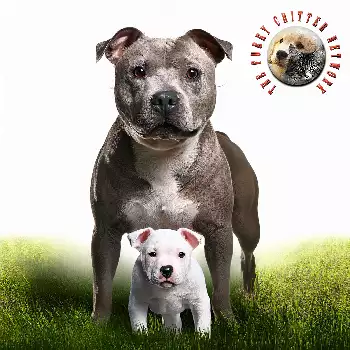

SBT History & Development

The abbreviation SBT emerged organically from the practical need to distinguish the Staffordshire Bull Terrier from its close relatives in written communication. In a world populated by American Staffordshire Terriers, American Pit Bull Terriers, Bull Terriers, and various other bull-and-terrier descendants, the three-letter shorthand became an essential tool for clarity. Breed clubs, registries, health databases, and legislative documents all benefited from a concise identifier that left no ambiguity about which specific breed was under discussion.

The breed itself traces its origins to the coal-mining regions of Staffordshire and the industrial Midlands of England, where bull-and-terrier crosses were developed in the late eighteenth and early nineteenth centuries. These dogs were the product of old-style Bulldogs bred to various British terrier types, creating animals that combined the Bulldog's tenacity and jaw strength with the terrier's speed and agility. The resulting dogs were initially used for blood sports, particularly bull-baiting and later dog fighting, activities that were widespread among the working classes of industrial England before progressive legislation began to curtail them.

The pivotal moment for the breed's legitimacy came in June 1935, when a group of fanciers met at the Old Cross Guns pub in Cradley Heath, in the heart of the Black Country, to form the Staffordshire Bull Terrier Club. A breed standard was drafted and approved at that same meeting, and The Kennel Club in London granted official recognition to the breed in July of that year. The first championship points were awarded in 1938, and the first breed champions, the bitch Lady Eve and the dog Gentleman Jim, earned their titles in 1939. This formal acceptance marked the transition from fighting dog to recognized purebred, a transformation driven by fanciers who believed the breed's qualities deserved preservation within a legitimate framework.

The breed made its way to other countries through British emigration and the international dog fancy. Canada recognized the Staffordshire Bull Terrier in the early 1950s, and the Federation Cynologique Internationale followed in 1954. American recognition came later, partly because the AKC had already accepted the American Staffordshire Terrier in 1936 and was cautious about registering what some viewed as a closely related type. Steve Stone organized the US Staffordshire Bull Terrier Club in 1967, beginning a campaign for AKC acceptance that culminated in 1974 when the breed was admitted to the registry and the Terrier Group. The first AKC-registered Stafford was the English import Ch. Tinkinswood Imperial.

The abbreviation SBT became increasingly useful as the breed's global footprint expanded and the need to differentiate it from the American Staffordshire Terrier grew more pressing. In breed-specific legislation debates, the distinction between SBT, AmStaff, and APBT carries genuine legal consequences, making precise terminology not just a matter of breed pride but of practical necessity. Today, SBT appears in OFA health records, CHIC database entries, veterinary literature, and the everyday conversations of a worldwide community of owners who know exactly which breed those three letters represent.

SBT Temperament & Personality

The SBT's temperament is a study in contradictions that somehow resolve into one of the most devoted companion dogs you will ever encounter. This is a breed that descends from fighting stock yet has been deliberately refined over nearly a century into a dog whose defining behavioral trait is an almost overwhelming affection for people. The AKC breed standard itself acknowledges this duality, describing a temperament rooted in indomitable courage and high intelligence, coupled with affection for friends and children in particular, off-duty quietness, and trustworthy stability.

The people-orientation of the SBT runs deep. This is not a dog that tolerates your presence; it actively seeks it out, follows you from room to room, and regards physical separation as a genuinely distressing experience. That intensity of attachment is one of the breed's greatest strengths and one of its most significant management challenges. An SBT left alone for extended periods will often develop destructive habits born from anxiety rather than defiance. Chewing is the default outlet, and given the breed's powerful jaws, the damage potential is substantial. Owners who work long hours without arranging companionship or enrichment for their SBT will come home to evidence of a dog that simply could not cope with the isolation.

With family members, the SBT is characteristically gentle and tolerant, earning a longstanding reputation for patience with children. The breed genuinely seems to enjoy the energy and unpredictability of young people, engaging in play with an enthusiasm that matches a child's own. That said, supervision is always necessary given the breed's physical strength and exuberant nature. An excited SBT does not always understand that its muscular body can inadvertently knock over a small child during a burst of play.

The relationship between SBTs and other dogs is where the breed's heritage asserts itself most clearly. While many individual SBTs coexist peacefully with other dogs, the breed carries a documented tendency toward dog-directed aggression, particularly between dogs of the same sex. This is not a failing of training or socialization, though both can mitigate it considerably. It is a behavioral predisposition rooted in the breed's fighting ancestry that responsible owners must acknowledge and manage. Early and ongoing socialization with other dogs is essential, but even well-socialized SBTs should never be left unsupervised with unfamiliar dogs or in situations where arousal levels may escalate beyond the individual dog's threshold.

With strangers, the SBT is generally far more welcoming than its muscular appearance might suggest. Most individuals greet unfamiliar people with tail-wagging enthusiasm rather than suspicion. The breed does not typically function as a natural guardian in the way that livestock protection breeds or dedicated protection dogs do, though their alert nature and willingness to bark at unusual activity provide a basic level of watchdog capability.

Prey drive varies among individuals but tends to be moderate to high. Small animals, particularly cats and smaller pets, may trigger a chase response in SBTs that have not been raised alongside them. This is another dimension of the breed's terrier heritage that requires honest assessment and appropriate management rather than denial or wishful thinking.

SBT Family Life & Living Requirements

Living with an SBT means accepting that you will never be alone in your own home again. This breed positions itself as a permanent shadow, relocating from room to room as you move through your day, settling at your feet while you work, and claiming whatever spot on the furniture gives it the closest proximity to its chosen person. For families who want a dog that is genuinely present and engaged in household life, the SBT delivers that experience with an intensity that few breeds can match.

The breed adapts reasonably well to various living situations, including apartments and smaller homes, provided its exercise needs are met consistently. The SBT does not require a sprawling property to be content, but it does require daily physical activity and mental engagement. A bored SBT in a small space will create its own entertainment, and that entertainment will almost certainly involve the systematic destruction of household items. The breed's powerful jaws make short work of furniture, shoes, and anything else within reach when frustration or boredom takes hold.

Families with children will find the SBT to be a natural fit in many respects. The breed's patience and playfulness with young people are well documented, and most SBTs seem to genuinely prefer the company of children over solitude. However, the breed's stocky build and enthusiastic play style mean that very young children should always be supervised during interactions. An SBT in the throes of a play session does not moderate its physical exuberance particularly well, and accidental collisions are a real possibility.

The question of other pets requires honest evaluation. An SBT raised alongside cats from puppyhood can learn to coexist peacefully, but introducing a new cat to an adult SBT with an established prey drive carries genuine risk. Multi-dog households require careful management, particularly with same-sex pairings. Owners who already have dogs should assess the resident dog's temperament alongside the incoming SBT's individual tendencies rather than relying on breed generalizations in either direction.

Heat sensitivity is a practical concern that affects daily life with an SBT. The breed's muscular build and relatively short muzzle make it vulnerable to overheating during warm weather. Exercise should be scheduled for cooler portions of the day during summer months, and access to shade and fresh water must be constant. Owners in hot climates need to be especially vigilant about recognizing early signs of heat stress, as the SBT will often push through discomfort to continue whatever activity it is enjoying rather than self-regulate. Fencing is non-negotiable for any property where the SBT will have outdoor access, and that fencing needs to be secure. This breed is athletic enough to scale surprisingly tall barriers and determined enough to dig underneath inadequate ones when motivated by prey, curiosity, or the simple desire to explore.

SBT Training & Exercise Needs

Training an SBT is an exercise in harnessing enthusiasm. This breed genuinely wants to engage with its handler, learns quickly when motivated, and retains trained behaviors reliably once they are established. The challenge lies not in the dog's intelligence but in its occasional stubbornness and its tendency to test boundaries with a confidence that comes naturally to any breed forged from bull-and-terrier stock. Positive reinforcement methods work exceptionally well with the SBT, as the breed is highly food-motivated and deeply responsive to praise from its bonded people.

Early socialization is not optional for this breed. The window between eight and sixteen weeks is critical for exposing the young SBT to a wide range of people, environments, other dogs, and novel experiences. Given the breed's documented potential for dog-directed aggression, socialization with other dogs should be structured, positive, and ongoing well beyond puppyhood. Puppy classes that emphasize appropriate dog-to-dog interaction are invaluable for building the social skills that will serve the SBT throughout its life.

Basic obedience should begin early and remain consistent. The SBT responds best to training sessions that are short, varied, and engaging. Repetitive drills bore this breed quickly, and a bored SBT will invent its own curriculum, which rarely aligns with what the handler had in mind. Recall training deserves particular attention, as the breed's prey drive can override even strong obedience foundations when a squirrel or rabbit enters the picture. Until recall is thoroughly proofed in distraction-heavy environments, off-leash exercise should be confined to securely fenced areas.

Leash manners require early and persistent work. The SBT is a strong, low-centered dog that can generate considerable pulling force despite its moderate size. A well-fitted harness and consistent loose-leash training from puppyhood will prevent the development of pulling habits that become difficult to correct in an adult dog whose chest and shoulder muscles are fully developed.

Exercise requirements for the SBT are moderate to high. The breed needs one to two hours of physical activity daily, split between structured walks and active play. Tug-of-war is a favorite game that channels the breed's natural grip strength and provides both physical and mental stimulation. Interactive puzzle toys help satisfy the breed's need for cognitive challenge during periods when physical exercise is not possible. Agility courses, rally obedience, and weight-pulling competitions offer excellent outlets for the SBT's athleticism and desire to work alongside its handler. The breed's compact build and low center of gravity make it surprisingly adept at agility work, and many SBTs excel in competitive settings where their intelligence and enthusiasm can shine.

SBT Health Concerns

The SBT is a generally robust breed with a life expectancy of 12 to 14 years, but it carries several breed-specific health concerns that prospective owners should understand before committing to the breed. Two genetic conditions stand out as the most significant and both have reliable DNA tests available.

Mast cell tumours represent the most common cancer concern in the SBT. These skin tumours can range from benign to highly aggressive and require veterinary evaluation whenever a new lump appears. Demodicosis, a skin condition caused by an overpopulation of Demodex mites, occurs at elevated rates in the breed and can cause localized or generalized hair loss and skin inflammation. Brachycephalic airway concerns exist in SBTs with particularly short muzzles, though well-bred specimens with moderate facial proportions are less affected than many other short-faced breeds.

Common Health Issues

  • L-2-Hydroxyglutaric Aciduria - L2HGA, is a neurometabolic disorder causing seizures, tremors, ataxia, and behavioral changes due to accumulation of L-2-hydroxyglutaric acid in the cerebrospinal fluid. It is inherited as an autosomal recessive condition and is untreatable, though a DNA test can identify carriers.
  • Hereditary Cataracts - HC, cause bilateral lens opacity typically appearing within the first months of life and often progressing to total blindness by age three. The condition follows autosomal recessive inheritance and can be detected through DNA testing before breeding.
  • Hip dysplasia involves abnormal development of the hip joint leading to looseness - Abnormal wear, pain, and eventual osteoarthritis. Radiographic screening through OFA or PennHIP is recommended for all breeding stock.
  • Elbow dysplasia encompasses developmental abnormalities of the elbow joint that produce lameness and arthritis - OFA radiographic evaluation is part of the breed's CHIC testing requirements.
  • Patellar luxation occurs when the kneecap displaces from the femoral groove during flexion - Causing intermittent lameness that can progress to chronic joint damage requiring surgical correction.
  • Mast cell tumours are the most prevalent cancer type in the breed - Presenting as skin masses that range from low-grade and easily managed to high-grade and aggressively metastatic.
  • Demodicosis results from overpopulation of Demodex mites in the skin - Causing hair loss, redness, and inflammation that may be localized or generalized depending on severity.

Preventive Care & Health Monitoring

  • DNA testing for L-2-Hydroxyglutaric Aciduria should be performed on all breeding stock - With results registered through OFA. Both parents must test clear or one parent must test clear to avoid producing affected offspring.
  • DNA testing for Hereditary Cataracts is mandatory for CHIC certification - Breeding decisions should ensure that two carriers are never mated together to prevent affected puppies.
  • Ophthalmologist evaluation by a board-certified ACVO specialist should be performed annually beginning at one year of age to screen for cataracts and other ocular conditions. - Ophthalmologist evaluation by a board-certified ACVO specialist should be performed annually beginning at one year of age to screen for cataracts and other ocular conditions.
  • Hip radiographs evaluated by OFA or PennHIP should be performed on all breeding candidates - With OFA evaluation available at two years of age and PennHIP evaluation available from sixteen weeks.
  • Elbow radiographs evaluated by OFA should accompany hip screening to identify elbow dysplasia before breeding decisions are made. - Elbow radiographs evaluated by OFA should accompany hip screening to identify elbow dysplasia before breeding decisions are made.
  • Regular skin checks should be performed to identify new lumps or masses early - Given the breed's elevated risk for mast cell tumours. Any new growth warrants prompt veterinary evaluation and potential biopsy.
  • Heat management protocols should be followed during warm weather - Including exercising during cooler hours and ensuring constant access to shade and fresh water, given the breed's sensitivity to overheating.

SBT Grooming & Maintenance

The SBT's grooming requirements are among the most straightforward of any breed, which is one of the practical advantages that makes this dog appealing to owners who prefer low-maintenance coat care. The short, smooth coat lies close to the skin and has a natural gloss when the dog is healthy and well-nourished. It sheds dirt readily and dries quickly after getting wet, qualities that reduce the need for frequent bathing. A weekly brushing with a rubber curry mitt or soft bristle brush is sufficient to remove loose hair and distribute the skin's natural oils across the coat surface.

Shedding is moderate but consistent throughout the year, with a slight uptick during seasonal transitions in spring and autumn. The hair is short enough that it does not mat or tangle, but it does embed itself into furniture, clothing, and carpet with a tenacity that belies its small size. Regular brushing helps manage the volume of loose hair in the home, and owners who stay on top of weekly sessions will find shedding far less intrusive than those who neglect the routine.

Bathing should be done on an as-needed basis rather than on a rigid schedule. The SBT's skin can be sensitive, and over-bathing strips the natural oils that keep the coat healthy and glossy. A bath every four to six weeks is generally sufficient unless the dog has rolled in something particularly foul or has been spending time in muddy conditions. A mild dog-specific shampoo is preferable to human products, which can alter the skin's pH balance and cause irritation.

Nail trimming requires attention every two to three weeks, depending on how much natural wear the dog's nails receive from walking on hard surfaces. The SBT's nails are thick and strong, and if allowed to grow too long, they can alter the dog's gait and cause discomfort. Ear cleaning should be part of the regular grooming routine, with a gentle ear cleanser used to remove wax and debris from the ear canal. The breed's rose or half-pricked ear set provides reasonable airflow, reducing but not eliminating the risk of ear infections.

Dental care is an often-overlooked component of SBT maintenance that carries real health consequences. The breed's strong jaws and love of chewing provide some natural tooth-cleaning action, but this is not a substitute for regular dental hygiene. Brushing the teeth several times per week with a canine toothpaste helps prevent tartar buildup and periodontal disease. Durable dental chews can supplement brushing but should not replace it entirely.