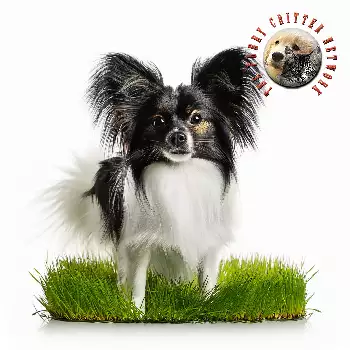
The Pap is a toy breed that manages to look both delicate and athletic at the same time. Standing eight to eleven inches at the shoulder and weighing between five and ten pounds, this is a small dog with a fine-boned frame that moves with surprising agility and confidence. The breed standard emphasizes proportion over absolute size, and a well-built Pap should appear balanced and elegant without looking frail or spindly. The body is slightly longer than tall, with a level topline and a chest that reaches to the elbows.
The head is the breed's defining feature and the source of both its formal name and its visual identity. The skull is of medium width and slightly rounded between the ears, with a well-defined stop. The muzzle is fine, tapering to a narrow point, and noticeably shorter than the skull. The nose is small, rounded, and black. The eyes are dark, round, medium-sized, and alert in expression, set well apart on the face with the inner corners aligned with the stop. They should not be bulging or protruding, and the expression they convey is one of bright, attentive intelligence.
The ears are what make the Pap instantly recognizable. In the Papillon variety, the ears are large and carried erect, set high and toward the back of the skull, with the shell of each ear held open and angled to the side. The inside of each ear is covered with long, fine, silky hair that flows outward, creating the butterfly-wing silhouette that gives the breed its name. The ear leather itself is thin but firm enough to maintain the erect position, and the fringed hair should be of sufficient length to give the ear its characteristic spread. In the Phalene variety, the ears are carried down, lying flat against the sides of the head, but this variety is far less commonly seen in everyday pet ownership.
The coat of the Pap is single-layered, meaning there is no dense undercoat beneath the outer hair. The hair is long, fine, and silky with a resilient quality, lying flat against the body and flowing naturally. The chest features a prominent frill of longer hair, and the back of the forelegs carries feathering. The hind legs are covered in breeches of longer hair from the hock to the foot. The tail is covered with a long, flowing plume that arches over the back when the dog is alert. Despite the coat's luxurious appearance, it does not mat as readily as double-coated breeds because the hair texture is silky rather than woolly.
Color in the Pap is always white-based with patches of any other color. The most commonly seen pattern is white with sable, red, or black markings, and the markings must cover both ears and extend over both eyes. A white blaze running up the center of the face between the eyes is preferred. An all-white dog or a dog lacking white is disqualified under the AKC standard. The tricolor pattern of white, black, and tan is also seen, as are white and lemon, white and red, and various sable combinations.
In movement, the Pap is quick, light, and free-flowing. The gait should be effortless and show good reach and drive without any wasted motion. Despite its small size, the breed covers ground with the confidence and precision of a much larger sporting dog, which reflects its spaniel heritage. The overall impression is of a toy dog that could easily compete in agility, obedience, or rally, and in fact many Paps do exactly that, excelling in performance events far beyond what their size might suggest.
Affectionate With Family
★★★★★
The Pap thrives on close contact with its people and actively seeks involvement in all household activities. This breed's affection is demonstrative and constant rather than reserved or intermittent.
Good With Young Children
★★★☆☆
Playful and willing to engage with children, but the Pap's small frame makes it vulnerable to accidental injury from toddlers. Best suited to families with older, gentler children.
Good With Other Dogs
★★★★☆
The Pap's spaniel heritage gives it a sociability with other dogs that many toy breeds lack. Most individuals are friendly and confident in multi-dog settings when properly socialized.
Shedding Level
★★☆☆☆
The single coat sheds moderately. The absence of a dense undercoat means seasonal shedding is less dramatic than in double-coated breeds, though regular brushing helps manage loose hair.
Coat Grooming Frequency
★★★☆☆
The long silky coat needs brushing two to three times per week to prevent tangles in the feathering and frill. Despite its elegant appearance, the coat is more manageable than it looks.
Drooling Level
★☆☆☆☆
Drooling is essentially nonexistent in the Pap. The breed's fine muzzle and tight lips produce no excess moisture.
Coat Type
★★★★☆
Long, fine, and silky with a resilient quality. The single coat lies flat against the body with abundant feathering on the legs, a prominent chest frill, and a flowing tail plume.
Openness To Strangers
★★★★☆
Most Paps greet unfamiliar people with friendly curiosity rather than suspicion. The breed is naturally outgoing and lacks the nervous reactivity seen in some toy breeds.
Playfulness Level
★★★★★
Energetic and enthusiastic about interactive play well into adulthood. The Pap approaches games, toys, and activities with the drive of a much larger sporting breed.
Watchdog/Protective Nature
★★★☆☆
Alert enough to announce visitors with a sharp bark, but not a breed that takes guarding seriously. The Pap will sound the alarm and then cheerfully welcome the newcomer.
Adaptability Level
★★★★★
Thrives in apartments, houses, urban and rural settings alike. The Pap adjusts to new environments quickly and travels well, making it one of the most adaptable toy breeds available.
Trainability Level
★★★★★
Among the most trainable of all toy breeds. The Pap learns quickly, retains lessons well, and excels in obedience, agility, rally, and trick training at competitive levels.