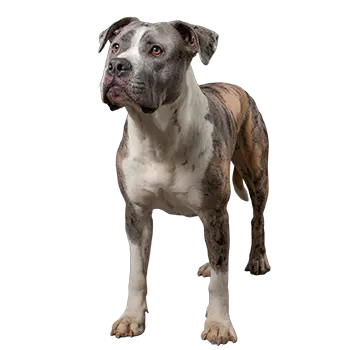
The Otto is a medium-to-large bulldog built for function rather than exaggeration. Everything about this dog's physical structure reflects its heritage as a catch dog and plantation guardian: broad enough to anchor against struggling livestock, athletic enough to cover ground quickly, and powerful enough to command respect from both animals and intruders. Unlike the compact, heavy English Bulldog that most people picture when they hear the word bulldog, the Alapaha retains the taller, more athletic frame of the old working bulldogs that preceded modern show breeding.
The head is the breed's most commanding feature. It is large and broad, flat across the skull, and distinctly square in profile. The jaws are heavily muscled, providing the grip strength that made these dogs effective at catching and holding cattle by the nose or ear. The muzzle is prominent and covered by loose upper lips, giving the face a characteristically bulldog expression without the extreme shortening seen in brachycephalic show breeds. The ears are natural drop ears, never cropped, and sit high on the skull. The eyes are one of the breed's most distinctive and talked-about features. They can be any color, including blue glass eyes and marble eyes where brown and blue are mixed within a single iris. This heterochromia and eye color variation is not considered a fault but is actually a prized characteristic.
The body is sturdy and deeply muscular with a broad chest and well-sprung ribs that provide the lung capacity for sustained physical effort. The hips are muscular but narrower than the chest, creating a frame that tapers slightly toward the rear. The back is straight and approximately as long as the dog is tall at the shoulders, contributing to the square proportions that the breed standard emphasizes. Males are noticeably larger and more heavily boned than females, with the breed exhibiting significant sexual dimorphism. A mature male can weigh nearly twice what a smaller female weighs, which is a wider gap than most breeds display.
The coat is short, close-lying, glossy, and stiff to the touch. Preferred color patterns feature at least fifty percent white with patches of color that may include blue merle, brown merle, red merle, brindle, black, chocolate, fawn, or red. Solid white dogs are accepted only when proper pigmentation is present on the skin, eye rims, lips, and nose. The merle gene is common in the breed, which produces the striking blue and marble eye colors but also requires careful breeding management to avoid the health complications associated with double merle pairings.
The tail is natural, never docked, thick at the base, and long enough to reach the hocks. It tapers to a point and is carried above the back when the dog is moving or excited. The feet are compact and cat-like, with dewclaws left intact. Movement should be smooth and powerful, with the hind legs driving the dog forward while the front legs maintain reach and balance. The overall impression is of a dog built to work, alert and confident in its bearing, projecting the quiet authority that earned these dogs their place on the plantations of the rural South.
The breed standard recognizes variation along a spectrum from bully type to standard type. Bully-type Alapahas have a more brachycephalic skull and heavier bone, while standard-type dogs display a slightly longer muzzle and leaner build. Both types are legitimate expressions of the breed, and the best examples maintain the athletic functionality that these dogs were originally selected for regardless of where they fall on that spectrum. A well-built Otto should never appear clumsy, overly wrinkled, or so heavy that it could not sustain a full day of physical work.
Affectionate With Family
★★★★★
The Otto forms an intensely close bond with its household and craves constant proximity to its people. This breed does not do well in isolation and considers itself a full participant in family life.
Good With Young Children
★★★★☆
Generally patient and protective with children it has been raised alongside, though supervision is important given the breed's substantial size and physical strength.
Good With Other Dogs
★★☆☆☆
The Otto's catch-dog heritage and territorial instincts make it assertive with unfamiliar dogs. Same-sex confrontations are particularly likely without careful management and socialization.
Shedding Level
★★★☆☆
Moderate year-round shedding with seasonal increases. The short coat releases dead hair consistently, making regular brushing a practical necessity.
Coat Grooming Frequency
★★☆☆☆
The short, stiff coat requires minimal grooming effort. Weekly brushing and occasional bathing are sufficient to maintain coat health and appearance.
Drooling Level
★★★☆☆
Moderate drooling is common, particularly when the dog is excited, anticipating food, or after drinking. The loose upper lips contribute to occasional slobber.
Coat Type
★★☆☆☆
Short, close-lying, and stiff to the touch with a natural gloss. The coat provides minimal insulation and is easy to maintain.
Openness To Strangers
★★☆☆☆
Naturally wary and watchful around unfamiliar people. The Otto evaluates strangers carefully before accepting their presence and will position itself protectively near its owner.
Playfulness Level
★★★☆☆
Enjoys interactive play with family members, particularly games that involve physical engagement. Playfulness is present but balanced by the breed's naturally composed temperament.
Watchdog/Protective Nature
★★★★★
Guarding is hardwired into this breed. The Otto establishes and defends territory instinctively, and its deep bark and imposing physical presence make it an exceptionally effective deterrent.
Adaptability Level
★★☆☆☆
Prefers a stable environment with a yard and consistent routine. Adapts poorly to frequent changes, confined living spaces, or households where the dog is left alone for extended periods.
Trainability Level
★★★★☆
Intelligent and capable of learning quickly, but brings an independent streak that requires firm, consistent leadership. Responds best to positive reinforcement and structured training programs.