Klee Kai

Alaskan Klee Kai

Quick Facts

🐕 Breed Group
Non-Sporting Group
📏 Size Category
Small to Medium
📏 Height
Males: 13-17 inches (Toy, Females: 13-17 inches (Toy, Miniature, Standard)
⚖️ Weight
Males: 6-25 lbs, Females: 6-25 lbs
⏱️ Life Expectancy
12-16 years
🧣 Coat Type
Double coat, standard or full length
🎨 Coat Colors
Black and White, Gray and White, Red and White, White
😀 Temperament
Intelligent, Loyal, Alert, Curious, Vocal
🏃 Exercise Needs
Moderate to High
🎓 Training Difficulty
Moderate
👶 Good with Children
Yes, with supervision
🐾 Good with Other Pets
Variable - prey drive present

Other Names & Breed Recognition

Klee Kai is what most people actually say when they are talking about this breed. The full official name is Alaskan Klee Kai, but in breed communities, social media groups, vet offices, and everyday conversation, the "Alaskan" prefix gets dropped more often than not. If you have seen one of these striking little dogs at a park and asked the owner what it was, they almost certainly said "Klee Kai" rather than reciting the full registry name. The abbreviation AKK is also widely used in written communication among enthusiasts.

The name itself comes from Athabaskan, one of Alaska's indigenous language families, where "klee kai" means "small dog." Linda Spurlin, the woman who developed the breed in the 1970s, originally called her dogs simply "Klee Kai" without the geographic prefix. The name was changed to "Alaskan Klee Kai" in 1995 to specify the breed's place of origin and distinguish it from any other small dogs that might claim a similar name. That change happened at the organizational level, but the simpler "Klee Kai" had already become the default in casual usage and it stuck.

The breed's recognition history reflects its relatively young age. The American Rare Breed Association recognized the Alaskan Klee Kai in 1995. The United Kennel Club followed with full breed recognition on January 1, 1997, making the UKC the primary registry for the breed for over two decades. In October 2020, the AKC accepted the breed into its Foundation Stock Service, the first step on the path toward full AKC recognition. The breed is not yet recognized by the Canadian Kennel Club, the FCI, or The Kennel Club in the United Kingdom.

You may occasionally see people refer to the breed as a "Mini Husky" or "Miniature Husky," but these labels are inaccurate and discouraged by the breed community. The Klee Kai is its own breed with its own standard, not a size variant of the Siberian Husky. While the breed was developed to resemble its larger northern ancestors in a smaller package, it has a distinct temperament profile, a different breeding history, and its own specific health considerations that set it apart from any Husky breed.

Klee Kai Organizations & Standards

The United Kennel Club has been the primary registry for the Klee Kai since granting breed recognition in 1997. The UKC standard describes the breed as a companion-sized version of the northern spitz-type dogs, with a wedge-shaped head, prick ears, a double coat, and a tail that curls over the back or to either side. The standard emphasizes the facial mask as the breed's most distinctive characteristic, describing the requirement for contrasting color with a well-defined nose bar down the center of the muzzle and goggles around the eyes. The UKC standard recognizes three size varieties: Toy (up to 13 inches), Miniature (13 to 15 inches), and Standard (15 to 17 inches). Dogs measuring over 17.5 inches are disqualified.

The Alaskan Klee Kai Association of America (AKKAOA) serves as the breed's primary parent club and has been central to establishing breeding standards, ethical guidelines, and health protocols since the breed's early development. The AKKAOA maintains a breeder directory, educational resources, and a list of approved breeders who have met their standards for health testing and ethical breeding practices. Working with an AKKAOA-approved breeder is strongly recommended because the breed's relative rarity and rising popularity have created opportunities for disreputable sellers to market mixed-breed dogs or poorly bred puppies as Klee Kai.

The AKC accepted the breed into its Foundation Stock Service in 2020, which allows dogs to be registered and recorded but does not yet grant full breed recognition or eligibility for AKC conformation events. The FSS designation represents the early stage of the AKC recognition process, and the breed community is working toward meeting the milestones required for advancement. In the meantime, AKC-registered Klee Kai can participate in certain AKC companion events.

Health testing standards for the Klee Kai have been established through the OFA's CHIC program. The required tests for CHIC certification include thyroid evaluation, patellar examination by an orthopedic veterinarian, ophthalmic examination by a veterinary ophthalmologist, and cardiac auscultation by a veterinary cardiologist. An optional test for Factor VII Deficiency through DNA screening is also part of the CHIC protocol. Reputable breeders typically exceed these minimums, with many also testing for hip and elbow dysplasia, running liver enzyme panels, and conducting genetic diversity profiling through services like Embark or UC Davis. For buyers, asking to see CHIC certification or equivalent documentation for both parents is one of the most reliable ways to identify a responsible breeding program.

Kennel Club Recognition

  • American Kennel Club (AKC): Recognized in 2020, Foundation Stock Service
  • United Kennel Club (UKC): Recognized, Northern Breed

Klee Kai Physical Description

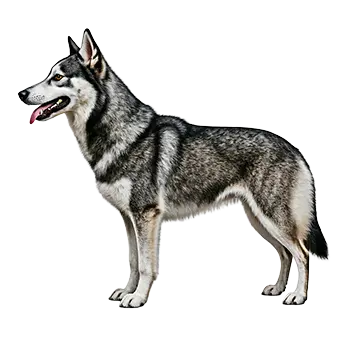
The first thing people notice about the Klee Kai is that it looks exactly like someone took a Husky and scaled it down. That resemblance is intentional and is the entire reason the breed exists, but the Klee Kai is not simply a small Husky. It has its own proportions, its own structural characteristics, and its own standard that defines what correct type looks like at each of the three recognized sizes.

The Toy variety stands up to thirteen inches at the shoulder and typically weighs under ten pounds. The Miniature ranges from thirteen to fifteen inches and carries ten to eighteen pounds. The Standard measures fifteen to seventeen inches with weight proportional to height, generally in the sixteen to twenty-five pound range. Dogs exceeding seventeen and a half inches are disqualified from showing. Across all three sizes, the body is slightly longer than it is tall, with the length measured from the breastbone to the point of the rump slightly exceeding the height at the withers.

The head is the breed's defining feature. It is clean, free of wrinkles, and proportionate to the body, with a slightly rounded skull that tapers through the muzzle to form a broad-based wedge. The stop is moderate and well-defined. The muzzle narrows toward the nose without becoming snipey, and the lips are tight and well-pigmented. The eyes are medium-sized and can be any color or combination of colors, including brown, blue, green, amber, and heterochromatic (one blue and one brown) or parti-colored (mixed colors within a single eye). Eye shape ranges from oval to slightly almond-shaped, and the expression should convey alertness and intelligence.

The ears are triangular, set high, firmly erect, and slightly large in proportion to the head. They are thick, well-furred, and contribute significantly to the breed's alert, fox-like expression. The neck is of moderate length and arched, blending into well-laid-back shoulders and a level topline. The chest is moderately deep with enough spring of rib to protect the lungs without making the dog appear barrel-bodied.

The facial mask is the single most important breed-specific physical trait. The standard requires clearly visible contrasting color between the mask and the lighter areas of the face, with a well-defined nose bar running down the center of the muzzle and goggles around the eyes. A full mask is the most desirable pattern. Stars and blazes on the forehead are acceptable but less preferred. Dogs with open faces or no discernible mask are disqualified.

The coat comes in two varieties: standard (shorter and closer-lying) and full (longer with more pronounced feathering on the legs and tail). Both are double-coated with a soft, dense undercoat and a straight, weather-resistant outer coat. The breed comes in black and white, gray and white, and red and white, each in varying shades. Solid white dogs exist but are disqualified from conformation showing, and most responsible breeders test for the gene responsible to avoid producing them.

The tail is well-furred and set just below the level of the topline. When the dog is alert or moving, it curls over the back or hangs to either side. At rest, it may drop. The legs are straight and well-boned in front, with moderate angulation in the rear that provides the driving power for the breed's quick, agile movement. Feet are oval with well-arched toes and thick pads. Dewclaws on the rear legs are sometimes present and are typically removed.

In motion, the Klee Kai should move smoothly and effortlessly at a moderately fast trot, with good reach in the front and solid drive from behind. As speed increases, the legs angle inward toward a center line beneath the body, which is normal and correct for this type of dog. The overall impression should be of a small, agile, well-proportioned northern dog whose appearance immediately suggests its Arctic heritage while remaining clearly distinct from a puppy or miniature version of any specific larger breed.

Affectionate With Family
The Klee Kai bonds tightly with its family and craves involvement in daily household life. This breed thrives on close contact with its people and can develop significant separation anxiety when left alone for extended periods.
Good With Young Children
The Klee Kai can coexist with children who handle dogs gently, but its small size makes it feel vulnerable around unpredictable toddlers. Supervision is essential because a startled Klee Kai may snap defensively when grabbed or cornered.
Good With Other Dogs
Most Klee Kai get along reasonably well with other dogs, particularly when raised together from a young age. Early and consistent socialization helps prevent the wariness around unfamiliar dogs that can develop if exposure is limited during puppyhood.
Shedding Level
The double coat sheds year-round at a moderate pace and blows out heavily twice per year during seasonal changes. Despite the breed's small size, the volume of loose fur during a coat blow catches many first-time owners off guard.
Coat Grooming Frequency
Weekly brushing keeps the coat in order during most of the year. The Klee Kai is a naturally clean breed that does not develop strong body odor and rarely needs bathing outside of seasonal shedding periods.
Drooling Level
Drooling is not part of the Klee Kai experience. The breed's tight lip structure and clean muzzle keep things dry under all normal circumstances.
Coat Type
A weather-resistant double coat comes in two recognized varieties: standard (shorter overall) and full (longer with more feathering). Both types share a soft, dense undercoat beneath a straight, coarser outer layer.
Openness To Strangers
Reserve around strangers is one of the defining traits of the breed. The Klee Kai observes new people carefully before engaging and often remains cautious throughout an interaction. Ongoing socialization helps build confidence but does not eliminate this natural wariness.
Playfulness Level
Curious and energetic, the Klee Kai approaches play with enthusiasm and creativity. It enjoys interactive games with its people and can entertain itself when motivated, though unsupervised play sometimes leads to mischief.
Watchdog/Protective Nature
Despite its small stature, the Klee Kai takes alerting seriously and will vocalize at anything unusual in its environment. This breed notices changes that other dogs would overlook and does not hesitate to announce them.
Adaptability Level
The Klee Kai adjusts reasonably well to different living environments including apartments and houses, provided its exercise and companionship needs are met. Major routine changes or extended isolation can trigger anxiety-based behaviors.
Trainability Level
Intelligence and food motivation make the Klee Kai capable of learning quickly, but an independent streak inherited from its northern ancestors means focus can waver when something more interesting is happening nearby.

Klee Kai History & Development

The Klee Kai exists because of one undersized Husky and one woman's determination to turn a happy accident into a recognized breed. In the mid-1970s, Linda Spurlin traveled from Alaska to visit her husband's relatives in Oklahoma, where she encountered a seventeen-pound gray and white Husky named Curious among their farm dogs. Curious drew attention everywhere she went. People stopped their cars, left restaurants to peer through windows, and crowded around to marvel at what looked like a perfect miniature Husky. Spurlin asked to take Curious back to Alaska and spent the next decade and a half working to create more dogs like her.

The name "Klee Kai" was Spurlin's original designation, drawn from Athabaskan words meaning "small dog." She chose the name deliberately to give her new breed an identity rooted in its Alaskan origins. For over twenty years, from the early 1970s through 1995, the breed was known simply as the Klee Kai. The "Alaskan" prefix was added in 1995 to specify geographic origin, but by that point the shorter name had already become the default in everyday conversation and it remained so.

Spurlin's breeding program used Alaskan Huskies as the primary foundation, supplemented with carefully selected crosses to Siberian Huskies, Schipperkes, and American Eskimo Dogs. The goal was always specific: produce a dog that looked like its northern sled dog ancestors but in a size suitable for companion living rather than working. Spurlin was exacting in her standards. She bred for appearance, soundness, and temperament, culling ruthlessly from her program any dogs that did not meet her criteria. She did not release a single dog to an outside buyer until 1988, after roughly fifteen years of selective breeding. That kind of patience in breed development is almost unheard of.

The Klee Kai's journey into the broader world proceeded cautiously. Spurlin maintained tight control over breeding rights and placement of her dogs. When she retired from breeding in 1995, she transferred her remaining nine dogs to a friend in Colorado who continued the work. By that time, the breed had begun attracting enough interest to warrant organizational infrastructure. The American Rare Breed Association recognized the breed in 1995, and the United Kennel Club followed with full recognition in 1997.

The shorter "Klee Kai" name persisted as the community name for the breed because it was what Spurlin herself had used for two decades and what the earliest owners and breeders had adopted. It also simply sounds better in English conversation. When someone asks what kind of dog you have, saying "Klee Kai" is quicker and more natural than "Alaskan Klee Kai," and it avoids the confusion that sometimes arises when people hear "Alaskan" and assume they are looking at some variety of Malamute or Husky.

The AKC's acceptance of the breed into its Foundation Stock Service in 2020 marked a significant step forward. The breed community continues to work toward full recognition while navigating the challenges that come with rising popularity in a breed with a still-limited gene pool. The Klee Kai remains relatively rare, though social media exposure has driven demand sharply upward, creating both opportunity and risk. The opportunity lies in growing the community of responsible owners and breeders. The risk lies in irresponsible breeding driven by profit rather than preservation of the standards Spurlin spent her career establishing.

Klee Kai Temperament & Personality

The Klee Kai was bred to be a companion, and it takes that job seriously. This is a dog that wants to be with its people, involved in whatever is happening, and positioned as close to the center of household activity as it can get. The bond is intense and often directed most strongly toward one or two primary individuals, though the Klee Kai is generally affectionate with the entire family. That intensity of attachment is one of the breed's greatest strengths and also its most common source of behavioral problems, because a Klee Kai that is separated from its people for extended periods can develop separation anxiety that manifests as destructive behavior, relentless vocalizing, or both.

And speaking of vocalizing, the Klee Kai has a lot to say. This breed inherited the talkative nature of its Husky ancestors and expresses itself through a range of howls, whines, yips, and conversational sounds that first-time owners either find charming or overwhelming. The Klee Kai is not typically an excessive barker in the traditional sense, but it will tell you when it is happy, annoyed, bored, excited, or has an opinion about something, which is most of the time. If you live in an apartment with thin walls, this is worth considering seriously before committing to the breed.

Intelligence is high and expresses itself as curiosity, problem-solving ability, and a quickness to learn that makes training both rewarding and challenging. The Klee Kai picks up new commands with impressive speed but applies that same intelligence to figuring out how to get what it wants, which does not always align with what you want. The independent thinking inherited from its northern ancestors means the Klee Kai may evaluate your request, decide it has a better idea, and proceed accordingly. This is not defiance in the traditional sense. It is the natural cognitive style of a breed whose ancestors needed to make independent decisions to survive.

With strangers, the Klee Kai is characteristically reserved. This is one of the most consistently noted temperament traits in the breed and one that requires proactive management through socialization. A well-socialized Klee Kai is cautious but composed around new people. An under-socialized one can become fearful and reactive, which in a small dog sometimes progresses to defensive snapping. Socialization is not a puppy-only project with this breed. It needs to continue throughout the dog's life, with regular positive exposure to new people, environments, and situations to prevent the natural wariness from calcifying into anxiety.

The prey drive is present and should not be underestimated despite the breed's small size. Klee Kai will chase small animals with genuine intent, and their speed and agility make them effective at it. Cats in the household require careful introductions and ongoing management. Other dogs are generally accepted, especially when the Klee Kai is raised alongside them, but introductions to unfamiliar dogs should be handled thoughtfully. The breed's small size means it can feel threatened by larger, more boisterous dogs, and a Klee Kai that feels cornered will not hesitate to defend itself.

The overall temperament picture is one of a highly intelligent, deeply bonded, vocally expressive little dog that rewards engaged ownership with fierce loyalty and genuinely entertaining companionship. It is not a good fit for owners who want a quiet, independent, easy-going pet that is happy to entertain itself. The Klee Kai demands involvement, communication, and a willingness to meet it halfway on the question of who is actually running the household.

Klee Kai Family Life & Living Requirements

The Klee Kai adapts to a wider range of living situations than many people expect from a breed with northern ancestry. Apartments, condos, townhouses, and traditional houses can all work, provided the dog's exercise and companionship needs are met. The breed's smaller size is a genuine advantage in tighter living spaces, and Klee Kai are generally clean, not destructive when properly exercised, and do not carry the heavy body odor that some breeds bring into small spaces. The main apartment concern is noise. The Klee Kai's vocal tendencies can create problems with neighbors if the dog is left alone frequently or is not adequately exercised and stimulated.

Separation anxiety is the single biggest lifestyle consideration with this breed. The Klee Kai was designed to be a companion, and it expects to be companioned. Dogs left alone for full workdays on a regular basis often develop anxiety behaviors that range from whining and howling to destructive chewing, escape attempts, and house soiling. Crate training helps manage the practical fallout, but it does not address the underlying anxiety. Households where someone is home for most of the day, where the dog can accompany its owner to work, or where a second pet provides company tend to produce the happiest Klee Kai.

Families with children over about seven or eight years old generally do well with this breed. The Klee Kai can be playful, affectionate, and genuinely fond of kids who treat it respectfully. Younger children present a different equation. The Klee Kai's small size, particularly in the Toy and Miniature varieties, makes it physically vulnerable to the kind of rough handling that toddlers deliver without malice. A Klee Kai that gets stepped on, grabbed by the tail, or cornered by a well-meaning but uncoordinated small child may react defensively, and a snap from any dog directed at a child's face is a serious situation regardless of the dog's size. Supervision is not optional with young kids and this breed.

Other pets can work with proper management. Klee Kai raised with cats from puppyhood often learn to coexist peacefully, though the prey drive remains present and monitoring is smart. Dog-to-dog dynamics are generally positive, especially with dogs of similar energy levels, and many Klee Kai do well in multi-dog households. The breed's social nature means a second dog can actually help with separation anxiety by providing companionship during the owner's absence.

Secure fencing matters. The Klee Kai is agile, clever, and motivated to explore, and a miniature-sized dog can squeeze through gaps that would not concern most breed owners. Fence checks should be routine, and the dog should not be left unsupervised in a yard with fencing that has not been evaluated for Klee Kai-sized escape routes. Off-leash time in unfenced areas carries real risk given the breed's prey drive and tendency to become selectively deaf when something interesting is happening at a distance.

Klee Kai Training & Exercise Needs

The Klee Kai is smart enough to learn almost anything and independent enough to decide whether it wants to. That combination makes training an exercise in building cooperation rather than demanding compliance. Positive reinforcement works well with this breed because most Klee Kai are genuinely food motivated and respond to enthusiastic praise. Harsh corrections backfire badly. The Klee Kai has a sensitive temperament underneath its confident exterior, and aversive training methods tend to produce a dog that shuts down, becomes anxious, or loses trust rather than one that obeys more reliably.

Socialization tops the training priority list and cannot be emphasized enough. The Klee Kai's natural reserve around strangers requires systematic, positive exposure to new people, environments, animals, sounds, and situations starting in puppyhood and continuing throughout the dog's life. The critical window for initial socialization is birth through about fourteen weeks, and breeders who use structured socialization protocols during this period produce puppies with a meaningful head start on confidence. But socialization does not end when puppyhood does. Adult Klee Kai that stop encountering novel situations can become increasingly anxious and reactive over time, and recovering lost social confidence is much harder than maintaining it.

Crate training deserves early investment because it serves multiple practical purposes throughout the Klee Kai's life. It provides a safe space during the inevitable periods when the dog must be left alone, it prevents destructive behavior during the teething and adolescent phases, and it prepares the dog for veterinary stays, travel, or emergency situations where confinement is necessary. Making the crate a positive association from the start, rather than introducing it as a punishment or an afterthought, pays dividends for years.

Exercise needs are moderate to high but manageable for most active households. An hour of activity per day, split between walks and interactive play, covers the baseline for most Klee Kai. The breed enjoys hiking, jogging at moderate distances, agility, rally, and particularly any activity that involves mental problem-solving alongside physical movement. Bored Klee Kai are destructive Klee Kai, so variety matters. Rotating through different walking routes, introducing new games, and offering puzzle toys during downtime keeps the mind engaged and prevents the behavioral problems that arise from monotony.

Recall training requires honesty about the breed's limitations. The Klee Kai's prey drive and independent nature mean that off-leash reliability in uncontrolled environments is a goal many owners work toward but relatively few fully achieve. A long line provides the freedom to practice recall at distance while maintaining the safety net that the breed's impulse control does not always provide. Owners who accept this reality and plan accordingly tend to have far fewer stressful incidents than those who trust a recall that has not been tested against genuine distraction.

Klee Kai Health Concerns

The Klee Kai benefits from the careful health testing practices established by ethical breeders since the breed's earliest days, but its relatively young age as a breed means the complete health picture is still developing. New conditions may emerge as the population grows and more data accumulates, which makes ongoing health monitoring important for every owner.

The overall health outlook for the Klee Kai is positive, particularly when puppies come from health-tested parents in responsible breeding programs. The breed's relatively short history means that the health data will continue to evolve, and owners who stay connected to the breed community and keep up with emerging health information are best positioned to catch and address any new concerns early.

Common Health Issues

  • Factor VII Deficiency - A genetic blood clotting disorder caused by an autosomal recessive gene. Affected dogs produce insufficient Factor VII protein, creating risk of excessive bleeding after surgery or injury. A DNA test is available, and responsible breeders screen all breeding stock to prevent producing affected puppies.
  • Patellar Luxation - The kneecap dislocates from its normal groove at the end of the femur. Severity ranges from occasional minor slips to permanent displacement requiring surgical correction. Signs include intermittent skipping, bunny-hopping, and holding up a rear leg. A CHIC-required screening for the breed.
  • Autoimmune Thyroiditis - The immune system produces antibodies that progressively damage the thyroid gland. May remain compensated for years before progressing to overt hypothyroidism with symptoms including weight gain, coat deterioration, lethargy, and skin problems. OFA thyroid panel is a CHIC-required test.
  • Congenital Cardiac Defects - Various heart valve and tissue malformations ranging from benign murmurs to serious structural abnormalities. Cardiac auscultation is CHIC-required, with breeding dogs evaluated after twelve months of age.
  • Juvenile Cataracts - Lens opacity developing in young dogs that can affect vision. Documented in certain lines within the breed. Identified through the CHIC-required ophthalmic examination by a veterinary ophthalmologist.
  • Cryptorchidism - One or both testicles fail to descend into the scrotal sac. Occurs at higher rates in the Klee Kai than many breeds, possibly linked to foundation Siberian Husky genetics. Retained testicles carry elevated cancer risk and should be surgically removed.
  • Liver Shunt (Portosystemic Shunt) - An abnormal blood vessel allows blood to bypass the liver, resulting in inadequate toxin filtration. Can cause poor growth, neurological symptoms, and digestive issues. Severity varies and treatment options range from medical management to surgical correction.

Preventive Care & Health Monitoring

  • OFA Thyroid Evaluation - CHIC-required test screening for autoimmune thyroiditis. Regular retesting recommended for breeding dogs because the condition can develop at any point during adulthood.
  • OFA Patellar Examination - CHIC-required test performed by an orthopedic veterinarian. Evaluates kneecap stability and identifies luxation that may not be apparent to the dog's owner during normal activity.
  • Ophthalmic Examination by Veterinary Ophthalmologist - CHIC-required screening that identifies juvenile cataracts, lens abnormalities, and other eye conditions documented in the breed.
  • Cardiac Auscultation by Veterinary Cardiologist - CHIC-required test identifying heart murmurs and structural cardiac defects. Puppies should be checked at their eight-week veterinary visit, with formal evaluation for breeding dogs conducted after twelve months.
  • Factor VII Deficiency DNA Test - Optional under CHIC but considered essential by the responsible breeding community. Identifies affected dogs and carriers, allowing breeders to make informed pairing decisions that prevent producing affected puppies.
  • Liver Enzyme Panel - Not a CHIC requirement but routinely performed by careful breeders to screen for liver shunt and other hepatic abnormalities that can affect the breed.

Klee Kai Grooming & Maintenance

The Klee Kai is a naturally clean breed that requires surprisingly little grooming effort for a double-coated dog. Most of the year, a weekly brushing session to remove loose hair and distribute the coat's natural oils is all that is needed. The breed does not develop strong body odor, and bathing is genuinely infrequent, needed only a handful of times per year unless the dog finds something foul to roll in. Over-bathing does more harm than good by stripping the coat's natural water resistance and potentially irritating the skin.

The twice-yearly coat blow is where grooming demands spike significantly. When the dense undercoat releases, it comes out in clumps and clouds over a period of two to three weeks. Daily brushing with an undercoat rake or slicker brush during this time is not optional if you want to keep your home reasonably fur-free. Many owners find that warm baths during the coat blow help loosen the shedding undercoat and speed up the process. The sheer volume of fur a Klee Kai produces during these periods is disproportionate to its size, and first-time owners are universally surprised by it.

Between coat blows, the shedding continues at a moderate, steady pace that is noticeable but manageable with weekly brushing. The coat does not mat or tangle easily in either the standard or full-coat variety, though the fuller coat may develop minor knots behind the ears or along the hindquarters if neglected for too long. A metal comb run through these areas once a week prevents any buildup.

Nail care follows the typical schedule for a small, active dog. Every two to three weeks is standard, though dogs that walk regularly on hard surfaces may wear their nails down enough to extend the interval. Many Klee Kai are sensitive about having their feet handled, so introducing nail trimming early and making it a positive experience with treats and calm handling pays off over the life of the dog. Ear maintenance is straightforward thanks to the breed's upright, well-ventilated ears. Weekly checks for wax buildup, redness, or unusual odor catch any developing problems before they become infections.

Dental care is essential and often underestimated across all small breeds. Small dogs are prone to dental crowding and the accelerated tartar buildup that comes with it. Brushing several times per week with a canine toothpaste helps prevent periodontal disease, which is one of the most common health problems in small dogs and one of the most preventable. Dental chews and routine veterinary dental cleanings supplement home care. The overall grooming commitment with a Klee Kai is modest for most of the year, with a few weeks of intensive coat management twice annually. For people who accept that seasonal shedding is part of the package, the breed is one of the easier northern types to maintain.