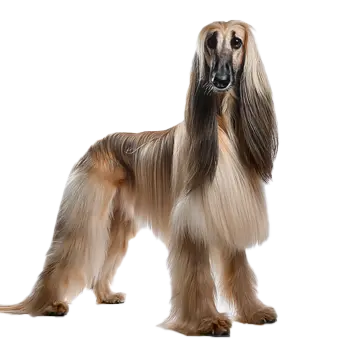
The Kabul Hound is a tall, elegant sighthound whose physical structure communicates both athletic capability and refined beauty. Males stand approximately 27 inches at the shoulder with a permissible range of 26 to 28 inches, weighing around 60 pounds. Females are slightly smaller at approximately 25 inches with a range of 24 to 26 inches, weighing around 50 pounds. The body is square in proportion, with the height at the withers equaling the distance from the chest to the buttocks. The overall silhouette projects length, grace, and power, with the prominent hipbones creating a distinctive topline that is one of the breed's most recognizable structural features.
The head is long and refined with a slightly convex muzzle, minimal stop between the skull and muzzle, and a prominent occiput at the back of the skull. The eyes are dark, nearly triangular in shape, and carry the aloof, far-seeing expression that breed enthusiasts describe as exotic or eastern. The ears are long, set low on the head, and covered with exceptionally long silky hair that blends into the coat of the neck. The jaws are powerful despite their refined appearance, a legacy of the breed's original work pursuing and dispatching game across Afghanistan's mountain terrain. The nose is black in most color varieties, though liver-colored noses appear in lighter-coated specimens.
The coat is the breed's most dramatic physical feature. Long, thick, and silky in texture with an exceptionally fine quality, it covers the body, legs, chest, flanks, and ears with flowing hair that moves freely during motion. The feet are large and well-feathered, providing snowshoe-like traction on rough terrain. A distinctive short-haired saddle runs along the back in mature dogs, creating a natural contrast against the longer furnishings. The topknot - a crown of long, silky hair on the head - is one of the breed's defining characteristics and is required by the breed standard. The coat served a critical functional purpose in the breed's homeland, insulating the dog against the severe cold of Afghanistan's mountain passes where temperatures can drop well below freezing.
The tail is set low, carried in a ring or curve at the end, and is sparsely feathered compared to the rest of the body. It should never be curled over the back or carried sideways. The breed's movement is distinctive and immediately recognizable - a smooth, springy gait with a style of high order, as the standard describes it, with the head carried proudly and the coat flowing behind like a banner. The large feet with arched toes and thick pads, combined with the powerful rear angulation and prominent hip structure, give the Afghan Hound its characteristic ground-covering stride that allowed it to navigate rocky mountain passes at remarkable speed.
Affectionate With Family
★★★★☆
The Kabul Hound forms deep, lasting attachments to its household and can be surprisingly affectionate with the people it trusts. This breed demonstrates loyalty through quiet companionship rather than overt displays, often choosing to rest near its favorite person and offering moments of genuine warmth and playfulness in private. Strangers rarely see the tender side of this breed, which reserves its most generous affection for the inner circle of its family.
Good With Young Children
★★☆☆☆
The Kabul Hound is not naturally suited to life with very young children. Its dignified temperament does not tolerate rough handling, sudden movements, or loud outbursts well, and the breed may become withdrawn or startled by the unpredictable energy of toddlers. Older children who understand how to interact calmly and respectfully with a large, sensitive dog are a far better match. Supervision is always recommended during any interaction between this breed and children of any age.
Good With Other Dogs
★★★☆☆
When properly socialized from puppyhood, the Kabul Hound can coexist peacefully with other dogs, particularly those of similar size and temperament. The breed tends to prefer the company of its own kind and often bonds readily with other sighthounds. However, its independent nature means it does not seek out dog-to-dog interaction the way more gregarious breeds do, and introductions to unfamiliar dogs should be handled gradually and in neutral territory.
Shedding Level
★★★☆☆
Despite its voluminous coat, the Kabul Hound sheds at a moderate level compared to many long-haired breeds. The long, silky hair does release throughout the year, and seasonal changes can produce heavier shedding periods. Regular brushing significantly reduces the amount of loose hair found around the home, but owners should expect some ongoing hair management as a routine part of living with this breed.
Coat Grooming Frequency
★★★★★
The Kabul Hound demands one of the highest grooming commitments of any dog breed. The long, fine, silky coat tangles and mats quickly without consistent attention, requiring thorough brushing sessions several times per week and regular bathing to maintain coat health and appearance. Many owners invest in professional grooming tools including high-velocity dryers, and those who show the breed devote even more time to coat care. Neglected coats can become painfully matted and may require shaving.
Drooling Level
★☆☆☆☆
The Kabul Hound is an exceptionally clean breed with virtually no drooling tendency. Its refined muzzle structure and tight lip line mean that saliva is not an issue in daily life. Owners will not encounter wet spots on furniture, clothing, or floors from drool, making this breed one of the tidiest in terms of oral cleanliness among large dogs.
Coat Type
★★★★★
The Kabul Hound's coat is its most visually striking feature - long, thick, and exceptionally silky in texture, covering the body, legs, ears, and feet with fine hair that flows freely during movement. A distinctive short-haired saddle runs along the back of mature dogs, providing a natural contrast to the longer furnishings elsewhere. The coat evolved to protect the breed from the extreme cold of Afghanistan's mountain passes and remains one of the most demanding coats in the dog world to maintain properly.
Openness To Strangers
★★☆☆☆
Aloofness toward unfamiliar people is a defining trait of the Kabul Hound and should not be mistaken for shyness or fearfulness. This breed evaluates newcomers at its own pace and may take considerable time before accepting attention from someone outside its established circle. Forcing interaction with strangers often backfires, causing the dog to withdraw further. Patient, respectful guests who allow the dog to approach on its own terms are most likely to eventually earn its regard.
Playfulness Level
★★★☆☆
Beneath the regal exterior lies a genuinely playful spirit that emerges in bursts, particularly during puppyhood and with trusted family members. The Kabul Hound can be clownish and silly in private, engaging in spontaneous sprints around the yard or tossing toys for its own amusement. These episodes are interspersed with long periods of composed relaxation. The breed does not demand constant entertainment but appreciates opportunities to express its athletic joy.
Watchdog/Protective Nature
★★☆☆☆
The Kabul Hound is not a natural guardian breed and should not be expected to serve as a protective watchdog. While it may alert the household to unfamiliar sounds or visitors, its response to perceived threats is more likely to be reserved observation than aggressive intervention. The breed's independent temperament means it assesses situations on its own terms rather than instinctively positioning itself between its family and danger.
Adaptability Level
★★★☆☆
The Kabul Hound can adapt to various living situations provided its exercise needs are met, but it thrives best with consistent routines and a stable environment. Changes in household dynamics, living arrangements, or schedules can unsettle this sensitive breed. Apartment living is possible if daily vigorous exercise is provided, though a home with a large, securely fenced yard is ideal. The breed's sensitivity to its environment means that calm, predictable households suit it best.
Trainability Level
★★☆☆☆
Training the Kabul Hound requires extraordinary patience and a willingness to accept that this breed operates on its own terms. Highly intelligent but profoundly independent, the Kabul Hound understands commands perfectly well but frequently chooses whether compliance suits its mood. Harsh corrections are counterproductive and may cause the dog to shut down entirely. Positive reinforcement with high-value rewards can produce results, but owners should expect a training relationship built on negotiation rather than obedience.