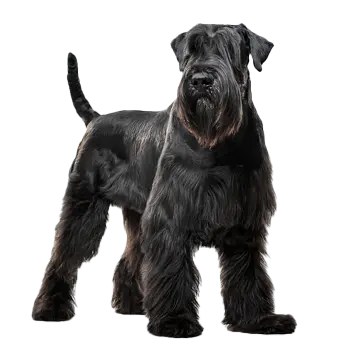
The Giant earns its nickname honestly. Standing up to 27.5 inches at the shoulder and weighing as much as 85 pounds, this is a substantial, powerful dog that commands attention in any setting. But size alone does not define the breed's physical presence. The Giant carries itself with a confidence and alertness that makes it appear even larger than it actually is. The square, compact body, high head carriage, and forward-leaning posture all contribute to a look of readiness and authority.
The head is strong and rectangular, with flat cheeks and a powerful muzzle that runs parallel to the top of the skull. There is a moderate stop between the forehead and the muzzle, and the overall impression is of strength without coarseness. The most recognizable facial features are the arched eyebrows, which give the dog a keenly intelligent expression, and the full mustache and beard that define the Schnauzer type. These furnishings are not just decorative - they originally served to protect the dog's face during work with livestock and in encounters with vermin.
The eyes are medium-sized, oval, and dark brown, set deep under those prominent brows. They carry an expression that experienced owners describe as penetrating and alert, with a quality of watchful assessment that reflects the breed's guarding instincts. The ears are set high on the skull and may be cropped to a pointed erect shape or left natural, in which case they fold forward in a V-shape that frames the face. Ear cropping has become less common in recent decades, particularly outside the United States.
The body is compact and muscular with a short, strong back and a deep chest that reaches to the elbow. The ribcage is well-sprung, providing ample lung capacity for a breed that was developed to work actively all day. The topline slopes very slightly from the withers toward the rear, and the underline tucks up moderately. The tail is set high and carried erect - historically docked, but increasingly left natural in countries where docking is prohibited or discouraged.
The coat is the breed's functional armor. A harsh, dense, wiry outer coat stands off from the body, supported by a soft, thick undercoat. The texture should feel rough and bristly to the touch, not soft or silky. When properly hand-stripped, the coat maintains its correct harsh texture and lies close to the body with moderate furnishings on the legs and face. Clipping the coat, while more convenient, gradually softens the texture over time and changes the coat's natural properties. The breed comes in two colors: solid black and pepper and salt, a banded coloring that creates a distinctive steel-gray effect.
The legs are straight and well-boned, with the forelegs appearing as parallel columns when viewed from the front. The hindquarters are powerfully muscled with well-bent stifles and strong hocks that provide driving force. Feet are compact and round with well-arched toes and thick, dark pads built for grip on varied terrain. Dewclaws on the rear legs are typically removed. The overall structure from shoulder to hip is designed to transmit power efficiently, reflecting a breed that was expected to work alongside cattle all day and still have energy left for guard duty at night.
The Giant moves with a powerful, ground-covering trot that reflects its working heritage. The gait should be free, balanced, and efficient, with good reach in front and strong drive from the rear. The topline remains firm and level during movement, and the overall impression is of a dog that can sustain this pace indefinitely without tiring. When standing at rest, the Giant presents a picture of coiled readiness - weight balanced, muscles engaged, and expression alert. There is nothing slack or casual about this dog's physical presence, even when it is doing nothing more remarkable than watching from the front porch.
Affectionate With Family
★★★★★
Giants form intense bonds with their household and are happiest when they can be near their people. This is a dog that takes its relationships seriously.
Good With Young Children
★★★☆☆
Can be good with children when raised together, but the breed's size and energy require supervision. Giants may unintentionally overwhelm small kids during play.
Good With Other Dogs
★★☆☆☆
Same-sex aggression and dominance behavior toward other dogs are documented patterns in this breed. Early socialization helps but does not always eliminate the tendency.
Shedding Level
★★☆☆☆
The wiry coat sheds minimally when properly maintained through regular hand-stripping. Clipped coats tend to shed more than stripped ones.
Coat Grooming Frequency
★★★★☆
The Giant's coat demands consistent upkeep including regular brushing, hand-stripping or clipping every few months, and attention to the beard and furnishings.
Drooling Level
★★☆☆☆
The breed is not a heavy drooler, though the beard and facial furnishings tend to collect water and food debris, which can feel like drooling to the unprepared owner.
Coat Type
★★★★☆
A harsh, dense, wiry outer coat over a soft undercoat. The breed's iconic eyebrows and beard are formed by longer furnishings on the face.
Openness To Strangers
★★☆☆☆
Giants are naturally reserved with unfamiliar people and will assess a stranger before deciding how to respond. This wariness is part of the breed's guarding heritage.
Playfulness Level
★★★★☆
Despite their imposing appearance, Giants are spirited and playful dogs that retain a puppyish enthusiasm well into adulthood. They enjoy interactive games with their owners.
Watchdog/Protective Nature
★★★★★
This is a breed that was developed to guard and protect. The Giant takes its watch duties instinctively and does not need training to alert to unusual activity.
Adaptability Level
★★★☆☆
Giants can adapt to various living situations provided their substantial exercise and mental stimulation needs are consistently met. They need space to move.
Trainability Level
★★★★☆
Highly intelligent and capable of advanced training, but the breed also has an independent streak. Giants respond best to confident, consistent handlers who make training engaging.