Gammel Dansk

Old Danish Pointer

Quick Facts

🐕 Breed Group
FCI Group 7 - Pointing Dogs, Section 1.1 Continental Pointing Dogs (Braque type); UKC Gun Dog
📏 Size Category
Medium
📏 Height
Males: 21-23.5 inches (54-60 cm), Females: 19.5-22 inches (50-56 cm)
⚖️ Weight
Males: 66-77 pounds (30-35 kg), Females: 57-68 pounds (26-31 kg)
⏱️ Life Expectancy
12-14 years
🧣 Coat Type
Short, dense, close-lying
🎨 Coat Colors
White with brown patches, markings, and speckling
😀 Temperament
Calm, determined, courageous, loyal, gentle, patient
🏃 Exercise Needs
Moderate to high
🎓 Training Difficulty
Easy to moderate - intelligent and willing
👶 Good with Children
Yes
🐾 Good with Other Pets
Yes, with proper socialization

Other Names & Breed Recognition

Gammel Dansk is a shortened form of Gammel Dansk Honsehund, the breed's full official Danish name that translates to Old Danish Bird Dog or Old Danish Chicken Dog. The abbreviated Gammel Dansk, meaning simply Old Danish, is used commonly in casual Danish conversation and among breed enthusiasts who find the full name cumbersome for everyday reference. The shortened form appears in breed databases, online discussions, and informal breed references, particularly in Scandinavian contexts where the meaning is immediately understood.

The breed is known by a substantial collection of names across different languages and contexts. In English, the most common designation is Old Danish Pointer, which emphasizes the breed's primary hunting function. The alternative Old Danish Bird Dog provides a more literal translation of honsehund. The historical name Bakhound or Bakhund honors Morten Bak, the 18th-century Danish farmer who developed the breed through eight generations of selective crossing. The French designation Ancien Chien d'Arret Danois and the German Altdanischer Huhnerhund appear in Continental European breed documentation, while in Italy the breed is occasionally called the Danish Bracco.

The Gammel Dansk holds special status as one of only two indigenous hunting dog breeds originating from Denmark, alongside the Danish-Swedish Farmdog. This distinction has elevated the breed to a position of genuine national pride within Denmark, where it has been recognized as part of the country's cultural heritage. The breed was Denmark's third most popular hunting dog by registration numbers in recent years, demonstrating that it maintains a significant following among Danish sportsmen who value its traditional working qualities and calm, close-working hunting style.

The breed's international recognition remains limited to a small number of registries. The FCI granted definitive recognition on February 4, 1969, classifying the breed under Group 7, Pointing Dogs, Section 1.1, Continental Pointing Dogs of the Braque type, with breed standard number 281. The UKC recognized the breed in 2006 under its Gun Dog group. The AKC, CKC, and The Kennel Club in the United Kingdom do not recognize the breed, reflecting its extreme rarity outside Scandinavia. Whether you encounter the name Gammel Dansk, Gammel Dansk Honsehund, Old Danish Pointer, or Bakhound, all designations refer to the same breed: a calm, powerful, brown-and-white continental pointer with over three centuries of Danish hunting heritage.

Gammel Dansk Organizations & Standards

The Gammel Dansk Honsehund Club, established in Denmark in 1947, is the breed's parent organization and was founded expressly to rescue the Old Danish Pointer from extinction following its catastrophic population decline during World War II. When the club formed, the breed's population had collapsed to approximately ten surviving dogs. The founding members undertook the urgent work of locating remaining specimens, establishing meticulous breeding records, and developing protocols that would rebuild the population while preserving the genetic diversity essential for long-term breed health. The Dansk Kennel Klub administers official registrations and works with the breed club to maintain standards.

The FCI breed standard, last updated on January 8, 1998, describes the Gammel Dansk as a medium-sized, rectangular, and strongly built dog with a height-to-length ratio of approximately 8:9. Males stand 54 to 60 centimeters at the withers with preference above 56 centimeters, while females measure 50 to 56 centimeters with preference above 52 centimeters. The standard states that the breed should convey an impression of quiet stability, determination, and courage, progressing rather slowly during hunts while always maintaining contact with the hunter.

The standard's treatment of sexual dimorphism is one of its most distinctive elements. It explicitly identifies the marked difference between males and females as one of the breed's most charming features: males should be powerful and substantial while females are characterized as lighter, more spirited, and capricious. This emphasis on dimorphism is unusual among pointing breed standards and reflects the practical reality that males and females historically filled complementary functional roles in Danish hunting tradition.

Specific head characteristics outlined in the standard reveal the breed's St. Hubert Hound heritage. The skull is short and wide without a pronounced stop, with a prominent occiput visible from every angle. The flews extend deep from the nose and cover the lower jaw, contributing to the head's characteristic depth. A moderate degree of throatiness on the neck is considered a hallmark of the breed. The standard tolerates a slight drooping of the lower eyelid given the breed's ancestry, though this feature should not be encouraged in breeding programs. These Bloodhound-derived features contributed the exceptional scenting ability that made the breed invaluable for tracking wounded deer and locating upland game in Danish hunting territory.

Kennel Club Recognition

  • United Kennel Club (UKC): Recognized in 2006, Gun Dog
  • FCI: Recognized in 1969, Group 7 - Pointing Dogs

Gammel Dansk Physical Description

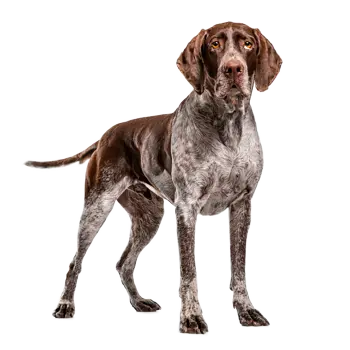
The Gammel Dansk is a medium-sized, solidly built continental pointing dog whose physical presence communicates substance, power, and quiet composure. Males stand 21 to 23.5 inches at the withers and weigh 66 to 77 pounds, while females measure 19.5 to 22 inches and weigh 57 to 68 pounds. The pronounced sexual dimorphism is one of the breed's most immediately recognizable features: males carry significantly more bone, mass, and muscular development than females, who appear lighter, more refined, and more agile. The rectangular body proportions, slightly longer than tall, produce a silhouette that suggests endurance and methodical working capability rather than explosive speed.

The head is broad and deep, carrying features that trace directly to the breed's St. Hubert Hound ancestry. The skull is short and wide with a prominent occipital protuberance, and the stop is barely perceptible. The muzzle is strong and substantial, with deep flews that extend the full length of the jaw and create the characteristic head depth that distinguishes the breed from lighter-framed pointing breeds. The nose is large with wide nostrils, reflecting the breed's exceptional scenting capability. The eyes are medium-sized, ideally dark brown, with an expression that communicates calm intelligence. The standard's acceptance of a slight lower eyelid droop links the breed visually to its Bloodhound heritage.

The ears are set rather low, broad, and slightly rounded at the tips, hanging close to the cheeks. The neck is muscular and well-furnished, carrying a trace of dewlap that is considered a breed characteristic. The chest is deep and wide, reaching to the elbows, with well-sprung ribs extending far back and a well-developed forechest that is particularly valued in males. The back is strong and straight, and the loin is broad. The tail is set somewhat high, fairly wide at the base, tapering toward the end, and reaching almost to the hocks.

The coat is short, dense, and close-lying, providing practical protection without grooming complexity. The color is exclusively white with brown, expressed in varying combinations of large brown patches, smaller markings, and dense brown speckling throughout the white areas. The breed standard considers more speckling preferable, creating a richly patterned coat that provides visual interest while maintaining the practical visibility that white-based coats offered Danish hunters working in foggy or snowy conditions. The brown ranges from deep liver to lighter shades, and the overall impression is warm and harmonious.

The Gammel Dansk moves with a deliberate, purposeful gait that reflects its working style as a slow, thorough, close-ranging pointing dog. The stride is smooth and balanced, with sufficient reach and drive to cover ground efficiently while the topline remains level and the head is carried at a moderate, attentive angle. This unhurried, methodical movement distinguishes the breed from the flashier, wider-ranging field style of British and German pointers, and it was precisely this measured pace and precise ground coverage that made the Gammel Dansk the preferred hunting companion of Danish foot hunters for generations.

Affectionate With Family
The Gammel Dansk bonds deeply and steadily with its family, expressing devotion through calm, ever-present companionship rather than demanding displays of affection. The breed's name, which translates to stand-by-me dog in its full form, captures this quality precisely: the Gammel Dansk wants to be near its people at all times, settling wherever the family gathers and accompanying its owner through daily routines with quiet, loyal attentiveness.
Good With Young Children
The Gammel Dansk's patient, gentle temperament makes it naturally well-suited to life with children. The breed approaches young family members with a tolerant, protective calmness that reduces the risk of the over-excited interactions that can create problems between sporting breeds and small children. Its solid, medium build provides sturdiness during enthusiastic play, though supervision is advisable with very young children given the breed's weight and strength.
Good With Other Dogs
The Gammel Dansk is generally tolerant and easygoing with other dogs, approaching canine encounters with the same measured composure it brings to all social interactions. The breed integrates smoothly into multi-dog households and handles encounters with unfamiliar dogs without territorial aggression. Some males may display mild assertiveness with other males, but this tendency is modest and responds readily to standard socialization and management.
Shedding Level
The Gammel Dansk sheds moderately throughout the year, with slightly heavier hair loss during seasonal coat transitions. The short, dense coat produces fine hairs that appear on furniture and clothing but do not accumulate in the quantities generated by heavy-coated or double-coated breeds. Regular weekly brushing effectively captures loose hair before it reaches household surfaces and maintains the coat's natural sheen.
Coat Grooming Frequency
The Gammel Dansk requires minimal grooming commitment. Its short, dense coat needs only a weekly brush with a hound glove or soft bristle brush, and no professional grooming, clipping, or trimming is ever needed. Bathing is necessary only when the dog becomes visibly soiled from outdoor activities. This is among the simplest coat care routines of any sporting breed, reflecting the breed's heritage as a practical working dog maintained without elaborate upkeep.
Drooling Level
The Gammel Dansk's deep flews, which are a recognized breed hallmark, produce slightly more moisture than tight-lipped breeds. Brief drooling may occur around mealtimes, after drinking, or following exercise. However, the breed does not produce the persistent, heavy drooling associated with breeds carrying extremely pronounced jowls, and most owners find the occasional moisture manageable with periodic wiping of the muzzle area.
Coat Type
The Gammel Dansk carries a short, dense, close-lying coat that provides functional weather protection without any grooming complexity. The texture is firm and smooth, lying flat against the body without feathering, furnishing, or undercoat layering. This practical covering was developed for a working gun dog that needed adequate protection during outdoor field work without imposing maintenance demands on the Danish farmers and hunters who kept these dogs.
Openness To Strangers
The Gammel Dansk approaches unfamiliar people with composed reserve, assessing newcomers calmly before offering its attention. The breed is neither immediately effusive with strangers nor suspicious or defensive, maintaining a watchful neutrality that reflects its stable, confident temperament. Once the dog's owner indicates that a visitor is welcome, the Gammel Dansk typically transitions to polite friendliness within a few minutes of introduction.
Playfulness Level
The Gammel Dansk displays a moderate playfulness that surfaces during outdoor activities and interactive engagement with family members. The breed enjoys retrieving games, scent-oriented activities, and companionable outdoor exploration but does not demand constant entertainment or exhibit the frenetic play energy of some higher-drive sporting breeds. Play sessions are characteristically measured, purposeful, and calm, reflecting the breed's overall composed disposition.
Watchdog/Protective Nature
The Gammel Dansk maintains a quiet watchfulness over its environment and will notice and may announce unusual activity with a bark, though it is not a naturally vocal or persistently suspicious breed. The breed's calm temperament and minimal territorial aggression mean it functions as a moderate alert dog rather than a dedicated watchdog. Its awareness is genuine but its response is measured, consistent with a breed whose primary function was cooperative hunting rather than property defense.
Adaptability Level
The Gammel Dansk adapts reasonably well to various living situations when its exercise and companionship needs are satisfied. The breed's notably calm indoor temperament makes it more adaptable than many sporting breeds of similar size and drive, as it settles quietly between activity periods without creating restless energy in the home. However, it functions best with yard access and proximity to open spaces, and apartment living is generally not recommended for this medium-to-large sporting breed.
Trainability Level
The Gammel Dansk is intelligent, attentive, and genuinely cooperative, responding willingly to positive reinforcement training with food rewards and verbal encouragement. The breed's emotional sensitivity means that gentle, patient methods produce far superior results to harsh corrections, which create anxiety and shutdown behavior. The Gammel Dansk excels in scent work and field training, where its natural instincts provide a motivated foundation, and performs well in basic obedience when sessions are kept positive and engaging.

Gammel Dansk History & Development

The Gammel Dansk's documented history begins around 1710 with Morten Bak, a farmer and salesman from Glenstrup in the Jutland region of Denmark. Bak undertook an ambitious breeding program that would span eight generations of careful selection, crossing local Danish farm dogs with dogs obtained from Romani travelers. The farm dogs likely carried the blood of estate-bred scent hounds descended from St. Hubert Hounds imported through the Netherlands, while the Romani dogs are believed to have been Spanish Pointers or closely related types that had traveled northward through Continental trade routes.

Bak's systematic eight-generation program produced a consistent type of piebald white-and-brown pointing dogs that became known as Bakhounds in honor of their creator. These dogs inherited the exceptional nose and powerful build of their hound ancestry alongside the pointing instinct of their Spanish Pointer heritage, creating a uniquely versatile gun dog suited to the specific demands of Danish terrain and hunting culture. The breed filled a distinctive niche: a close-working, slow-paced pointer that maintained constant contact with its handler, worked methodically across both small and large hunting grounds, and possessed tracking ability that made it effective on wounded deer as well as upland game birds.

The breed's golden era came during the 19th century, when the Gammel Dansk was Denmark's most widely used hunting dog. Danish hunters valued its methodical approach, reliable pointing, and exceptional nose, qualities that complemented the traditional Danish preference for foot hunting rather than the mounted field sports that favored faster, wider-ranging breeds. The breed's predominantly white coat provided essential visibility in Denmark's frequently foggy, overcast, and snowy hunting conditions. The Matzen family from Nystad maintained breeding lines and pedigree records from the late 18th century, with Johannes Matzen serving as breed club secretary and treasurer from 1947 to 1963.

The late 19th and early 20th centuries brought devastating decline. Imported English and German pointing breeds attracted Danish hunters with their greater speed and more dramatic field style, displacing the slower, more traditional Gammel Dansk. By the end of World War II, the breed's population had collapsed to approximately ten surviving dogs, bringing it to the very edge of extinction. The formation of the Gammel Dansk Honsehund Club in 1947 provided the organizational framework for an intensive rescue effort that gradually rebuilt the population through careful management of the remaining genetic material.

The breed experienced a significant resurgence in Danish popularity during the 1980s, attributed in part to a popular nature television program called En Naturlig Forklaring that featured an Old Danish Pointer named Balder. Public affection for the television dog introduced the breed to a broad Danish audience and sparked renewed interest that helped establish it as Denmark's third most registered hunting breed. International recognition expanded with FCI acceptance in 1969 and UKC recognition in 2006. Today, the Gammel Dansk maintains a stable and devoted following primarily within Denmark, with small but growing populations in Sweden, Finland, and a handful of enthusiasts working to introduce the breed to North America.

Gammel Dansk Temperament & Personality

The Gammel Dansk possesses a temperament that the FCI standard describes with elegant precision: a quiet and stable dog showing determination and courage. These few words capture the essence of a breed whose character is defined by composed confidence rather than excitable intensity. The Gammel Dansk is not a flashy, high-energy, demonstrative dog; it is a calm, centered, deeply reliable companion that approaches every situation with the measured assurance of a breed that has been doing its work competently for over three hundred years.

The breed's calmness is its most defining behavioral quality and the trait that most immediately distinguishes it from other pointing breeds. Where breeds like the German Shorthaired Pointer or the Vizsla bring vibrant intensity to both home and field, the Gammel Dansk operates with a composed steadiness that pervades every aspect of its daily life. In the home, this translates to a dog that settles without fuss, moves without frenzy, and maintains a quiet, grounding presence that many owners describe as inherently calming. The breed does not create anxious energy in its household; it absorbs and diffuses it.

Determination surfaces unmistakably during field work and purpose-driven activity. The Gammel Dansk hunts with a methodical thoroughness that more impetuous breeds cannot match, quartering ground with careful precision, holding a steady point with unwavering patience, and tracking scent with a persistence that reflects its St. Hubert Hound heritage. This determination is not aggressive or frantic; it is the quiet, focused application of purpose that characterizes a breed developed for sustained, productive work rather than brief bursts of spectacular performance.

The breed's family devotion runs deep and expresses itself through constant, quiet companionship. The Gammel Dansk is a shadow dog that positions itself near its people throughout the day, moving from room to room to maintain proximity without demanding attention or generating noise. This unobtrusive devotion reflects the breed's hunting partnership heritage, in which the dog maintained constant contact with its handler across hours of field work. The same instinct that kept the Gammel Dansk within working range of its huntsman now keeps it within comfortable distance of its family at home.

Emotional sensitivity is a genuine feature of the breed's character that shapes the quality of the human-dog relationship. The Gammel Dansk reads its handler's mood and emotional state with considerable accuracy and adjusts its own behavior in response. Household tension, anger, or erratic behavior produces visible distress in a breed that functions best in calm, consistent environments. This sensitivity is not fragility; it is the hallmark of a breed that was developed to work in intimate partnership with a single handler, calibrating every behavioral decision to subtle cues from the person it trusts and follows.

Gammel Dansk Family Life & Living Requirements

The Gammel Dansk is a genuinely excellent family dog whose calm temperament, gentle disposition, and moderate maintenance needs make it compatible with a range of household configurations. The breed's ability to shift between active outdoor engagement and quiet indoor composure produces a dog that is both athletically capable and remarkably pleasant to live with on a daily basis. For families seeking a sporting breed that can function as both a hunting partner and a settled household companion, the Gammel Dansk offers an unusually balanced combination of qualities.

The breed's gentleness with children is one of its most valued practical attributes. The Gammel Dansk approaches young family members with the patient, unhurried tolerance that characterizes its interactions with all people, and its calm temperament reduces the over-excited knockdowns and frantic greetings that can create problems between sporting breeds and small children. The breed's medium size provides enough sturdiness for enthusiastic play while remaining manageable for children who want to participate in walking, grooming, and training activities. Children old enough to accompany the dog on outdoor adventures develop especially rewarding partnerships with this breed.

The Gammel Dansk functions best in homes with yard access and proximity to parks, trails, or open land where it can exercise its natural hunting instincts through walks, exploration, and scent work. The breed is not well-suited to apartment living due to its size and exercise requirements, though its remarkably calm indoor temperament means it is more adaptable within a suburban setting than its athletic build might initially suggest. A home with a securely fenced yard and regular access to open space provides an appropriate foundation for most families.

The breed does not thrive in isolation and needs regular human companionship to maintain its emotional equilibrium. The Gammel Dansk's heritage as a close-working hunting dog produced a breed that is psychologically designed for partnership, and extended periods alone can trigger separation anxiety, excessive barking, or withdrawn behavior. Households where human company is available for significant portions of the day provide the social environment that the breed requires, and owners who can include the dog in daily activities and outings will experience the full depth of its companionship.

The Gammel Dansk integrates smoothly into multi-pet households when proper introductions and socialization are provided. The breed's tolerant, non-aggressive disposition facilitates peaceful coexistence with other dogs and, in most cases, with cats and other household animals. Its hunting heritage means that small prey animals may trigger instinctive pursuit behavior, but this tendency is mild and manageable through standard training and environmental management.

Gammel Dansk Training & Exercise Needs

Training the Gammel Dansk is a gratifying process that benefits from the breed's intelligence, cooperative spirit, and genuine desire to work alongside its handler. The breed learns readily with positive reinforcement methods and retains training with good reliability, producing a responsive partner that approaches instruction with calm attentiveness. Food rewards, verbal praise, and the opportunity to engage in meaningful work all serve as effective motivators. The breed's emotional sensitivity makes it critically important to avoid harsh corrections, confrontational methods, or angry tones, which produce anxiety, shutdown behavior, and lasting damage to the training relationship.

Field training reveals the Gammel Dansk's most impressive natural aptitudes. The breed possesses strong inherent pointing instinct and an exceptional nose inherited from its St. Hubert Hound ancestry, enabling it to locate and indicate game birds with natural precision. Young dogs frequently demonstrate spontaneous pointing during early field exposure, requiring primarily refinement and steadying rather than fundamental skill development. The breed's methodical, close-working hunting style makes it particularly well-suited to smaller hunting grounds and the tight cover conditions common in Danish hunting territory.

Exercise requirements are moderate to high, reflecting the breed's sporting heritage without the extreme demands of the highest-energy pointing breeds. The Gammel Dansk needs sixty to ninety minutes of daily physical activity, distributed across walks, free play in enclosed areas, scent work, and structured field activities. The breed's calm indoor temperament means that properly exercised dogs settle contentedly between activity sessions, creating a manageable daily rhythm that active families can sustain without difficulty.

Scent work and tracking activities leverage the breed's exceptional olfactory capability and provide mental enrichment of a quality that physical exercise alone cannot match. The Gammel Dansk's effectiveness in tracking wounded deer has made it a valued conservation tool in Danish wildlife management, and structured tracking exercises provide satisfying enrichment for companion dogs that lack regular hunting opportunities. Laid scent trails, structured nose work, and search games engage the breed's primary cognitive strength and reinforce the cooperative bond between dog and handler.

Early socialization during the critical developmental period is important for developing the confident, well-adjusted adult that the breed is capable of becoming. The Gammel Dansk's natural reserve with strangers should be addressed through positive exposure to diverse people, environments, sounds, and situations during the first four months of life. Puppy classes, controlled social outings, and systematic environmental enrichment establish the foundation for a dog that handles novel circumstances with composure rather than anxiety, preserving the breed's essential calm temperament while broadening its social confidence.

Gammel Dansk Health Concerns

The Gammel Dansk is a generally robust breed with a favorable health profile that reflects its functional breeding heritage and the careful stewardship of a small but dedicated breeding community. The breed's lifespan of 12 to 14 years is solid for a medium-sized sporting dog, and its overall constitution is hardy and well-suited to the active outdoor life for which it was developed. Available health data is somewhat limited by the breed's small global population and concentration within Denmark, but the conditions that have been documented are consistent with those seen in other medium-to-large continental pointing breeds.

Hip and elbow dysplasia represent the primary orthopedic concerns documented in the breed. Hip dysplasia involves developmental malformation of the hip joint producing abnormal articulation and progressive arthritis, while elbow dysplasia encompasses several developmental conditions affecting the elbow joint. Both conditions produce lameness and joint deterioration that worsen over time without management. Radiographic screening of breeding stock through OFA or equivalent evaluation protocols provides the primary tool for reducing incidence in future generations. Weight management throughout the dog's life minimizes mechanical stress on joints that may carry subclinical dysplastic changes.

The breed's pendulous, broad ears create a predisposition to chronic ear infections that requires ongoing preventive attention. The ear configuration restricts airflow to the canal and traps warmth and moisture that favor microbial overgrowth. Dogs that work in wet field conditions or swim regularly face amplified risk. A consistent weekly ear care routine including inspection, cleaning with veterinary-approved solution, and thorough drying prevents the majority of infections that would otherwise develop. Prompt treatment of early symptoms prevents progression to chronic, treatment-resistant disease.

The breed's deep chest places it at moderate risk for gastric dilatation-volvulus, the acute emergency in which the stomach fills with gas and may rotate. While the Gammel Dansk is not among the highest-risk breeds, its chest depth justifies preventive awareness. Standard bloat prevention protocols including divided feeding, slow-feeder bowls, post-meal rest periods, and consideration of prophylactic gastropexy during elective surgery all contribute to risk reduction.

The breed standard's acceptance of slight lower eyelid drooping reflects a predisposition to entropion and related eyelid conformational issues inherited from the breed's St. Hubert Hound ancestry. While mild lower lid relaxation is considered acceptable within the breed, progressive inward rolling of the lid margin causes chronic corneal irritation from eyelash contact that can lead to ulceration and scarring. Regular ophthalmologic evaluation helps identify dogs that require surgical correction before permanent corneal damage occurs.

Common Health Issues

  • Hip dysplasia - Developmental abnormality of the hip joint producing imprecise articulation, chronic wear, and progressive arthritis. The breed's solid build and active hunting demands amplify the functional consequences of dysplastic joints. Radiographic evaluation of breeding stock through OFA or equivalent protocols helps reduce incidence.
  • Elbow dysplasia - A group of developmental conditions affecting the elbow joint, including ununited anconeal process and fragmented coronoid process. The condition produces progressive lameness and joint deterioration. Radiographic screening is recommended for breeding stock to reduce incidence in future generations.
  • Ear infections (otitis externa) - The breed's pendulous, broad ears restrict air circulation within the ear canal, promoting bacterial and yeast overgrowth in the warm, moist environment. Dogs working in wet conditions or swimming regularly face heightened risk. Weekly preventive cleaning and prompt treatment of early signs prevent chronic complications.
  • Gastric dilatation-volvulus (bloat) - An acute emergency in which the stomach distends with gas and may rotate, compromising blood supply to vital organs. The breed's deep chest creates moderate risk. Feeding management, slow-feeder bowls, and avoiding exercise immediately after meals reduce but do not eliminate risk.
  • Entropion - An eyelid conformational defect in which the lid margin rolls inward, causing chronic corneal irritation from eyelash contact. The breed standard tolerates slight lower eyelid drooping, reflecting a mild predisposition that warrants monitoring. Surgical correction resolves the condition permanently when needed.

Preventive Care & Health Monitoring

  • Hip and elbow radiographic evaluation for breeding stock - OFA or equivalent screening recommended for all dogs intended for breeding. Only dogs with structurally normal evaluations should be included in breeding programs to systematically reduce orthopedic disease incidence.
  • Weekly ear inspection and cleaning - Examine ears weekly for redness, odor, or excessive wax. Clean with veterinary-approved ear solution after swimming and field work. Ensure thorough drying of ear canals after cleaning to prevent moisture-driven infections.
  • Bloat prevention through feeding management - Divide daily food ration into two or three smaller meals. Use slow-feeder bowls to minimize air ingestion. Restrict vigorous activity for thirty minutes before and one hour after meals. Discuss prophylactic gastropexy with veterinarian.
  • Annual ophthalmologic evaluation - Regular eye examination monitors for entropion and related eyelid abnormalities, given the breed standard's acceptance of slight lower eyelid relaxation. Early surgical correction prevents chronic corneal damage from inward-rolling lashes.
  • Regular exercise appropriate to age and condition - Provide sixty to ninety minutes of daily physical activity through walks, scent work, field activities, and free play. Adjust exercise intensity during growth periods to protect developing joints. Swimming offers excellent low-impact cardiovascular conditioning.
  • Weight management through measured feeding - Maintain lean body condition to protect joints and cardiovascular health. The breed's muscular, substantial build should not be confused with acceptable excess weight. Regular body condition scoring helps detect gradual weight gain before it becomes clinically significant.

Gammel Dansk Grooming & Maintenance

The Gammel Dansk's grooming requirements are among the simplest of any sporting breed, a practical advantage that reflects its heritage as a working dog maintained by Danish farmers and hunters without elaborate grooming resources. The short, dense coat requires only a weekly brush with a hound glove or soft bristle brush to remove loose hair and distribute natural skin oils. This brief routine, taking no more than ten minutes, maintains the coat in healthy condition and preserves its natural sheen without any professional grooming involvement.

Bathing is an infrequent requirement, needed only when the dog becomes genuinely soiled from field work or environmental encounters. The short coat releases dried mud and debris with minimal effort and dries rapidly after water exposure, reducing the need for formal bathing sessions. When bathing is required, a mild dog-specific shampoo applied quickly and rinsed thoroughly restores the coat's clean condition without stripping the natural oils that maintain its texture and weather resistance.

Ear care demands the most consistent grooming attention and represents the single area where the Gammel Dansk's maintenance requirements exceed the minimal. The broad, pendulous ears should be inspected weekly for signs of redness, odor, swelling, or abnormal discharge. A veterinary-approved ear cleaning solution applied weekly as a preventive measure and after every water exposure keeps the ear canals clean and dry. Thorough drying after cleaning is essential, as trapped moisture is the primary driver of the chronic ear infections that plague pendulous-eared breeds when preventive care is neglected.

The breed's deep flews and characteristic throatiness may trap food debris and moisture around the muzzle during meals. A quick wipe with a damp cloth after eating keeps the facial area clean and prevents the skin irritation that can develop when food residue accumulates in facial folds. This is a minor maintenance task but one that contributes meaningfully to the breed's daily comfort and cleanliness.

Nail trimming every two to three weeks, dental care through regular tooth brushing with enzymatic canine toothpaste, and periodic monitoring of the eyes for signs of eyelid-related irritation complete the Gammel Dansk's grooming profile. The breed's total maintenance picture is characterized by extremely low grooming demands offset by moderate exercise and social companionship requirements that reflect its fundamental identity as a devoted sporting companion designed for close partnership with an active human family.