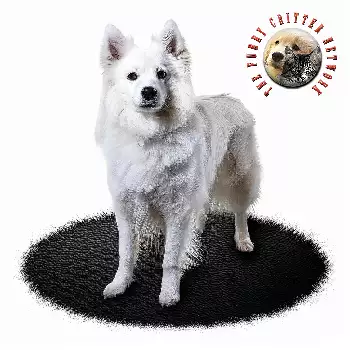
The Florentine Spitz is a small dog with a big visual impact. That fluffy, snow-white coat gives it a presence that far exceeds its actual size, and the fox-like face with its dark, round eyes and alert, pricked ears creates an expression that manages to be simultaneously noble and impish. First impressions often include surprise at how small the dog actually is beneath all that coat, because the standoff texture of the fur adds considerable visual volume to a frame that typically weighs under 14 pounds.
The head is the breed's most characteristically Spitz feature. It forms a distinct wedge shape when viewed from above, tapering from a moderately broad skull to a pointed muzzle that is shorter than the skull but not snubbed. The stop is moderate, and the overall head proportions give the breed its vulpine appearance - volpino means little fox, and the resemblance is unmistakable. The nose is small, round, and black in white dogs. Eyes are round, large relative to the head, and dark brown to near-black with darkly pigmented rims that create a defined, expressive gaze. Ears are triangular, erect, and set high on the skull, covered with short, dense fur that gives them a crisp outline.
The body is compact and squarely built, meaning the length from chest to rump approximately equals the height at the shoulder. Despite the small frame, there is nothing fragile about a well-built Florentine Spitz. The chest has moderate depth, the back is straight and firm, and the legs carry enough bone for the breed's size to support an active, agile lifestyle without the brittleness sometimes associated with very small dogs. The tail is a standout feature, curling forward over the back and covered with long, plume-like hair that fans out attractively when the dog is alert or in motion.
The coat is the feature that draws the most attention and the most confusion with other breeds. People frequently mistake the Florentine Spitz for a small Pomeranian or a miniature American Eskimo Dog, and while the resemblance is real, there are clear differences on close inspection. The Florentine Spitz is slightly larger and more squarely built than a Pomeranian, with a longer muzzle and rounder eyes. The coat texture is harsher than either of those breeds, standing off from the body in a way that creates a dramatic silhouette without the excessive softness that makes some Spitz coats difficult to maintain.
White is overwhelmingly the most common color and the one most associated with the breed's historical identity. Red dogs also exist and are equally correct under the standard, displaying a warm, solid russet tone that ranges from deep orange to lighter ginger. Champagne, a pale cream shade, appears occasionally and is tolerated though not ideal. Black was historically documented but is extremely rare today.
The hind legs feature longer feathering that forms the distinctive trousers mentioned in the standard, and the overall coat coverage creates an impression of uniform fluffiness from every angle. When a well-groomed white Florentine Spitz stands in good light, it looks almost like a small, animated cloud with a fox face and bright dark eyes peering out from the center. Movement is light, quick, and purposeful with good reach and drive for a dog this size, reflecting the breed's active, spirited nature. The trot should appear effortless and lively, with the tail plume bouncing above the back and the coat catching the light with each stride. Despite the fluffy exterior, there is a genuine little athlete underneath, capable of surprising speed and agility when motivated by a squirrel, a game of chase, or the simple joy of running across an open field.
Affectionate With Family
★★★★★
The Florentine Spitz forms an intense bond with its household and craves close contact throughout the day. It thrives on being near its people rather than being left alone.
Good With Young Children
★★★☆☆
Gets along well with gentle, respectful children but its small size makes it vulnerable to rough handling. Best suited to families with kids who understand how to interact with small dogs.
Good With Other Dogs
★★★☆☆
Can coexist well with other dogs when properly socialized, though it may try to assert itself with larger dogs despite its size. Introductions should be gradual and supervised.
Shedding Level
★★★☆☆
Sheds moderately throughout the year with heavier seasonal blowouts when the dense undercoat releases. Regular brushing keeps loose hair manageable.
Coat Grooming Frequency
★★★☆☆
Needs brushing two to three times per week to prevent matting in the dense double coat. The texture is harsher than it looks, which actually helps resist tangles somewhat.
Drooling Level
★☆☆☆☆
The Florentine Spitz is not a drooler. Its small, clean muzzle keeps things tidy, which is appreciated in a dog that likes to be close to faces.
Coat Type
★★★☆☆
A standoff double coat with a harsh, straight outer layer and a soft, woolly undercoat beneath. The overall effect is a fluffy, fox-like appearance that belies the coat's coarse texture.
Openness To Strangers
★★☆☆☆
Naturally wary of unfamiliar people and will announce their presence with vigor. Warms up eventually but maintains a healthy skepticism that served the breed well as a watchdog.
Playfulness Level
★★★★☆
Energetic and game for interactive play well into adulthood. The Florentine Spitz has a mischievous streak that keeps things entertaining around the house.
Watchdog/Protective Nature
★★★★★
An outstanding vocal alarm dog that misses nothing happening in its territory. The breed was historically used to alert larger guard dogs to intruders, and that instinct is fully intact.
Adaptability Level
★★★★☆
Adapts well to various living situations including apartments, provided its exercise and companionship needs are met. Its small size is a practical advantage in smaller spaces.
Trainability Level
★★★☆☆
Intelligent and capable of learning quickly, but brings a Spitz-typical independence to the training process. Positive methods and patience yield the best results with this breed.