Eurasier

Eurasier

Quick Facts

🐕 Breed Group
Non-Sporting Group
📏 Size Category
Medium
📏 Height
Males: 20-24 inches, Females: 19-22 inches
⚖️ Weight
Males: 51-71 pounds, Females: 40-57 pounds
⏱️ Life Expectancy
12-14 years
🧣 Coat Type
Dense double coat, medium-long with short facial coat
🎨 Coat Colors
Red, fawn, wolf grey, black, black and tan; all combinations permitted except pure white or liver
😀 Temperament
Calm, Loyal, Intelligent, Watchful, Gentle, Reserved
🏃 Exercise Needs
Moderate
🎓 Training Difficulty
Easy
👶 Good with Children
Very Good
🐾 Good with Other Pets
Good when raised together

Other Names & Breed Recognition

The Eurasier is known in some countries and registration systems as the Eurasian, both names derived from the same source: the European and Asian ancestry of the breed. The name was deliberately chosen by the breed's founder to reflect the cross-continental heritage of the three foundation breeds - the European Wolfspitz, the Asian Chow Chow, and later the Samoyed. The UKC registers the breed under the name Eurasian. In Germany, where the breed originated, the standard spelling and usage is Eurasier. Most international registries use Eurasier.

The FCI granted recognition to the Eurasier in 1973, placing the breed in Group 5 (Spitz and Primitive Types), Section 4 (European Spitz). This classification is accurate - the Eurasier's physical type, coat structure, and some behavioral characteristics are classically Spitz in nature, inherited primarily from the Wolfspitz and Samoyed components of the breed's makeup. The Kennel Club in the UK places the breed in the Utility Group, which is the British equivalent for breeds that do not fit neatly into sporting, working, or pastoral categories. The Canadian Kennel Club recognizes the breed in the Non-Sporting Group.

The AKC has included the Eurasier in its Foundation Stock Service, which is the preliminary step toward full recognition. The breed has been building its US presence slowly but steadily. The United States Eurasier Club (USEC) is the primary breed organization in North America for those seeking breeder referrals, health information, and breed education. The USEC maintains its own health requirements that in some respects exceed standard CHIC requirements, reflecting the club's serious commitment to managing the breed's known health challenges.

The breed is most numerous in Germany and Switzerland, where it was developed and where the Eurasier Verband coordinates breed standards and health programs in alignment with the FCI. The breed has a following in the Netherlands, France, and Scandinavia. In North America, Canada has a somewhat larger established community than the United States, and Canadian breeders have been active in maintaining health testing infrastructure through the Eurasier Club of Canada.

One naming note that confuses some buyers: the Eurasier is sometimes confused with the Wolfspitz or the Keeshond, one of its founding breeds. These are related but distinct dogs. The Keeshond is one of the German Spitz varieties and is often described as an ancestor of the Eurasier. While the physical resemblance between a grey Eurasier and a Keeshond can be striking to casual observers, they are separate breeds with different standards and different temperament emphases. The Eurasier's specific reserve with strangers and profound family attachment were deliberately bred outcomes, not carried-over traits from any single ancestor.

Eurasier Organizations & Standards

The Eurasier Verband in Germany is the primary steward of the breed in its country of origin, operating under FCI guidelines and maintaining the stud book. The Eurasier Verband coordinates health testing requirements and breed standards with affiliated clubs across Europe. The FCI standard, which forms the basis for breed standards used by most international registries, emphasizes the Eurasier's Spitz characteristics: a wedge-shaped head, prick ears, dense double coat, and a tail carried in a curl over the back. The standard calls for a balanced, well-constructed, medium-sized dog with good bone and substance without heaviness.

In North America, the United States Eurasier Club and the Eurasier Club of Canada maintain health testing infrastructure and breeder codes of ethics. The USEC's health requirements for breeding dogs include OFA or PennHIP hip evaluation, OFA elbow evaluation, patellar luxation evaluation, autoimmune thyroiditis panel (required within one year of breeding), CAER eye examination, and dentition evaluation - the last of these being specific to the Eurasier given the FCI standard's strict requirements around full dentition. The USEC encourages submission of all results to the OFA public database.

Autoimmune thyroiditis holds a unique position in the Eurasier's health program because it is the breed's most prevalent documented condition. Unlike hip or elbow dysplasia, which may not appear until a dog is two years old, thyroid dysfunction in Eurasiers typically develops between ages two and five - meaning a dog that tested clear at breeding age may develop the condition later. The USEC and international breed clubs therefore recommend ongoing thyroid testing throughout a dog's life, not just a single pre-breeding clearance.

The Dandy-Walker Like Malformation (DWLM) is a neurological condition documented in the breed that results from an underdeveloped cerebellum. Affected puppies show signs of neurological dysfunction including poor coordination, tremors, and abnormal gait, usually apparent by eight weeks of age. While the condition is rare, its breed-specific documentation makes it a required reporting item in some club health programs. Breeding dogs with affected offspring in their lines require careful consideration.

Dentition examination is required by the FCI standard, which penalizes missing teeth as a serious fault or disqualification. This is unusual compared to most breed standards and reflects a specific concern about heritable tooth absence in the Eurasier. The USEC's dentition database requirement means buyers can verify a puppy's parents' dentition status before purchase.

The coefficient of inbreeding (COI) is a concern in a relatively young breed with a constrained founder population. Both the USEC and European Eurasier clubs actively encourage attention to genetic diversity in breeding decisions, not just health test results. A dog with perfect health test results bred to a closely related partner produces a litter with elevated COI and potentially reduced genetic diversity - a concern for a breed still building its global numbers. Responsible breeders consult COI calculations as part of their breeding planning, and buyers can ask about the COI of a planned litter as a measure of a breeder's thoughtfulness about long-term breed health.

Kennel Club Recognition

  • United Kennel Club (UKC): Recognized, Northern Breeds
  • Canadian Kennel Club (CKC): Recognized, Non-Sporting Group
  • FCI: Recognized, Group 5
  • The Kennel Club (UK): Recognized, Utility Group

Eurasier Physical Description

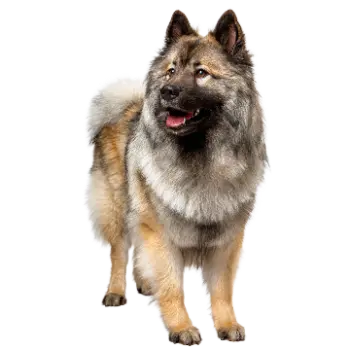
The Eurasier is a medium-sized, balanced Spitz-type dog with a coat that is one of its most immediately striking features. The overall impression should be of a well-constructed, harmonious dog - not extreme in any direction, not exaggerated in head or body, but with a clearly Spitz character expressed through the wedge-shaped head, prick ears, and lavishly coated body. The breed was designed to be both beautiful and fundamentally sound, and the standard consistently emphasizes moderation over exaggeration.

The head has a broad, slightly domed skull that tapers toward the muzzle through a moderate stop. The muzzle is well-developed and tapers slightly without becoming snipey, finishing in a well-pigmented nose. The lips are close-fitting rather than pendulous. The eyes are medium-sized, obliquely set, and dark brown with a lively, alert expression. Light eyes are a fault. One of the most striking physical details of the Eurasier is the tongue, which may be pink, blue-black, or spotted - an inheritance from the Chow Chow in the breed's ancestry. A fully pink tongue, a spotted tongue, and a blue-black tongue are all acceptable and none indicates any health problem.

The ears are prick ears: firm, erect, triangular, and moderately sized. They are set high on the skull and carried upright. When the dog is alert or interested, the ears may rotate forward slightly. The expression created by the erect ears, oblique dark eyes, and wedge-shaped head is intelligent and watchful, consistent with the breed's alert but composed temperament.

The neck is moderately long, muscular, and blends smoothly into the shoulders. The body is well-muscled and compact without being short-coupled. The chest is broad and moderately deep, with well-sprung ribs. The topline is level and firm. The loin is strong and the croup is slightly sloping. This is a dog built for moderate endurance rather than extreme athleticism - well-proportioned and capable without being either heavy or slight.

The tail is carried in a loose curl over the back - a classic Spitz characteristic. The degree of curl varies between individuals; some carry the tail in a single loose ring, others in a tighter or more angled position. The tail is well-furred with long hair on both the upper and lower surface. The tail is never docked.

The coat is one of the Eurasier's defining physical characteristics and the feature that requires the most owner maintenance. The FCI standard specifies a thick, dense undercoat with medium-long, loosely lying guard hair over the body. The coat on the face, muzzle, front of the legs, and ears is short and smooth. The back of the front legs carries feathering, and the hind legs carry breeches of longer hair. The neck coat is slightly longer than the body coat but does not form a mane. The tail is heavily coated throughout. Neutered dogs may have a different coat texture or growth pattern than intact dogs, which is worth knowing for owners considering spay or neuter timing.

Color is notably varied in the Eurasier, and the FCI standard allows all color combinations except pure white, white patches, and liver. In practice, the most common colors are red in various shades from pale gold to deep rust, wolf grey (a salt-and-pepper mixture of grey, cream, and black hairs that gives a distinctive muted grey appearance), solid black, and black and tan. Fawn in various tones is also seen. All of these are correct. Males are substantially larger and heavier-boned than females, and the difference is visible - this is a breed with notable sexual dimorphism that becomes more apparent as dogs mature into adulthood.

The Eurasier's feet are compact and round with well-arched toes and firm, thick pads. The pads are often darkly pigmented. The movement should be ground-covering and efficient - a free, well-coordinated trot with good reach in front and adequate drive behind. A Eurasier that moves short, minces, or shows stiffness at a trot is showing structural or health issues worth investigating.

The Eurasier's coat is notable for the regional variation in length and texture across the body. The shorter, smoother coat on the face and front of the legs contrasts with the longer, flowing coat on the body and creates a clean, well-defined expression rather than the obscured face of some heavily coated breeds. This clear face, with the dark eyes visible against a relatively smooth facial coat, is part of what gives the Eurasier its characteristic watchful, attentive expression.

Neutered dogs often develop a coat that differs from intact dogs - sometimes denser, sometimes softer in texture, sometimes showing altered color intensity. This is worth knowing for owners who spay or neuter and then wonder why the coat looks different from the photos they saw of show dogs. Neither coat is problematic; they are simply different hormonal coat expressions.

Affectionate With Family
The Eurasier was designed from the ground up to be a devoted family companion. These dogs form profound bonds with their household and require close daily contact with their people to thrive - this is their literal purpose.
Good With Young Children
Patient and gentle with children in the family. Their calm temperament and moderate size make them suitable companions for children who understand how to approach a dog respectfully.
Good With Other Dogs
Generally friendly with other dogs, particularly when socialized from puppyhood. They may be selective rather than universally enthusiastic with unfamiliar dogs.
Shedding Level
Moderate shedding year-round with two heavy seasonal coat blows annually lasting about three weeks each. During these periods, daily brushing is essential and the volume of shed hair is substantial.
Coat Grooming Frequency
Once or twice weekly brushing under normal conditions keeps the coat healthy. The dense double coat does not mat badly between brushings outside of seasonal shed periods.
Drooling Level
Not a drool-prone breed. The Eurasier has a clean, dry mouth and is not prone to the salivating behavior of loose-lipped breeds.
Coat Type
A medium-long double coat that is moderately demanding to maintain. The FCI standard specifies a thick undercoat with loosely lying guard hair and a short, smooth coat on the face and front of the legs.
Openness To Strangers
The breed standard uses the phrase 'dignified reserve' with strangers, and that describes it perfectly. They are not aggressive toward unfamiliar people but they do not warm up quickly - and they dislike being touched by people they do not know.
Playfulness Level
Calm indoors but genuinely lively and playful outdoors, especially with their family. The contrast between indoor calm and outdoor enthusiasm is one of the breed's most appealing characteristics.
Watchdog/Protective Nature
Alert and watchful without being noisy or excitable. The Eurasier will announce visitors but is not a bark-at-everything breed and is not prone to guarding behavior.
Adaptability Level
Adapts well to different living environments including apartments, provided exercise needs are met and the dog has constant access to its family. What they cannot adapt to is isolation.
Trainability Level
Intelligent and willing, with a genuine desire to work with their person. Sensitive to harsh handling and responds exclusively to positive methods. Short, engaging sessions produce the best results.

Eurasier History & Development

The Eurasier is one of the few dog breeds in the world that can trace its precise origins to a specific person, a specific date, and a specific intention. In 1960, a German dog enthusiast named Julius Wipfel set out to create a new breed from scratch - one that combined the best characteristics of European and Asian Spitz breeds into a calm, devoted family companion. Wipfel worked with Charlotte Baldamus and a small group of fellow enthusiasts in Weinheim, Germany, and their initial cross was between the Wolf Spitz (known in some countries as the Keeshond) and the Chow Chow.

The early offspring of these crosses, initially called Wolf Chows, showed promising results in temperament and type. The Wolf Spitz contributed the Spitz body structure, upright ears, curled tail, and the calm, even-tempered quality that defines the German Spitz breeds. The Chow Chow added substance, the distinctive blue-black tongue, a certain dignified reserve, and some of the structural heaviness that gives the Eurasier more body than a typical Spitz. The combination was intentional and considered - Wipfel was not simply crossing breeds at random but working toward a specific vision of a family companion dog.

In 1972, twelve years after the initial breeding program began, a single Samoyed male named Arktos was introduced to the breeding program. This addition was deliberate - the Samoyed's friendly, open temperament was intended to balance the more reserved aspects of the Chow Chow influence. The Samoyed also contributed to the breed's coat quality and to the slightly more open, approachable expression that distinguishes the Eurasier from a Chow Chow cross. After the Samoyed introduction, the breed was renamed from Wolf Chow to Eurasier, reflecting its truly cross-continental heritage.

The FCI granted formal recognition in 1973, just one year after the Samoyed addition and thirteen years after the founding crosses. This rapid recognition for a deliberately created breed reflects how coherently and consistently the breeding program had been conducted. By 1973, Eurasiers were breeding true - producing offspring consistent in type and temperament - and the founders had maintained detailed records of every breeding decision.

The breed spread from Germany to other European countries, becoming particularly popular in Germany, Switzerland, the Netherlands, and Scandinavia. It reached Canada and the United States in the 1990s and early 2000s, with the USEC forming to serve the growing US community. The AKC's FSS registration opened in more recent years. Today the breed is well-established in Europe and slowly growing in North America, remaining rare enough to require patience in finding a well-bred puppy but established enough that a community of knowledgeable breeders and owners exists to support new Eurasier families.

What is notable about the Eurasier's development compared to most breed creation efforts is how systematically and philosophically the founders approached the project. Wipfel was not simply trying to produce a good-looking dog - he was attempting to engineer a specific set of behavioral characteristics that he believed were missing or rare in existing breeds. He wanted a dog with the Spitz's family orientation and intelligence, the Chow Chow's calm dignity and independence without its potential stubbornness, and the Samoyed's more open engagement - all in one balanced package. That the resulting breed is as consistent in temperament as it is suggests the founders understood their foundation breeds well and made thoughtful crossing decisions over the twelve years before FCI recognition.

Eurasier Temperament & Personality

The Eurasier was designed to be a companion dog, and that purpose is expressed in every aspect of how these dogs behave. This is not a breed with working dog drive that has been redirected into a family context. The Eurasier was created from the beginning to live closely with a family, to be calm and manageable indoors, to be tolerant and gentle with children, and to be watchful without being reactive. The breeders who developed this dog had a specific vision for what the personality should look like, and by most accounts they achieved it with unusual consistency.

The family bond that Eurasiers form is profound and non-negotiable in terms of what the dog needs to thrive. These dogs do not do well in kennels, do not adapt to isolation, and should never be left to live outside or restricted to a crate for extended periods. The Wikipedia entry for the breed states this plainly: Eurasiers were bred as companion dogs and do poorly in a kennel environment. Separation from their family is not merely unpleasant for a Eurasier - it can cause genuine psychological distress. They need to be physically present with their people, sharing daily life. This is the core of what the breed is and requires.

With their own family, Eurasiers are affectionate, calm, and gently attentive. They are not velcro dogs in the demanding, anxious way of some companion breeds - they do not bark for attention or paw insistently at their people. Their attachment is more dignified: they want to be in the same room, to be included, to be part of whatever is happening. They observe a great deal and respond with a sensitivity to their owner's emotional state that many owners find remarkable.

With strangers, the breed standard's phrase is dignified reserve, and that phrase is precise. Eurasiers do not growl at unfamiliar people, do not bark excessively at visitors, and are not aggressive with strangers who are not threatening. But they do not rush up for greetings, they do not allow themselves to be petted freely by people they do not know, and they maintain a quality of watchful distance until they decide on their own timeline that a person is acceptable. Forcing introductions - asking them to tolerate being handled by strangers before they are ready - creates a negative experience and damages trust. The dog will come to people when it is ready, and pressuring the process does not speed it up.

This reserve with strangers is entirely breed-appropriate and should not be mistaken for a problem to solve. A well-socialized Eurasier is watchful but not reactive, reserved but not fearful. A poorly socialized one can become more anxious or sharply reactive than the standard describes as ideal. Early socialization is the investment that determines which end of that spectrum the adult dog occupies.

One characteristic that owners consistently mention is the Eurasier's indoor calm contrasted with outdoor liveliness. Inside the house, this breed is quiet, unobtrusive, and restful to live with. Take the same dog outside with its family, and it becomes engaged, playful, and genuinely enthusiastic - ready to hike, run, play fetch, or explore new environments with obvious pleasure. This reliable on/off quality is not common in medium-sized dogs and is one of the most practically valuable traits the breed offers to families who want an active outdoor partner that is not also a constantly moving indoor presence.

Eurasier Family Life & Living Requirements

The Eurasier adapts to a wider range of living environments than most medium-sized dogs, including apartments and smaller homes, because its indoor energy level is genuinely low. A well-exercised Eurasier is calm, quiet, and undemanding indoors. They will rest contentedly for hours, observe their surroundings with interest, and require no constant entertainment. The adjustment this breed requires is not about space - it is about relationship. A Eurasier left alone for most of the day in a large house with a yard is worse off than one in a smaller apartment with an owner who is home regularly. The physical environment matters far less than the social environment.

For households where people work away from home full-time, the Eurasier is not an ideal choice unless robust provisions are made for the dog's social needs. A dog walker midday, a second dog companion, or a work arrangement that allows the dog to come to work or limits solo time to a few hours daily are all ways to make it work. An unmitigated eight-to-ten-hour daily solitude for a Eurasier is genuinely problematic for the dog's welfare and will show up in anxiety-related behaviors.

Shedding is one of the more significant practical realities of this breed. The coat blows twice yearly for approximately three weeks, and during these periods the quantity of shed undercoat is substantial. Daily brushing during coat blows keeps loose hair from building up in the coat and prevents the undercoat from matting against the skin. Between coat blows, once or twice weekly brushing is adequate. The coat's texture does not mat severely under normal conditions, which is one practical advantage of the Eurasier's coat over some longer-coated breeds. That said, a household deeply committed to pet-hair-free environments will find the Eurasier's twice-yearly shed periods challenging.

The breed is comfortable in a range of climates and handles cold weather well given its double coat. In hot summer weather, outdoor activity should be scheduled during cooler parts of the day and shade and water access provided. This breed does not overheat the way brachycephalic dogs do, but the dense coat means they are not ideally suited to humid tropical climates.

With children, the Eurasier's patience and calm make it a reliable companion in a family setting. The dog's natural watchfulness means it is often paying close attention to what children are doing even when it appears to be resting. The breed is not prone to the overexcited jumping or nipping that makes some energetic breeds problematic with young children.

The breed is not prone to destructive chewing, obsessive behaviors, or nuisance barking when properly exercised and included in family life. These are behaviors of a stressed, isolated, or under-exercised dog, not a typical Eurasier. The breed's calm, cooperative nature means that the household management challenges owners of some breeds deal with constantly - jumping, counter-surfing, escape attempts, demand barking - are generally not features of daily life with a well-raised Eurasier. What is required in exchange is genuine inclusion and consistent companionship.

Eurasier Training & Exercise Needs

Training a Eurasier is generally a pleasant experience for owners who use positive reinforcement and understand that this breed's intelligence comes with sensitivity. The Eurasier is willing and attentive with a handler it trusts and has bonded to. It picks up concepts reasonably quickly and retains what it learns well. What it cannot tolerate is harsh handling, raised voices, physical corrections, or repetitive drilling that bores it. Any of these shut the dog down - not through stubbornness but through the genuine sensitivity that is a documented characteristic of the breed. The FCI standard explicitly notes that the Eurasier requires consistent but understanding training.

Keep training sessions short, varied, and positive. Five to ten minutes of focused, rewarding training followed by play or free time is more productive than a thirty-minute session that loses the dog's engagement after the first ten minutes. Clicker training works well with Eurasiers - the precision and positive association of the click builds the kind of enthusiasm and clarity the breed responds to best. Food motivation is present in most individuals, and food rewards combined with calm praise are the most reliable tools.

Early socialization is essential for this breed's long-term temperament management. The natural reserve with strangers needs to be shaped in puppyhood through consistent, positive exposure to a wide variety of people and situations. The goal is not to override the breed's characteristic reserve but to build the confidence and positive associations that allow the adult dog to express that reserve calmly rather than with anxiety. A Eurasier that was undersocialized as a puppy may become more sharply reactive with strangers than the breed standard describes - not because it is aggressive, but because it does not have the experiential framework to process unfamiliar situations calmly.

Exercise needs are moderate. Daily walks totaling thirty to sixty minutes satisfy the physical requirements of most adult Eurasiers. This is not a high-drive working breed that needs athletic outlets - it is a companion breed with moderate stamina and a genuine indoor off switch. What matters more than exercise volume is the quality of the experience: a varied walk through different environments with opportunities to sniff and observe satisfies the Eurasier's sensory engagement needs better than a long, repetitive run on a familiar route.

Dog sports can be pursued and many Eurasiers enjoy them, but the breed does not have the competitive drive of herding or sporting breeds. Rally obedience, beginner agility, and scent work all suit the Eurasier's intelligence and desire to work with its person. Therapy dog certification is a documented use for this breed - the calm, gentle temperament and moderate size make well-socialized Eurasiers good candidates for visiting hospitals, schools, and care facilities.

Eurasier Health Concerns

The Eurasier is a relatively young breed compared to most recognized breeds, but its founding cross from three established breeds and the small initial gene pool have created some specific and well-documented health considerations. The United States Eurasier Club maintains detailed OFA statistics for the breed, and these statistics provide unusually specific and useful information about actual disease prevalence.

Eye conditions with a documented hereditary component in the Eurasier include distichiasis (extra eyelashes that may irritate the corneal surface), entropion, ectropion, and more rarely, glaucoma. The Chow Chow influence is believed to contribute to this eye disease predisposition. CAER eye examinations are part of the responsible breeder's health testing protocol. Dandy-Walker Like Malformation (DWLM) is a rare but breed-documented neurological condition affecting cerebellar development, causing visible neurological signs by eight weeks of age. The Eurasier's dentition is also subject to specific health monitoring, as missing teeth are a heritable fault and a disqualification in the FCI standard.

Common Health Issues

  • Autoimmune Thyroiditis: The breed's most common condition, affecting 15-18% of Eurasiers. The immune system attacks the thyroid gland, leading to hypothyroidism. Typically appears between ages 2-5. Managed effectively with daily medication - Treated dogs live normal lives.
  • Patellar Luxation: The most common skeletal condition in the breed at 7.6% of OFA-submitted dogs. The kneecap slips out of its groove - Causing a characteristic skipping gait or intermittent lameness. Required CHIC test for breeding dogs.
  • Elbow Dysplasia: Affects 5 - 2% of OFA-submitted Eurasiers. Abnormal elbow joint development leads to arthritis and lameness. OFA elbow evaluation is required for breeding dogs.
  • Hip Dysplasia: Affects 3.2% of OFA-submitted Eurasiers - Relatively low prevalence for a medium-sized breed. OFA or PennHIP evaluation is required before breeding.
  • Distichiasis: Extra eyelashes that may grow inward and irritate the corneal surface - May be mild and non-problematic or require veterinary intervention depending on severity and location.
  • Entropion and Ectropion: Eyelid conditions where the lid rolls inward or outward respectively - Both causing chronic eye irritation. Documented in the breed, believed partially inherited from Chow Chow ancestry.
  • Dandy-Walker Like Malformation - DWLM, : A rare neurological condition resulting from underdeveloped cerebellum. Affected puppies show coordination problems, tremors, and abnormal gait by eight weeks of age.
  • Missing Teeth - Dental Hypodontia, : Heritable absence of one or more adult teeth. A serious fault or disqualification under the FCI breed standard. Dentition examination is a required health test for breeding dogs.

Preventive Care & Health Monitoring

  • Autoimmune thyroiditis panel - Full thyroid panel including TgAA, required within one year of each breeding per USEC Code of Ethics, and annually for all breeding dogs throughout their reproductive life given the condition's typical onset at ages 2-5.
  • OFA or PennHIP hip evaluation required before breeding; OFA patellar luxation evaluation required; OFA elbow evaluation strongly recommended - All part of USEC health requirements.
  • CAER eye examination by an ACVO-certified ophthalmologist to screen for distichiasis - Entropion, ectropion, and glaucoma before breeding.
  • Dentition examination required by USEC with results submitted to OFA database - Verify that both parents of any puppy have documented normal dentition.
  • Ongoing thyroid monitoring for all Eurasiers throughout life is recommended even for non-breeding dogs - Annual testing from age one allows early detection of autoimmune thyroiditis when it develops.

Eurasier Grooming & Maintenance

The Eurasier's coat is abundant and beautiful, and maintaining it requires regular but not extreme effort outside of the biannual coat blows. The FCI standard's description of loosely lying guard hair over a thick undercoat describes a coat that, under normal conditions, does not mat severely between brushings. This is a genuine advantage over some double-coated breeds with softer or tighter-growing undercoats that compact and mat much more easily. A weekly brush using a slicker brush followed by a metal comb is sufficient to keep the coat healthy and tangle-free during non-shedding periods.

The coat blows are the significant grooming events. Twice yearly, the undercoat loosens and begins to shed in large quantities. This shedding period lasts approximately three weeks per cycle. During this time, daily brushing is necessary to remove the loosening undercoat before it forms mats against the skin or builds up in the coat in ways that are harder to brush out later. A de-shedding tool or undercoat rake used first, followed by a slicker brush, is an efficient approach. The volume of hair that comes out during a coat blow can be startling to first-time owners - be prepared.

Bathing every six to eight weeks maintains coat health and cleanliness. The thick double coat takes considerable time to saturate fully and even longer to dry completely. A thorough blow-dry using a dog dryer on a cool or low-heat setting prevents the undercoat from remaining damp against the skin, which can cause hot spots or skin irritation. Never put a Eurasier with a damp undercoat in a warm, enclosed space - conditions that promote skin problems. Air drying in a warm, well-ventilated environment works for owners without a dryer, but takes several hours for full drying.

The face is short-coated and low-maintenance, requiring only a quick wipe to remove any eye discharge. The eyes should be checked daily for any discharge or redness. Given the breed's documented eye conditions, any persistent tearing, redness, or cloudiness should be evaluated by a veterinarian rather than simply wiped away. The inside of the prick ears should be checked weekly for debris, moisture, or signs of infection. The ear canal is moderately easy to access given the upright ear structure, making inspection and cleaning simpler than in floppy-eared breeds.

Dental care for the Eurasier has an additional dimension beyond the standard health recommendation: the breed's heritable missing-teeth trait means that monitoring dentition from puppyhood is appropriate. All adult teeth should be present by the time a puppy is six months old, and any gaps should be noted and reported to the breeder. For daily health, brushing teeth or providing dental chews helps maintain gum health. Nail trimming every three to four weeks rounds out the maintenance routine.