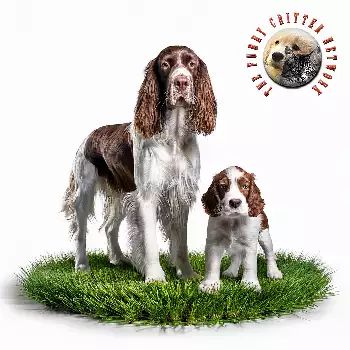
Stand next to someone with a good ESS and the first thing you notice is how sensibly put together the dog is. Nothing is exaggerated, nothing is caricatured. The ESS is a working gun dog built to cover ground all day, hold up to brambles and stream crossings, and still have enough left to load back into the truck at the end of the hunt. That working utility shows in every physical proportion.
The head is one of the breed's most distinctive features. The skull is moderately long, fairly broad, and slightly rounded at the crown, with a clearly defined stop where the skull meets the muzzle. The muzzle itself is fairly long and reasonably wide, giving the dog the jaw strength needed to carry game. The lips are fairly square but not pendulous. The eyes are medium-sized, oval in shape, and set to look forward - the color should be dark hazel in liver-and-white dogs and dark brown or black in black-and-white dogs. Light or prominent eyes are considered a fault because they compromise the breed's soft, intelligent expression. The ears are long and wide, hanging close to the head and covered with wavy feathering. The ear leather reaches approximately to the tip of the nose when pulled forward - a distinctive spaniel feature that also, practically speaking, contributes to the breed's well-documented susceptibility to ear infections.
The neck is moderately long and muscular, flowing into well-laid-back shoulders. The body is fairly short-coupled, with a deep chest that reaches to the level of the elbow, giving the lungs and heart room to work on long hunting days. The topline is level between the withers and the base of the tail, with some slope into the hindquarters. The tail - traditionally docked in American lines, left natural in European and UK lines - is carried level with or below the back and wags almost continuously when the dog is engaged. Field people often say you can read an ESS's enthusiasm through its tail before you even see its face.
The forequarters are clean and well-angulated, with moderate bone that gives the dog substance without heaviness. The hindquarters are broad and muscular, well-angulated through the stifle and hock, generating the drive that powers the dog through cover. The feet are compact and round, well-padded, with close-set toes. Overall, the ESS moves with reach and drive, covering ground effortlessly at a ground-covering trot - not flashy, but purposeful and efficient.
Coat is a defining characteristic and the source of considerable breed community discussion. The outer coat is of medium length, either flat or wavy - never curly, which is a fault - and sits close enough to be weather-resistant in the field while still carrying the signature feathering. The undercoat is dense and soft, providing insulation. Feathering appears on the ears, the backs of all four legs, the chest, and the belly. It is moderate and functional rather than excessive. Field-bred ESS dogs tend to carry a shorter, less glamorous coat than bench-bred dogs - a deliberate difference that makes field dogs easier to maintain and less prone to collecting debris in cover.
Color in the ESS runs to liver and white or black and white, either with or without tan markings over the eyebrows, inside the ears, on the cheeks, and on the underside of the tail. Ticking - small flecks of color within the white portions of the coat - is common and acceptable. What is not acceptable by the AKC standard is lemon, red, orange, or sable coloring, which the standard treats as disqualifying faults linked to genetic irregularities rather than true breed type.
Affectionate With Family
★★★★★
The ESS bonds closely with the people who share its home, showing open affection and a genuine desire to be included in everyday life. This is a dog that follows you around and means it.
Good With Young Children
★★★★☆
ESS dogs are patient and playful with kids, making them solid family dogs when properly socialized. Their energy level is a better match for school-age children than toddlers.
Good With Other Dogs
★★★☆☆
Most ESS dogs get along reasonably well with other dogs, though individual personality and early socialization matter. Field-bred lines can carry more intensity than bench-bred dogs.
Shedding Level
★★★★☆
Plan on regular vacuuming. The ESS sheds consistently throughout the year and picks up burrs, mud, and debris on those feathered ears and legs.
Coat Grooming Frequency
★★★☆☆
The coat needs brushing a few times a week to stay tangle-free, especially the feathering around the ears and legs. Periodic trimming keeps things tidy.
Drooling Level
★☆☆☆☆
Not a drooler. The ESS has a clean-mouthed sporting dog build and will not leave slicks on your furniture or clothes.
Coat Type
★★★☆☆
Medium-length, flat to wavy outer coat with a dense undercoat. The feathering on the ears, chest, and legs is a hallmark of the breed and requires consistent attention.
Openness To Strangers
★★★★☆
The ESS tends to be friendly and welcoming with new people - not suspicious, just enthusiastic. Early socialization reinforces this naturally open disposition.
Playfulness Level
★★★★☆
Energy and play are core to the ESS personality. This is not a dog that goes looking for a quiet corner; it goes looking for a tennis ball or a bird.
Watchdog/Protective Nature
★★★☆☆
The ESS will alert you when something is off, but it is not a guard dog by nature. Its friendly disposition means it will likely greet an intruder before confronting one.
Adaptability Level
★★★☆☆
The ESS adapts reasonably well to different living situations as long as exercise needs are met. Without adequate physical and mental outlets, adaptability breaks down quickly.
Trainability Level
★★★★★
The ESS is genuinely eager to work with you, which makes training a pleasure. Bred for generations to take direction in the field, this dog listens and responds.