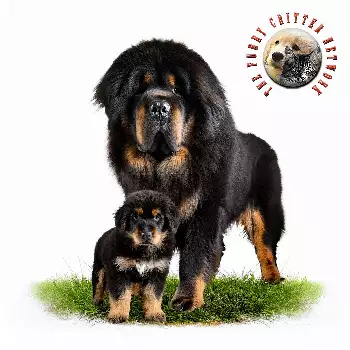
Standing next to a Do-Khyi for the first time, what strikes most people is not just the size - it is the density. This is a dog that looks like it was engineered to absorb bad weather and physical hardship without flinching. The body is substantial and powerfully built, with heavy bone, a broad chest, and a muscular frame that suggests both endurance and strength. Males reach a minimum of 26 inches at the shoulder and can weigh well over 100 pounds; females are similarly proportioned but somewhat lighter and slightly lower to the ground.
The head is one of the breed's most distinctive features - broad, heavy, and well-defined, with a pronounced stop and a strong muzzle. The skull is wide between the ears, giving the face an imposing presence that contributes to the breed's guardian effectiveness. The eyes are brown, set moderately wide, and carry an alert, watchful expression that reflects the dog's default state of evaluating its surroundings. Ears are medium-sized, V-shaped, and hang close to the head. When the dog is relaxed they sit low and back; when alert they lift slightly, framing the broad skull.
The neck is thick, muscular, and well-arched, contributing to the mane effect that makes Do-Khyi males particularly striking. The mane develops more fully in males than females and reaches its mature expression by three to five years of age. The body is slightly longer than it is tall, giving the dog a rectangular silhouette with a level topline and a moderate tuck-up. The tail is heavily feathered and carried curled over the back when the dog is active and alert - a characteristic carriage that is as much a breed marker as any other feature.
The coat is what sustained this breed through Himalayan winters. It is a thick double coat with a coarse, straight or slightly wavy outer layer and a dense, wooly undercoat that provides genuine insulation. The coat is longest around the neck and shoulders, on the back of the legs, and on the tail, creating a full, lion-like appearance in mature dogs. Coat quality and density vary somewhat between the two historical types - the heavier monastery-type dogs and the slightly leaner nomadic dogs - but both carry adequate insulation for cold-climate living.
Color ranges include black, black and tan, brown, brown and tan, blue-gray, blue-gray and tan, and various shades of red gold from deep mahogany to lighter sable. Tan markings appear above the eyes, on the muzzle, throat, chest, lower legs, and under the tail when present. The standard does not accept white markings beyond a small star on the chest, and dogs with heavily patterned or spotted coats are considered nonconforming. Movement is powerful and ground-covering with a free, rolling stride that belies the dog's substantial weight.
The feet are large, round, and cat-like with well-arched toes and thick pads built for rough terrain. The legs are straight and heavily boned, with well-developed musculature throughout. The rear quarters are broad and well-angulated, providing the drive behind the breed's characteristic rolling gait. When moving at a trot the dog carries itself with a natural dignity - unhurried but covering ground efficiently, the way a dog built for patrol across rough terrain needs to move.
One detail that surprises new owners is how much the appearance changes between a coat-blown Do-Khyi and one in full coat. In late spring after the annual shed, the dog can look dramatically smaller and leaner than it did through winter. The mane reduces, the feathering thins, and the overall silhouette becomes more compact. Then the undercoat rebuilds through summer and fall, and by winter the dog is back to its full, imposing presence. This annual cycle is normal and not a cause for concern.
Affectionate With Family
★★★★☆
The Do-Khyi bonds deeply with its own people and shows genuine warmth within the household. This loyalty was bred over millennia - these dogs are devoted to the family unit they guard.
Good With Young Children
★★★☆☆
The Do-Khyi is generally patient with the children it grows up with, though its sheer size demands supervision around small kids. This is not a breed for rough-and-tumble play with toddlers.
Good With Other Dogs
★★☆☆☆
Dominance tendencies are common in this breed, particularly same-sex pairings. Early and consistent socialization helps, but two intact males under one roof is asking for trouble.
Shedding Level
★★★☆☆
The Do-Khyi goes through one significant annual shed - a heavy coat blow that lasts several weeks. Outside that period, shedding is manageable with regular brushing.
Coat Grooming Frequency
★★★☆☆
Weekly brushing keeps the thick double coat in shape through most of the year. During the seasonal shed, daily attention is necessary to manage the volume of undercoat coming out.
Drooling Level
★★☆☆☆
The Do-Khyi drools less than many giant breeds - the tighter lip structure compared to loose-lipped mastiff types means you are not constantly reaching for a towel.
Coat Type
★★★★☆
The coat is coarse and thick with a heavy, wooly undercoat built for Himalayan winters. It looks impressively full and mane-like around the neck and shoulders.
Openness To Strangers
★☆☆☆☆
Wariness toward unfamiliar people is a core trait in this breed - it is not shyness, it is exactly what a guardian dog is supposed to do. Do not expect a Do-Khyi to warm up to strangers quickly.
Playfulness Level
★★★☆☆
There is a playful side to the Do-Khyi that comes out with trusted family members, particularly when young. As they mature they tend toward a more dignified, watchful demeanor.
Watchdog/Protective Nature
★★★★★
Guarding is the Do-Khyi's entire purpose - this instinct is centuries deep and runs without training. The breed is naturally alert, territorial, and decisive about perceived threats.
Adaptability Level
★★☆☆☆
The Do-Khyi is not well-suited to apartment living or tight urban spaces. It needs room, cooler temperatures are better, and routine changes are not taken in stride by this breed.
Trainability Level
★★☆☆☆
The Do-Khyi understands what you want - it just reserves the right to decide whether that matters right now. Independent thinking was an asset on the Tibetan plateau; it is a daily negotiation in your living room.