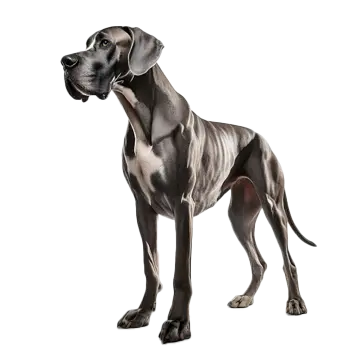
Standing next to a Dane for the first time is a different experience than seeing one in a photograph. These dogs are genuinely, uncomplicatedly tall. Males are required to be at least 30 inches at the withers by the AKC standard, and many working dogs stand 32 to 34 inches. A large male Dane looks a grown adult directly in the eye when standing on all fours. The effect is not intimidating in the way that an aggressive dog is intimidating - it is more like standing next to something that resets your understanding of what a dog can be. The scale is magnificent rather than threatening when the temperament is right, which in a well-bred Dane it almost always is.
The head is the Dane's signature - long, rectangular, and distinctively expressive. The skull and muzzle are roughly equal in length, which gives the face an open, balanced quality rather than the pushed-in appearance of heavier Mastiff breeds. The stop - the transition from skull to muzzle - is well-defined but clean, not abrupt or overdone. The jaws are strong and well-developed, and the bite is scissors. The eyes are medium-sized, dark in color, and deeply set, with an alert, intelligent expression that communicates calm and awareness simultaneously. The brow is not heavily wrinkled, giving the Dane's face a cleaner, more open look than many large Molosser breeds.
Cropped ears, once standard in North American show rings, have become less common as ear cropping bans have spread across Europe, and many modern Danes carry natural folded ears that lie close along the sides of the head. The natural ear softens the face considerably without diminishing the breed's authority. In countries where cropping remains legal, both presentations are seen in the show ring, but the trend has moved steadily toward natural ears.
The neck is one of the breed's most striking features in motion - long, well-arched, and carried high with a dignity that has inspired the breed's historical epithet, the Apollo of Dogs. The chest is broad and deep, with the brisket reaching to or below the elbow. This depth is a structural hallmark of the breed, but it also creates an elevated susceptibility to gastric dilatation-volvulus. Every Dane owner should understand this risk from the beginning, not as an afterthought.
The body is rectangular rather than square - slightly longer from shoulder to hip than it is tall at the withers. The topline is short and level, the loins are well-muscled, and the hindquarters are strong and well-angulated. The forelegs are perfectly straight with substantial bone, and the feet are round, compact, and well-arched. The tail is long, thick at the root, and tapers gradually to a fine point. It is carried level with the backline in motion and hangs naturally at rest.
The coat is short, dense, and close-lying with a natural gloss that is a reliable indicator of good condition and nutrition. Color variety in Great Danes is unusual for a large working breed. Fawn ranges from light golden to deep, rich gold, typically with a black mask. Brindle places clearly defined black stripes on a fawn base. Blue is a steel gray produced by dilute pigment genetics. Black is solid black with no white markings. Mantle is black and white in a blanket-style pattern. Harlequin is pure white with torn, irregular black patches distributed across the body - one of the most striking coat patterns in all of purebred dogs. Merle shows gray base with irregular black patches of varying sizes. The genetics behind harlequin and merle require careful attention in breeding programs to avoid double merle offspring, which carry significant risk of sensory impairment.
Movement in a properly built Dane is genuinely beautiful to watch - long flowing strides, excellent reach in front, strong propulsive drive from the hindquarters, and a topline that stays level and steady through the trot. Structural faults remove that effortless quality and produce labored movement. For a prospective owner evaluating a breeding program or a litter, watching both parents move is one of the most informative assessments available.
Affectionate With Family
★★★★★
Danes are deeply bonded to their people and will seek out closeness constantly - this is a dog that genuinely wants to be in your lap regardless of whether that is physically practical.
Good With Young Children
★★★☆☆
The Dane's gentle disposition is real, but their sheer size means even a casual tail wag can topple a toddler - supervision and teaching the dog not to lean or jump is essential.
Good With Other Dogs
★★★☆☆
Most Danes coexist peacefully with other dogs, though their size alone changes the dynamic in any interaction, and early socialization makes a significant difference in how they handle unfamiliar dogs.
Shedding Level
★★★☆☆
That short coat sheds steadily year-round, and when a dog this large sheds, you notice it - weekly brushing keeps it manageable and reduces hair on furniture.
Coat Grooming Frequency
★★☆☆☆
Beyond regular brushing and the occasional bath, the Dane's short coat needs very little work - a hound glove once a week keeps them looking polished.
Drooling Level
★★★☆☆
Not the most prolific droolers in the working group, but Danes do drool, particularly after drinking or when anticipating a meal - a hand towel near the bowl is practical.
Coat Type
★☆☆☆☆
Short, smooth, and close-lying - the Dane's coat requires no trimming, no stripping, and no elaborate care beyond consistent brushing.
Openness To Strangers
★★★☆☆
A well-socialized Dane is friendly and approachable, but their size means they do not have to be aggressive to make a stranger reconsider - alert without being reactive.
Playfulness Level
★★★★☆
Danes retain a genuine puppyish enthusiasm well into adulthood and love a good play session - just clear the room of breakables before the zoomies start.
Watchdog/Protective Nature
★★★★☆
Few intruders will push their luck once a Great Dane makes its presence known - the bark alone is a deterrent, and they are naturally alert to unusual activity.
Adaptability Level
★★★☆☆
Danes adapt reasonably well to different living situations as long as they have space to stretch out and daily exercise - they are calmer indoors than their size might suggest.
Trainability Level
★★★★☆
Intelligent and people-oriented, Danes respond well to consistent, reward-based training - starting early matters because a stubborn 160-pound dog is a fundamentally different problem than a stubborn 10-pound one.