Bullet Heads

Boston Terrier

Quick Facts

🐕 Breed Group
Non-Sporting Group
📏 Size Category
Small
📏 Height
Males: 15-17 inches, Females: 15-17 inches
⚖️ Weight
Males: 12-25 pounds, Females: 12-25 pounds
⏱️ Life Expectancy
11-13 years
🧣 Coat Type
Short, smooth, fine-textured single coat
🎨 Coat Colors
Black and white, brindle and white, seal and white
😀 Temperament
Friendly, lively, intelligent, affectionate, gentle, determined
🏃 Exercise Needs
Moderate
🎓 Training Difficulty
Easy to moderate - eager to please but occasionally stubborn
👶 Good with Children
Yes
🐾 Good with Other Pets
Yes - generally sociable with proper socialization

Other Names & Breed Recognition

Bullet Heads is one of the earliest informal names applied to the breed now universally known as the Boston Terrier. The name appeared during the 1870s and 1880s, the formative decades when the breed was being developed in the stables and back streets of Boston, Massachusetts, from crosses between English Bulldogs and the now-extinct White English Terrier. The term described the breed's most immediately striking physical feature: a round, compact, blocky skull that bore a passing resemblance to a bullet in profile. During this period, the dogs that would become Boston Terriers had no fixed name and were identified by a rotating collection of descriptive labels including Bullet Heads, Round Heads, American Bull Terriers, Boston Bulls, and Boston Bulldogs, each reflecting a different observer's impression of the developing type.

The naming confusion came to a head in 1889 when approximately thirty owners gathered to form the American Bull Terrier Club, initially calling their dogs Round Heads or Bull Terriers. This did not sit well with fanciers of the established Bull Terrier and Bulldog breeds, who objected to the implication that these Boston-bred dogs were related to or equivalent to their own breeds. The Bulldog contingent held significant influence with the American Kennel Club at the time, and the Boston fanciers were pressured to choose a different name. The resulting compromise was Boston Terrier, a name that honored the breed's city of origin while sidestepping the territorial disputes with Bulldog and Bull Terrier advocates. The club was reorganized as the Boston Terrier Club of America in 1891.

The AKC admitted the Boston Terrier in 1893, making it one of the first breeds developed in the United States to receive formal kennel club recognition. The breed is classified in the AKC's Non-Sporting Group rather than the Terrier Group, reflecting its companion rather than working function despite the word Terrier in its name. The United Kennel Club places the breed in its Companion Dog Group, while the FCI classifies it in Group 9 among Companion and Toy Dogs. The Kennel Club in the United Kingdom recognizes the breed within its Utility Group, and the Canadian Kennel Club places it in the Non-Sporting Group.

If you encounter the name Bullet Heads in a historical reference, a breed history article, or an older publication about American dog breeds, you are looking at the Boston Terrier in its earliest, pre-standardization form. The name carries no implication of a separate breed, a different type, or a distinct lineage. It is simply one of several colorful labels that circulated among Boston's dog fanciers before formal breed nomenclature was established. The same square-headed, tuxedo-marked, lively little dog that was called a Bullet Head in the 1880s is the American Gentleman of today.

Bullet Heads Organizations & Standards

The Boston Terrier Club of America, founded in 1891 after its predecessor the American Bull Terrier Club was reorganized under pressure from Bulldog and Bull Terrier fanciers, serves as the AKC parent club for the breed. The club maintains the official breed standard, promotes responsible breeding through its Code of Ethics, publishes health guidance through its health committee, and coordinates rescue efforts for Boston Terriers in need of rehoming. The BTCA's formation was instrumental in the breed's trajectory from informal street dog to recognized companion breed, and its successful petition for AKC recognition in 1893 secured the Boston Terrier's place among the earliest American breeds in the registry.

The breed standard describes the Boston Terrier as a lively, highly intelligent, smooth-coated, short-headed, compactly built dog with a short tail. The standard specifies a square appearance with balanced proportions in which the body length from point of shoulder to point of buttock equals the height at the withers. Weight is divided into three competition classes: under 15 pounds, 15 to under 20 pounds, and 20 to not exceeding 25 pounds. Height typically ranges from 15 to 17 inches at the shoulder. The standard places particular emphasis on the breed's distinctive color pattern, requiring brindle, seal, or black as the base color with white markings that must include a blaze between the eyes, a white muzzle band, and a white forechest.

The BTCA participates in the OFA Canine Health Information Center program. For a Boston Terrier to earn CHIC certification, the dog must have a DNA test for the HSF4 gene associated with hereditary juvenile cataracts, a patellar luxation evaluation by a veterinarian, and a BAER hearing test. An ACVO eye examination by a board-certified veterinary ophthalmologist is also recommended. These screenings target the breed's most significant hereditary health vulnerabilities and give prospective buyers objective data about a puppy's genetic and orthopedic health status.

Regional Boston Terrier clubs operate across the United States and internationally, hosting specialty shows, health clinics, and educational events. The breed has maintained consistently high popularity in the United States, ranking among the AKC's top 25 most registered breeds in recent years. This sustained demand underscores the importance of the parent and regional clubs' work in maintaining breed quality, supporting health research, and discouraging the irresponsible breeding practices that high demand can incentivize.

Kennel Club Recognition

  • American Kennel Club (AKC): Recognized in 1893, Non-Sporting Group
  • United Kennel Club (UKC): Recognized, Companion Dog Group
  • Canadian Kennel Club (CKC): Recognized, Non-Sporting Group
  • FCI: Recognized, Group 9 - Companion and Toy Dogs
  • The Kennel Club (UK): Recognized, Utility

Bullet Heads Physical Description

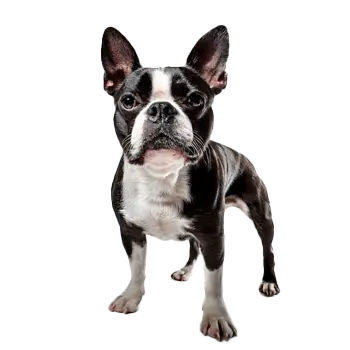
The Bullet Heads breed is a compactly built, well-proportioned small dog whose square body profile, distinctive tuxedo markings, and large expressive eyes create one of the most recognizable silhouettes in the canine world. Standing 15 to 17 inches at the shoulder and weighing between 12 and 25 pounds across the three weight classes, the Boston Terrier combines a sturdy, muscular frame with clean lines and an overall impression of balance and refinement. The body is deliberately square in proportion, with the length from point of shoulder to point of buttock matching the height at the withers. The breed should appear athletic and well-muscled without any suggestion of coarseness, bulk, or excessive fineness.

The head gives the breed its historical name and remains its most defining feature. It is square and flat on top, with a short, wide, wrinkle-free muzzle set in proportion to the skull at approximately one-third of the total skull length. The jaw is broad and square with an even or slightly undershot bite. The eyes are the breed's emotional centerpiece: large, round, dark in color, and set wide apart, they convey an expression of alertness, curiosity, and good humor that makes the Boston Terrier one of the most facially expressive of all breeds. The ears are small, carried erect, and positioned at the corners of the skull. The prominent eyes, while endearing, represent a significant health vulnerability, as the shallow orbits provide limited mechanical protection.

The coat is short, smooth, fine-textured, and lies close to the body with a natural sheen. The breed standard accepts three base colors: black, brindle, and seal. Seal is a breed-specific color term describing a coat that appears black in most light but reveals a warm reddish-brown cast in direct sunlight. All three base colors are paired with the required white markings that produce the breed's signature tuxedo appearance. The ideal marking pattern includes a white blaze between the eyes extending over the skull, a white muzzle band, a white chest, and white forelegs to the elbows or higher.

The tail is short, set low, and may be straight or screw-shaped, carried below the horizontal plane of the back. The naturally short tail is a breed characteristic rather than the result of docking and is genetically related to the same vertebral factors that produce the breed's compact spinal structure. The Boston Terrier moves with a sure-footed, rhythmic gait that conveys confidence and purpose, with the front and rear legs tracking in straight lines and each stride reflecting the balanced proportions of a well-constructed companion dog.

Affectionate With Family
The Bullet Heads breed, now known as the Boston Terrier, is profoundly people-oriented and forms deep emotional bonds with every member of its household. This breed was refined over more than a century from fighting dog stock into a purpose-built companion, and that transformation is evident in the intensity of its attachment to its family. Boston Terriers seek constant proximity to their people, routinely claiming laps, pressing against legs, and positioning themselves at the center of household activity. This devotion extends to all family members rather than fixating on a single individual, making the breed a genuinely shared companion.
Good With Young Children
The Bullet Heads breed is well-suited to families with children thanks to its patient nature, sturdy build, and genuine enjoyment of interactive play. The Boston Terrier's compact but muscular frame can absorb accidental bumps from young children without the fragility concerns associated with many toy breeds. Most Bostons match the energy and enthusiasm of active children naturally, creating mutually enjoyable play partnerships. Supervision remains important to protect the breed's prominent eyes from inadvertent poking and to teach children respectful handling of any dog.
Good With Other Dogs
The Bullet Heads breed has largely shed the combative instincts of its pit-fighting ancestors and typically gets along well with other dogs when properly socialized. Over a century of selective breeding for companionship has produced a dog that prefers amicable interaction over confrontation in most social encounters with other canines. Multi-dog households generally work well with Boston Terriers, and most individuals enjoy canine company at dog parks and on group walks. Occasional resource guarding or mild same-sex tension may surface in some individuals but responds readily to early socialization and consistent management.
Shedding Level
The Bullet Heads breed sheds lightly throughout the year, producing modest amounts of loose hair that are easily managed with weekly brushing. The absence of an undercoat eliminates the dramatic seasonal shedding events that characterize double-coated breeds, keeping household fur levels consistently low. A lint roller and occasional brushing are typically sufficient to maintain a clean home. The Boston Terrier ranks among the lower-shedding breeds, making it a practical choice for owners who value a tidy living environment.
Coat Grooming Frequency
The Bullet Heads breed requires minimal coat maintenance, making it one of the easiest breeds to groom. Weekly brushing with a soft-bristle brush or grooming mitt captures loose hair and distributes natural oils, while bathing is needed only every four to six weeks under normal circumstances. The breed requires no professional grooming, clipping, or trimming. The primary grooming demands of a Boston Terrier focus not on the coat but on cleaning facial folds, inspecting the eyes daily, and maintaining dental hygiene.
Drooling Level
The Bullet Heads breed produces minimal drool under normal circumstances, though the slightly undershot jaw and brachycephalic structure can generate occasional moisture around the mouth following meals, drinks, or physical exertion. This is generally mild and easily addressed with a quick wipe. The breed is not a significant drooler by any meaningful standard, and owners will not encounter the furniture-soaking saliva production associated with breeds that have heavy flews or pendulous jowls.
Coat Type
The Bullet Heads breed has a short, smooth, fine-textured single coat that lies flat against the body and displays a natural sheen when the dog is in good health. The coat offers minimal insulation against cold, which means the breed benefits from a jacket during winter walks in northern climates. The tuxedo-patterned markings, with white set against black, brindle, or seal, are the breed's visual signature and a defining element of the breed standard. This low-maintenance coat is perfectly suited to an urban companion dog.
Openness To Strangers
The Bullet Heads breed typically approaches unfamiliar people with friendly curiosity and a wagging tail, reflecting generations of breeding specifically for sociable urban companionship. Most Boston Terriers warm up to visitors quickly and enjoy receiving attention from anyone willing to offer it. The breed was developed in the close quarters of Boston's working-class neighborhoods and later adopted by the city's upper classes, producing a dog comfortable with diverse groups of people and social situations. Genuine shyness or wariness toward strangers is uncommon and generally considered a temperament fault.
Playfulness Level
The Bullet Heads breed brings an infectious comedic energy to daily life that owners consistently describe as clownish and deliberately amusing. Boston Terriers engage enthusiastically in fetch, tug-of-war, and interactive toy play, and they frequently invent their own games through spontaneous zoomies and antic-filled interactions with household objects. The breed's play drive persists well into adulthood, moderated only slightly by advancing age. The breed shifts between energetic play and calm companionship with ease, making it adaptable to varied household rhythms.
Watchdog/Protective Nature
The Bullet Heads breed alerts reliably to doorbells, unusual noises, and arriving visitors with a clear, purposeful bark. Boston Terriers are attentive to environmental changes and notice disruptions in routine that a less observant dog might overlook. However, the breed is not a guard dog and will typically follow its initial alert with a friendly greeting once the visitor enters. The breed is not prone to nuisance barking and generally settles quickly after the source of stimulation has been identified.
Adaptability Level
The Bullet Heads breed adapts exceptionally well to virtually any living situation, from a compact city apartment to a spacious suburban home. The breed's small size, moderate exercise needs, and quiet indoor disposition make it an ideal urban companion, and its flexibility extends across household configurations including singles, couples, families, and seniors. Boston Terriers handle travel well, adjust to new environments without prolonged stress, and generally accommodate changes in routine with equanimity. The breed's primary limitation is sensitivity to temperature extremes, requiring climate-controlled living space.
Trainability Level
The Bullet Heads breed is intelligent, eager to please, and responds well to positive reinforcement training, making it one of the more trainable companion breeds. Boston Terriers enjoy the interaction and mental stimulation of structured training sessions and pick up basic commands and tricks with impressive consistency. An occasional stubborn moment may surface, but this is minor compared to the independence seen in many terrier and primitive breeds. The breed's sensitivity to its owner's emotional state means that enthusiastic, upbeat training produces dramatically better results than stern or corrections-based approaches.

Bullet Heads History & Development

The Boston Terrier's origin story begins around 1870 in the working-class neighborhoods of Boston, Massachusetts, where coachmen, stable hands, and fighting-dog enthusiasts were crossing English Bulldogs with English White Terriers to produce dogs suited for the pit. The founding dog of the breed, known as Hooper's Judge, was a dark brindle import from England weighing approximately 32 pounds, with a blocky head, white facial markings, and a muscular build that combined Bulldog substance with Terrier athleticism. Robert C. Hooper of Boston acquired Judge from William O'Brien, and bred him to a small white bulldog-type female named Gyp, owned by Edward Burnett of Southboro. Their offspring, particularly a dog named Eph, established the genetic foundation from which all Boston Terriers descend.

The transition from fighting dog to parlor companion was driven by the preferences of Boston's residents, who recognized in these compact, lively dogs the makings of an excellent urban companion. Over the next two decades, breeders systematically reduced the breed's size from the original 30-to-44-pound range to a maximum of 25 pounds, softened its temperament from aggressive combatant to amiable housemate, and refined the distinctive tuxedo markings into a breed hallmark. During this transitional period, the dogs were called by various informal names including Bullet Heads, Round Heads, American Bull Terriers, and Boston Bulls. The naming confusion reflected the breed's uncertain identity during a period when its physical type and behavioral character were still in active development.

Litter brother studs Barnard's Tom and Atkinson's Toby, born in 1878, were pivotal in establishing consistent type within the emerging breed. Barnard's Tom in particular is credited as a true founding sire whose offspring demonstrated the compact build, square head, and tractable temperament that would become breed hallmarks. By 1888, the New England Kennel Club was accepting the breed in competition under the name Round Head Bull and Terrier. The formation of the Boston Terrier Club in 1891 and AKC recognition in 1893 formalized the breed's identity and launched it on a trajectory of rapidly growing popularity that would make it one of America's most beloved companion breeds.

The early 20th century saw the Boston Terrier's popularity explode across the United States. By the 1920s and 1930s, it consistently ranked among America's most popular breeds, beloved for its tuxedo markings, compact size, and genuinely engaging personality. Massachusetts designated the Boston Terrier as its official state dog in 1979, and Boston University adopted the breed as its mascot, cementing the breed's identity as an iconic American creation. Modern breeding efforts have focused on moderating the breed's brachycephalic features to improve respiratory function while maintaining the appealing physical type and outstanding temperament that have made the Boston Terrier a perennial favorite.

Bullet Heads Temperament & Personality

The Bullet Heads breed possesses a temperament that has been deliberately shaped over more than a century of selective breeding for companion function, producing a dog that is genuinely people-oriented, emotionally perceptive, and endlessly engaging. The Boston Terrier's personality is frequently described in terms that suggest a natural entertainer: owners report a dog that seems to understand what makes people laugh and will deliberately repeat behaviors that generate positive reactions. This performative quality, paired with large expressive eyes and an animated body language vocabulary that includes head tilts, play bows, and what can only be described as mugging for attention, creates a companion that provides genuine daily amusement.

Beneath the comedic exterior lies a dog of genuine intelligence and emotional sensitivity. Boston Terriers read human facial expressions, body language, and vocal tone with remarkable accuracy, responding to their owner's emotional state with physical closeness during moments of sadness or stress and energetic playfulness during lighter moods. This attunement makes the breed an outstanding companion for individuals who value emotional responsiveness in a dog, though it also means the breed absorbs household tension and conflict more acutely than less perceptive breeds. The Boston Terrier's sensitivity extends to training, where enthusiastic praise and food rewards produce dramatically better results than stern corrections.

The breed's social nature encompasses not just its immediate family but extends to a generally warm reception of strangers, visiting friends, other dogs, and even cats when properly socialized. The Boston Terrier is not a suspicious or territorial breed, and most individuals greet visitors with genuine enthusiasm rather than wariness. The breed does bark to announce arrivals and unusual sounds, providing adequate alert-dog function, but this bark is purposeful rather than excessive and typically gives way to a friendly welcome once the visitor is acknowledged. The breed is not prone to nuisance barking when properly exercised and mentally stimulated.

A thread of determination inherited from the breed's bull-and-terrier fighting ancestors persists in the modern Boston Terrier, manifesting not as aggression but as an occasional stubborn streak during training or when the dog has decided it wants something its owner has not offered. This tenacity is part of the breed's character rather than a behavioral flaw, and most owners appreciate a dog with enough personality to hold opinions while remaining fundamentally cooperative and eager to please. The breed's energy level is moderate and self-regulating, shifting smoothly between active play and calm companionship in response to the household's rhythm.

Bullet Heads Family Life & Living Requirements

The Bullet Heads breed thrives in virtually any household that can provide consistent human companionship, making it one of the most versatile small breeds for diverse family configurations. The Boston Terrier's compact size, moderate exercise needs, and quiet indoor demeanor suit apartment and condominium living exceptionally well, while its playful nature and energy ensure it is equally at home in larger suburban properties. The breed does not require a yard, does not produce excessive noise, and settles contentedly when its social and physical needs have been met. This adaptability has kept the Boston Terrier among America's most popular urban companion breeds for over a century.

Families with children at all stages generally find the Boston Terrier to be an excellent match. The breed's compact but sturdy build makes it more resilient to the incidental physical contact of life with children than many toy breeds, while its patient and playful nature creates natural play partnerships with kids of all ages. Boston Terriers often develop particularly devoted relationships with the children in their household, actively seeking them out for games and companionship. As with any breed, supervision of interactions with very young children is advisable to protect both the child and the dog's vulnerable eyes from inadvertent injury.

Seniors and retirees represent one of the breed's strongest demographic matches. The Boston Terrier's manageable size, moderate exercise requirements, and deep attachment to its owner provide physical companionship that is both emotionally fulfilling and logistically practical for owners with limited mobility or strength. The breed's relatively long lifespan of 11 to 13 years, and sometimes longer, ensures many years of companionship. The straightforward grooming requirements and minimal training demands further reduce the burden of ownership compared to more complex breeds.

Temperature regulation is the single most important environmental consideration for any Boston Terrier owner. The breed's brachycephalic facial structure significantly compromises its ability to cool itself through panting, making heat stroke a serious and potentially fatal risk during warm weather. Owners must provide air-conditioned indoor environments, restrict outdoor activity during peak heat hours, and recognize early signs of overheating including excessive panting, drooling, and lethargy. Cold weather also poses challenges due to the breed's thin, short coat and minimal body insulation. A well-fitted jacket is recommended for winter walks in temperate and northern climates.

Bullet Heads Training & Exercise Needs

The Bullet Heads breed is a bright, cooperative learner that responds enthusiastically to positive reinforcement training and genuinely enjoys the mental engagement that structured learning provides. Boston Terriers pick up basic obedience commands, household routines, and tricks with impressive speed, motivated by the interaction with their owner as much as by the food rewards and praise that accompany successful performance. Short, upbeat training sessions of five to ten minutes produce the best results, as the breed's attention span is moderate and may wane during lengthy or repetitive drills. Harsh verbal corrections, physical discipline, and confrontational training methods are counterproductive with this sensitive breed and risk damaging the trust that forms the foundation of the Boston Terrier's willingness to cooperate.

Housetraining is the most commonly reported training challenge, a difficulty the breed shares with many small and brachycephalic breeds. The small bladder capacity inherent to a dog in the 12-to-25-pound range requires frequent outdoor trips during puppyhood, and accidents during the learning period are an expected part of the process. Consistency, patience, and a reliable schedule are the essential ingredients of successful housetraining. Many owners supplement outdoor training with indoor potty options during the early months, particularly in climates where extreme heat or cold makes extended outdoor time impractical for this temperature-sensitive breed. Most Boston Terriers achieve full housetraining reliability by six to eight months with consistent effort.

Exercise needs are moderate and achievable for owners with diverse lifestyles. A daily walk of 30 to 45 minutes, divided into two sessions if preferred, combined with indoor play and mental stimulation, satisfies most Boston Terriers' physical and psychological needs. The breed enjoys interactive games including fetch, tug-of-war, and puzzle toys, and many individuals show aptitude for structured activities such as agility, rally obedience, and nose work. Exercise must always be managed with respect for the breed's brachycephalic limitations: avoid vigorous activity in hot or humid weather, watch for signs of respiratory distress, and use a harness rather than a collar.

Mental stimulation is an essential complement to physical exercise for this intelligent breed. A Boston Terrier deprived of cognitive engagement may develop behavioral outlets including excessive barking, destructive chewing, or attention-seeking antics that test household patience. Puzzle feeders, training games, novel walking routes, and social outings all contribute to the breed's mental well-being. The Boston Terrier's natural curiosity and problem-solving aptitude make it receptive to enrichment activities, and most owners discover that a mentally stimulated dog is a calmer, more contented household companion.

Bullet Heads Health Concerns

The Bullet Heads breed carries several well-documented health predispositions that prospective owners should understand before acquiring a puppy. The breed's brachycephalic anatomy, prominent eyes, compact skeletal proportions, and piebald coat genetics create specific vulnerabilities that require proactive management. With responsible breeding practices, appropriate health screening, and attentive veterinary care, most of these conditions can be prevented, detected early, or managed effectively, and the majority of Boston Terriers live comfortable, active lives within their expected lifespan of 11 to 13 years.

Brachycephalic obstructive airway syndrome represents the breed's most significant and pervasive health challenge. The shortened skull compresses the upper airway structures, frequently resulting in narrowed nostrils, an elongated soft palate, and a reduced-diameter trachea that collectively impair the dog's ability to breathe efficiently. Affected dogs may snore loudly, gag or retch during excitement, struggle during exercise, and face serious risk of heat stroke in warm conditions. The severity of BOAS varies considerably among individuals, and prospective buyers should evaluate the breathing quality of both parents and avoid breeders producing dogs with extremely flat faces. Early surgical correction of stenotic nares and elongated soft palate can significantly improve airway function when performed before secondary changes develop.

The breed's large, prominent eyes are its second most significant area of health vulnerability. Hereditary juvenile cataracts, linked to the HSF4 gene mutation, represent the best-characterized genetic eye condition, with a definitive DNA test enabling responsible breeders to produce puppies at substantially reduced risk. Beyond cataracts, the shallow orbital structure that creates the breed's appealing wide-eyed expression leaves the eyes exposed to corneal ulcers from mechanical injury, cherry eye from prolapse of the third eyelid gland, glaucoma, and dry eye syndrome. Daily eye inspection and prompt veterinary attention for any changes in appearance are essential components of responsible ownership.

Patellar luxation, congenital deafness associated with piebald genetics, hemivertebrae related to the screw tail, and atopic dermatitis complete the breed's primary health profile. Each condition is addressable through screening, early detection, and appropriate veterinary management. The Boston Terrier Club of America's CHIC health screening protocol provides a framework for evaluating breeding stock, and prospective buyers should prioritize breeders who participate in the program and can provide documentation of test results for both parents.

Common Health Issues

  • Brachycephalic obstructive airway syndrome (BOAS) - A constellation of upper airway abnormalities including stenotic nares, elongated soft palate, everted laryngeal saccules, and hypoplastic trachea caused by the breed's shortened skull. Severity ranges from mild snoring to life-threatening respiratory compromise during exercise or heat exposure. Early surgical correction of the nares and soft palate can substantially improve breathing quality when performed before secondary airway changes develop.
  • Hereditary juvenile cataracts - An early-onset lens opacity caused by the HSF4 gene mutation that may appear in puppies as young as eight weeks and can progress to bilateral blindness by two years of age. A definitive DNA test is available and is a required CHIC screening for the breed. Responsible breeders test all breeding stock and can significantly reduce the incidence of affected puppies through informed mating decisions.
  • Patellar luxation - A displacement of the kneecap from its normal position that is prevalent across small breeds and is a required CHIC screening for the Boston Terrier. Severity grades range from intermittent slipping that self-corrects to permanent displacement requiring surgical stabilization. Weight management and controlled exercise help manage mild cases, while higher-grade luxation typically requires surgical intervention.
  • Congenital deafness - Sensorineural hearing loss associated with the breed's white markings and piebald genetics, which may be unilateral or bilateral. BAER testing can identify affected puppies as early as five weeks of age. Dogs with hearing in one ear function well with minor accommodations, while bilaterally deaf dogs require visual-cue-based training and careful environmental management.
  • Cherry eye (prolapsed nictitans gland) - A protrusion of the third eyelid gland appearing as a red swollen mass in the inner corner of the eye, occurring frequently in the breed due to its prominent eye structure and shallow orbital anatomy. Surgical replacement of the gland rather than removal is the preferred treatment to preserve tear production and prevent chronic keratoconjunctivitis sicca later in life.
  • Hemivertebrae - A congenital vertebral malformation associated with the breed's naturally short, screw-shaped tail that may compress the spinal cord in severe cases, causing pain, weakness, or incontinence. Many Boston Terriers have radiographic evidence of hemivertebrae without clinical symptoms, but screening of breeding stock helps reduce the incidence of symptomatic cases in offspring.
  • Corneal ulcers - Erosion or perforation of the corneal surface that occurs frequently in the breed due to the large, prominent eyes and shallow orbital structure that leave the cornea exposed to mechanical injury. Prompt veterinary attention for any signs of squinting, tearing, redness, or cloudiness is essential, as untreated ulcers can progress rapidly and may threaten vision.

Preventive Care & Health Monitoring

  • DNA test for hereditary juvenile cataracts (HSF4 gene) from an OFA-approved laboratory - A required CHIC screening test. Both parents should be tested before breeding, and prospective buyers should request documentation of HSF4 status. Dogs homozygous for the mutation face high risk of developing cataracts before age two.
  • OFA patellar luxation evaluation - A required CHIC screening test conducted by a veterinarian to assess kneecap stability in dogs over 12 months of age. Results should be registered with the OFA, and prospective buyers should verify normal patellar status in both parents.
  • BAER hearing test for congenital deafness - A recommended screening that identifies unilateral or bilateral sensorineural hearing loss. Testing can be performed on puppies as early as five weeks. Responsible breeders provide BAER test results for breeding stock and puppies.
  • ACVO eye examination by a board-certified veterinary ophthalmologist - Annual eye examination recommended by the Boston Terrier Club of America to screen for cataracts, corneal ulcers, glaucoma, and other ocular conditions to which the breed is predisposed. Results should be registered with the OFA.
  • Brachycephalic airway management including harness use, weight control, and heat avoidance - Use a harness rather than a collar to reduce tracheal pressure, maintain a lean body weight, avoid strenuous exercise in hot or humid conditions, and consult a veterinarian early if snoring, gagging, or exercise intolerance worsens. Discuss early surgical correction of stenotic nares and elongated soft palate with your veterinarian.
  • Daily facial fold cleaning and eye inspection - Clean facial wrinkles daily with a damp cloth or veterinarian-approved wipe to prevent moisture-related dermatitis. Inspect the prominent eyes daily for redness, discharge, cloudiness, or foreign material, and seek prompt veterinary attention for any ocular changes.

Bullet Heads Grooming & Maintenance

The Bullet Heads breed is one of the lowest-maintenance breeds in terms of coat care, requiring only basic weekly brushing and occasional bathing to maintain its characteristic smooth, glossy appearance. The short, fine coat responds well to a soft-bristle brush, rubber grooming mitt, or hound glove, which removes loose hair and distributes natural oils across the skin surface. Bathing is needed only every four to six weeks under normal conditions, using a mild dog shampoo that preserves the coat's natural oils. The breed does not require professional grooming, and the absence of trimming, clipping, or styling requirements makes the Boston Terrier an exceptionally practical choice for owners who prefer to invest their time in companionship rather than grooming.

Facial fold care demands more attention than the coat itself. The wrinkles and creases around the Boston Terrier's shortened muzzle trap moisture, food debris, and bacteria that can cause irritation, dermatitis, and unpleasant odor if not cleaned regularly. Daily wiping with a damp cloth, unscented baby wipe, or veterinarian-recommended facial wipe removes accumulated material and prevents the bacterial overgrowth that leads to fold dermatitis. After cleaning, the folds should be thoroughly dried, as residual moisture is the primary driver of skin problems in these areas. In humid climates, some owners apply a thin barrier of cornstarch or a veterinarian-approved drying agent to keep the folds dry between cleanings.

Eye care is a daily responsibility for Boston Terrier owners. The breed's prominent eyes and shallow orbits require daily visual inspection for signs of redness, discharge, cloudiness, squinting, or foreign material. Tear staining beneath the eyes is common and can be managed with daily wiping and tear stain removal products. Any sudden change in eye appearance, including increased tearing, a bluish or cloudy cast to the cornea, visible swelling, or squinting, warrants immediate veterinary attention, as corneal ulcers and other eye injuries can deteriorate rapidly without prompt treatment.

Dental care is critical for the breed given the dental crowding that results from the Boston Terrier's shortened jaw. The compressed dental arch creates conditions that accelerate plaque accumulation, tartar formation, and periodontal disease. Daily tooth brushing with a canine-specific toothpaste is the most effective preventive measure, though even three to four brushings per week significantly reduce disease progression. Professional dental cleanings under anesthesia should be scheduled as recommended by your veterinarian. Nail trimming every two to three weeks, ear cleaning as needed, and routine skin inspection complete the breed's grooming requirements.