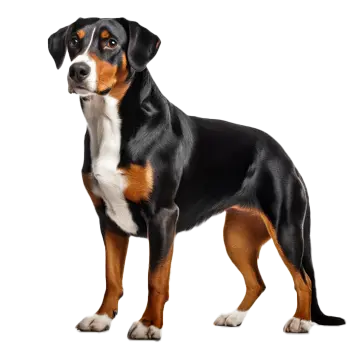

Bouvier Appenzellois

Appenzeller Sennenhund

Quick Facts

🐕 Breed Group
Working / Herding (FCI Group 2, Section 3)
📏 Size Category
Medium
📏 Height
Males: 20-22 inches (52-56 cm), Females: 19-21 inches (50-54 cm)
⚖️ Weight
Males: 55-70 pounds (25-32 kg), Females: 45-60 pounds (20-27 kg)
⏱️ Life Expectancy
12-14 years
🧣 Coat Type
Double coat - short, thick, glossy topcoat with dense undercoat
🎨 Coat Colors
Black or Havana brown with symmetrical white and rust markings
😀 Temperament
Energetic, loyal, intelligent, alert, confident, wary of strangers
🏃 Exercise Needs
High
🎓 Training Difficulty
Moderate - intelligent but independent
👶 Good with Children
Yes, with proper socialization
🐾 Good with Other Pets
Conditional - early socialization required; strong herding instinct

Other Names & Breed Recognition

Bouvier Appenzellois is the French-language name for the Swiss mountain dog most commonly known in English as the Appenzeller Sennenhund or Appenzeller Mountain Dog. The term bouvier translates directly as cattle herder or drover, while Appenzellois refers to the canton and historical region of Appenzell in northeastern Switzerland where the breed developed. In French-speaking Switzerland, in France, and across francophone communities worldwide, this is the standard designation for the breed. It appears in FCI documentation alongside the German name Appenzeller Sennenhund, reflecting the multilingual nature of Swiss breed nomenclature. The name carries the same functional meaning as the German original: this is the herdsman's dog of Appenzell.

Several closely related French names circulate in breed literature and kennel club records. Bouvier d'Appenzell and Bouvier de l'Appenzell are both widely used and considered interchangeable with Bouvier Appenzellois. Occasionally the breed appears as Bouvier des Alpes, a broader geographic reference that is less precise but still understood to indicate the same dog. In English, the breed goes by Appenzeller Sennenhund, Appenzeller Mountain Dog, Appenzeller Cattle Dog, or simply Appenzeller. The German-language name Appenzeller Sennenhund remains the breed's official registered designation with the FCI, and all translations and regional variants ultimately point back to the same standard.

The Bouvier Appenzellois is one of four closely related Swiss mountain dog breeds collectively known in German as the Sennenhunde and in French as the Bouviers Suisses. The other three are the Bouvier Bernois (Bernese Mountain Dog), the Grand Bouvier Suisse (Greater Swiss Mountain Dog), and the Bouvier de l'Entlebuch (Entlebucher Mountain Dog). All four share a characteristic tricolor coat pattern and a working heritage rooted in Alpine farming, though they differ substantially in size, coat length, and specific function. The Bouvier Appenzellois occupies the middle ground in terms of size and is distinguished from the other three by its tightly curled tail carried over the back, a feature that reflects its Spitz-type ancestry.

Recognition of the Bouvier Appenzellois varies among international kennel clubs. The FCI granted definitive recognition in 1954, classifying the breed under Group 2, Section 3 as a Swiss Mountain and Cattle Dog. The United Kennel Club has recognized the breed since 1993, placing it in the Guardian Dog Group. The Canadian Kennel Club admitted the breed to its Miscellaneous Class in 2023 and has since moved it to the Working Group. In the United States, the breed is enrolled in the American Kennel Club's Foundation Stock Service program under the Herding Group designation but has not yet achieved full AKC recognition, reflecting its continued rarity in North America. The breed's parent organization in the country of origin is the Schweizerischer Club fur Appenzeller Sennenhunde, founded in 1906.

Bouvier Appenzellois Organizations & Standards

The Schweizerischer Club fur Appenzeller Sennenhunde, established in 1906, is the primary breed club in the country of origin and works closely with the Swiss Kennel Club and the FCI to maintain the breed standard. The club oversees breeding registrations, promotes health testing protocols, organizes breed-specific events, and maintains the stud book that traces the breed's lineage back to the earliest registered dogs. Albert Heim, the geologist and cynologist who played a pivotal role in distinguishing and preserving all four Swiss mountain dog breeds, drew up the first comprehensive breed standard for the Appenzeller in 1914, laying the foundation for the document that governs the breed worldwide today.

In the United States, the Appenzeller Mountain Dog Club of America serves as the breed's primary organization and maintains a registry that interfaces with the AKC's Foundation Stock Service. The club promotes responsible breeding, supports health research, and provides educational resources for prospective owners navigating the challenges of acquiring and raising this rare breed. As of late 2024, the breed was approaching the numerical threshold required to move from FSS status to the AKC Miscellaneous Class, the next step toward full recognition. The AMDCA also participates in breed events hosted by the UKC and the International All Breed Canine Association, where Appenzellers can earn conformation and performance titles.

The FCI breed standard describes the Bouvier Appenzellois as a medium-sized, nearly square dog of robust construction with well-developed musculature and great agility. The standard specifies a tricolor coat in which the base color is either black or Havana brown, with symmetrical rust and white markings distributed according to a precise pattern. Rust markings appear above the eyes, on the cheeks, on the chest, and on the legs between the base color and the white. White markings form a blaze on the forehead, extend from the chin down the throat and chest, cover the feet, and tip the tail. The tail itself is set high and carried in a tight curl over the back, a feature unique among the Swiss mountain dogs and one that reflects the breed's Spitz-type heritage.

The standard further calls for a dog that is lively, high-spirited, self-assured, and fearless, with a natural suspicion of strangers. The ideal Appenzeller is incorruptible as a watchdog and eager to learn, though the standard acknowledges the breed's independent judgment, a trait forged by centuries of autonomous work in Alpine terrain. Faults include shyness, aggression without provocation, incorrect color distribution, a tail that does not curl, and any significant deviation from the square body proportions that define the breed's working silhouette. The emphasis throughout the standard is on functional athleticism rather than exaggerated features, reflecting a breed that is still selected primarily for its ability to work.

Kennel Club Recognition

  • United Kennel Club (UKC): Recognized in 1993, Guardian Dog Group
  • Canadian Kennel Club (CKC): Recognized, Working Group
  • FCI: Recognized in 1954, Group 2 - Pinscher and Schnauzer

Bouvier Appenzellois Physical Description

The Bouvier Appenzellois presents a picture of balanced athleticism in a medium-sized frame that was developed for the physical demands of driving cattle through steep Alpine terrain. Males stand between 20 and 22 inches at the withers and typically weigh 55 to 70 pounds, while females measure 19 to 21 inches and weigh 45 to 60 pounds. The body is nearly square in proportion, meaning the length from point of shoulder to point of buttock roughly equals the height at the withers. This compact, balanced construction gives the breed its characteristic agility and turning speed, which were essential for working cattle on narrow mountain paths where a longer-bodied dog would be at a disadvantage.

The head is proportionate to the body with a slightly wedge-shaped skull that is broadest between the ears and tapers moderately toward the muzzle. The stop is only slightly defined, creating a clean profile without the heavy brow or pronounced forehead seen in some other working breeds. The eyes are small to medium in size, almond-shaped, and always dark, giving the face an expression of sharp intelligence and alertness. The ears are triangular, set high, and hang flat against the cheeks when the dog is relaxed. When the dog is alert or working, the ears lift at the base and rotate forward, changing the entire expression of the face from calm observation to active engagement.

The most distinctive physical feature of the Bouvier Appenzellois is its tail, which is set high and carried in a tight curl over the back. This is the only Swiss mountain dog with a curled tail, and the trait reflects Spitz-type ancestry that sets the Appenzeller apart from its three related breeds. The curl should be firm and complete, lying flat against the croup or the hip, and should not hang limply or form a loose ring. When the dog is moving, the curled tail is carried confidently over the back; it may relax slightly when the dog is at rest but should never hang straight down.

The coat is a functional double layer designed for the variable conditions of the Swiss mountains. The topcoat is short, thick, straight, and glossy, lying close to the body without standing off or curling. Beneath it, a dense undercoat provides insulation against cold temperatures and moisture. The coat is always tricolor, with a base of either black or Havana brown overlaid with symmetrical rust and white markings. The rust appears in predictable locations: above each eye, on the cheeks, on the chest, and on the legs as a transitional zone between the base color and the white. White markings include a blaze from the forehead to the muzzle, a continuous stripe from the chin down the throat and chest, white feet, and a white tail tip. The symmetry of these markings is considered important in the show ring, though working dogs are evaluated primarily on structure and movement.

In motion, the Bouvier Appenzellois covers ground with an efficient, ground-eating trot that reflects its heritage as a dog built to work all day over uneven terrain. The gait is free and balanced, with good reach in front and strong drive from behind. The topline remains level during movement, without excessive bouncing or rolling, and the curled tail rides confidently over the back. This is not a breed built for speed in the sprinting sense but rather for sustained, tireless movement across demanding landscapes.

Affectionate With Family
The Bouvier Appenzellois forms exceptionally strong bonds with its household and thrives on close contact with family members. This is a breed that wants to be part of every activity and will follow its people from room to room, positioning itself where it can keep an eye on the entire family. That deep attachment comes with a corresponding sensitivity to the moods and routines of the household, making the Appenzeller a remarkably responsive companion for owners who include the dog in daily life.
Good With Young Children
With proper socialization from puppyhood, the Bouvier Appenzellois can be a patient and playful companion for children. However, the breed's herding instinct means it may try to nip at running children's heels or use body checks to direct their movement. Supervision is always necessary, particularly with toddlers, because the Appenzeller's exuberance and medium-large frame can easily bowl over a small child. Families that teach both the dog and the children respectful interaction generally find this breed to be a devoted and protective playmate.
Good With Other Dogs
The Bouvier Appenzellois is not naturally dog-aggressive but can be assertive and confident in the presence of unfamiliar dogs. Early and ongoing socialization is essential to develop reliable manners around other canines. Some individuals, particularly intact males, may display same-sex tension. In multi-dog households where introductions are handled carefully, the Appenzeller typically integrates well, though its high energy and tendency to initiate rough play may overwhelm calmer breeds.
Shedding Level
The Bouvier Appenzellois sheds moderately year-round and more heavily during seasonal coat changes in spring and autumn. The short double coat produces a steady stream of loose hair that collects on furniture and clothing, though it is easier to manage than the profuse shedding of the longer-coated Bernese Mountain Dog. Regular brushing keeps shedding manageable and prevents the undercoat from matting during the heavier blow periods.
Coat Grooming Frequency
The short, close-lying coat of the Bouvier Appenzellois is one of the breed's most practical features. Weekly brushing with a firm bristle brush or rubber curry comb is sufficient during most of the year to remove dead hair and distribute skin oils. During the biannual shedding season, increasing brushing to two or three sessions per week keeps the undercoat from accumulating. The coat naturally repels dirt and dries quickly, reducing the need for frequent bathing.
Drooling Level
The Bouvier Appenzellois is a clean, low-drool breed with tight lips and a well-proportioned muzzle that does not collect or release saliva. Owners will not find wet spots on furniture or clothing after interactions with this dog, making it a practical choice for households that value tidiness. Occasional drooling may occur in anticipation of food, but it is minimal and not a characteristic feature of the breed.
Coat Type
The Bouvier Appenzellois carries a functional double coat designed for the variable conditions of the Swiss Alps. The topcoat is short, thick, straight, and glossy, lying flat against the body to repel moisture and debris. Beneath it, a dense undercoat provides insulation in cold weather. This practical coat requires far less grooming maintenance than the longer-coated Swiss mountain breeds while still offering excellent weather protection for an active outdoor dog.
Openness To Strangers
Suspicion of unfamiliar people is written into this breed's temperament and reinforced by centuries of guarding Alpine farms and livestock. The Bouvier Appenzellois does not rush to greet newcomers and will typically position itself between its family and a visitor, watching closely before deciding to relax. This reserve makes the breed an effective natural alarm system but requires dedicated socialization during the critical puppy months to prevent wariness from hardening into reactivity or fearfulness in everyday situations.
Playfulness Level
The Bouvier Appenzellois retains a high degree of playfulness well into adulthood, approaching games with the same enthusiasm it brings to work. Fetch, tug, and chase games are favorites, and many Appenzellers invent their own entertainment when given the opportunity. This playful drive is one of the breed's most engaging qualities but also means that boredom sets in quickly without outlets, leading to self-directed activities that owners may find less charming, such as redecorating the garden.
Watchdog/Protective Nature
Guarding is one of the Bouvier Appenzellois's oldest and most deeply embedded functions. This breed is naturally alert, territorial, and vocal, responding to any disturbance in its environment with a loud, carrying bark that was historically used to alert isolated Alpine farmsteads to approaching strangers or predators. The Appenzeller does not need training to be watchful; it needs training to moderate its protective responses so that everyday visitors, delivery people, and passersby are not treated as threats.
Adaptability Level
The Bouvier Appenzellois is a breed built for wide-open Alpine terrain and does not transition easily to confined or sedentary living. Apartment life is strongly discouraged unless the owner is committed to providing extensive daily exercise and mental stimulation outside the home. Changes in routine, environment, or household composition can unsettle this breed, which thrives on predictability and purpose. The ideal living situation includes a securely fenced yard and an owner who leads an active outdoor lifestyle.
Trainability Level
The Bouvier Appenzellois is an intelligent breed that learns quickly and genuinely enjoys the process of working with its handler. It responds best to positive reinforcement methods that channel its energy and drive into structured tasks. However, the breed has an independent streak rooted in its heritage as a dog that made decisions autonomously on the mountainside, so repetitive drills without variety will produce a bored and disengaged student. Varied sessions that incorporate new challenges keep the Appenzeller motivated and eager to perform.

Bouvier Appenzellois History & Development

The history of the Bouvier Appenzellois is inseparable from the agricultural traditions of the Swiss Alps, where medium-sized, tricolor dogs have worked alongside cattle herders and dairy farmers for centuries. The Appenzell region of northeastern Switzerland, encompassing the cantons of Appenzell Innerrhoden and Appenzell Ausserrhoden, provided the geographic and cultural context in which this breed developed. The Sennen, or Alpine herdsmen, required dogs that could drive cattle up to high summer pastures and back down to the valleys in autumn, guard the farm and livestock from predators, pull carts loaded with milk and cheese to market, and serve as general-purpose working companions in an isolated mountain environment. The Bouvier Appenzellois evolved to fill all of these roles simultaneously.

The earliest documented written reference to the breed appears in Friedrich von Tschudi's 1853 book Das Thierleben der Alpenwelt, where the author describes a short-haired, multicolored, medium-sized dog of Spitz type found in the Appenzell region and used for both farm guarding and cattle herding. This description establishes that the type was already recognizable and consistent enough to warrant specific mention more than 170 years ago. The breed's deeper origins are debated. One theory holds that the Appenzeller descends from ancient Molossian dogs brought to Switzerland by Roman legions, which then crossed with local herding types over two millennia. A second theory proposes that the breed is native to the region and predates the Roman period, having developed independently from local stock that included Spitz-type dogs. The curled tail, upright ear carriage when alert, and sharp bark all point to Spitz ancestry that distinguishes this breed from the other three Swiss mountain dogs.

Organized breeding efforts began in the late 19th century when Max Siber, a forester and breed advocate, petitioned the Swiss Cynological Society in 1895 to support the preservation and systematic breeding of the Appenzeller Mountain Dog. Siber recognized that industrialization and changing agricultural practices were beginning to erode the traditional working dog populations of the Swiss Alps and that deliberate intervention was needed to maintain breed type. In 1898, the breed was exhibited at the first international dog show. The founding of the Schweizerischer Club fur Appenzeller Sennenhunde in 1906 marked the beginning of formal breed management, including the establishment of a stud book and the development of breeding guidelines. Albert Heim, the same geologist who played a central role in the preservation of all four Swiss mountain dogs, published the first comprehensive breed standard in 1914.

The FCI granted definitive recognition to the breed in 1954, solidifying its international status. Despite this recognition, the Bouvier Appenzellois has remained a relatively rare breed outside Switzerland. The breed's demanding temperament, high exercise requirements, and limited breeding population have kept it a specialist's choice rather than a mainstream companion dog. In the United States, the first Appenzellers arrived in the early 1950s, but organized breeding did not gain traction until the formation of the Appenzeller Mountain Dog Club of America. The AKC enrolled the breed in its Foundation Stock Service in 2007, and as of 2024, the breed was nearing the population threshold for advancement to the Miscellaneous Class. The breed's population in North America remains small, and most breeders maintain close ties to European bloodlines to preserve genetic diversity.

Today the Bouvier Appenzellois continues to serve as a working farm dog in Switzerland while also finding roles in competitive dog sports, search and rescue, and companionship for active families. The breed's versatility, which was its defining characteristic on the Alpine farm, translates well into modern activities such as agility, obedience, herding trials, and carting. Conservation-minded breeders in Switzerland and across Europe maintain careful breeding records and health testing protocols to ensure the breed remains sound and functional as its population slowly grows internationally.

Bouvier Appenzellois Temperament & Personality

The temperament of the Bouvier Appenzellois is a direct product of its working heritage: this is a dog bred to make independent decisions in demanding situations, to protect property and livestock with unwavering commitment, and to work cooperatively with its handler across long and physically taxing days. These traits produce a companion that is intensely loyal, highly energetic, remarkably intelligent, and decidedly opinionated. The Appenzeller is not a passive dog that waits to be told what to do. It is an active participant in the household, alert to every sound and movement, eager to be involved in every activity, and perfectly willing to take charge when it perceives a leadership vacuum.

Loyalty to the family unit is one of the breed's most defining and endearing characteristics. The Bouvier Appenzellois bonds deeply with its people and demonstrates affection through physical proximity, attentive watching, and enthusiastic participation in family activities. This is a dog that will follow its owner from room to room, position itself at the best vantage point to monitor the household, and greet returning family members with unrestrained joy. The flip side of this devotion is that the breed does not tolerate isolation well. Left alone for extended periods without mental stimulation or social contact, the Appenzeller will become anxious, vocal, and destructive. This is fundamentally a working partnership breed, not a dog that can be parked in a yard and expected to entertain itself.

The breed's natural wariness of strangers is a deeply ingrained trait that requires active management through socialization rather than suppression. The Bouvier Appenzellois was bred to distinguish between familiar people and potential threats to the farm, and it brings that same discernment to modern life. Visitors to the home will be greeted with barking and careful scrutiny until the dog determines they are welcome, a process that can take time and benefits from calm, consistent introductions by the owner. Without adequate socialization during the critical developmental period, this wariness can intensify into genuine fear-based reactivity, making early and ongoing exposure to diverse people, environments, and situations one of the most important investments an owner can make.

The Appenzeller's intelligence is both a gift and a responsibility. This breed learns quickly, remembers thoroughly, and generalizes well from one context to another. But intelligence without direction produces a dog that invents its own entertainment, which may include rearranging the furniture, herding the family cat, excavating the garden, or developing an impressive vocabulary of barks and howls to express displeasure with boredom. Owners who channel the Appenzeller's mental energy into structured training, puzzle toys, and meaningful work are rewarded with a remarkably capable and responsive companion. Those who underestimate the breed's need for cognitive engagement will discover that a bored Appenzeller is an extraordinarily creative problem-maker.

Vocality is a characteristic that prospective owners should understand and accept from the outset. The Bouvier Appenzellois was selected for its loud, carrying bark, which served as an essential alarm system on isolated mountain farms. Modern Appenzellers retain this trait with full enthusiasm. They bark at visitors, at passing wildlife, at unusual sounds, at changes in routine, and sometimes at things that are invisible to the human eye but clearly significant to the dog. Training can moderate the volume and duration of barking episodes but will not eliminate the behavior entirely. Owners who live in close proximity to neighbors or in noise-sensitive environments should carefully consider whether they can accommodate a breed that considers vocal communication a fundamental right.

Bouvier Appenzellois Family Life & Living Requirements

The ideal home for a Bouvier Appenzellois is one that provides space, activity, structure, and consistent human companionship. This breed was developed for a life of purpose on an Alpine farm, and while it has adapted to modern domestic living, its core needs remain rooted in that working heritage. A house with a securely fenced yard is strongly preferred over an apartment, not merely because of the dog's size but because of its energy level, its need for outdoor time, and its tendency to bark at environmental stimuli that are far more frequent and audible in a multi-unit building.

Fencing deserves special attention. The Bouvier Appenzellois is athletic, agile, and motivated by its guarding instinct to patrol and investigate the perimeter of its territory. A fence that is less than five feet tall may not contain an excited or determined Appenzeller, and the fence must extend to ground level or below to prevent digging. Electronic or invisible fencing is generally not recommended for this breed because the Appenzeller's drive to investigate or confront a perceived threat often overrides the deterrent effect of a static correction. A physical barrier that the dog can see and respect is far more reliable than an invisible boundary.

Within the family, the Bouvier Appenzellois typically bonds most strongly with one person, often the individual who provides the most consistent training and activity, but extends its loyalty and affection to the entire household. The breed is generally good with children who have been taught to interact respectfully with dogs, and many Appenzellers develop a particularly gentle and protective relationship with the children in their family. However, the breed's herding instinct may express itself as nipping at running children's heels or body-checking to redirect movement, behaviors that must be addressed through training rather than punishment. Very young children should always be supervised around an Appenzeller, not because the breed is aggressive but because its exuberance and physical strength can easily overwhelm a toddler.

The Bouvier Appenzellois does not do well when left alone for extended periods. This is a breed that measures its well-being by the quality and quantity of its interaction with its people, and extended solitude produces anxiety that manifests as destructive behavior, excessive barking, and attempts to escape. Families where all adults work full-time outside the home should consider whether they can provide a midday visit, doggy daycare, or a work-from-home arrangement that keeps the Appenzeller within the social orbit of its family. A second dog can provide companionship but does not fully substitute for human interaction in this breed.

Climate tolerance is reasonable given the breed's Alpine origins. The Bouvier Appenzellois handles cold weather well, thanks to its dense double coat and robust constitution. Heat tolerance is more limited, and owners in warm climates should provide shade, access to fresh water at all times, and exercise schedules that avoid the hottest parts of the day. The breed should never be left in a vehicle or confined in an area without ventilation during warm weather. Swimming is enjoyed by many Appenzellers and can serve as an excellent low-impact exercise option during summer months.

Bouvier Appenzellois Training & Exercise Needs

Training a Bouvier Appenzellois is an engaging and rewarding experience for owners who approach it with patience, creativity, and an understanding that this breed is not interested in mindless obedience. The Appenzeller is highly intelligent and genuinely enjoys learning, but it brings an independent temperament to the training relationship that demands respect for its perspective. This is a dog that will quickly master any skill it finds meaningful and will just as quickly lose interest in repetitive drills that offer no mental challenge. The most successful training programs for this breed incorporate variety, progressive difficulty, and real-world application of learned behaviors.

Positive reinforcement is the foundation of effective Appenzeller training. This breed responds well to food rewards, toy play, and verbal praise when these are delivered with timing and enthusiasm. Harsh corrections, physical punishment, or confrontational methods will damage the relationship between dog and handler without improving compliance, because the Appenzeller does not yield to force. Instead, it becomes wary and disengaged, shutting down the cooperative spirit that makes it such a capable working partner. Firm boundaries and clear expectations are essential, but they must be communicated through structure and consistency rather than intimidation.

Socialization is the single most important component of training for the Bouvier Appenzellois and should begin the moment the puppy arrives home. The breed's natural suspicion of strangers and environmental alertness make early, positive exposure to a wide range of people, animals, sounds, surfaces, and situations absolutely critical. A well-socialized Appenzeller remains watchful and discerning but can navigate the modern world without excessive reactivity. An undersocialized Appenzeller becomes a management challenge, reacting to every unfamiliar stimulus with barking, lunging, or avoidance behaviors that restrict the dog's life and stress the owner.

Exercise requirements are substantial and non-negotiable. The Bouvier Appenzellois needs a minimum of 90 minutes of vigorous physical activity daily, and most individuals thrive with more. A sedate walk around the block does not constitute adequate exercise for this breed; the Appenzeller needs to run, explore, and engage its body in demanding physical work. Hiking, trail running, bikejoring, carting, and off-leash play in safe, enclosed areas are all excellent outlets. The breed also excels in structured dog sports including agility, obedience, herding trials, rally, and tracking, all of which combine physical exertion with the mental engagement that keeps the Appenzeller satisfied.

Mental stimulation is as important as physical exercise and should be woven into the daily routine rather than treated as an occasional enrichment. Puzzle feeders, scent work, hide-and-seek games, and training sessions that introduce new skills or increase the complexity of known ones all contribute to the Appenzeller's cognitive well-being. A physically tired Appenzeller that has not been mentally engaged will still find the energy to create problems; a mentally satisfied Appenzeller that has had adequate physical exercise will settle contentedly and rest.

Bouvier Appenzellois Health Concerns

The Bouvier Appenzellois is generally a robust and healthy breed, benefiting from a working heritage that selected strongly for physical soundness and endurance over cosmetic traits. The breed has not been subjected to the extreme popularity-driven breeding pressures that have compromised health in many companion breeds, and its relatively small, carefully managed breeding population has helped maintain structural integrity. Nevertheless, like all breeds, the Appenzeller is predisposed to certain health conditions that prospective owners and breeders should understand.

Hip dysplasia is the most commonly discussed orthopedic concern in the breed. This hereditary condition involves abnormal development of the hip joint, leading to progressive cartilage deterioration, inflammation, and pain. Severity ranges from mild laxity that produces no clinical signs to severe malformation that requires surgical intervention. Radiographic screening of breeding stock through programs such as the Orthopedic Foundation for Animals or PennHIP provides the most reliable method for reducing incidence in future generations. Maintaining a lean body condition throughout the dog's life, particularly during the rapid growth phase of puppyhood, also helps minimize the impact of any underlying predisposition.

Elbow dysplasia, a related developmental condition affecting the elbow joint, has also been documented in the breed. The condition encompasses several specific abnormalities that can occur singly or in combination and typically manifests as forelimb lameness in young dogs between four and twelve months of age. As with hip dysplasia, radiographic evaluation of breeding stock is the primary tool for reducing prevalence. Treatment for affected dogs ranges from conservative management with rest, anti-inflammatory medication, and physical therapy to surgical intervention in more severe cases.

Progressive retinal atrophy is an inherited eye disease that causes gradual degeneration of the retina and eventual blindness. DNA testing can identify carriers of the responsible genes, allowing breeders to make informed mating decisions that prevent the production of affected offspring. Annual eye examinations by a board-certified veterinary ophthalmologist provide an additional layer of screening and can also detect cataracts, which have been reported in the breed at various ages. Early detection of cataracts allows for monitoring and timely surgical intervention when vision is significantly compromised.

Gastric dilatation-volvulus, commonly known as bloat, is a life-threatening emergency that can affect any deep-chested breed, including the Bouvier Appenzellois. The condition occurs when the stomach fills with gas and rotates on its axis, cutting off blood supply and trapping contents. Without immediate surgical intervention, bloat is fatal. Risk factors include feeding a single large meal per day, eating rapidly, exercising vigorously before or after meals, and having a first-degree relative that has experienced the condition. Preventive measures include dividing daily food into two or three smaller meals, using slow-feeder bowls, and avoiding intense activity around mealtimes. Some veterinarians recommend prophylactic gastropexy, a surgical procedure that tacks the stomach to the abdominal wall to prevent rotation, which can be performed at the time of spay or neuter.

Epilepsy has been reported in the breed, presenting as recurrent seizures that typically begin between one and five years of age. Most cases are classified as idiopathic, meaning no underlying structural brain abnormality is identified. Anticonvulsant medication can control seizure frequency and severity in the majority of affected dogs, allowing them to live normal lives. Breeders should track seizure history in their lines and avoid breeding affected individuals.

Common Health Issues

  • Hip dysplasia - An inherited orthopedic condition in which the hip joint develops abnormally, leading to progressive cartilage deterioration, pain, and reduced mobility. Responsible breeders screen both parents with radiographic evaluation before producing litters to reduce the incidence of this condition in the breeding population.
  • Progressive retinal atrophy (PRA) - A group of inherited eye diseases that cause gradual degeneration of the photoreceptor cells in the retina, eventually leading to partial or complete vision loss. DNA testing is available to identify carriers, and responsible breeders test all breeding stock to avoid producing affected puppies.
  • Elbow dysplasia - A developmental condition affecting the elbow joint that encompasses several related abnormalities including fragmented coronoid process and ununited anconeal process. The condition can cause lameness and discomfort, particularly in growing puppies and young adults. Radiographic screening of breeding stock helps reduce prevalence.
  • Gastric dilatation-volvulus (bloat) - A life-threatening emergency in which the stomach fills with gas and rotates on its axis, cutting off blood supply to the stomach and spleen. The Appenzeller's deep chest conformation creates moderate risk. Feeding smaller meals, avoiding vigorous exercise immediately after eating, and recognizing early symptoms such as unproductive retching are critical preventive and response measures.
  • Epilepsy - An inherited neurological condition that produces recurrent seizures of varying severity. Idiopathic epilepsy typically presents between one and five years of age and can usually be managed with anticonvulsant medication under veterinary supervision. Affected dogs should not be used for breeding.
  • Cataracts - Opacity of the lens that can develop at various ages and progress to impair vision or cause blindness. Both hereditary and age-related cataracts have been documented in the breed. Annual ophthalmologic examinations help detect early changes, and surgical removal remains the definitive treatment when vision is significantly affected.

Preventive Care & Health Monitoring

  • Hip and elbow radiographic evaluation of breeding stock - Request documentation from breeders showing that both parents have been evaluated for hip and elbow dysplasia through an organization such as OFA or PennHIP, with results rated acceptable for breeding.
  • DNA testing for progressive retinal atrophy - Ensure that breeding dogs have been tested for PRA and that results are documented. Carriers bred only to clear mates will not produce affected offspring, so carrier status alone does not disqualify a dog from a responsible breeding program.
  • Annual ophthalmologic examination by a board-certified veterinary ophthalmologist - Regular eye examinations detect early signs of cataracts and other hereditary eye conditions before they progress to the point of affecting quality of life.
  • Bloat prevention strategies - Feed two or three smaller meals per day rather than a single large meal, use slow-feeder bowls for dogs that eat rapidly, and avoid strenuous exercise for at least one hour before and after eating. Discuss prophylactic gastropexy with your veterinarian, particularly if the dog has a family history of bloat.
  • Maintain healthy body condition throughout life - The Appenzeller's athletic build masks weight gain effectively, making regular body condition scoring essential. Excess weight accelerates joint deterioration in dogs predisposed to hip or elbow dysplasia and increases the risk of other metabolic conditions.
  • Early and ongoing socialization program - While not a medical intervention, systematic socialization during the critical period of eight to sixteen weeks and continuing through adulthood is essential preventive care for a breed with strong guarding instincts. Undersocialized Appenzellers may develop fear-based reactivity that significantly reduces quality of life for both the dog and the household.

Bouvier Appenzellois Grooming & Maintenance

The grooming requirements of the Bouvier Appenzellois are modest compared to those of many breeds of similar size and working heritage. The short, close-lying double coat is one of the breed's most practical features, requiring regular but uncomplicated maintenance to keep the dog clean, comfortable, and looking its best. Owners who are accustomed to the intensive grooming demands of the longer-coated Bernese Mountain Dog will find the Appenzeller's coat management refreshingly straightforward.

Weekly brushing with a firm bristle brush or rubber curry comb is sufficient during most of the year to remove dead hair, distribute natural skin oils, and keep the coat glossy. The brushing session also provides an opportunity to check the skin for parasites, irritations, hot spots, or unusual lumps and bumps. During the biannual shedding season, which typically occurs in spring and autumn, the undercoat loosens and comes out in substantial quantities. Increasing brushing frequency to every other day or daily during these periods helps manage the volume of loose hair and prevents the undercoat from matting against the skin, which can trap moisture and create conditions for skin irritation.

Bathing should be performed only as needed, typically every two to three months or when the dog has gotten into something that requires soap and water. The Appenzeller's coat has natural oils that provide water resistance and help repel dirt, and overwashing strips these oils and can lead to dry, flaky skin. When bathing is necessary, a mild dog-specific shampoo followed by thorough rinsing and drying is adequate. The coat dries relatively quickly compared to longer-coated breeds, but the undercoat should be dried completely to prevent moisture from being trapped against the skin.

Nail care is an important but frequently neglected component of Appenzeller maintenance. Active dogs that spend significant time on hard surfaces may wear their nails down naturally, but most Appenzellers will need nail trimming every two to three weeks. Overgrown nails alter the mechanics of the foot, causing the toes to splay and the dog to shift weight backward, which can contribute to joint stress over time. If the sound of nails clicking on hard floors is audible, the nails are overdue for a trim. Introducing nail handling and trimming during puppyhood, paired with positive reinforcement, makes this a low-stress maintenance task throughout the dog's life.

Dental care should be part of the regular grooming routine. Daily tooth brushing with a veterinary-approved enzymatic toothpaste is the gold standard for preventing periodontal disease, which affects the majority of dogs by age three. If daily brushing is not feasible, brushing several times per week combined with dental chews and annual professional dental cleanings under anesthesia will help maintain oral health. The Appenzeller's moderate jaw structure does not predispose it to unusual dental crowding, but neglecting dental hygiene will produce the same consequences in this breed as in any other: painful infections, tooth loss, and potential systemic health effects.

Ear care is straightforward given the breed's drop ear conformation. The triangular ears hang close to the cheeks, which limits airflow to the ear canal and can create a warm, moist environment favorable to bacterial and yeast infections. Weekly inspection of the ears for redness, discharge, odor, or excessive wax buildup, followed by gentle cleaning with a veterinary-approved ear solution when needed, helps prevent infections from developing. Dogs that swim regularly should have their ears dried thoroughly after each water exposure.