Bolognese Toy Dog

Bolognese

Quick Facts

🐕 Breed Group
Toy Group
📏 Size Category
Toy
📏 Height
Males: 10-12 inches, Females: 10-12 inches
⚖️ Weight
Males: 6-10 pounds, Females: 5-9 pounds
⏱️ Life Expectancy
12-14 years
🧣 Coat Type
Fluffy, non-shedding single coat
🎨 Coat Colors
White
😀 Temperament
Devoted, calm, playful, reserved with strangers
🏃 Exercise Needs
Low to moderate
🎓 Training Difficulty
Moderate
👶 Good with Children
Yes, with older gentle children
🐾 Good with Other Pets
Generally good

Other Names & Breed Recognition

The Bolognese Toy Dog is a descriptive alternate name for the Bolognese, a name that emphasizes both the breed's geographic Italian origin and its classification as a toy-sized companion. The "Toy" designation in this alternate form is straightforward - it signals to anyone unfamiliar with the Italian name that this is a small dog bred primarily for companionship rather than for work. The name appears in British and European dog literature where authors and enthusiasts wanted to clarify the breed's size and purpose for readers who might confuse the animal with, say, the pasta sauce that shares its name.

The official name, Bolognese, derives from the Italian city of Bologna, the northern Italian cultural and culinary center where this breed became closely identified with aristocratic life during the Renaissance period. Historical records place these small white dogs in the households of Italian nobility as far back as the thirteenth century, and later documentation from the fifteenth and sixteenth centuries confirms their status as treasured gifts exchanged between European courts. The name stuck so firmly to the place that no other name entirely displaced it - but the Bolognese Toy Dog label has genuine practical currency for those who want to communicate the breed's category at a glance.

The Bolognese is a member of the Bichon family, a loose grouping of small, companion-oriented dogs with fluffy coats and Mediterranean or European origins. Its closest relatives by type include the Bichon Frise, the Maltese, the Havanese, and the Coton de Tulear. Because of this family resemblance, people sometimes refer to this breed informally as the Bichon Bolognese, a combined name that places it explicitly within the Bichon group while retaining the geographic distinction. This label appears in some European breed databases and in texts discussing Bichon-type dogs collectively.

In North America, the breed is less commonly known by any of its names because it remains genuinely rare. The American Kennel Club has placed the Bolognese in its Foundation Stock Service since 1999, which is the pre-recognition registry maintained for rare breeds working toward full recognition. Dogs registered in the FSS can participate in AKC companion events. The breed is fully recognized by the Federation Cynologique Internationale under Group 9 and by The Kennel Club in the United Kingdom. The American Bolognese Club is the national breed club in the United States and serves as the primary organizational body for breed standards and health promotion.

Bolognese Toy Dog Organizations & Standards

The primary organizational oversight for the Bolognese Toy Dog in the United States rests with the American Bolognese Club, which works in coordination with the AKC Foundation Stock Service to maintain breed standards and promote responsible breeding practices. Since the breed has not yet achieved full AKC recognition, the American Bolognese Club sets its own code of ethics and health testing expectations for member breeders. The club recommends that breeding dogs undergo two health evaluations annually: an OFA CAER ophthalmic examination performed by a board-certified ACVO ophthalmologist and an OFA patellar evaluation.

The FCI standard, which serves as the international benchmark for the breed, describes the Bolognese Toy Dog as a small, compact dog with a square build - meaning the height at the withers roughly equals the length of the body. The standard calls for a weight range between 5.5 and 9 pounds and a height of 10 to 12 inches. The coat is one of the most precisely described characteristics: it must be fluffy and non-compact throughout the entire body, without any distinguishing undercoat layer. This single-layer, woolly-textured coat is fundamentally different from the silky, double-layered coats of some Bichon relatives. The standard requires the coat to be pure white throughout without any colored patches or shading.

The Kennel Club in the United Kingdom places this breed in its Toy Group and maintains its own written standard consistent with the FCI description. UK breeders have worked with Bolognese Toy Dogs since their first importation into Britain in the 1990s, and the breed has seen modest but steady growth in UK registration numbers over subsequent decades.

The breed's FCI classification in Group 9, Section 1 (Bichons and related breeds) confirms its recognized status within the international network of canine organizations. Most countries whose dog clubs are affiliated with the FCI recognize the breed under this classification. European breed clubs, particularly in Italy where the breed originated, remain active in preserving the historical type and temperament that made this small dog a fixture of aristocratic households for centuries.

For the CAER eye examination, results are valid for one year and must be renewed annually in all breeding dogs. The OFA patellar evaluation can be performed by any licensed veterinarian and is recorded in the OFA database. Responsible Bolognese Toy Dog breeders make both test results publicly available so prospective buyers can verify health screening before committing to a purchase. Buyers should ask for the OFA registration numbers and look them up independently in the OFA database.

Kennel Club Recognition

  • FCI: Recognized, Group 9 Companion and Toy Dogs
  • The Kennel Club (UK): Recognized, Toy Group

Bolognese Toy Dog Physical Description

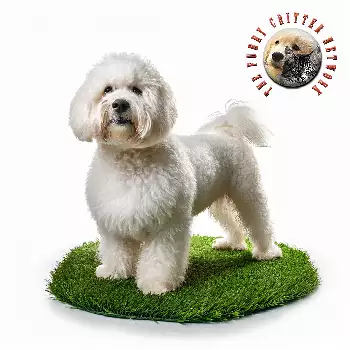
The Bolognese Toy Dog is a small, squarely built companion whose most immediately striking feature is its coat. The fluffy, all-white, single-layer coat covers the entire body in a texture that is neither silky nor wiry but distinctly woolly - creating the impression of a round, cloud-like dog when the coat is maintained in full. This is not a dog that blends into the background. The bright white coat against any setting, whether urban sidewalk or garden furniture, makes the Bolognese Toy Dog a visually distinctive presence.

The body is compact and square, with the height at the withers closely matching the length of the body. Adults typically stand ten to twelve inches at the shoulder and weigh between five and ten pounds, placing them firmly at the smaller end of companion dogs. The build is sturdy for the size - this is not a fragile, willowy toy breed but one with actual substance to its frame. The legs are well-boned relative to the body size, and the overall impression is of a solid little dog rather than a delicate one.

The head is of moderate length with a slightly rounded skull and a well-defined stop. The muzzle is roughly equal in length to the skull, giving the face a balanced, harmonious proportion. The nose is black and should remain deeply pigmented in a healthy dog - a fading nose can occasionally indicate nutritional or health issues in white-coated breeds. The eyes are large, round, and dark, set to face forward, with an expression that can only be described as earnest and attentive. The eye rims are dark, which creates a natural eyeliner effect that prevents the eyes from fading into the surrounding white coat.

The ears are set high and hang flat against the sides of the head, reaching approximately to the level of the jaw. They are covered in the same fluffy coat texture as the body and blend seamlessly into the surrounding fur when the dog is in full coat. The neck is of moderate length and carried with a slight arch, contributing to the dog's alert, upright carriage.

Movement in the Bolognese Toy Dog is fluid and effortless, with good reach in front and strong drive from behind. The breed should move with a light, springy quality that reflects its historically pampered but physically sound breeding. Despite living for centuries as an aristocratic lap companion, the breed retains sound conformation and functional movement.

The tail is set at medium height and curves over the back in a graceful arc when the dog is moving. At rest, the tail may drop, but it returns to its characteristic position when the dog is alert and engaged. The feet are round and compact with well-arched toes and dark nails. The pads are firm, and the overall foot structure is practical and well-made despite the dog's small scale.

The coat texture deserves its own closer look because it is so central to the breed's identity. Each individual hair shaft is neither fine and silky nor coarse and wiry, but has a wooly, slightly rough quality that creates the fluffed, cloud-like appearance when the coat is properly maintained. Because it is a single-layer coat without a dense undercoat, the overall volume is created by the texture of the hair itself and by the way it is brushed and maintained rather than by sheer density. Owners who neglect brushing discover quickly that the coat mats rather than sheds, which means regular maintenance is not optional.

Color is equally important in the breed standard. The coat must be pure white throughout, with no colored patches or shading that would suggest mixing with other breeds. Minor yellowish tinting sometimes develops around the face and lower legs, particularly in dogs with tear staining or in those not bathed regularly enough. This tinting is cosmetic rather than disqualifying in companion dogs but can affect show prospects. A white-coated breed like this one requires owners to be proactive about keeping the coat clean and bright.

Affectionate With Family
The Bolognese Toy Dog is intensely devoted to its household and thrives on closeness with the people it loves. It is genuinely happiest when it is near you.
Good With Young Children
This tiny breed tolerates calm, respectful children well but is fragile enough that very young or rough children pose a risk of accidental injury.
Good With Other Dogs
The Bolognese Toy Dog is typically relaxed and mannerly with other dogs, making it a comfortable fit in multi-dog households when introductions are handled well.
Shedding Level
This single-coated breed sheds minimally, which is one of the reasons it appears on lists of breeds sometimes considered more suitable for allergy-sensitive households.
Coat Grooming Frequency
The fluffy, textured coat tangles readily and requires brushing several times per week, plus regular professional grooming to prevent matting from becoming a problem.
Drooling Level
Drooling is essentially a non-issue with the Bolognese Toy Dog. Owners are not dealing with this concern.
Coat Type
The characteristic single-layer, fluffy white coat has a wooly, non-shedding texture distinct from the silky coats of related Bichon-type breeds.
Openness To Strangers
This breed tends toward initial reserve with unfamiliar people. It is not aggressive, but it prefers to assess before engaging and warms up at its own pace.
Playfulness Level
Playful and lively by nature, the Bolognese Toy Dog enjoys interactive games and lighthearted activity while also being content to settle into calm companionship.
Watchdog/Protective Nature
Alert to its environment, this breed will notice and announce unusual activity. It is not aggressive but is observant enough to serve as a reasonable early-alert dog.
Adaptability Level
The Bolognese Toy Dog adjusts readily to a wide range of living situations - from city apartments to country homes - as long as its need for human companionship is consistently met.
Trainability Level
Intelligent and people-oriented, this breed responds well to positive training. The relationship with the handler matters more than the technique for this companion dog.

Bolognese Toy Dog History & Development

The name Bolognese Toy Dog carries centuries of European aristocratic history embedded within it. The city of Bologna in northern Italy gave the breed its primary name, but the full title with the "Toy" designation communicates something that the single-word name does not: this dog was always, from its earliest documented history, a companion bred specifically for human closeness and lap-level living rather than for any working function.

The breed's origins are placed variously in ancient Rome and in medieval Italy, with verifiable documentation appearing in written and painted sources from the thirteenth century onward. Italian nobility prized these small white dogs and circulated them as diplomatic gifts throughout the courts of Europe. The Medici family of Florence was among the most celebrated supporters of the breed, with Cosimo de Medici documented as having sent several of these dogs to Belgian noble households as gifts of political goodwill. By the sixteenth century, the Bolognese Toy Dog appeared in paintings by Titian and later by Goya, demonstrating its sustained presence in the highest social circles across multiple centuries and multiple countries.

The name Bolognese Toy Dog in its full descriptive form became useful during the late nineteenth and twentieth centuries as cynological organizations developed breed registries and standardized nomenclature. When dog shows and formal breeding programs emerged in Britain and across Europe, writers and registrars needed to communicate the breed's classification clearly to audiences unfamiliar with Italian naming conventions. Calling it a Bolognese Toy Dog made its size category immediately intelligible, distinguishing it from working or sporting breeds with similar regional names.

The breed nearly disappeared during and after the Second World War, as the aristocratic households that had sustained it for centuries were disrupted and the small companion breeds fell out of favor during years of hardship. Italian breeder Gian Franco Giannelli is credited with reviving the breed during the 1960s through careful selection from remaining stock, and the FCI formally recognized it. The first Bolognese Toy Dogs reached the United Kingdom in the 1990s after decades of near-total absence from British records.

The breed arrived in North America in the late twentieth century through dedicated importation efforts. Its rarity remains a defining characteristic - litters are small and breeders are few, meaning that anyone seeking a Bolognese Toy Dog should expect a waiting list and a careful vetting process from responsible breeders who take their role in preserving this ancient lineage seriously. Unlike mass-produced popular breeds, the Bolognese Toy Dog's small North American breeding population means each litter is relatively significant to the breed's development here, which is why responsible breeders apply considerable care to health testing, temperament evaluation, and placement decisions.

The alternate name Bolognese Toy Dog continues to serve a practical purpose: it distinguishes this breed immediately as a toy-group companion for readers and buyers who encounter it in broader dog literature, preventing the confusion that sometimes arises when the single-word Italian name appears without context. For a breed with over seven hundred years of documented history, clarity of communication is the least it deserves.

Bolognese Toy Dog Temperament & Personality

The Bolognese Toy Dog is the kind of companion that selects you right back. When you stand in the room with one, it is watching you - tracking your movements, reading your mood, orienting its attention toward whoever in the household it considers its primary person. This breed was developed over centuries with one purpose: to be near people, to be a source of comfort and engagement for the humans who kept it. That heritage runs deep and shows up in every behavioral pattern this dog has.

The defining quality is devotion. This is not a dog that is merely friendly - it is a dog that forms genuine, specific attachments and experiences real distress when those attachments are disrupted. The Bolognese Toy Dog bonds closely and needs regular human contact to remain emotionally stable. Owners who work long hours away from home and return to a dog that has been alone all day will often find a dog that is restless, vocal, or has found some way to express its anxiety physically. This is not stubbornness or bad behavior - it is what happens when a dog bred across many generations for close human companionship is regularly deprived of that companionship.

With familiar people the breed is warm, playful, and attentive. It follows household members from room to room, participates in daily routines, and inserts itself into whatever activity is happening with cheerful persistence. The playfulness is real and sustained - this is not just a dog that sits on your lap. It engages with toys, initiates games, and appreciates when you make time for interactive sessions.

With unfamiliar people the story is different. The Bolognese Toy Dog is reserved with strangers, sometimes to a degree that surprises new owners who expected a universally friendly toy breed. It holds back, observes, and decides on its own timeline whether a newcomer is trustworthy. Dogs that are well-socialized from puppyhood - meaning they are regularly exposed to new people, new places, and new situations during the developmental window - warm up much more readily and become more adaptable adults than those who spend their first year primarily in a single household. Early socialization is not optional for this breed; it is essential.

Bark tendency varies by individual. Some Bolognese Toy Dogs are relatively quiet; others develop alert-barking habits that can become excessive without consistent training. The tendency to announce visitors or unusual sounds is natural and is not itself a problem, but allowing it to escalate into sustained, anxious barking is. Establishing a "quiet" cue early and reinforcing calm behavior around doorbell sounds and visitor arrivals prevents the habit from becoming entrenched.

One more thing worth saying clearly: this is a dog that knows it is loved and expects to be treated accordingly. It is not demanding in a bossy or aggressive way, but it has the quiet confidence of a breed that has always lived in close quarters with people who valued it. Owners who engage with it as a genuine companion rather than a decoration will get back a dog that is attentive, responsive, and deeply satisfying to live with.

Bolognese Toy Dog Family Life & Living Requirements

The Bolognese Toy Dog is genuinely one of the best-matched breeds for apartment living, provided the daily routine includes consistent human companionship and modest physical activity. Its small size, low shedding, minimal barking tendency in well-managed dogs, and calm indoor demeanor make it a comfortable fit in spaces where larger, higher-energy dogs would struggle. A modest daily walk supplemented by indoor play satisfies the physical component without requiring a yard or extensive exercise infrastructure.

This breed fits most naturally with adults and older children who interact with it calmly. The Bolognese Toy Dog is sturdy for its size but still physically small, which means young children who do not yet understand how to handle small dogs represent a genuine injury risk. Enthusiastic grabbing, dropping, or stepping on a dog this size causes real harm. Families with young children should supervise all interactions and teach appropriate handling before allowing unsupervised contact.

The breed's reserved nature with strangers means the household social scene matters. Homes with frequent visitors who are patient and let the dog approach on its own terms work well. Households where the dog is expected to be immediately friendly with every new arrival will find this expectation frustrating for both dog and owner. Setting appropriate expectations - the dog will warm up, but on its own schedule - makes the situation manageable.

Separation anxiety is the most significant practical lifestyle consideration. This breed does not do well when left alone for extended periods as a regular routine. Owners who must be away from home for eight or more hours daily should seriously consider whether this is the right breed for their situation, or whether pairing the dog with another compatible companion dog might buffer against isolation stress. Gradual alone-time training from puppyhood is important - dogs that are never left alone as puppies often develop severe separation distress as adults when circumstances change.

The Bolognese Toy Dog handles travel well compared to many breeds. Its small size makes it suitable for airline cabin travel, and its calm temperament means it adjusts to new environments without the acute anxiety that some high-strung toy breeds experience. Owners who can take their dog with them rather than leaving it behind will have a happier dog and an easier relationship overall. For those whose lifestyle includes regular travel or movement between homes, this breed's adaptability is a genuine advantage that many other close-bonding breeds simply do not share.

Bolognese Toy Dog Training & Exercise Needs

The Bolognese Toy Dog is intelligent and people-oriented, and those two qualities combine in a way that makes training generally rewarding when approached correctly. The breed wants to engage with you - the relationship is the reward in many respects - so building training into quality interaction time rather than treating it as a separate, formal exercise works well. Short sessions of five to ten minutes woven into normal daily life tend to produce better results than structured long sessions that feel more like work than connection.

Positive reinforcement is the only approach worth using with this breed. Food-based rewards work well for most individuals, and the specific treat that motivates your dog is worth discovering early. Some Bolognese Toy Dogs are highly food-motivated; others respond more strongly to brief play sessions or enthusiastic verbal praise. Matching the reward to what genuinely excites the individual dog makes training significantly more effective.

Housetraining can require more patience with this breed than with some others. Small dogs have small bladders and faster digestive cycles, which means more frequent outdoor trips are needed, especially with puppies. Establishing a consistent schedule from the very first day and returning to the same outdoor spot helps. Expecting a Bolognese Toy Dog puppy to hold it for as long as a larger breed puppy would is setting both of you up for frustration.

Exercise needs are genuinely modest. A daily walk of twenty to thirty minutes covers the physical requirement for most adults of this breed. Supplementing with indoor play, mental enrichment toys, or brief training sessions satisfies the mental engagement component. The breed is not restless or destructive from under-exercise the way working-heritage breeds can be, but it does need to move every day and explore the world through scent regularly. A dog kept entirely indoors without variation in its sensory environment becomes dull and over-focused on its primary person in ways that can intensify separation anxiety. Getting outside daily - even if the weather is less than ideal - is worth making a priority. Dogs that are walked regularly in varied environments are better socialized, more adaptable, and tend to have lower baseline anxiety than dogs whose world is restricted to familiar indoor spaces. Thirty minutes outside daily, even split into two shorter morning and evening outings, is a reasonable and achievable target for most owners, and the benefit to the dog's overall wellbeing is significant.

Bolognese Toy Dog Health Concerns

The Bolognese Toy Dog is among the healthier toy breeds, with a documented lifespan of twelve to fourteen years and a relatively short list of breed-specific health concerns. The American Bolognese Club attributes this partly to the breed's long history of natural development without extreme conformation changes that introduce structural health problems.

Dental disease is a consistent concern for all toy breeds and the Bolognese is not exempt. The combination of small jaw size and the full complement of adult teeth creates crowding that accelerates plaque accumulation and periodontal disease. Daily brushing and regular professional dental cleanings are not optional extras for this breed - they are part of maintaining its overall health. Urinary stones have also been reported in the breed; ensuring adequate hydration and appropriate diet helps reduce risk. As with most small breeds, the health record is genuinely good overall, and owners who maintain routine veterinary care, dental hygiene, and annual health screening for breeding dogs can expect a long, healthy partnership with their dog.

Common Health Issues

  • Patellar luxation: The kneecap intermittently or persistently slips from its normal position in the femoral groove, causing a skipping or three-legged gait - Graded I through IV in severity.
  • Legg-Calve-Perthes disease: Spontaneous degeneration of the femoral head due to disrupted blood supply - Causing progressive rear limb lameness in young dogs typically under one year of age.
  • Cataracts: Opacity of the lens causing partial or complete vision impairment - Hereditary forms are documented in the breed and screened through annual CAER examinations.
  • Progressive retinal atrophy: Degeneration of the retinal photoreceptors causing gradual vision loss progressing to blindness - Detected through CAER ophthalmologist examination.
  • Dental disease: Crowding from small jaw size accelerates tartar accumulation and periodontal disease - Making consistent dental hygiene essential from puppyhood forward.

Preventive Care & Health Monitoring

  • OFA CAER Eye Examination: Annual ophthalmologist examination by a board-certified ACVO specialist - Recommended by the American Bolognese Club for all breeding dogs.
  • OFA Patellar Evaluation: Annual patellar assessment recommended for breeding dogs - Records results in the publicly searchable OFA database.
  • Daily dental brushing: Small jaw crowding makes this breed particularly susceptible to periodontal disease - Daily brushing is the most effective preventive measure.
  • Regular professional dental cleanings: Annual or biannual professional cleaning under anesthesia removes calculus that home brushing cannot address. - Regular professional dental cleanings: Annual or biannual professional cleaning under anesthesia removes calculus that home brushing cannot address.

Bolognese Toy Dog Grooming & Maintenance

The Bolognese Toy Dog's fluffy white coat is its most visually striking feature and its most labor-intensive maintenance requirement. The single-layer, wooly texture mats more readily than silky coats because the individual hair shafts tend to catch and intertwine rather than slide past each other. A mat left unaddressed grows quickly into a tighter, denser tangle that eventually requires shaving if it becomes too close to the skin. Regular brushing prevents this escalation.

Brushing several times per week - ideally daily - with an appropriate slicker brush and comb combination keeps the coat tangle-free between professional grooming appointments. Working through the coat systematically, section by section rather than skimming the surface, catches small mats before they become large ones. Pay particular attention to the areas behind the ears, under the armpits, and around the collar, which experience the most friction and mat most quickly.

Professional grooming every six to eight weeks maintains the coat in good condition, handles the trimming needed around the face, ears, and feet, and allows a groomer to assess the skin beneath the coat for any developing problems. Many owners opt for shorter "puppy cuts" on the body to reduce the maintenance burden between appointments without eliminating the breed's characteristic fluffy appearance.

The white coat shows tear staining prominently, particularly in puppies and young adults. Daily gentle cleaning of the eye area with a damp cloth prevents staining from accumulating into visible brown streaks. Dental hygiene is essential given the breed's tendency toward periodontal disease - daily brushing with dog-safe toothpaste is the most effective prevention. Ears should be checked weekly and cleaned when wax accumulation is visible. Nails need trimming every three to four weeks to prevent overgrowth from affecting gait.

Bathing every two to three weeks keeps the white coat bright and the skin healthy beneath. Using a shampoo formulated for white coats helps counteract any yellowing that develops over time. Thorough drying after baths matters with this coat type - leaving moisture in the coat, particularly in the denser furnishing areas, can lead to skin irritation or hot spots if the coat remains damp close to the skin.