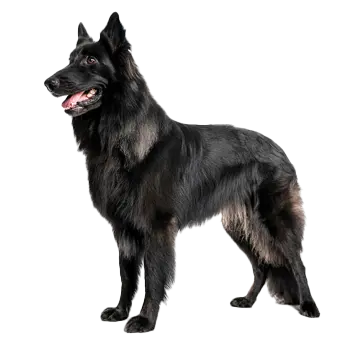

Black Belgian

Belgian Sheepdog (Groenendael)

Quick Facts

🐕 Breed Group
Herding Group (AKC), FCI Group 1 - Sheepdogs and Cattledogs
📏 Size Category
Large
📏 Height
Males: 24-26 inches (61-66 cm), Females: 22-24 inches (56-61 cm)
⚖️ Weight
Males: 55-75 pounds (25-34 kg), Females: 45-60 pounds (20-27 kg)
⏱️ Life Expectancy
12-14 years
🧣 Coat Type
Double coat - long, straight, abundant outer coat with dense undercoat
🎨 Coat Colors
Solid black (small white patch on chest and white on toe tips permitted)
😀 Temperament
Intelligent, loyal, alert, versatile, energetic, protective
🏃 Exercise Needs
High
🎓 Training Difficulty
Low to moderate - highly intelligent and eager to work
👶 Good with Children
Yes - with proper socialization
🐾 Good with Other Pets
Conditional - early socialization important; may herd smaller animals

Other Names & Breed Recognition

Black Belgian is an informal English-language descriptor for the Belgian Sheepdog, the long-haired, solid black variety of the Belgian Shepherd. The name is straightforward and descriptive, identifying the dog by its nationality and its most visually distinctive feature: the jet black coat that sets it apart from the other Belgian Shepherd varieties. While "Black Belgian" appears in casual conversation, breed forums, and informal references rather than in kennel club registries, it communicates the breed's identity instantly and accurately. Anyone encountering the term in a dog-related context is looking at the Belgian Sheepdog, known internationally as the Groenendael.

The breed carries a notable collection of formal names depending on the registry and country of reference. In the United States, the AKC registers the breed as the Belgian Sheepdog, a designation adopted when the AKC chose to recognize the four Belgian Shepherd varieties as separate breeds rather than as varieties of a single breed. In most of the rest of the world, the FCI recognizes a single breed called the Belgian Shepherd (Chien de Berger Belge) with four varieties distinguished by coat type and color, and the long-haired black variety is designated the Groenendael, named for the Belgian village where Nicolas Rose first established a breeding program for the type. The Kennel Club in the United Kingdom uses Belgian Shepherd Dog (Groenendael) as the full designation.

The four Belgian Shepherd varieties are the Groenendael (long-haired black), the Tervuren (long-haired fawn to mahogany with black overlay), the Malinois (short-haired fawn to mahogany with black mask), and the Laekenois (rough-haired fawn). Under FCI rules, all four are varieties of a single breed and historically could appear in the same litter depending on the genetics of the parents. The AKC treats each as a separate breed with its own registration, while the FCI, the Kennel Club, and most other international registries maintain the single-breed classification. This structural difference means that a Groenendael registered with the FCI is a variety of the Belgian Shepherd, while the same dog registered with the AKC is a separate breed called the Belgian Sheepdog.

The breed is formally recognized by every major kennel club worldwide. The AKC first registered the Belgian Sheepdog in 1912 and currently places it in the Herding Group. The FCI classifies the Belgian Shepherd in Group 1 (Sheepdogs and Cattledogs), Section 1 (Sheepdogs), under standard number 15 with Belgium as the country of origin. The Kennel Club places it in the Pastoral Group, the Canadian Kennel Club assigns it to the Herding Group, and the United Kennel Club lists it in the Herding Dog Group. Regardless of the name used, Black Belgian, Belgian Sheepdog, Groenendael, or Chien de Berger Belge, all refer to the same elegant, intelligent, solid black herding dog with deep roots in Belgian agricultural and working dog traditions.

Black Belgian Organizations & Standards

The Belgian Sheepdog Club of America serves as the AKC parent breed club, maintaining the breed standard, organizing national and regional specialty events, supporting breed rescue, and promoting responsible breeding practices through its Code of Ethics. The club publishes educational resources on breed health, temperament, and training, and supports research into health conditions affecting the breed. The BSCA's health committee tracks breed-specific health data and coordinates with veterinary researchers studying conditions of particular relevance to the Belgian Sheepdog.

The breed's CHIC requirements establish minimum health screening standards for responsible breeding. While the specific recommended tests are periodically updated, the screening program typically includes hip evaluation, elbow evaluation, ophthalmologist examination, and thyroid evaluation. Breeders committed to the BSCA Code of Ethics agree to perform these tests on breeding stock and to make results available to puppy buyers. The OFA maintains a public database of health screening results that allows prospective buyers to verify the testing status of any dog's parents.

The breed standard describes the Belgian Sheepdog as a well-balanced, square-proportioned dog of medium size with an elegant but substantial build. Males stand twenty-four to twenty-six inches at the withers, with females measuring twenty-two to twenty-four inches. The standard emphasizes the breed's proud carriage, alert expression, and the abundant black coat that creates the distinctive silhouette. The coat must be solid black, though a small white patch on the chest and white on the toe tips are tolerated. The standard specifically calls for a temperament that is watchful, alert, and attentive to its owner, with a quality of protectiveness that should never cross into unprovoked aggression or excessive shyness.

The FCI standard, which governs the breed across most of the world, describes the Groenendael as one of four varieties of the Belgian Shepherd and emphasizes the same qualities of balance, elegance, and working utility. The FCI standard permits intervariety breeding under specific circumstances and with club approval, a practice that has historically been used to maintain genetic diversity and preserve working ability across the Belgian Shepherd population. This flexibility reflects the breed's origins as a single population of herding dogs differentiated primarily by coat type rather than by fundamental structural or temperament differences.

Kennel Club Recognition

  • American Kennel Club (AKC): Recognized in 1912, Herding Group
  • United Kennel Club (UKC): Recognized, Herding Dog Group
  • Canadian Kennel Club (CKC): Recognized, Herding Group
  • FCI: Recognized, Group 1 - Sheepdogs and Cattledogs
  • The Kennel Club (UK): Recognized, Pastoral

Black Belgian Physical Description

The Black Belgian presents a striking figure that combines athletic elegance with functional working structure. The breed is square in proportion, with the body length from point of shoulder to point of buttock approximately equal to the height at the withers. Males stand twenty-four to twenty-six inches and weigh fifty-five to seventy-five pounds, while females stand twenty-two to twenty-four inches and weigh forty-five to sixty pounds. The overall silhouette communicates alertness, agility, and readiness for action, with the proud head carriage, erect ears, and flowing black coat creating an impression of natural nobility that has made the breed a perennial favorite among enthusiasts of working dogs.

The head is clean-cut and strong, carried proudly on a muscular neck of sufficient length to allow the dog to carry its head well above the topline. The skull is flattened rather than rounded, approximately equal in length to the muzzle, with a moderate stop. The muzzle tapers slightly toward the nose without appearing snipey, and the jaws are strong with a complete scissor bite. The eyes are medium-sized, almond-shaped, and dark brown, conveying an expression of alertness and intelligence that is central to breed character. The ears are stiff, erect, and triangular, set high on the head and proportionate in size to the head.

The body is built for sustained effort and quick, agile movement. The chest is deep, reaching to the elbow, but not excessively broad. The back is firm, straight, and level from withers to croup. The loin is short, broad, and strong, and the croup is medium-long, gradually sloping. The tail reaches at least to the hock and is carried low in repose, raised to approximately horizontal when the dog is in motion, with the tip curving slightly upward but never forming a hook or curling over the back. The legs are straight, well-boned, and muscular, with the rear angulation balanced by equivalent front assembly. The feet are round, tight, and well-padded.

The coat is the breed's most immediately recognizable feature and the characteristic that gives the Black Belgian its informal name. The outer coat is long, straight, and abundant, with a moderately harsh texture that provides weather protection. The undercoat is dense and proportionate to the climate, providing insulation without adding excessive bulk. The coat is particularly profuse around the neck and chest, forming a distinctive collarette or mane that is more pronounced in males. Long feathering adorns the backs of the forelegs, the thighs are covered with abundant hair forming full breeches, and the tail carries a dense plume. The coat color must be solid black, with only limited tolerance for a small white patch on the chest and white tips on the toes. The coat's deep, lustrous black creates the dramatic visual impact that distinguishes the Groenendael from the other Belgian Shepherd varieties.

Movement is effortless, ground-covering, and elastic, reflecting the breed's heritage as a working herding dog that needed to patrol and manage livestock across varied terrain for extended periods. The gait at a natural trot is smooth, with good reach in front and strong drive from the rear. The breed moves with a light, springy quality that communicates readiness and athleticism rather than heaviness or labor. At speed, the feet converge toward the centerline, and the topline remains firm and level. The overall impression in motion should be one of tireless, efficient movement.

Affectionate With Family
The Black Belgian forms deeply devoted bonds with its family, demonstrating a level of attachment and emotional sensitivity that sets it apart from many working breeds. This is a dog that seeks constant companionship, follows its people from room to room, and expresses its affection through physical closeness and attentive eye contact. The breed's devotion is wholehearted and intense, making it a profoundly rewarding companion for owners who can reciprocate that level of engagement.
Good With Young Children
The Black Belgian can be a patient and protective companion for children, particularly when raised alongside them from puppyhood. However, the breed's high energy, herding instincts, and sensitive temperament require supervision during interactions with very young children. The dog may attempt to herd running children by nipping at heels, a natural behavior that needs redirection through training. Families with older children who understand how to interact respectfully with dogs typically have the best outcomes.
Good With Other Dogs
The Black Belgian generally coexists well with other dogs when properly socialized, though its confident, assertive personality can produce friction with equally dominant canine housemates. Same-sex aggression occasionally surfaces, particularly among intact males. Early, extensive socialization with a variety of dogs builds the social skills needed for reliable interactions, and the breed typically does well in multi-dog households where introductions have been handled thoughtfully and individual boundaries are respected.
Shedding Level
The Black Belgian sheds substantially throughout the year, with the long, abundant coat releasing significant quantities of hair onto furniture, clothing, and flooring. Twice annually, the dense undercoat blows heavily over several weeks, producing dramatic volumes of loose fur that require daily removal. The solid black coat makes shed hair particularly visible on light-colored surfaces and clothing. Regular brushing manages but never eliminates the shedding, and owners should accept a permanent relationship with lint rollers and vacuum cleaners.
Coat Grooming Frequency
The Black Belgian's long double coat requires regular brushing two to three times per week to prevent matting, remove loose hair, and maintain its natural luster. During the biannual coat blow, daily brushing with an undercoat rake becomes necessary. The coat should never be shaved or closely clipped. The areas most prone to tangling include behind the ears, under the forelegs, and in the dense feathering around the hindquarters. While the grooming commitment is consistent, the breed does not require professional styling or trimming.
Drooling Level
The Black Belgian is a notably clean, dry-mouthed breed that produces virtually no drool under normal circumstances. Its tight lip structure and refined muzzle keep saliva contained, and owners will not encounter the wet spots or strings of drool associated with breeds that have loose, pendulous flews. This is one of the tidiest breeds in terms of mouth management, a quality that many owners appreciate in an indoor companion.
Coat Type
The Black Belgian carries a long, straight, abundant double coat that is one of the breed's most striking visual features. The outer coat is moderately harsh in texture and lies flat against the body, with especially profuse growth forming a pronounced mane or collarette around the neck and chest, feathering on the backs of the forelegs, and a full, bushy tail. The undercoat is dense and provides effective insulation. The coat's jet black color gives the breed its informal name and creates the elegant, dramatic silhouette for which it is known.
Openness To Strangers
The Black Belgian approaches unfamiliar people with watchful reserve, maintaining a measured distance while assessing the stranger's intentions. This is a breed that does not rush to greet newcomers with indiscriminate friendliness but instead observes and evaluates before offering any warmth. Well-socialized individuals accept friendly visitors calmly once their handler indicates acceptance, though the breed retains an alertness to unfamiliar people that reflects its heritage as a farm guardian. Excessive shyness or fearfulness are temperament faults rather than breed characteristics.
Playfulness Level
The Black Belgian maintains an enthusiastic play drive well into adulthood, approaching games and interactive activities with the focused energy characteristic of high-drive herding breeds. Retrieving, tug-of-war, agility equipment, and structured play sessions that challenge both body and mind are all embraced with vigor. The breed's play style tends to be purposeful and intense rather than casual, and its stamina for games often exceeds that of its human partners. This sustained playfulness provides an excellent outlet for the breed's considerable energy reserves.
Watchdog/Protective Nature
The Black Belgian is an outstanding watchdog with a natural protective instinct that has been refined over more than a century of selection for guarding and police work. The breed is highly alert to changes in its environment, responds to approaching visitors or unusual sounds with immediate attention, and possesses a deep, authoritative bark that communicates serious intent. Its protective drive extends to its family and property, making it one of the most naturally vigilant herding breeds. Proper socialization ensures this protectiveness remains appropriate rather than becoming indiscriminate aggression.
Adaptability Level
The Black Belgian can adapt to various living environments provided its substantial exercise and mental stimulation needs are consistently met. The breed can live in apartments or homes with small yards if given ample daily activity, but it thrives with access to outdoor space for running and working. It handles changes in routine reasonably well when its handler provides stability and structure, but prolonged isolation or understimulation produces anxiety-driven behavioral problems. The breed is sensitive to household tension and does best in calm, structured environments.
Trainability Level
The Black Belgian is one of the most trainable breeds available, combining exceptional intelligence, strong work ethic, and a genuine desire to collaborate with its handler. The breed absorbs new concepts rapidly, retains learned behaviors reliably, and actively seeks opportunities to work and please. It excels across the full spectrum of canine disciplines including obedience, agility, herding, tracking, protection sports, and search and rescue. Positive reinforcement methods produce the best results with this sensitive breed, as harsh corrections undermine confidence and damage the handler-dog bond.

Black Belgian History & Development

The Black Belgian traces its origins to the broader population of herding dogs that worked Belgian farms and pastures throughout the nineteenth century. Before formal breed recognition, the shepherd dogs of Belgium existed as a diverse working population varying in coat type, color, and length across different regions. These dogs shared a common purpose, herding and guarding livestock, and a common set of working qualities including intelligence, trainability, endurance, and alertness, but they had not been standardized into distinct types. The movement to formalize Belgian herding dogs into recognized breeds began in the 1890s, when Professor Adolphe Reul of the Belgian School of Veterinary Sciences surveyed the country's shepherd dogs and proposed a classification based on coat type and color.

The Groenendael variety owes its establishment to Nicolas Rose, a restaurateur who owned the Chateau de Groenendael near Brussels. In 1885, Rose acquired a long-haired black Belgian shepherd bitch named Petite and, admiring her striking appearance, spent over a year searching for a suitable male of similar type. He eventually found a match, and the resulting breeding program produced a line of elegant, black-coated shepherd dogs that became the foundation of the Groenendael variety. Rose's dogs gained recognition at early Belgian dog shows, and the distinctive black color, combined with the flowing long coat, quickly captured the attention of breeders and the public.

The Club du Chien de Berger Belge was founded in 1891, and the first Belgian Shepherd standard was adopted in 1892. Over the following decades, the classification of the Belgian Shepherd varieties underwent several revisions, with ongoing debates about whether the different coat types should be considered separate breeds or varieties of a single breed. Intervariety breeding was initially common, with all four types occasionally appearing in the same litter, but as breeders focused on establishing consistent type within each variety, interbreeding was restricted. The disruptions of two world wars forced temporary relaxation of these restrictions to prevent genetic bottleneck, and controlled intervariety breeding has been periodically permitted since.

The breed arrived in the United States in the early twentieth century and was first registered by the AKC in 1912. The breed was initially registered simply as Belgian Sheepdog, encompassing all varieties, but the AKC eventually split the Belgian Shepherds into separate breeds: the Belgian Sheepdog (Groenendael), the Belgian Tervuren, and the Belgian Malinois, with the Laekenois gaining recognition much later. This American decision to treat the varieties as separate breeds, rather than following the FCI model of a single breed with four varieties, has had lasting implications for breeding programs, registration, and competition rules.

The Belgian Sheepdog has distinguished itself across an extraordinary range of working roles. During World War I, Belgian Shepherds served as message carriers, ambulance dogs, and sentry dogs on the Western Front, with the Groenendael variety performing alongside the other types. In the decades since, the breed has been employed in police work, search and rescue, tracking, detection work, and competitive dog sports including obedience, agility, herding, and protection sports. The breed's versatility, combining the sensitivity and handler focus needed for companion work with the drive and resilience needed for demanding professional roles, is the practical legacy of more than a century of selection for functional working ability alongside beauty and structural soundness.

Black Belgian Temperament & Personality

The temperament of the Black Belgian is characterized by an intensity of engagement with its handler and its environment that sets it apart from many breeds of similar size and appearance. This is a dog that operates at a consistently high level of awareness, processing information from its surroundings continuously and responding to its handler's cues with a quickness that reflects both high intelligence and deep attentiveness. The breed does not simply occupy space in a household; it actively participates in family life, monitors its environment, and seeks connection with its people in ways that can be profoundly rewarding for owners who appreciate and can manage that level of involvement.

Loyalty and devotion to family define the emotional core of the Black Belgian temperament. The breed bonds deeply and often preferentially with its primary handler while extending genuine affection to all family members. This attachment is not passive; the Belgian Sheepdog demonstrates its loyalty through constant companionship, protective vigilance, and an emotional sensitivity that allows it to read and respond to its handler's moods with remarkable accuracy. The depth of this bond creates a partnership quality in the relationship that experienced herding dog owners often describe as the most rewarding aspect of living with the breed.

Protectiveness is a natural and significant component of the Black Belgian temperament. The breed is inherently watchful, alert to changes in its environment, and prepared to defend its family and territory if it perceives a genuine threat. This protective instinct is one of the breed's most valued qualities when properly channeled through socialization and training, producing a dog that provides real security without creating liability. However, the protective drive requires responsible management: an undersocialized Belgian Sheepdog may become suspicious of all strangers and reactive in novel situations, transforming a valuable trait into a behavioral problem.

The breed's sensitivity is both a strength and a management consideration. The Black Belgian is emotionally porous, absorbing the moods and tensions of its household and responding to harsh treatment with anxiety, withdrawal, or defensive behavior. Training methods built on positive reinforcement, clear communication, and mutual respect produce the best results, while confrontational or punitive approaches damage the dog's confidence and the handler-dog relationship. The breed thrives in calm, structured environments where expectations are consistent and where the dog's need for mental and emotional engagement is met.

Energy and drive in the Belgian Sheepdog are substantial and should not be underestimated by prospective owners. This is a working breed with generations of selection for sustained physical and mental effort, and it requires an outlet for that energy that goes beyond casual daily walks. Without adequate exercise, training, and mental stimulation, the Black Belgian becomes restless, anxious, and prone to developing the neurotic behaviors that give working breeds a reputation for difficulty. With appropriate management, the same energy and drive that can become problematic in an understimulated dog fuel the enthusiastic, capable, willing companion that makes the breed so valued among knowledgeable owners.

Black Belgian Family Life & Living Requirements

The Black Belgian integrates into family life as an active, involved participant whose need for engagement and companionship shapes the household dynamic. This breed is not content to be a background presence; it wants to be where its people are, participating in activities, observing household routines, and maintaining the close physical and emotional proximity that its temperament demands. Families who include their Belgian Sheepdog in daily life, who take it along on outings, involve it in outdoor recreation, and make it a genuine household participant, are rewarded with a devoted, well-adjusted companion. Those who expect the dog to entertain itself in the backyard while family life happens indoors will encounter mounting behavioral problems.

Families with children can have positive experiences with the Belgian Sheepdog when both the dog and the children are properly prepared for the relationship. The breed's herding instincts may manifest as attempts to control children's movement by circling and nipping at heels, a behavior that requires consistent redirection from the earliest stages. Children should be taught to interact respectfully with the dog, avoiding rough play, teasing, and sudden movements that can trigger the breed's reactive sensitivity. With mutual understanding and appropriate supervision, the Belgian Sheepdog can become a loyal, protective, and playful companion for school-age children.

Housing requirements center on space for exercise and mental engagement rather than simply square footage. The breed can adapt to apartment living if its substantial daily exercise needs are met through multiple active outings, but it is most comfortable in a home with a securely fenced yard that provides space for running, playing, and patrolling. Fencing should be at least six feet high and regularly inspected for integrity, as the breed's intelligence and athleticism make it capable of finding creative escape routes if motivated. The Belgian Sheepdog is not suited to outdoor-only living; it needs indoor access and close human contact to maintain emotional balance.

Separation tolerance is limited in this breed. The Belgian Sheepdog's intense attachment to its family makes prolonged isolation genuinely distressing, and dogs left alone for extended periods frequently develop separation anxiety manifesting as destructive behavior, excessive vocalization, and self-directed behaviors. Owners who work full-time schedules need to arrange for midday visits, doggy daycare, or other companionship solutions to prevent isolation stress. A second dog can help, though it does not fully substitute for human companionship in a breed as handler-oriented as this one.

The breed coexists with other household pets with varying degrees of success depending on individual temperament and socialization history. Most Belgian Sheepdogs live peacefully with other dogs, particularly when raised together, though introductions should be managed thoughtfully. The breed's herding instinct may extend to cats and other small animals, and while many Belgians learn to coexist peacefully with family cats, the chase impulse may require management around unfamiliar small animals. Supervision during interactions with small pets is prudent, especially during the early adjustment period.

Black Belgian Training & Exercise Needs

Training the Black Belgian is one of the most rewarding aspects of owning the breed, as the Belgian Sheepdog's combination of intelligence, drive, and handler focus produces a dog that excels across virtually every canine discipline. The breed learns rapidly, retains training reliably, and approaches work with an enthusiasm that makes training sessions feel like collaborative partnerships rather than exercises in compliance. This aptitude has made the Belgian Sheepdog a mainstay in competitive obedience, agility, herding trials, tracking, protection sports, and professional working roles including police and military service, search and rescue, and detection work.

Positive reinforcement methods are essential for effective training with this breed. The Belgian Sheepdog's emotional sensitivity means that harsh corrections, raised voices, and physical punishment produce anxiety, avoidance, and damaged trust rather than improved performance. The breed responds best to clear, consistent, reward-based instruction that builds confidence and strengthens the handler-dog bond. Food rewards, toy rewards, and verbal praise all serve as effective reinforcers, with the specific balance depending on individual drive and preference. Short, varied training sessions that maintain the dog's enthusiasm produce better results than long, repetitive drills that invite boredom.

Early socialization is critical and should be treated as the foundation of all subsequent training. Belgian Sheepdog puppies need extensive positive exposure to a wide range of people, dogs, environments, sounds, surfaces, and situations between eight and sixteen weeks of age, with continued socialization throughout the first year. The breed's natural reserve with strangers and its protective instincts can sharpen into fearfulness, reactivity, or aggression if the puppy is not adequately socialized during the critical developmental period. Puppy classes, controlled public outings, visits from diverse people, and supervised interactions with well-mannered dogs all contribute to building the confident, socially competent adult.

Exercise requirements are substantial and non-negotiable. The Black Belgian needs a minimum of one to two hours of vigorous daily exercise, combining structured activities such as leash walks, off-leash running, and training sessions with mental enrichment through puzzle toys, scent work, and interactive games. The breed excels in organized canine sports that provide the combined physical and cognitive challenge it craves, including agility, competitive obedience, herding, tracking, and nose work. Simply providing a yard does not constitute exercise; the breed needs interactive, purposeful activity that engages both body and mind.

Mental stimulation is as important as physical exercise and should be integrated into the dog's daily routine. The Belgian Sheepdog's intelligence demands engagement, and a dog that is physically tired but mentally understimulated will still find ways to create problems. Puzzle feeders, training sessions that introduce new concepts, scent detection games, and structured problem-solving activities all channel the breed's cognitive capacity constructively. The Black Belgian that receives both adequate physical exercise and meaningful mental challenge settles calmly and contentedly; the one that receives neither becomes the kind of difficult, anxious, destructive dog that gives working breeds their reputation for being "too much" for average owners.

Black Belgian Health Concerns

The Black Belgian is a generally hardy breed with a respectable lifespan of twelve to fourteen years for its size, though like all purebred dogs it carries susceptibility to certain inherited conditions that prospective owners and breeders should understand. The breed's health profile benefits from a heritage of selection for working ability, which has generally favored functional soundness over extreme physical features. However, the breed is not immune to the genetic conditions that affect many medium to large breeds, and responsible health screening of breeding stock is essential for maintaining and improving the population's overall health.

Epilepsy represents one of the most significant health concerns specific to the Belgian Sheepdog. Idiopathic epilepsy, meaning seizures without an identifiable structural brain lesion, occurs at elevated rates in the breed compared to the general dog population. The condition typically manifests between one and five years of age, with seizures varying in frequency and severity from rare, mild episodes to frequent, severe events that significantly impact quality of life. Management with anticonvulsant medications such as phenobarbital, potassium bromide, or newer agents like levetiracetam and zonisamide controls seizure activity in most affected dogs, though lifelong medication and monitoring are required. No DNA test currently exists for idiopathic epilepsy in this breed, making pedigree analysis and seizure history review essential components of responsible breeding decisions.

Progressive retinal atrophy affects the Belgian Sheepdog at documented rates and represents a serious concern for breeders and owners. The condition causes gradual degeneration of the photoreceptor cells in the retina, producing progressive vision loss that typically begins with impaired night vision and advances to partial or complete blindness. DNA testing is available for some forms of PRA affecting the breed, allowing breeders to identify carriers and affected animals before breeding and to make informed mating decisions that reduce the probability of producing affected offspring. Annual ophthalmologic examinations by a board-certified specialist provide surveillance for early retinal changes.

Orthopedic conditions including hip dysplasia and elbow dysplasia affect the breed at rates consistent with many medium to large breeds. Both conditions are polygenic, influenced by both genetics and environmental factors including nutrition, growth rate, and exercise during development. Screening breeding stock through OFA or PennHIP hip evaluation and OFA elbow evaluation provides data for informed breeding decisions. Maintaining lean body condition, feeding appropriate large-breed growth diets during development, and avoiding excessive forced exercise in young dogs all contribute to reducing orthopedic disease risk.

Gastric dilatation-volvulus is a life-threatening emergency that affects deep-chested breeds including the Belgian Sheepdog. The breed's chest conformation places it among breeds at elevated risk for this condition, in which the stomach fills with gas and may rotate, trapping contents and cutting off blood supply. Prophylactic gastropexy at the time of spay or neuter surgery substantially reduces the risk of gastric torsion. Cancer, including hemangiosarcoma, osteosarcoma, and lymphoma, represents a significant cause of mortality in the breed. While no specific screening tests prevent cancer, awareness of risk, regular veterinary examinations, and prompt attention to warning signs including unexplained lumps, persistent lameness, and changes in appetite or energy support the earliest possible detection and intervention.

Common Health Issues

  • Hip dysplasia - A polygenic developmental disorder of the hip joint in which improper fit between the femoral head and acetabulum causes progressive joint degeneration and arthritis. OFA or PennHIP hip evaluation is a recommended screening test for breeding stock.
  • Elbow dysplasia - A group of developmental abnormalities affecting the elbow joint that produce lameness and progressive arthritis. OFA elbow evaluation is recommended for breeding stock to reduce incidence in the breed population.
  • Progressive retinal atrophy (PRA) - An inherited degenerative eye disease that causes progressive vision loss and eventual blindness through degeneration of the photoreceptor cells in the retina. The Belgian Sheepdog is among the breeds with documented susceptibility, and annual ophthalmologic examinations combined with available DNA testing help identify affected and carrier animals.
  • Epilepsy - Idiopathic epilepsy occurs at elevated rates in the Belgian Sheepdog, producing recurrent seizures without identifiable structural cause. The condition typically manifests between one and five years of age and is managed with anticonvulsant medications. Breeding stock with seizure histories or close relatives with epilepsy should be used cautiously.
  • Gastric dilatation-volvulus (bloat/GDV) - A life-threatening emergency in which the stomach distends with gas and may rotate, cutting off blood supply. The Belgian Sheepdog's deep chest places it among breeds at elevated risk. Prophylactic gastropexy reduces the risk of torsion.
  • Thyroid disease (hypothyroidism) - Autoimmune thyroiditis causing underactive thyroid function is documented in the breed. Symptoms include weight gain, lethargy, coat changes, and reproductive difficulties. Thyroid function screening through OFA-registered testing helps identify affected breeding stock.
  • Cancer (various types) - The Belgian Sheepdog has documented susceptibility to several cancers including hemangiosarcoma, osteosarcoma, and lymphoma. Cancer represents a significant cause of death in the breed, and monitoring for early warning signs including unexplained lumps, lameness, and changes in appetite or energy is important throughout the dog's life.

Preventive Care & Health Monitoring

  • OFA or PennHIP hip evaluation - Hip radiographs evaluated by OFA (after age two) or PennHIP are recommended screening tests for breeding stock. Request documentation of hip scores for both parents before purchasing a puppy.
  • OFA elbow evaluation - Elbow radiographs evaluated and registered with OFA are recommended for Belgian Sheepdog breeding stock. Both parents should have documented elbow clearances.
  • Ophthalmologist examination - Annual eye examinations by a board-certified veterinary ophthalmologist screen for progressive retinal atrophy, cataracts, and other hereditary eye conditions. DNA testing for known PRA mutations should be performed on breeding stock.
  • Thyroid evaluation - Thyroid function panels registered with OFA help identify autoimmune thyroiditis in breeding stock. Annual thyroid screening is recommended for breeding animals and for dogs showing clinical signs of thyroid dysfunction.
  • Epilepsy history review - Discuss the incidence of epilepsy in breeding lines with the breeder. While no DNA test exists for idiopathic epilepsy in this breed, responsible breeders track seizure histories across generations and avoid breeding dogs from high-incidence lines.
  • Prophylactic gastropexy - Discuss prophylactic gastropexy with your veterinarian at the time of spay or neuter surgery. This procedure tacks the stomach to prevent the torsion component of bloat in this deep-chested breed.
  • Annual wellness examination with complete blood chemistry - Comprehensive annual veterinary examinations including blood chemistry panels support early detection of thyroid disease, organ dysfunction, and other conditions. Dogs over age seven benefit from biannual examinations.

Black Belgian Grooming & Maintenance

The grooming requirements of the Black Belgian are driven by the breed's long, abundant double coat, which demands consistent maintenance to remain healthy, clean, and free of mats and tangles. The coat is the breed's most visually striking feature, and maintaining its natural beauty requires a commitment of time and effort that prospective owners should evaluate honestly before choosing the breed. Owners who find regular grooming tedious or who are unwilling to accept substantial shedding throughout the year should consider whether the Belgian Sheepdog is the right choice for their household.

Regular brushing forms the foundation of coat care. During normal shedding periods, thorough brushing two to three times per week with a slicker brush and a metal comb keeps the coat free of tangles and removes loose hair before it deposits on household surfaces. The areas most prone to matting are behind the ears, under the front legs, in the dense feathering on the chest and breeches, and around the base of the tail. Each brushing session should include careful attention to these trouble zones, working through any developing tangles gently with a comb before they become tight mats that pull on the skin and cause discomfort.

During the biannual coat blow, which occurs in spring and fall as the dense undercoat releases, daily brushing with an undercoat rake becomes necessary. The shed undercoat can be dramatic in volume, releasing in clumps and tufts that, if not removed, felt against the skin and create conditions for moisture retention and skin irritation. Some owners find that a warm bath followed by thorough blow-drying during the coat blow accelerates the process and helps release the dead undercoat more efficiently. Even with diligent grooming during shedding periods, black hair will be a constant presence on clothing, furniture, and flooring throughout the dog's life.

Bathing should be infrequent, limited to every two to three months or when the dog becomes genuinely dirty. The Belgian Sheepdog's coat contains natural oils that provide water resistance and contribute to the coat's characteristic luster. Excessive bathing strips these oils, producing dry skin, increased shedding, and a coat that loses its natural sheen. When bathing is necessary, a mild dog-specific shampoo followed by thorough rinsing and complete drying prevents skin irritation and the musty odor that develops when the dense undercoat retains moisture. The coat should never be shaved, as removing it eliminates essential thermal regulation and may result in permanent changes to coat texture.

Routine maintenance beyond coat care includes nail trimming every two to three weeks, dental care through daily brushing with canine toothpaste, and weekly ear inspection and cleaning. The breed's erect ears provide good airflow to the ear canal, reducing infection risk compared to pendant-eared breeds, but regular checks for redness, odor, or excessive wax remain important. Dental health benefits from daily brushing supplemented by appropriate dental chews and periodic professional cleanings. A complete grooming session for a Belgian Sheepdog takes approximately forty-five minutes to an hour, a regular commitment that maintains the coat's health and appearance and provides valuable hands-on time for monitoring the dog's overall physical condition.