Bichon Poil Fris

Bichon Frise

Quick Facts

🐕 Breed Group
Non-Sporting Group
📏 Size Category
Small
📏 Height
Males: 9.5-11.5 inches, Females: 9.5-11.5 inches
⚖️ Weight
Males: 12-18 pounds, Females: 12-18 pounds
⏱️ Life Expectancy
14-15 years
🧣 Coat Type
Double coat - soft dense undercoat, coarser curly outer coat
🎨 Coat Colors
White, white and apricot, white and buff, white and cream
😀 Temperament
Cheerful, playful, gentle, affectionate, sensitive, merry
🏃 Exercise Needs
Moderate
🎓 Training Difficulty
Moderate - eager to please but can be stubborn with housetraining
👶 Good with Children
Yes
🐾 Good with Other Pets
Yes

Other Names & Breed Recognition

Bichon Poil Fris is a shortened form of the French name Bichon a Poil Frise, which translates directly as "curly-haired bichon" or "curly-coated lap dog." This is the formal French designation for the breed that English speakers know simply as the Bichon Frise. The name captures the breed's two defining characteristics: it belongs to the Bichon family of small white companion dogs, and its coat is curly rather than straight or wavy. The word bichon itself is believed to derive from an Old French diminutive meaning "small dog," while frise means curled or curly. Together they describe the breed with precise economy.

The Bichon family includes several related breeds that share Mediterranean ancestry and a history as companions to European nobility: the Bichon Frise, the Bolognese, the Havanese, the Maltese, and the Coton de Tulear. Among these, the Bichon Frise is distinguished primarily by its curly double coat and its particular historical association with France and Belgium, though its deeper origins trace to the Mediterranean basin and the Canary Islands. The breed was known historically as the Bichon Tenerife, reflecting the Canary Island where French sailors encountered and acquired the dogs, likely in the 14th century. That earlier name gave way to Bichon a Poil Frise when the French Kennel Club (Societe Centrale Canine) formally recognized and named the breed in 1933.

In English-speaking countries, the breed is universally known as the Bichon Frise, a truncation of the full French name that has become the standard designation across the American Kennel Club, Canadian Kennel Club, and Kennel Club of the United Kingdom. The AKC recognized the breed in 1972, placing it in the Non-Sporting Group, where it remains. The United Kennel Club recognized the breed in 1981 under its Companion Dog Group. The Federation Cynologique Internationale classifies the breed within Group 9 (Companion and Toy Dogs), Section 1 (Bichons and Related Breeds), with France and Belgium sharing the designation as the breed's countries of patronage.

The full French name Bichon a Poil Frise, and its shortened variant Bichon Poil Fris, appear most commonly in historical breed literature, FCI documentation, and European breed club publications. In everyday use, both French and English speakers have settled on the abbreviated Bichon Frise. Whether the full French form, the shortened variant, or the familiar English abbreviation is used, all three names point to the same breed: a small, white, curly-coated companion dog with a cheerful disposition, a talent for performance, and a history that winds through Mediterranean trade routes, European courts, circus rings, and modern living rooms.

Bichon Poil Fris Organizations & Standards

The Bichon Frise Club of America serves as the AKC parent club and the primary breed organization in the United States. The BFCA maintains the AKC breed standard, coordinates health research, supports rescue operations for displaced Bichons, and promotes responsible breeding through its code of ethics. The club participates in the OFA Canine Health Information Center program, establishing required health screenings that breeding dogs must complete to earn CHIC certification. Required tests include a patellar luxation evaluation by a veterinarian with results registered in the OFA database and an eye examination by a board-certified ACVO ophthalmologist. Optional tests include hip evaluation for Legg-Calve-Perthes disease and cardiac screening.

The AKC breed standard describes the Bichon Frise as a small, sturdy, white powder puff of a dog whose merry temperament is evidenced by its plumed tail carried jauntily over the back and its dark-eyed, inquisitive expression. Both males and females stand 9.5 to 11.5 inches at the withers, with latitude outside this range granted only when a specimen's overall superiority clearly justifies it. In no case should the height extend over 12 inches or under 9 inches. The body is slightly longer than tall, compact, and of medium bone throughout. The standard places particular emphasis on the coat, which must consist of a soft, dense undercoat and a coarser, curly outer coat, creating a soft but substantial texture. When bathed and brushed, the coat stands away from the body, producing the powder-puff appearance that is the breed's visual hallmark.

The FCI standard, jointly maintained through French and Belgian breed clubs, provides the international reference document and classifies the breed within Group 9, Section 1. The FCI description specifies a height of 25 to 29 centimeters at the withers, with some tolerance up to 30 centimeters for males, and places emphasis on a joyful temperament, dark eyes with pigmented halos, and a purely white coat. The FCI standard notes that shadings of buff, cream, or apricot may appear on the ears and body of young dogs but should fade to white by maturity. The Kennel Club in the United Kingdom classifies the Bichon Frise in its Toy Group rather than the Non-Sporting Group used by the AKC, reflecting different organizational philosophies about breed categorization.

The breed's health infrastructure has expanded significantly as the Bichon Frise population has grown. The BFCA's health committee tracks prevalent conditions through voluntary reporting and coordinates with veterinary researchers on studies addressing allergies, urinary tract disease, and orthopedic conditions. Regional Bichon Frise clubs across the United States and Europe host health clinics at specialty shows, offering discounted screening tests and educational seminars for breeders and owners. The breed community's emphasis on health testing reflects an understanding that the Bichon's long lifespan and popularity create both opportunities and obligations for maintaining genetic health across a large and widely distributed breeding population.

Kennel Club Recognition

  • American Kennel Club (AKC): Recognized in 1972, Non-Sporting Group
  • United Kennel Club (UKC): Recognized in 1981, Companion Dog Group
  • Canadian Kennel Club (CKC): Recognized, Non-Sporting Group
  • FCI: Recognized, Group 9 - Companion and Toy Dogs
  • The Kennel Club (UK): Recognized, Toy

Bichon Poil Fris Physical Description

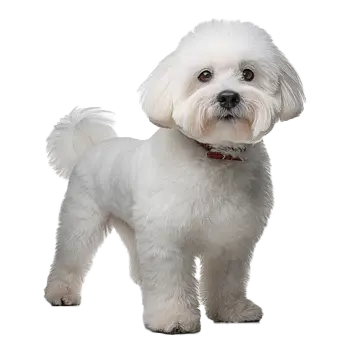
The Bichon Poil Fris is a small, compact dog whose physical appearance combines sturdy functionality with an unmistakable powder-puff elegance. Standing 9.5 to 11.5 inches at the withers and weighing 12 to 18 pounds, the breed presents a body that is slightly longer than tall, with medium bone that is neither coarse nor fine. Despite its decorative appearance, the Bichon is a solidly built little dog with enough substance and balance to be genuinely athletic. The overall silhouette, when properly groomed, is a rounded, snowball-like form that disguises the well-proportioned skeleton and muscular development underneath.

The head is the breed's most expressive feature, dominated by large, round, dark brown or black eyes surrounded by dark pigmented halos that accentuate the alert, inquisitive expression the breed standard describes. The nose and lips are black. The skull is slightly rounded, and the muzzle is proportionate to the skull, neither snippy nor heavy. Drop ears are set slightly above eye level, frame the face, and are covered with long flowing hair. When the dog is alert, the ears lift slightly at the base and swing forward. The mouth closes in a scissors bite, and the overall head expression should convey intelligence, curiosity, and cheerfulness.

The body is well-muscled and balanced, with a level topline except for a slight muscular rise over the loin. The chest is well developed and wide enough to allow free movement of the forelegs. The ribcage extends well back to a short, muscular loin. The tail is set on level with the topline, well furnished with hair, and carried curved gracefully over the back so that the hair of the tail rests on the back. The legs are straight and well-boned, with round, tight feet and black paw pads. The movement is free, precise, and effortless, with the head and tail carried high, producing the jaunty, self-assured gait that characterizes the breed in motion.

The coat is the Bichon's signature feature and the characteristic that gives the breed its name. It consists of a soft, dense undercoat and a coarser, curly outer coat that together produce the pillowy, stand-off texture unique among companion breeds. When properly groomed, bathed, and scissored, the coat creates the rounded powder-puff silhouette that is the breed's visual trademark. The accepted color is white, though shadings of buff, cream, or apricot may appear around the ears or on the body, particularly in younger dogs. No more than ten percent of the coat should show these shadings in an adult show dog. The coat is hair rather than fur, growing continuously and shedding minimally, which contributes to the breed's reputation as a lower-allergen companion.

Affectionate With Family
The Bichon Poil Fris lives for human companionship and expresses its affection with boundless enthusiasm. This is a breed that wants to be on a lap, pressed against a leg, or otherwise in direct physical contact with its people at every opportunity. The depth of attachment extends to all members of the household, and the breed's sensitivity to human emotion means it responds to its family's moods with remarkable attentiveness. Few companion breeds match the Bichon's sheer intensity of devotion.
Good With Young Children
The Bichon Frise's gentle temperament, playful nature, and sturdy build for its size make it a strong match for families with young children. The breed genuinely enjoys the energy and attention that children bring and will participate enthusiastically in games and play. Its small size means it is unlikely to knock over a child, though very young children should be taught not to handle the dog roughly or drop it from height. Supervision ensures safe interactions, but the breed's fundamental disposition toward children is warm and patient.
Good With Other Dogs
The Bichon Poil Fris is a sociable breed that generally gets along well with other dogs, both in the household and during encounters at parks or on walks. The breed does not carry significant same-sex aggression or competitive tendencies, and its playful nature makes it a willing participant in canine social interactions. Some individual Bichons can be bold despite their size and may approach much larger dogs with more confidence than caution, which requires owner awareness to prevent mismatches during play.
Shedding Level
The Bichon Frise is one of the lowest-shedding breeds available, a trait that has contributed significantly to its popularity as a companion dog. The breed's continuously growing hair sheds minimally, and the loose hair that does detach tends to be caught by the dense undercoat rather than falling onto furniture and clothing. This characteristic makes the Bichon a frequent recommendation for people with allergies, though no dog is truly hypoallergenic and individual sensitivity varies.
Coat Grooming Frequency
The Bichon's beautiful powder-puff coat comes at a significant grooming cost. Daily brushing is ideal to prevent the matting that develops rapidly in the curly double coat, and professional grooming every four to six weeks is necessary to maintain the breed's characteristic rounded silhouette. Skipping grooming sessions leads quickly to painful mats that can require shaving to remove. The grooming commitment is the single most demanding aspect of Bichon ownership and should be fully understood before acquiring the breed.
Drooling Level
The Bichon Frise is an exceptionally clean-mouthed breed that produces virtually no drool. The tight lips and small muzzle keep saliva well contained, and owners will not encounter wet spots on furniture, clothing, or floors. This tidiness extends to the breed's general habits, as Bichons tend to be fastidious dogs that keep themselves clean. The dry mouth is one of several traits that make the breed well-suited to indoor living and close physical contact.
Coat Type
The Bichon carries a distinctive double coat consisting of a soft, dense undercoat and a coarser, curly outer coat that stands away from the body when properly groomed. The texture is unique among companion breeds, producing the characteristic powder-puff appearance when scissored into the rounded show trim. The coat is hair rather than fur, meaning it grows continuously rather than to a predetermined length, which accounts for both the minimal shedding and the intensive grooming requirements that define life with this breed.
Openness To Strangers
The Bichon Poil Fris approaches unfamiliar people with genuine delight rather than caution. The breed's history as a companion and performer has produced a dog that thrives on attention from any source and greets visitors with tail wagging and an eagerness to be petted. This universal friendliness makes the Bichon a poor choice for anyone seeking a guard dog but an excellent choice for social households that welcome frequent visitors. The breed's warmth toward strangers is one of its most consistently expressed temperament traits.
Playfulness Level
Playfulness is central to the Bichon temperament and persists well into the senior years. The breed approaches games, toys, and interactive play with infectious enthusiasm, often initiating play sequences through characteristic bouncing, spinning, and the famous Bichon blitz, a sudden burst of high-speed running in circles. This playful energy is expressed in manageable amounts rather than sustained high-intensity output, making the breed entertaining without being exhausting for most owners.
Watchdog/Protective Nature
The Bichon will bark to announce visitors and alert its family to unusual activity, providing a basic alarm function. However, the breed's fundamental friendliness means that the barking typically transitions quickly from alert to greeting once the stranger comes into view. The Bichon has no meaningful protective or guarding instinct and should not be expected to deter intruders beyond an initial vocal announcement. Some individuals develop excessive barking habits that require training management.
Adaptability Level
The Bichon Frise adapts exceptionally well to a wide range of living situations, from studio apartments to large suburban homes. Its small size, moderate exercise needs, and sociable nature make it one of the most versatile companion breeds available. The breed travels well, adjusts to new routines with minimal stress, and handles changes in household composition with equanimity. The primary limitation on adaptability is the breed's intolerance of prolonged isolation, which produces separation anxiety and associated behavioral problems.
Trainability Level
The Bichon Poil Fris is an intelligent breed that responds enthusiastically to positive reinforcement training, learning tricks, obedience commands, and performance routines with genuine eagerness. The breed's history as a circus and street performer reflects this trainability. The one significant training challenge is housetraining, which often proceeds more slowly in Bichons than in many other breeds. Consistent scheduling, crate training, and patient reinforcement eventually produce reliable habits, but the housetraining period may extend several months longer than owners expect.

Bichon Poil Fris History & Development

The history of the Bichon Frise weaves through Mediterranean trade routes, European royal courts, French street performance, and twentieth-century breed preservation efforts. The breed's deepest roots lie in the Mediterranean basin, where small white companion dogs have been documented since antiquity. The specific ancestors of the modern Bichon are believed to have developed in the region around Italy, and traders following Phoenician sea routes are thought to have distributed these dogs to various ports of call, including the Canary Islands off the coast of Africa. It was on Tenerife, the largest of the Canaries, that French sailors reportedly encountered the breed in the 14th century and brought specimens back to Europe, where they became known as Bichon Tenerife.

The breed's first great period of popularity came during the Renaissance, when the little white dogs became fixtures in the courts of France, Spain, and Italy. French nobility of the 15th and 16th centuries kept Bichons as pampered companions, and the dogs appear in paintings by Spanish master Francisco de Goya among others. Under Henry III of France, the Bichon reportedly enjoyed such lavish treatment that the king carried his favorites in a basket hung around his neck. This courtly popularity persisted through the 17th and 18th centuries but declined sharply after the French Revolution, when the overthrow of aristocratic patronage left the breed without its traditional support base.

The 19th and early 20th centuries saw the Bichon reinvent itself as a working companion, finding new purpose as a circus performer, organ grinder's dog, and street entertainer. The breed's intelligence, trainability, and natural showmanship made it well-suited to performance work, and this period preserved the breed's numbers and temperament through an era when it no longer had noble sponsors. After World War I, French and Belgian breed enthusiasts began the systematic effort to restore the breed to a consistent type. In 1933, the Societe Centrale Canine of France officially adopted the breed name Bichon a Poil Frise and established the first modern breed standard.

The breed reached the United States in the 1950s, brought by returning military personnel and imported by dedicated breeders. The Bichon Frise Club of America was formed in 1964, and the AKC granted Miscellaneous Class status in 1971 before full recognition in the Non-Sporting Group in 1972. The breed's popularity has grown steadily since, driven by the combination of minimal shedding, cheerful temperament, manageable size, and adaptability to apartment and suburban living. The Bichon currently sits comfortably in the middle tier of AKC registrations, popular enough to be readily available from responsible breeders without the extreme demand pressures that affect some trending breeds.

Bichon Poil Fris Temperament & Personality

The Bichon Frise possesses one of the most consistently cheerful and sociable temperaments in the companion dog world. The AKC breed standard identifies a cheerful attitude as the hallmark of the breed and instructs that one should settle for nothing less. This is not marketing language; it describes a fundamental breed characteristic that has been selected and reinforced across centuries of development as a companion, performer, and household participant. The well-bred Bichon radiates good humor, approaches life with playful enthusiasm, and seems genuinely delighted by human company in all its forms.

The breed's social nature extends far beyond its immediate family circle. Unlike many companion breeds that bond exclusively to one person, the Bichon distributes its affection broadly, greeting family members, visitors, and even strangers with equal warmth. This democratic friendliness makes the breed an outstanding therapy dog and a natural fit for social households that welcome frequent guests. The breed's history as a performer has produced a dog that actively seeks attention and thrives under observation, often initiating entertaining behaviors, including the characteristic Bichon blitz of high-speed spinning and racing, to elicit laughter and engagement from its audience.

Beneath the cheerful exterior, the Bichon Frise carries a genuine sensitivity that requires thoughtful management. The breed responds poorly to harsh corrections, raised voices, or tension in the household, and prolonged conflict between family members can produce anxiety-related behaviors including excessive barking, destructive chewing, or housetraining regression. The Bichon's sensitivity is best managed through positive reinforcement training, consistent routines, and a household atmosphere that matches the breed's sunny disposition. When the environment is calm and the dog feels secure, the Bichon's natural temperament shines without interference.

Separation anxiety is the breed's most significant behavioral vulnerability. The Bichon was developed to be a constant companion, and its psychological architecture does not accommodate prolonged isolation gracefully. Dogs left alone for extended periods may bark excessively, destroy household items, urinate or defecate indoors despite being housetrained, or develop compulsive behaviors. The breed does best in households where someone is home for most of the day, where the dog can accompany its owner to pet-friendly workplaces, or where a robust schedule of doggy daycare, midday walks, and environmental enrichment bridges periods of absence.

Bichon Poil Fris Family Life & Living Requirements

The Bichon Frise is one of the most adaptable family dogs available, fitting comfortably into a remarkably wide range of household configurations and living environments. The breed's small size, moderate exercise needs, and sociable temperament make it equally at home in a city apartment, a suburban house, or a rural property. The primary requirement is not space but companionship; the Bichon needs to be with its people and will adjust its activity level and routines to match whatever environment provides that connection. Single owners, couples, families with children, and retirees all find the Bichon a compatible companion when they can commit to the breed's need for daily interaction.

The breed's relationship with children is one of its genuine strengths. The Bichon Frise is patient, playful, and sturdy enough to tolerate the well-meaning but sometimes clumsy affection of young children better than many toy breeds. The breed actively enjoys children's energy and will participate enthusiastically in games, making it a willing playmate. Its small size reduces the risk of accidental knockdowns, and its gentle mouth makes nipping during play uncommon. Families with very young children should still supervise interactions to ensure the dog is not dropped, stepped on, or handled too roughly, but the Bichon's fundamental orientation toward children is warm and tolerant.

Multi-pet households generally work well for the Bichon Frise. The breed is sociable with other dogs, lacks significant prey drive, and can coexist peacefully with cats and other household animals. Introductions should be managed carefully, as with any breed, but the Bichon's friendly nature makes integration into an existing pet household relatively straightforward. The breed does not typically attempt to dominate other animals and prefers cooperative social interactions over competition. Some Bichons develop strong bonds with feline housemates and will seek out cat companions for mutual grooming and napping.

The breed's coat and small size make it well-suited to indoor living, but owners must plan for the grooming commitment that the Bichon's distinctive coat demands. The time and financial investment in regular professional grooming, daily brushing, and coat maintenance represents the most significant practical requirement of Bichon ownership beyond basic care. Owners who understand and budget for this commitment find the breed one of the most rewarding companions available. Those who underestimate the grooming requirement often face a frustrating cycle of matting, skin problems, and costly dematting sessions that diminish the experience for both owner and dog.

Bichon Poil Fris Training & Exercise Needs

The Bichon Frise responds to training with an enthusiasm that reflects its long history as a performer and companion. The breed learns commands, tricks, and routines quickly when motivated by food rewards, praise, and play, and its natural showmanship makes training sessions enjoyable for both handler and dog. The Bichon's intelligence and desire to please produce a willing training partner for basic obedience, rally, agility, and trick training. The breed has also proven well-suited to therapy dog work, where its gentle temperament and love of human attention combine with trained behaviors to create a calming, engaging presence.

The single most challenging aspect of Bichon training is housetraining. The breed is widely recognized as slower to develop reliable house habits than many other breeds, and the housetraining period may extend for several months beyond what owners of other breeds might expect. The reasons are debated but likely involve the breed's small bladder capacity, its sensitivity to outdoor conditions (many Bichons dislike rain or cold), and a general stubbornness about where and when elimination occurs. Consistent scheduling, crate training, positive reinforcement for outdoor elimination, and patient management of indoor accidents eventually produce reliable results, but the process requires genuine commitment.

Exercise requirements are moderate and easily met by most households. A daily walk of 20 to 30 minutes, supplemented by indoor play sessions and opportunities for off-leash activity in a secure area, satisfies the breed's physical needs. The Bichon is surprisingly athletic for its size and can excel in agility, where its quickness, focus, and enthusiasm for food rewards translate into competitive performance. The breed also enjoys fetch, interactive puzzle toys, and games that combine physical activity with mental challenge. Despite its moderate exercise needs, the Bichon benefits from regular activity to maintain physical condition and prevent the weight gain to which small, pampered dogs are prone.

Mental stimulation is important for preventing the boredom-related behaviors that can emerge in an understimulated Bichon. Puzzle feeders, trick training sessions, scent games, and varied walking routes keep the breed's active mind engaged. The Bichon's sociable nature means that interactions with other dogs and people also serve as mental stimulation, and regular opportunities for social engagement contribute to the breed's psychological well-being. The overall training and exercise package for a Bichon is manageable for most owners: moderate physical activity, consistent positive training, ongoing socialization, and a patient approach to the housetraining challenge that defines the breed's one significant training weakness.

Bichon Poil Fris Health Concerns

The Bichon Frise is a generally healthy breed with a long lifespan of 14 to 15 years, reflecting the robust constitution that small breeds often enjoy compared to their larger counterparts. However, the breed does carry predispositions to several health conditions that responsible breeders screen for and owners should understand. The Bichon Frise Club of America's participation in the OFA CHIC program establishes minimum health testing standards for breeding dogs, focusing on the conditions most reliably documented in the breed population.

Orthopedic conditions represent the most commonly screened health concern for the breed. Patellar luxation, in which the kneecap displaces from its normal groove in the femur, is a required CHIC screening test and the most frequently reported skeletal issue in Bichons. The condition ranges from mild, intermittent slipping that the dog corrects on its own to severe, permanent displacement that requires surgical stabilization. Maintaining lean body condition reduces mechanical stress on the stifle joint and slows progression in affected dogs. Legg-Calve-Perthes disease, involving avascular necrosis of the femoral head in young dogs, has also been documented in the breed and is included as an optional CHIC screening test.

Eye diseases constitute the second major health category for the breed. Cataracts are the primary concern, with both juvenile and adult-onset forms documented in the Bichon population. Annual ophthalmologic examination by a board-certified ACVO specialist is a required CHIC test and the most effective mechanism for early detection. Other eye conditions occasionally reported include progressive retinal atrophy and corneal dystrophy. The breed's large, prominent eyes and the surrounding facial hair create conditions that can contribute to tear staining and minor eye irritation, which while not disease states per se, require ongoing management.

Allergies and skin conditions affect a meaningful proportion of the Bichon population and represent one of the breed's most common reasons for veterinary visits. Environmental allergies, food sensitivities, and flea allergy dermatitis can produce chronic itching, skin redness, ear infections, and paw licking. The breed's dense double coat can mask early skin changes, making regular coat inspection during grooming sessions important for early detection. Bladder stones and recurrent urinary tract infections occur at elevated rates in the breed, and owners should monitor for signs of urinary discomfort including straining, frequent urination, or blood in the urine. Dental disease is a universal concern in small breeds, and the Bichon benefits from daily tooth brushing and regular professional dental cleanings to prevent the periodontal disease that leads to tooth loss and systemic health complications.

Common Health Issues

  • Patellar luxation - Displacement of the kneecap from its normal position in the femoral groove, ranging from mild intermittent slipping to permanent dislocation requiring surgical correction. The condition is a required CHIC screening test for the breed and one of the most commonly documented orthopedic issues in Bichons.
  • Cataracts - Opacity of the lens that impairs vision and can progress to blindness. Both juvenile and adult-onset forms have been documented in the breed. Annual ophthalmologic examination by a board-certified ACVO specialist is a required CHIC test and the primary mechanism for early detection.
  • Allergies and skin conditions - The Bichon Frise is predisposed to allergic dermatitis, including environmental allergies, food sensitivities, and flea allergy dermatitis. Symptoms typically include itching, skin redness, recurrent ear infections, and excessive licking or chewing of the paws. Management often requires dietary modification, environmental controls, and veterinary dermatological support.
  • Bladder stones and urinary tract infections - The breed carries an elevated risk for calcium oxalate and struvite bladder stones, which can cause urinary obstruction, bloody urine, and recurrent urinary tract infections. Dietary management, adequate water intake, and prompt treatment of urinary symptoms help reduce stone formation and recurrence.
  • Dental disease - Small breeds are predisposed to periodontal disease due to dental crowding, and the Bichon Frise is no exception. Tartar accumulation, gingivitis, and tooth loss can develop without consistent dental hygiene. Daily brushing and regular professional dental cleanings under anesthesia are important preventive measures.
  • Legg-Calve-Perthes disease - Avascular necrosis of the femoral head caused by inadequate blood supply to the developing hip joint, typically presenting as progressive hind limb lameness in young dogs between five and eight months of age. Surgical removal of the affected femoral head and neck resolves pain and restores function in most cases.

Preventive Care & Health Monitoring

  • OFA patellar luxation evaluation - Required CHIC test. Veterinary physical examination of both stifles with results registered in the OFA database, performed on all dogs intended for breeding.
  • Annual ACVO ophthalmologic examination - Required CHIC test. A board-certified veterinary ophthalmologist examines for hereditary eye diseases including cataracts, with results registered through OFA.
  • Daily dental care - Daily brushing with canine toothpaste is the most effective preventive measure against the periodontal disease to which small breeds are predisposed. Professional dental cleanings under anesthesia should be performed as recommended by the veterinarian.
  • Skin and coat monitoring - Regular inspection of the skin during grooming sessions helps detect early signs of allergic dermatitis, hot spots, or fungal infection. Prompt veterinary attention for persistent itching, redness, or hair loss prevents chronic skin problems from becoming entrenched.
  • Urinary health monitoring - Owners should monitor for signs of urinary difficulty including straining, frequent urination, bloody urine, or accidents in housetrained dogs. Adequate fresh water intake and veterinary urinalysis at annual checkups help detect bladder stones and infections early.
  • Hip evaluation for Legg-Calve-Perthes screening - Optional CHIC test. Radiographic evaluation of the hip joints helps identify avascular necrosis of the femoral head in young dogs, particularly those from lines with a history of the condition.

Bichon Poil Fris Grooming & Maintenance

Grooming the Bichon Frise is the breed's most demanding ownership requirement and the single factor that most clearly separates the Bichon from lower-maintenance companion breeds. The distinctive powder-puff coat that defines the breed's appearance requires a level of care that goes far beyond what most first-time dog owners anticipate. Understanding and committing to this grooming regimen before acquiring a Bichon is essential; the alternative is a matted, uncomfortable dog and a frustrated owner facing expensive dematting sessions or the necessity of shaving the coat down to the skin.

Daily brushing is the foundation of Bichon coat care. Using a slicker brush and a steel comb, the owner should work through the entire coat section by section, brushing from the skin outward to prevent mats from forming at the base of the hair where they are invisible from the surface. The curly texture of the Bichon's coat means that loose hair tangles into the surrounding coat rather than falling away, and without daily brushing, mats develop rapidly, sometimes within 48 hours. Pay particular attention to the areas behind the ears, under the front legs, around the collar line, and on the legs and belly, where friction and moisture accelerate mat formation.

Professional grooming every four to six weeks is a practical necessity for maintaining the Bichon in good coat condition. A typical grooming appointment includes bathing with an appropriate shampoo, blow-drying the coat straight to maximize volume and check for hidden mats, and scissoring the coat into the rounded silhouette that characterizes the breed. The scissoring technique requires skill and experience, and finding a groomer who understands the Bichon trim is worth the effort. Some owners learn to groom their own dogs, which saves money over time but requires investment in quality tools and practice to achieve professional-level results. Between professional sessions, owners should maintain the coat through daily brushing and spot cleaning as needed.

Beyond coat care, the Bichon grooming routine includes attention to tear staining, dental hygiene, nail trimming, and ear care. The breed's large eyes and facial structure produce tear drainage that can stain the white facial hair, creating reddish-brown streaks that detract from the clean appearance. Daily face washing and keeping facial hair trimmed short around the eyes help manage staining. Nails should be trimmed every two to three weeks. Ears should be checked weekly for redness, odor, or debris, and the ear canal should be kept clear of excessive hair growth that can trap moisture and promote infection. Dental care through daily brushing with canine toothpaste is particularly important given the breed's predisposition to periodontal disease.