Berger de Beauce

Beauceron

Quick Facts

🐕 Breed Group
Herding Group
📏 Size Category
Large
📏 Height
Males: 25.5-27.5 inches, Females: 24-26.5 inches
⚖️ Weight
Males: 70-110 pounds, Females: 70-110 pounds
⏱️ Life Expectancy
10-12 years
🧣 Coat Type
Short, dense double coat
🎨 Coat Colors
Black and tan (bas rouge), harlequin (black, gray, and tan)
😀 Temperament
Confident, intelligent, loyal, assertive
🏃 Exercise Needs
High
🎓 Training Difficulty
Moderate - requires experienced, consistent handler
👶 Good with Children
Yes, with proper socialization and supervision
🐾 Good with Other Pets
Generally good when properly socialized

Other Names & Breed Recognition

Berger de Beauce translates directly from French as Shepherd of Beauce - the Beauce being the large, fertile plain southwest of Paris that has historically been the heartland of French grain farming and, by extension, the homeland of the herding dogs developed to work its flocks. This is the breed's original French name, used in France itself and throughout the Francophone world, and it remains the primary designation among French breeders, enthusiasts, and within the FCI framework where French breed nomenclature governs.

In English-speaking countries, particularly the United States and Canada, the breed is most commonly known simply as the Beauceron - a French adjective derived from Beauce that means of or from the Beauce. The AKC uses Beauceron as the official breed name and granted full recognition in 2007, placing the breed in the Herding Group where its working heritage belongs. For anyone outside France searching registries, breed clubs, or health databases, Beauceron is the name that will produce results.

French speakers and those familiar with French dog culture will often use Berger de Beauce in full, particularly in formal or show contexts, just as they would use the full names of other French herding breeds. The breed also carries the informal French nickname bas rouge, meaning red stockings, which describes the distinctive tan markings on the lower legs that characterize the black and tan coloration most commonly seen in the breed. This is perhaps the most evocative alternate name for the Beauceron, pointing directly to the most immediately visible feature of the classic coloration. Any discussion with French breeders or French kennel club documentation will use Berger de Beauce as the formal designation.

Other names appearing in older literature include Beauce Shepherd, French Shepherd, and occasionally Berger Francais de Beauce. The French military and law enforcement communities, which have historically worked extensively with this breed, use Berger de Beauce consistently in their training and operational documentation. The breed shares the name structure with its close relative the Briard, which is formally known as the Berger de Brie - both names follow the same geographic naming convention and both breeds share ancient herding heritage in the agricultural heartland of France.

Berger de Beauce Organizations & Standards

The breed's primary governance in France operates through the Societe Centrale Canine (SCC) and specifically through the Club des Amis du Beauceron, which was founded in 1922 and serves as the French parent club. The Club des Amis du Beauceron maintains the breed standard, coordinates breed events including the French breed specialty, and serves as the liaison to the FCI for international breed matters. The FCI standard, which has primacy for the breed internationally, classifies the Berger de Beauce in Group 1, Section 1, alongside the Briard and other French sheepdog types.

In the United States, the American Beauceron Club serves as the AKC parent club and sets the health testing and breeding ethics framework for responsible American breeders. The CHIC program for the Beauceron, developed in partnership between the American Beauceron Club and the OFA, requires three tests for dogs seeking CHIC certification: OFA Hip Evaluation (or PennHIP), OFA Echocardiogram performed by a board-certified cardiologist, and an ACVO Eye Exam by a board-certified veterinary ophthalmologist. The program also recommends but does not require elbow evaluation, autoimmune thyroiditis testing, and von Willebrand's disease testing.

The AKC breed standard describes a well-muscled, large dog with balanced proportions, males standing 25.5 to 27.5 inches at the withers and females 24 to 26.5 inches. Weight typically runs from 70 to 110 pounds. The standard specifies two acceptable color patterns: black with tan markings (the classic bas rouge pattern with tan on the legs, chest, and facial points) and harlequin, a three-color pattern of black, gray, and tan sometimes described as a merle-like patterning. The double dewclaws on the rear legs are a breed requirement - their absence is a disqualifying fault - and are one of the most immediately recognizable physical characteristics of the breed alongside the tan leg markings.

The Kennel Club in the United Kingdom classifies the breed in its Pastoral Group. The Canadian Kennel Club also recognizes the breed in the Herding Group. Buyers should always work with breeders who can provide current OFA health testing documentation for both parents, and specifically who have the cardiac echocardiogram results that are unique to the Beauceron's required testing protocol and not required in most other herding breeds.

The UKC classifies the Beauceron in its Herding Dog Group, and the Kennel Club in the UK places it in the Pastoral Group. The Canadian Kennel Club recognizes the breed in the Herding Group. Regardless of country, prospective buyers should verify that all three required CHIC tests - hips, cardiac echocardiogram, and eye certification - are documented and current before committing to any puppy.

Kennel Club Recognition

  • American Kennel Club (AKC): Recognized in 2007, Herding Group
  • United Kennel Club (UKC): Recognized, Herding Dog Group
  • Canadian Kennel Club (CKC): Recognized, Herding Group
  • FCI: Recognized, Group 1 - Sheepdogs and Cattle Dogs
  • The Kennel Club (UK): Recognized, Pastoral Group

Berger de Beauce Physical Description

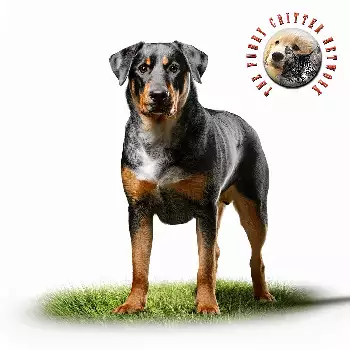
The first impression of a Berger de Beauce is size combined with substance. This is a large, powerful dog that carries real physical weight and presence without appearing coarse or heavy - the musculature is visible and the build is clearly athletic, but the proportions remain balanced and the overall silhouette reads as a working dog rather than a guarding breed. Males stand between 25.5 and 27.5 inches at the withers and can weigh upward of 100 pounds in good working condition; females are somewhat smaller but share the same general impression of capable solidity.

The head is proportionate to the body, long and flat on top, with a muzzle that equals the skull in length. The stop is slight. The expression is attentive and confident, reflecting the breed's characteristic self-assurance. The eyes are dark brown, horizontal, and slightly oval - not round, not prominent, but direct and steady in their gaze. The ears are set high; traditionally they were cropped in France, but ear cropping is now illegal in much of Europe and increasingly restricted elsewhere, and natural drop ears of medium size have become the norm in most countries. Natural ears should hang flat and close to the head.

The neck is muscular and well-proportioned, flowing smoothly into well-laid shoulders and a level, strong back. The chest is broad and deep, reaching to the level of the elbows, which contributes to both the impressive front profile and the elevated bloat risk that comes with a deep-chested large breed. The loin is short and the croup is only slightly sloped. The tail hangs in a natural J-curve at rest and should not be carried above the level of the back.

The legs are straight and strongly boned, with well-developed muscle throughout. One of the most distinctive and immediately identifying features of the Berger de Beauce is the presence of double dewclaws on each rear leg. These are not vestigial remnants; they are a breed requirement and their absence is a disqualifying fault under all major standards. The feet are compact and round, with hard, dark pads and black nails.

The coat is short, dense, and coarse on the outer layer with a soft, dense undercoat that provides insulation and weather resistance. The coat lies flat against the body throughout; there is no feathering, no fringing, and no excess length anywhere. It is a working coat that requires minimal maintenance and provides all-weather functionality. Two color patterns are standard: black and tan (the classic bas rouge coloration where tan markings appear on the muzzle, above the eyes, on the chest, on the lower legs, and under the tail) and harlequin, a striking three-color pattern combining black, gray, and tan. Solid black, brown, and gray are not acceptable under the standard.

The breed's double dewclaws on the rear legs deserve specific mention because they are one of the most immediately distinctive and unexpected physical features for people encountering the breed for the first time. These are not accidental anatomical remnants but a required breed characteristic - their absence is a disqualifying fault under both FCI and AKC standards. Functionally, there is debate about whether they provide traction on soft ground or serve another purpose; what is not debatable is that they define the breed's silhouette and have been present in the Beauceron since before formal breed documentation began.

In motion, the Berger de Beauce covers ground efficiently and freely, with good reach in front and strong drive from the rear. The gait should be fluid and tireless-looking, not labored or choppy. A dog that moves with ease and ground-covering efficiency is demonstrating the working soundness that the breed was developed to possess. Show dogs are evaluated in motion as much as standing, because the standard is ultimately a description of a functional working animal.

Affectionate With Family
The Berger de Beauce bonds intensely with its household and is genuinely devoted to the people it considers its own, though that devotion expresses itself through attentive loyalty rather than constant physical affection.
Good With Young Children
With proper socialization and supervision, the Beauceron can be an excellent family dog with children, though its size and herding instincts make early training and child education about appropriate interaction important.
Good With Other Dogs
Generally manageable with other dogs in a well-socialized household, though the assertive, confident nature of this breed means that social dynamics with dominant dogs of either sex need to be managed thoughtfully.
Shedding Level
The dense double coat sheds moderately year-round and more heavily during seasonal coat changes - regular brushing substantially reduces what ends up on floors and furniture.
Coat Grooming Frequency
Weekly brushing keeps the short, dense coat in good condition with minimal time investment - the Beauceron is refreshingly low-maintenance in the grooming department for a working breed of its size.
Drooling Level
Not a heavy drooler under normal conditions, though like most large dogs the Beauceron may drool somewhat when anticipating food or after vigorous exercise - nothing that will define your housekeeping.
Coat Type
A practical, weather-resistant double coat that requires minimal care - a short, coarse outer layer over a soft dense undercoat, designed for all-weather field work rather than decorative appeal.
Openness To Strangers
Reserved and watchful with strangers by default - this is a breed that was developed in part as a guardian, and that protective wariness of unfamiliar people is built into the character.
Playfulness Level
Athletic and genuinely playful with its family, the Beauceron enjoys active engagement and games that challenge both body and mind - a dog that brings real enthusiasm to the activities it has decided are worth its time.
Watchdog/Protective Nature
A natural guardian that combines physical capability with attentive awareness - the Berger de Beauce was developed as both herder and protector, and those protective instincts are strong and reliable in the breed.
Adaptability Level
Adaptable when its exercise and mental stimulation needs are consistently met; this is not a breed that adjusts happily to a sedentary lifestyle regardless of living space, but a well-exercised Beauceron can live in varied settings.
Trainability Level
Highly capable and motivated to work with a handler who projects appropriate confidence and consistency - this intelligent breed reads its owner carefully and will work around perceived weaknesses in leadership.

Berger de Beauce History & Development

The Berger de Beauce's history begins in the agricultural heartland of north-central France, where the open plains of the Beauce and Brie regions demanded dogs capable of managing large flocks across wide, relatively flat terrain. Unlike the mountain herding breeds of France that needed to handle precipitous alpine conditions, the Beauce dog needed endurance, speed, and sufficient assertiveness to control large numbers of sheep and cattle across the grain plains. The breed that emerged from this environment was larger and more powerful than the Brie herding type, with greater guarding instinct to go with its herding ability.

The earliest formal differentiation between French herding breeds occurred at a public event in Paris in 1863, where dogs that closely resembled the modern Beauceron appeared in the company of the Briard type. French cynologists began working to classify and standardize the native French shepherd types in the 1880s and 1890s, and the name Berger de Beauce was applied specifically to the short-coated, larger type from the Beauce plain. The Club des Amis du Beauceron was formally established in 1922, giving the breed an organized advocacy and standards body.

The breed's relationship with French military and police institutions runs deep. During the First and Second World Wars, Beaucerons served extensively as messenger dogs, search and rescue dogs, mine detectors, and sentry dogs. Their combination of physical capability, intelligence, and trainability made them valued working assets in conditions that eliminated less robust breeds. The military and police use of the breed continued after the wars and remains part of the breed's identity today - the French Gendarmerie Nationale and military units have historically maintained working Beauceron programs.

The breed arrived in North America primarily through enthusiasts who encountered it in Europe and recognized its qualities as both a working and companion dog. Numbers remained very small through the 1980s and 1990s. The AKC Miscellaneous Class admission came before full recognition was granted in 2007, and the breed has grown in American ownership since then, though it remains relatively uncommon compared to other herding breeds of comparable quality.

The name Berger de Beauce remains the formal name in French-speaking contexts, in FCI documentation, and in the original breed club correspondence. Understanding it as the full, formal French designation for what English speakers call the Beauceron situates the breed accurately within French cynological tradition.

The working relationship between the Berger de Beauce and French military organizations during both World Wars is one of the most documented chapters in the breed's history. These dogs served as messengers under fire, carried medical supplies between field positions, helped detect mines, and performed search functions that saved lives on both sides of the conflict period. The demands placed on them during those years, and the breed's consistent performance, cemented its reputation for courage and physical capability. French police and military units continued working with the breed after the wars, and active working programs with the Gendarmerie Nationale represent a living continuation of that tradition.

For English-speaking owners, the name Berger de Beauce appears primarily in historical references, FCI documentation, and correspondence with French breeders. The AKC name Beauceron is the practical search term for registry information, health records, and the American breed club.

Berger de Beauce Temperament & Personality

The Berger de Beauce is a serious dog, and that quality comes through immediately on meeting one. This is not a dog that bounces and seeks attention from every person it meets. It is watchful, self-contained, and evaluates situations with the steady attention of an animal bred to make decisions about what belongs in its territory and what does not. The seriousness is not coldness - this breed is capable of genuine warmth and playfulness with its family - but it is always present, giving the dog an air of quiet competence that owners consistently find impressive.

The intelligence in this breed is real and consequential. The Beauceron reads its owner carefully and calibrates its behavior based on what it observes. An inconsistent, uncertain, or permissive handler gets a dog that essentially manages the relationship on its own terms, which with a large, assertive herding breed can become problematic. A handler who projects calm, consistent authority and follows through reliably gets a highly cooperative partner that applies its considerable intelligence to working with rather than around its person. The difference between these two outcomes is almost entirely in the owner's approach.

With its own family, the Berger de Beauce is loyal and affectionate in the ways working dogs tend to express those qualities - through close attention, physical proximity, and reliable presence rather than constant seeking of pets and approval. It tends to attach most strongly to one or two people in the household while remaining appropriately friendly with the rest. The protective instinct toward family members is genuine and can become overprotective if not shaped through early socialization.

Children in the household are generally treated as part of the family unit to be protected and included, but the breed's size and its herding instincts create situations that need management. Young children who run and squeal trigger herding behaviors in some individuals. Teaching both the dog and the children appropriate interaction from early on is the practical solution, and the investment pays off in a family dog that is both loyal and reliable.

The drive level in this breed is substantial, and an underexercised, understimulated Beauceron channels that drive into behaviors the owner will find undesirable. This is not a dog that settles quietly into a sedentary lifestyle. It needs daily physical exercise, mental engagement, and purpose. When those needs are met, the dog is calm, settled, and genuinely pleasant to live with. When they are not, the restlessness and behavioral issues that result are predictable and entirely the owner's responsibility to prevent.

The Beauceron is not a dog that forgets what it has learned, for better or worse. A dog that has developed pushy or controlling behaviors because its household failed to establish clear expectations will hold onto those behaviors tenaciously. This is one of the reasons that early training from puppyhood matters so much - not because the breed is difficult, but because the intelligence and memory that make it excellent to train also mean that poorly managed early patterns persist. Getting the foundation right from the beginning is far easier than correcting problems that have been allowed to become habits.

For the owner who invests appropriately in training, socialization, and exercise, the Berger de Beauce is a deeply rewarding companion - loyal, capable, impressive, and genuinely pleasant to live with.

Berger de Beauce Family Life & Living Requirements

The Berger de Beauce needs space and activity that matches its working heritage. A home with a securely fenced yard where the dog can move freely and burn energy is significantly better than apartment living with only leash walks for exercise. This does not mean the breed cannot live in a city - owners who commit to providing sufficient exercise and mental engagement can manage a Beauceron in urban settings - but the commitment required is genuine and daily, not something to be managed sporadically.

This is unambiguously not a beginner dog. The combination of size, drive, intelligence, and assertiveness means that first-time dog owners or owners with permissive household dynamics are likely to find themselves out-managed by the breed. Previous experience with large, driven working breeds, or a strong commitment to professional training guidance from the start, makes the difference between a rewarding experience and a challenging one. The breed consistently rewards experienced handlers and consistently challenges inexperienced ones.

The protective instinct is strong and needs to be shaped rather than simply suppressed or indulged. A Berger de Beauce that has been broadly socialized from puppyhood - exposed to many different people, environments, sounds, and situations during the critical developmental period - grows into an adult that can distinguish between genuine threats and normal social situations. A dog that is sheltered from the world during those early months grows into an adult that finds too many things threatening, which creates management problems as the dog gets larger and more confident.

With other pets, the Beauceron is generally manageable when raised alongside them and properly introduced. The herding instinct can express itself around smaller animals, and same-sex dog dynamics with other assertive breeds are worth monitoring. Food protection and resource guarding tendencies should be addressed in training from an early age. The overall picture is of a breed that can coexist harmoniously in a multi-pet household when the owner understands the behavioral tendencies and manages them proactively.

Housing requirements reflect the dog's size and energy level. A home with outdoor access and a securely fenced yard is strongly preferred over apartment living. This is a breed that benefits from being able to move freely in a safe outdoor space, and the fence needs to be solid - an athletic, large herding breed is capable of clearing barriers that would stop many other dogs. The minimum fence height recommendation for this breed is six feet.

The commitment to this dog must be long-term and daily. A Berger de Beauce that does not receive consistent exercise, training, and engagement becomes progressively harder to manage as its confidence and capability mature. The owners who struggle with this breed are almost uniformly those who underestimated what daily commitment to a high-drive working dog looks like in practice.

Berger de Beauce Training & Exercise Needs

The exercise requirement for this breed is not optional and cannot be satisfied by a leisurely daily walk. The Berger de Beauce is a dog built for sustained physical work, and it needs daily vigorous exercise to maintain the mental balance that makes it pleasant to live with. Long runs, extended fetch sessions, swimming, hiking, and dog sports that involve both physical and mental engagement are the kinds of activity this breed is built for. An hour or more of genuine exercise daily is the baseline, not the ceiling.

Training should begin early and continue consistently throughout the dog's life. The Beauceron's intelligence means it learns quickly - both what you want and what you do not want - and early training establishes patterns that persist. Basic obedience is not the end goal but the foundation on which more complex work gets built. This breed excels in protection sports, herding, tracking, agility, rally, and competitive obedience - activities that engage both the athletic and intellectual capabilities that make the breed exceptional.

The handler's approach matters enormously with this breed. Positive reinforcement works well and is the appropriate foundation for training, but it must be combined with clear expectations and consistent follow-through. A Berger de Beauce that learns it can ignore certain requests will extend that negotiation to other situations. The goal is not dominance-based pressure but calm, consistent clarity about expectations. The dog that knows exactly what is expected of it and that those expectations are consistently enforced is a settled, cooperative dog.

Socialization is as important as formal training and should be treated with equal seriousness. Puppy classes that expose the dog to many different people, dogs, and environments in positive contexts lay the foundation for an adult that can move through the world without excessive reactivity. The natural wariness of this breed can become genuine anxiety or aggression if early socialization is neglected - two outcomes that are much harder to address after the fact than to prevent through consistent early exposure.

Mental stimulation through puzzle toys, scent work, or learning new skills should supplement physical exercise rather than replace it. Both forms of engagement are necessary, and owners who provide only one or the other tend to find the dog managing its own stimulation in ways that are destructive or difficult to live with. Obedience foundations like solid heel, recall, sit, down, and stay should be reliable before the dog reaches adult size and strength - these are much easier to establish in a puppy than to retrofit in a large, self-assured adult.

Berger de Beauce Health Concerns

The Berger de Beauce is a reasonably healthy large breed with a lifespan of 10 to 12 years. The primary health concerns documented for this breed reflect both its size and its specific genetic predispositions, and responsible breeders test for the most significant ones before producing litters.

The overall picture for Berger de Beauce health is manageable for buyers who work with health-testing breeders and who are prepared to monitor their dog's cardiac health through the breed-specific screening protocol. The cardiac requirement is the element that most distinguishes this breed's health management from other herding dogs, and it is worth taking seriously.

Common Health Issues

  • Hip Dysplasia: Affects approximately 14 percent of the breed - An inherited developmental condition of the hip joint that causes progressive arthritis and lameness; OFA or PennHIP evaluation of both parents is required for CHIC certification.
  • Dilated Cardiomyopathy - DCM, : The distinctive cardiac concern in the Beauceron, involving enlargement of the heart muscle and reduced pumping capacity; can be asymptomatic until advanced, making echocardiogram screening by a board-certified cardiologist the required detection method.
  • Gastric Dilatation-Volvulus - GDV, : The deep-chested conformation of this breed significantly elevates GDV risk; a life-threatening emergency requiring immediate veterinary intervention when the stomach fills with gas and twists.
  • Progressive Retinal Atrophy - PRA, : A degenerative retinal disease causing progressive vision loss; annual ACVO ophthalmologist eye examination is required for CHIC certification.
  • Elbow Dysplasia: A developmental joint condition of the elbow causing front leg lameness - Documented in the breed and recommended for OFA evaluation in breeding stock.
  • Hypothyroidism - Lymphocytic Thyroiditis, : An autoimmune-driven thyroid condition that is documented as a genetic disease in this breed; testing is recommended for breeding dogs though not currently required for CHIC.

Preventive Care & Health Monitoring

  • OFA Hip Evaluation or PennHIP: Required for CHIC certification - Both parents should have current evaluations before any litter is produced.
  • Cardiac Echocardiogram by Board-Certified Cardiologist: Required for CHIC certification - Standard auscultation by a general practitioner is not sufficient for the level of screening this breed needs given documented DCM risk.
  • ACVO Eye Exam: Annual examination by a board-certified veterinary ophthalmologist - Required for CHIC certification.
  • OFA Elbow Evaluation: Recommended for breeding stock - Not required for CHIC but documented in the breed.
  • Von Willebrand's Disease DNA Test: Recommended by the American Beauceron Club for breeding animals. - Von Willebrand's Disease DNA Test: Recommended by the American Beauceron Club for breeding animals.
  • GDV Risk Management: Feed smaller meals twice daily rather than one large meal - Restrict vigorous exercise for at least one hour after eating; know the warning signs and treat as an emergency if they appear.

Berger de Beauce Grooming & Maintenance

The Berger de Beauce's short, dense double coat is one of the more practical coats in the large working breed world. A thorough brushing once a week with a slicker brush or stiff bristle brush removes loose hair and keeps the coat lying flat and clean. During seasonal shedding periods in spring and fall, more frequent brushing - several times a week - manages the heavier coat release and keeps the hair manageable. Bathing is needed only occasionally; this is not a coat that traps odor or requires regular washing to stay fresh-smelling under normal conditions.

The rear double dewclaws require particular attention that owners of other breeds may not be accustomed to. Because double dewclaws on the rear legs have less contact with the ground than regular toenails, they do not wear down naturally and can curl and grow into the skin if neglected. Regular trimming every two to three weeks prevents this. All nails should be checked at the same time, with the double dewclaws treated as a priority.

Ear care follows the same routine as any drop-eared breed: weekly inspection for moisture, debris, or the early signs of infection, and gentle cleaning with a veterinarian-recommended cleaner when needed. The ear canal of a dog with naturally hanging ears gets less air circulation than in prick-eared breeds, which creates conditions where moisture can accumulate. Staying ahead of this through regular inspection prevents the chronic low-grade infections that can develop in neglected ears.

Dental hygiene and regular nail care round out the maintenance routine. Teeth benefit from brushing several times a week to reduce tartar accumulation and maintain gum health. Overall, the grooming time commitment for this breed is modest given its size - an owner willing to spend 30 to 45 minutes per week on maintenance will keep a Berger de Beauce looking and feeling its best.

Periodic coat inspection after time outdoors in fields or brush is worthwhile; the short, tight coat is less likely to collect debris than long-coated breeds but ticks can be harder to spot on a dark-coated dog. Running hands through the coat during grooming sessions makes routine tick and skin check part of a single efficient process.