Australian Silky Terrier

Silky Terrier

Quick Facts

🐕 Breed Group
Toy Group
📏 Size Category
Small
📏 Height
Males: 9-10 inches, Females: 9 inches
⚖️ Weight
Males: 8-10 pounds, Females: 8-10 pounds
⏱️ Life Expectancy
13-15 years
🧣 Coat Type
Long, fine, silky - single coat
🎨 Coat Colors
Blue and tan
😀 Temperament
Alert, spirited, independent, loyal
🏃 Exercise Needs
Moderate - at least 30-45 minutes daily
🎓 Training Difficulty
Moderate - smart but terrier-independent
👶 Good with Children
Best with older children
🐾 Good with Other Pets
Caution with small animals - prey drive

Other Names & Breed Recognition

Australian Silky Terrier is the name by which this breed is known outside the United States, and for most of the world it is the primary designation. Australians use it as a matter of national identity - the breed was developed in Australia, and the name acknowledges that origin clearly. When you are in the United Kingdom, Ireland, Australia, or most of continental Europe, the dog Americans call the Silky Terrier is the Australian Silky Terrier. The two names refer to the same breed entirely, and knowing this saves a great deal of confusion when reading international breed literature or searching for breed clubs abroad.

The American Kennel Club recognized the breed in 1959 and placed it in the Toy Group under the name Silky Terrier. That shortened name became the standard in the United States, though the full name Australian Silky Terrier was used in American breed circles for years before the AKC name became firmly established. In Australia, the ANKC registers the breed as the Australian Silky Terrier. The FCI, which governs breed standards internationally, classifies the Australian Silky Terrier in Group 3, Section 4 - Toy Terriers.

The name distinction is worth understanding because it also carries a small but meaningful message about how the breed should be understood. The inclusion of the word Australian connects the Silky to its geographic and developmental origin - a breed that came from a specific place, shaped by the terrier work done there, and distinct from the toy breeds developed in European palaces and drawing rooms. The word Terrier in the name tells you the other half of the story: this is not a decorative breed. It is a working terrier that happens to be small and gorgeous.

Other names you might encounter include the Sydney Silky, which was an early informal designation used before the breed standardized and gained official recognition. That name reflected the concentration of early breeding activity around the Sydney area in New South Wales, where much of the breed's development took place. The Sydney Silky designation fell out of use as the breed gained broader recognition across Australia and internationally, but it shows up occasionally in older breed histories.

The breed should not be confused with the Yorkshire Terrier, which it superficially resembles, or with the Australian Terrier, which shares some ancestry. Both of those are distinct breeds. The Australian Silky Terrier sits between them in some ways - larger than the Yorkshire Terrier, smaller than the Australian Terrier, with a unique coat texture and characteristic color that distinguishes it from both.

Australian Silky Terrier Organizations & Standards

The Silky Terrier Club of America is the AKC parent club for the breed in the United States and the principal source of breed standard information, breeder referrals, and health resources for Americans interested in the breed. Under the name used in the US, the STCA promotes responsible breeding and participates in the AKC's Canine Health Information Center program. Their health testing protocols are documented and available to prospective buyers who want to verify that their puppy's parents have been evaluated.

The CHIC program for the Australian Silky Terrier requires two evaluations for a dog to earn a CHIC number. The first is an ACVO eye examination conducted by a board-certified veterinary ophthalmologist. Eye exams evaluate for heritable conditions including cataracts and progressive retinal atrophy, both of which are documented in the breed. The second required evaluation is an OFA patellar luxation assessment, which evaluates the kneecap's placement and stability. Breeders who complete both tests and make results publicly available through the OFA database are applying a baseline of due diligence that prospective buyers should confirm before purchasing a puppy.

The AKC breed standard describes the Australian Silky Terrier as a dog of moderate length in body, with a fine bone structure that is nonetheless more substantial than a true toy breed. The ideal height is approximately nine inches at the shoulder for both males and females, though the standard allows for slight variation. The signature coat falls flat from a part running from the base of the skull to the tail, and should be glossy and fine-textured - the standard explicitly calls for a silky rather than woolly or cottony texture, which is the distinguishing quality from which the breed takes its name.

In Australia, the breed is governed by the state and national kennel councils under the umbrella of the Australian National Kennel Council. The ANKC standard and the AKC standard are closely aligned, reflecting the common origin of both. The Kennel Club in the United Kingdom maintains its own standard for the breed and classifies it in the Toy Group, consistent with other major registries outside the FCI.

The FCI classification in Group 3, Section 4 reflects the breed's dual identity - it is terrier by heritage and instinct, toy by size. That tension is part of what makes the Australian Silky Terrier interesting and occasionally challenging for new owners who assume the Toy Group designation means a docile, low-energy companion.

Kennel Club Recognition

  • American Kennel Club (AKC): Recognized in 1959, Toy Group
  • United Kennel Club (UKC): Recognized, Companion Breeds
  • Canadian Kennel Club (CKC): Recognized, Toy Group
  • FCI: Recognized, Group 3 - Terriers
  • The Kennel Club (UK): Recognized, Toy

Australian Silky Terrier Physical Description

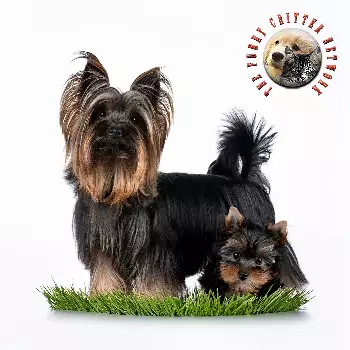
The Australian Silky Terrier's most immediate visual impression is that coat - long, fine, and genuinely silky in texture, parting cleanly from the skull to the tail and falling to near floor length in adults. It frames the dog in a flowing curtain of blue and tan that makes the breed immediately recognizable. But underneath that show-stopping coat is a compact, athletic little dog built for genuine work, and understanding the structure beneath the coat is just as important as appreciating the coat itself.

Height is approximately nine to ten inches at the shoulder for both sexes. Weight sits around eight to ten pounds, making this breed slightly heavier and more substantial than it looks when the coat is in full length. The body is moderately long relative to height - longer than it is tall, in the manner of terriers developed for ground work. The bone is fine but not fragile. The musculature is real, with quarters strong enough to power a dog that historically chased rats and other vermin through the scrub.

The head is wedge-shaped, slightly longer than it is wide, with a flat skull that tapers moderately toward the muzzle. The stop is shallow. The muzzle is strong and medium in length, carrying a scissors bite. The nose is black, and the eyes are small, almond-shaped, and dark - they give the dog an alert, keen expression that suggests something is always being assessed. The ears are small, V-shaped, and carried erect, set high on the skull and always pricked. Soft or tipped ears indicate a structural issue and are a fault under the breed standard.

The neck is moderately long and well-muscled, flowing into a level topline. The chest is moderately deep, reaching to the elbow. The ribs are well-sprung without being rounded. The hindquarters carry good angulation and enough muscle to support the breed's characteristic quick, light movement. The feet are small and compact, with well-arched toes and black nails.

Color is blue and tan exclusively. The blue appears on the body, tail, and the top of the head from the base of the ears to the base of the skull - this area is called the topknot and carries a tan or silver-fawn color distinct from the body blue. The tan appears on the muzzle, the lower legs, and markings on the face and beneath the tail. The blue can range from a deep steel blue to a silvery blue. Puppies are born black and tan and develop their adult coloring gradually over approximately 18 months.

The tail was traditionally docked and carried upright. In countries where docking is prohibited or restricted, the natural tail is set high and carried in an upright position consistent with the breed's confident, alert posture. Movement is free and light-footed, with the coat flowing as the dog moves in a way that makes the gait look effortless. A dog moving well in full coat is a genuinely striking sight.

The coat itself deserves a closer description beyond texture. Blue and tan is the only acceptable color in the breed standard, but the range of expression within that description is wider than it sounds. The blue component can range from a pale silver-blue to a deeper steel blue depending on age and genetics. The tan markings on the face, lower legs, and beneath the tail tend to be rich and warm in contrast to the cool tones of the blue. Puppies are born black and tan - the adult blue develops gradually as the dark black pigment opens to reveal the blue underneath, a process that takes roughly 18 months to complete. Owners of young puppies are often surprised by how dramatically the coat changes in the first year and a half of the dog's life.

Affectionate With Family
The Australian Silky Terrier bonds deeply with its household and craves daily closeness. It is thoroughly devoted to the people it knows, forming attachments that shape the entire texture of its daily life.
Good With Young Children
They do reasonably well with children who understand how to handle a small dog with respect. Very young children who grab or chase can provoke nipping - supervision is always the right call.
Good With Other Dogs
Socialized Australian Silky Terriers generally coexist with other dogs, though they carry a typical terrier confidence that means they will not back down from a challenge regardless of the size difference.
Shedding Level
The single, silky coat sheds minimally - one of the reasons this breed appeals to people who want a dog in their living space without constant hair management. Regular brushing moves shed hair to the brush rather than the furniture.
Coat Grooming Frequency
That beautiful coat comes with a commitment: daily or near-daily brushing keeps it tangle-free, and professional grooming appointments every six to eight weeks maintain the length and condition properly.
Drooling Level
Essentially zero. The Australian Silky Terrier is a dry-mouthed breed with no tendency toward drooling.
Coat Type
The coat is fine, straight, and silky - with a texture compared to human hair rather than typical dog fur. It parts naturally from the back of the skull to the base of the tail and falls to approximately floor length in properly groomed adults.
Openness To Strangers
Alert with unfamiliar people but not aggressive toward them. Most Australian Silky Terriers warm up after an initial period of assessment - they are cautious rather than fearful.
Playfulness Level
Highly playful and game for activity well into adult life. This breed enjoys games, interactive toys, and any activity that lets it engage its alert, curious mind.
Watchdog/Protective Nature
A reliable and vocal watchdog that takes note of anything unusual and is not shy about announcing it. Their hearing is keen and their assessment of the environment is near-constant.
Adaptability Level
Adapts well to apartment and urban living as long as daily exercise and social interaction needs are consistently met. Small size makes them physically suitable for smaller spaces; their energy level demands the routine be upheld.
Trainability Level
Intelligent dogs that learn quickly when properly motivated, but they carry classic terrier independence. Reward-based training with high-value treats outperforms any approach that relies on correction or repetition without payoff.

Australian Silky Terrier History & Development

The name Australian Silky Terrier traces the breed's story directly: developed in Australia, built on terrier stock, identified by a coat that defines the breed. The development of the breed happened primarily in the late 19th and early 20th centuries in New South Wales and Victoria, where breeders working with the already-established Australian Terrier introduced Yorkshire Terrier blood to create a distinctly different strain with a refined coat and slightly reduced working edge while retaining the core terrier character.

The Yorkshire Terrier connection is visible in the coat: the Silky's texture is finer and more Yorkshire-like than the rough outercoat of the Australian Terrier. But breeders were not trying to produce a Yorkshire Terrier variant. They were refining a distinctly Australian product - a small terrier suited to the specific environment and needs of Australian households, with enough working instinct to remain useful and enough elegance to appeal as a companion.

Early breed development was not always unified. Sydney breeders and Melbourne breeders occasionally produced dogs to slightly different standards, which led to some controversy about what the breed should look like. The name Sydney Silky reflected the Sydney school's influence during this period. Breed club formation and the establishment of a consistent standard gradually resolved these differences, and the name Australian Silky Terrier became the accepted designation by the time the breed gained formal recognition from Australian kennel councils.

The breed arrived in the United States in the period following World War II, brought home by American servicemen who had spent time in Australia and encountered the dogs there. American breed interest grew, and the AKC recognized the breed in 1959 under the simplified name Silky Terrier. The shorter American name stuck domestically, which is why the full name Australian Silky Terrier sometimes surprises Americans who encounter it in international breed contexts.

Outside the US, the full name has always been the standard. In Australia today, the Australian Silky Terrier is recognized as a national breed - one of the handful of breeds developed on the continent and carried to international recognition. The breed's numbers are modest globally; it has never become a high-volume popular breed, which has actually served to maintain consistent quality in breeding programs focused on the dogs rather than market demand. The working character - the hunting drive, the alertness, the independence - remains largely intact, which is a credit to breeders who maintained those traits despite the shift to companion-dog status.

The breed community outside Australia has grown slowly but with genuine dedication. American breed enthusiasts who came to the Australian Silky Terrier through contact with Australian dogs tend to be among its most committed advocates, appreciating precisely the qualities that make the breed more demanding than a typical toy companion. The Silky Terrier Club of America has maintained breed integrity through educational programs and health testing advocacy since the AKC recognition era, ensuring that the breed arriving in American homes has not drifted too far from the dogs that gave it its name.

Australian Silky Terrier Temperament & Personality

The Australian Silky Terrier is the kind of dog that people who love terriers immediately recognize and people expecting a typical toy breed often find surprising. It is classified in the Toy Group by size, but the mind, the drive, and the behavioral tendencies are solidly terrier. There is no such thing as a passive Australian Silky Terrier. They are alert, opinionated, curious about everything in their territory, and fully prepared to express displeasure if their needs are being ignored.

The breed's original working purpose - hunting rats and other vermin in Australian homesteads - left a genuine behavioral legacy. Prey drive is real in this breed and should be taken seriously by owners who share their space with small pets. Cats may coexist with a well-socialized Australian Silky Terrier, particularly if the cat was present before the dog arrived and is capable of establishing its own authority. Guinea pigs, rabbits, hamsters, and birds are a different calculation, and should not be left unsupervised with any dog that carries this level of hunting instinct.

Barking is a characteristic behavior pattern in the Australian Silky Terrier that prospective owners need to factor into their decision. This breed vocalizes readily - announcing visitors, responding to sounds outside, expressing boredom, and occasionally communicating preferences about the household schedule. Bark training from puppyhood can manage the behavior to acceptable levels, but cannot eliminate it. Owners in close-quarters living situations like apartments or condos should plan to invest real effort in this area.

Separation anxiety is documented in the breed. Australian Silky Terriers form close bonds with their people and do not adapt well to being left alone for long stretches. A dog that is isolated regularly tends to develop problem behaviors - excessive barking, destructive activity, and general restlessness - that are symptoms of the underlying anxiety rather than character defects. This is a breed that does best in a home where it has genuine daily company.

With family, the Australian Silky Terrier is thoroughly devoted and affectionate. It tends to be close-following, wanting to be in the same room as its people and involved in whatever is happening. The combination of affection and independence is a distinctly terrier quality: deeply attached, but on its own terms. These dogs will choose engagement over passive sitting, and activity over stillness. Living with one means accepting that premise.

Potential owners who research the breed honestly report that it is not suited to households looking for a low-maintenance companion that requires little training or management. It is, however, exceptionally well-suited to people who want a real relationship with an intelligent, characterful dog. The Australian Silky Terrier rewards owners who engage with it, train it, exercise it properly, and take its terrier nature seriously. Those owners typically describe it as one of the most rewarding dogs they have ever lived with. The gap between what the breed is and what people assume it will be based on size and group classification is one of the most consistent themes in owner accounts.

Australian Silky Terrier Family Life & Living Requirements

The Australian Silky Terrier's physical size makes it genuinely suitable for smaller living spaces, including apartments and urban settings, as long as the exercise commitment is upheld. Thirty to forty-five minutes of daily activity is a reasonable baseline, split between structured walks and active play. A dog that has been properly exercised is a different animal to live with than one that has been sitting in an apartment all day - the well-exercised Australian Silky Terrier settles comfortably; the under-exercised one creates its own activity.

Fenced outdoor space is ideal for this breed but requires attention to security. The prey drive that sends this dog after anything that moves in the yard will also send it under a fence with a gap or over a barrier that does not reach high enough to obscure the view. Walk perimeters before allowing unsupervised outdoor time and address gaps before assuming they are fine. Off-leash exercise in unfenced areas is generally not recommended for terrier breeds with this level of chase instinct.

Families with children should consider the age and temperament of the children carefully. The Australian Silky Terrier does best with children who are old enough to handle a small dog with consideration. Roughhousing, chasing, and grabbing can provoke nipping from any small terrier, and this breed is no exception. Teaching children appropriate interaction from the beginning creates a much more positive relationship than correcting problems after they develop.

The grooming commitment is a real lifestyle factor for families considering this breed. That coat does not maintain itself. Daily brushing is necessary to prevent tangles and matting, and the sections behind the ears and under the legs are particular problem areas. Families who are not willing to commit to regular grooming sessions should either budget for professional grooming on a frequent schedule or consider a different breed entirely. A neglected coat becomes a matted, uncomfortable mess that is stressful for the dog and expensive to correct.

The breed's tendency toward barking is another factor worth discussing honestly before committing. In a detached house with tolerant neighbors, a dog that barks at the mail carrier is manageable. In a thin-walled apartment building, the same behavior can become a genuine problem. Bark training from puppyhood is the practical approach, and it does work, but it requires consistent follow-through rather than occasional correction. Starting early and staying consistent is the only reliable path.

Australian Silky Terrier Training & Exercise Needs

Training an Australian Silky Terrier is a rewarding process if approached correctly and a frustrating one if not. The intelligence is genuine - this is a quick-learning breed that picks up patterns and associations rapidly. The independence is equally genuine, and it produces a dog that will evaluate whether following a given command seems worthwhile at any particular moment. Those two qualities combined mean that training works best when it is engaging, rewarding, and varied enough to hold the dog's interest.

Positive reinforcement with high-value food rewards is the most effective approach. Short sessions of five to ten minutes, run frequently throughout the day, outperform long sessions that drag on past the point of the dog's interest. Ending each session while the dog is still engaged and on a successful repetition keeps it coming back willingly. The moment the dog starts offering off-task behaviors - sniffing the floor, looking away, doing something else - the session is over for that round.

Housetraining deserves specific attention because it can take longer with this breed than many owners expect. Consistency in the early months is essential: a tight schedule for outdoor trips, a crate for supervision when the dog cannot be watched, and zero tolerance for ambiguous situations all support the process. Inconsistent management extends the housetraining period significantly.

Exercise should include both physical and mental components. Walks provide physical outlet and exposure to the environment - the Australian Silky Terrier is a curious dog that benefits from environmental enrichment through new routes, new smells, and varied experiences. Interactive games at home - hide and seek with toys, short training sessions with tricks, puzzle feeders - address the mental needs that physical exercise alone does not satisfy. Dog sports including agility and earthdog trials tap directly into this breed's natural abilities and provide excellent whole-dog engagement that owners consistently find has a positive effect on behavior and overall contentment.

Socialization during the puppy period is foundational. An Australian Silky Terrier that meets a wide variety of people, dogs of different sizes, and different environments during the first four to sixteen weeks of socialization windows develops into a more confident, adaptable adult. Socialization is not the same as exposure - it means positive experiences that build good associations rather than overwhelming encounters that build anxiety. A well-socialized Australian Silky Terrier is a significantly more pleasant household companion than one that missed that window.

Australian Silky Terrier Health Concerns

The Australian Silky Terrier is a generally healthy breed with a lifespan of 13 to 15 years. Like all breeds, it has documented health tendencies that owners should understand going in.

Dental disease deserves specific mention because it is documented as one of the Australian Silky Terrier's most consistent health vulnerabilities. Research suggests that significant periodontal disease can reduce a small dog's lifespan by one to three years. Regular brushing, dental chews, and professional cleanings are not optional extras for this breed - they are meaningful health investments that directly affect longevity.

Common Health Issues

  • Patellar luxation - The kneecap shifts out of its groove in the femur, causing intermittent skipping gait or lameness. Severity ranges from mild grade 1 (occasional skip) to grade 4 (permanent displacement requiring surgery).
  • Legg-Calve-Perthes disease - Disrupted blood supply to the femoral head causes bone death and hip joint collapse in young dogs, typically presenting between five and nine months of age as progressive hind-leg lameness. Surgical removal of the damaged femoral head and neck has a good prognosis.
  • Portosystemic liver shunt - A hereditary vascular abnormality in which blood bypasses the liver, leading to toxin accumulation. Signs may include stunted growth, seizures, and behavioral changes. Medical management and surgery are treatment options depending on severity.
  • Progressive retinal atrophy - An inherited degenerative retinal condition causing progressive vision loss leading to blindness. No treatment is available, but affected dogs can adapt well using other senses.
  • Cataracts - Lens opacity causing reduced vision that may progress to blindness. Hereditary cataracts are documented in the breed. Surgical correction is available for qualifying cases.
  • Malassezia dermatitis - A yeast overgrowth causing itching, greasiness, odor, and thickened skin, typically affecting the ears, skin folds, and feet. Topical and oral antifungal treatment is effective.
  • Tracheal collapse - Weakening of the tracheal rings causing a honking cough and breathing difficulty. Use of a harness rather than a collar reduces pressure on the throat.

Preventive Care & Health Monitoring

  • ACVO ophthalmologist evaluation - Required CHIC test. Annual eye exams by a board-certified veterinary ophthalmologist evaluate for progressive retinal atrophy and cataracts.
  • OFA patellar luxation evaluation - Required CHIC test. Veterinary assessment of kneecap placement and stability. Breeding dogs should have OFA-documented normal patellar evaluations.
  • Use a harness for walks - Prevents pressure on the trachea, which reduces risk of tracheal collapse progression in a breed predisposed to this condition.
  • Regular dental care - Silky Terriers have a heightened tendency toward periodontal disease that can shorten lifespan by one to three years. Daily tooth brushing or consistent professional cleanings are worthwhile preventive investments.
  • Weight management - Maintaining a healthy, lean body weight reduces stress on the kneecaps and joints, decreases anesthetic risk, and supports overall longevity.

Australian Silky Terrier Grooming & Maintenance

That spectacular coat is the defining visual feature of the Australian Silky Terrier, and maintaining it is the central grooming commitment for this breed. The coat parts naturally from the back of the skull to the tail and falls to near-floor length in adults. It is single-coated - there is no dense undercoat - which means shedding is minimal but also means tangles and mats form more readily than they would in a double-coated breed. Daily brushing with a pin brush and a fine-toothed metal comb is the standard for a dog in full coat. The areas behind the ears, under the legs, and around the collar area are the first to mat and need particular attention.

Professional grooming every six to eight weeks is the realistic expectation for most pet owners. A good groomer will trim the coat to the owner's preferred length - many pet owners keep a shorter trim that reduces maintenance time while still honoring the breed's characteristic appearance. If showing, the full natural length is maintained to standard.

The topknot on the head is traditionally tied up to keep it clear of the eyes, either with a small bow or a clip. This is functional as well as traditional: coat falling over the eyes is uncomfortable for the dog and can cause chronic irritation. Ears should be checked weekly for wax buildup and debris. Nails grow quickly in this breed and should be trimmed every three to four weeks. Dental care is particularly important for the Australian Silky Terrier - small-breed dogs are prone to periodontal disease, and the Silky's documented tendency toward dental disease makes regular brushing or professional cleaning a genuine health priority rather than an optional extra. A clean mouth directly extends healthy lifespan.

Bathing frequency for the Australian Silky Terrier is typically every two to four weeks for a dog in full coat. More frequent bathing is fine with a gentle shampoo that preserves the coat's natural texture; less frequent bathing means more reliance on brushing to keep the coat clean. After bathing, the coat should be blown dry on a low setting to prevent mats from forming as it dries. Some owners use a light leave-in conditioner to make brushing easier, particularly in dry climates where static electricity is an issue.