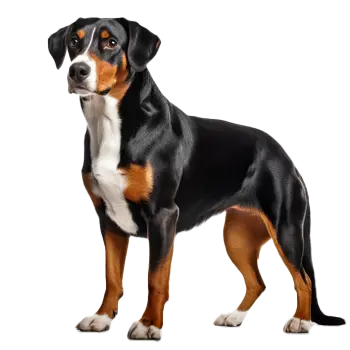
The Appenzeller Hirtenhund presents as a medium-sized, compactly built, muscular dog whose physical proportions communicate agility, power, and endurance suited to demanding work in steep mountain terrain. The body is slightly longer than tall in a ratio of approximately 10 to 9, giving the dog the length needed for efficient, ground-covering movement without sacrificing the compactness required for quick turns and sudden directional changes during cattle-driving work. The chest is broad and deep, reaching to the elbows, with well-sprung ribs that provide ample lung capacity for sustained exertion at altitude.
The head is wedge-shaped and proportionate to the body, with a flat skull, a moderate stop, and a muzzle that tapers slightly toward a black or brown nose depending on coat color. The eyes are small and almond-shaped, ranging from light to dark brown, and convey an alert, intelligent expression. The ears are set high, triangular with rounded tips, and hang flat against the cheeks when at rest, lifting slightly at the base when the dog is attentive. The jaw is strong with a scissors bite. The overall head structure reflects both the mastiff ancestry common to all Sennenhund breeds and the possible Spitz influence that gives the Appenzeller a more refined appearance than its larger cousins.
The coat is one of the breed's most distinctive features. The double coat consists of a thick, glossy, close-fitting topcoat over a dense undercoat. The topcoat lies flat and tight against the body, providing weather resistance without the bulk or length that would impede movement during active work. The coat should be straight with no curl or wave, though a very slight wave on the back and withers is tolerated. The tricolor pattern is essential to breed type: a base color of either black or havana brown, with symmetrical rust-brown markings above the eyes, on the cheeks, chest, and legs, and white markings including a blaze from the forehead to the muzzle, a white marking on the chin extending to the throat, a white cross on the chest, white feet, and a white tail tip.
The tail is perhaps the single most distinguishing physical feature separating the Appenzeller from the other three Sennenhund breeds. Set high and densely coated, the tail is carried in a tight curl over the back when the dog is alert or moving, reflecting the Spitz influence in the breed's heritage. This curled tail carriage gives the Appenzeller a distinctive silhouette that is immediately recognizable to those familiar with the Swiss mountain dog family. Movement is agile, balanced, and ground-covering, with good reach in front and strong drive from behind, demonstrating the breed's capacity for sustained physical work across varied terrain.
Affectionate With Family
★★★★☆
The Appenzeller Hirtenhund forms deep, devoted bonds with its family and demonstrates its affection through constant companionship and a desire to be involved in every household activity. This is not a breed that displays its love through quiet cuddling alone; it shows attachment through energetic engagement, physical proximity, and an attentive watchfulness over its people. The breed reserves its warmest behavior for the family unit and may take longer to extend the same warmth to newcomers.
Good With Young Children
★★★☆☆
The Appenzeller Hirtenhund generally enjoys the company of children and can be a lively, enthusiastic playmate for older kids who can match its energy. However, the breed's strong herding instincts may lead it to nip at children's heels during play, attempting to herd them as it would livestock. Young children are also at risk of being knocked over by this exuberant, medium-sized dog during excited greetings or play. Supervision and early training to redirect herding behavior are essential in homes with small children.
Good With Other Dogs
★★★☆☆
The Appenzeller Hirtenhund can coexist well with other dogs when properly socialized from puppyhood, though its confident, assertive nature means it may attempt to establish itself as the dominant animal in multi-dog households. The breed is not typically dog-aggressive but can be territorial and may challenge unfamiliar dogs that enter its perceived territory. Early and consistent socialization helps ensure that the breed's natural confidence translates into appropriate canine interactions rather than confrontational posturing.
Shedding Level
★★★☆☆
The Appenzeller Hirtenhund sheds moderately throughout the year with heavier seasonal shedding during the spring and autumn coat transitions. The short, dense double coat releases a steady volume of hair that regular brushing helps manage. During the seasonal coat blow, shedding intensifies considerably, and daily brushing becomes necessary to keep loose hair under control and prevent it from accumulating on furniture and clothing.
Coat Grooming Frequency
★★☆☆☆
The Appenzeller Hirtenhund's short, dense coat is relatively low-maintenance compared to longer-coated breeds. Weekly brushing with a firm bristle brush or rubber grooming mitt is sufficient during most of the year to remove loose hair, distribute natural oils, and keep the coat looking glossy and healthy. During the biannual coat blow, more frequent brushing with an undercoat rake helps manage the increased shedding volume efficiently.
Drooling Level
★☆☆☆☆
The Appenzeller Hirtenhund is a clean, dry-mouthed breed that produces virtually no excess drool. The tight lips and well-formed muzzle characteristic of the Spitz-influenced Sennenhund type ensure that owners will not encounter wet spots on furniture, clothing, or floors. Some minor drooling may occur around mealtimes or during intense exercise, but the breed is exceptionally tidy in this regard.
Coat Type
★★★☆☆
The double coat of the Appenzeller Hirtenhund consists of a thick, glossy, close-fitting topcoat over a dense undercoat that can be black, brown, or gray. The topcoat lies flat and tight against the body, providing weather resistance appropriate for the breed's Alpine working heritage without the bulk or length of the coats found on its larger Sennenhund relatives. The coat should be straight with no curl or wave, though a very slight wave on the back and withers is tolerated.
Openness To Strangers
★★☆☆☆
The Appenzeller Hirtenhund is naturally wary of strangers, a characteristic deeply rooted in its centuries-old role as a farm guardian and watchdog in the isolated Alpine valleys. The breed does not rush to greet unfamiliar people and may bark assertively to announce their presence. With proper socialization, the Appenzeller learns to accept invited visitors, but it retains a measured reserve that distinguishes it from breeds that welcome every newcomer indiscriminately.
Playfulness Level
★★★★★
The Appenzeller Hirtenhund is an exuberantly playful breed that retains its youthful energy and enthusiasm well into adulthood. This is a dog that approaches games, interactive play, and physical activity with evident joy and tireless enthusiasm. The breed particularly enjoys activities that engage both its body and mind, and it will invent its own games if formal entertainment is not provided. This high playfulness is delightful for active families but can become overwhelming for owners who prefer a calmer companion.
Watchdog/Protective Nature
★★★★★
The Appenzeller Hirtenhund is one of the most alert and vigilant watchdog breeds, with a deeply ingrained instinct to guard its home, property, and family. The breed's high-pitched, carrying bark served as an early warning system on isolated Swiss farms for centuries, and this vocal alertness carries over fully to the modern home. The Appenzeller takes its guardian role seriously and will not hesitate to sound the alarm at any unusual activity, making it an outstanding watchdog but a potentially challenging neighbor if barking is not managed through training.
Adaptability Level
★★☆☆☆
The Appenzeller Hirtenhund was developed for life on active Swiss mountain farms and does not adapt easily to confined living spaces or sedentary lifestyles. The breed needs substantial daily exercise, mental stimulation, and ideally a job to perform, whether that job involves herding, competitive dog sports, or structured training routines. Apartment living is poorly suited to this breed unless the owner commits to an intensive daily exercise program. The Appenzeller also tends to be vocal, which creates additional challenges in close-quarter living situations.
Trainability Level
★★★★☆
The Appenzeller Hirtenhund is highly intelligent and genuinely eager to learn, making it very trainable in the hands of an experienced owner who provides consistent, firm, and positive leadership. The breed responds best to reward-based training methods that engage its active mind and channel its considerable energy into productive behaviors. However, the Appenzeller's confidence and independent working heritage mean it can be assertive with owners who are inconsistent or overly permissive. This is not an ideal breed for first-time dog owners despite its intelligence.