American Gentleman

Boston Terrier

Quick Facts

🐕 Breed Group
Non-Sporting Group
📏 Size Category
Small
📏 Height
Males: 15-17 inches, Females: 15-17 inches
⚖️ Weight
Males: 12-25 pounds, Females: 12-25 pounds
⏱️ Life Expectancy
11-13 years
🧣 Coat Type
Short, smooth, fine
🎨 Coat Colors
Black, brindle, or seal with white markings
😀 Temperament
Friendly, bright, amusing
🏃 Exercise Needs
Moderate
🎓 Training Difficulty
Easy to Moderate
👶 Good with Children
Yes
🐾 Good with Other Pets
Generally Yes

Other Names & Breed Recognition

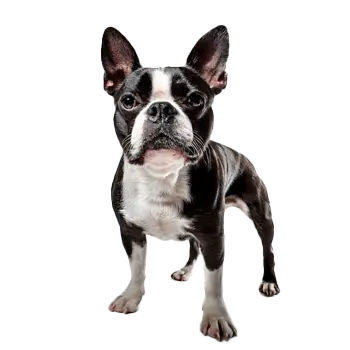
The American Gentleman is one of the most charming nicknames in all of dogdom, and it belongs exclusively to the Boston Terrier. The name did not emerge from a breed club or a formal designation - it grew organically out of the way the dog looks. Stand a Boston Terrier in good light and the reason becomes immediately obvious: the precisely placed white chest blaze, white muzzle band, and white collar against a dark coat of black, brindle, or seal reads exactly like a man dressed for a formal occasion. The dog wearing a tuxedo gave people something to say about it, and the American Gentleman stuck.

The Boston Terrier itself carries an impressive roster of alternate names and historical designations. Early specimens were sometimes called Roundheads, a reference to the breed's distinctively domed skull before the current name was standardized. The name Boston Bull appeared frequently in the breed's early decades and remains in occasional use today, particularly among older fanciers and in historical accounts. The Boston Terrier Club of America, founded in 1891, pushed for standardization around the current name, and the American Kennel Club recognized the breed in 1893, making it one of the earliest AKC-recognized American breeds and the very first bred specifically in the United States.

What separates the American Gentleman nickname from most alternate names is that it describes character as much as appearance. The breed has a reputation for being well-mannered and sociable that reinforces the formal-wear visual joke. You are not just looking at a dog that resembles a man in evening clothes - you are looking at a dog whose temperament frequently matches the composed, friendly bearing of someone who actually knows how to behave in company. The nickname earns its staying power because it works on two levels simultaneously.

Across registries, the Boston Terrier competes in the Non-Sporting Group with the AKC and the Canadian Kennel Club, and in the Utility Group with The Kennel Club in the United Kingdom. The FCI places the breed in Group 9, which covers companion and toy dogs. UKC classifies them in Companion Breeds. The breed is recognized worldwide, and the American Gentleman nickname travels with it into casual usage in many countries, though regional preferences for the formal name Boston Terrier remain strong everywhere outside the United States.

American Gentleman Organizations & Standards

The Boston Terrier Club of America (BTCA) serves as the AKC parent club for the breed and has been the primary steward of the Boston Terrier standard since its founding in 1891 - one of the oldest parent clubs in the country. The BTCA maintains the official breed standard, coordinates the national specialty show, administers the BTCA Health Certification Program, and provides educational resources for breeders and owners. For anyone researching the American Gentleman, the BTCA website is the most authoritative starting point for health, breeding, and standard information.

The AKC breed standard for the Boston Terrier is built around the breed's signature formal appearance. The standard calls for a square, well-balanced body with a short tail that may be either straight or screw-shaped. The skull is described as square, flat on top, and free from wrinkles, with a well-defined stop. The muzzle is short, square, and wide, proportionate to the skull without appearing extreme. Eyes are large, round, dark in color, and wide-set, positioned squarely in the skull with a soft, alert expression. Ears are small, carried erect, and positioned at the corners of the skull. The AKC standard specifies three weight classes: under 15 pounds, 15 to 20 pounds, and 20 to 25 pounds.

The white markings are specified precisely in the standard and are integral to the breed's identity. The standard calls for a white muzzle band, an even white blaze between the eyes, and a white forechest. White on the forelegs is desirable, and white on the hind legs below the hock is preferred. A symmetrical and well-balanced distribution of white is valued, but the standard notes that color and markings should not outweigh type, soundness, and temperament in evaluation.

The BTCA Health Certification Program requires three specific tests for participating dogs: a CAER eye examination from a board-certified veterinary ophthalmologist, OFA patellar luxation evaluation, and OFA BAER testing for congenital deafness. Dogs completing all three tests with results entered into the OFA database receive CHIC numbers. This program has been in place since 2002 and reflects the breed's known predispositions toward ocular conditions, kneecap issues, and hereditary deafness. Breeders who participate in the program demonstrate a commitment to producing structurally sound dogs and are the preferred source for anyone serious about the health of their American Gentleman. Dogs completing all three required tests and earning CHIC numbers can be searched in the OFA public database, giving prospective buyers a straightforward way to verify that breeding stock has been properly evaluated before a litter was produced.

Kennel Club Recognition

  • American Kennel Club (AKC): Recognized in 1893, Non-Sporting Group
  • United Kennel Club (UKC): Recognized, Companion Breeds
  • Canadian Kennel Club (CKC): Recognized, Non-Sporting Group
  • FCI: Recognized, Group 9 - Companion and Toy Dogs
  • The Kennel Club (UK): Recognized, Utility

American Gentleman Physical Description

The first thing most people notice about an American Gentleman is the coat pattern - that crisp, formal arrangement of white against a darker ground color that makes the dog look dressed for a black-tie event. The impression holds up under closer examination. This is a compact, square-bodied dog with clean lines and a balanced structure that communicates both substance and refinement without bulk. The body is not long and low like a Dachshund, nor tall and leggy like a terrier mix. Everything about the proportion reads as intentionally composed.

The head is the most distinctive feature of the breed. The skull is broad, square, and slightly domed, meeting the short, wide muzzle at a defined stop. The muzzle itself is flat across the top, square at the end, and short - this is a brachycephalic breed, meaning the face is compressed relative to other dogs, and that compression defines both the look and some of the health considerations owners need to understand. The jaw is broad with an even or slightly undershot bite. Wrinkles on the head should be minimal; the AKC standard specifically discourages excessive facial wrinkling.

The eyes are one of the breed's most expressive features. They are large, round, and dark brown, set wide and square in the skull. The expression they create is soft and alert simultaneously - this is a dog that looks like it is paying attention, which it usually is. The ears are small, thin, and naturally erect, set at the outer corners of the skull. Cropping was once practiced but is no longer permitted under the AKC standard or recommended by the parent club.

The neck is slightly arched and of good length, flowing into a level topline and a short, compact body. The chest is deep and broad, the back is short, and the rump curves slightly to the tail. The tail is a notable feature - it may be straight or in a screw shape (corkscrew), and is naturally short, carried low. The tail is never docked. The legs are straight, well-boned, and set squarely under the body. Overall movement is free and easy with a confident, lively stride that matches the breed's alert personality.

The coat is short, smooth, and fine-textured with a natural shine. The base colors are black, brindle, or seal - a color that appears black in most light but shows a reddish cast in direct sunlight. The white markings are specific: the muzzle band and blaze are required, the forechest blaze is standard, and white on the forelegs and below the hocks is preferred. The pattern creates a formal symmetry that has remained central to the breed's identity since its early development in Boston in the 1870s.

Weight is divided into three classes under the AKC standard: under 15 pounds, 15 to 20 pounds, and 20 to 25 pounds. Height is not specified by weight class in the standard, but the proportions should remain square and balanced regardless of size. A well-built American Gentleman gives the impression of a confident, compact dog that is neither coarse nor fine - exactly what the formal nickname suggests.

The screw tail - sometimes a tight corkscrew, sometimes simply a short straight stub - is a defining feature that distinguishes the Boston Terrier from other small breeds and is carried naturally without docking. Movement should be free and easy, with the front and rear legs working in a straight, coordinated manner that reflects a structurally sound build. Gait problems, including paddling or swinging of the front legs, suggest structural faults that conscientious breeders work to avoid. A dog in good physical condition carries itself with a lively, alert bearing that communicates the breed's characteristic engagement with its surroundings.

Affectionate With Family
The American Gentleman bonds deeply with his people and rarely wants to be more than a few feet from someone he loves. These dogs are genuine companions, not independent creatures content with distance.
Good With Young Children
Generally patient and playful with kids, though the breed's compact size means roughhousing needs supervision. Their gentle nature makes them well-suited to family life when children learn to respect their boundaries.
Good With Other Dogs
Boston Terriers typically do fine in a multi-dog home when properly introduced, though some individuals can be stubborn about sharing space or toys. Early socialization smooths most rough edges.
Shedding Level
The short, fine coat sheds lightly and consistently year-round rather than in dramatic seasonal blowouts. Regular wiping with a damp cloth or a quick pass with a rubber curry brush keeps loose hair under control.
Coat Grooming Frequency
Outside of keeping the facial skin folds clean and dry, the American Gentleman requires very little coat maintenance. An occasional bath and weekly wipe-down handles the bulk of grooming.
Drooling Level
Not a drooler by any meaningful measure. The brachycephalic face can contribute to some moisture around the mouth after drinking, but nothing approaching the slobber output of true drool-prone breeds.
Coat Type
A smooth, flat coat that lies close to the body with a fine texture and subtle sheen. The white markings and dark base color create the formal appearance that inspired the American Gentleman nickname.
Openness To Strangers
Most Boston Terriers greet new people with curiosity and warmth rather than suspicion. Their sociable character means they generally view strangers as potential friends rather than threats.
Playfulness Level
Playful and inventive well into middle age, the American Gentleman has a clownish side that surfaces regularly. They enjoy fetch, tug, and particularly any game that keeps their person engaged alongside them.
Watchdog/Protective Nature
Alert enough to notice unusual sounds and bark to alert their people, but not territorial or intimidating enough to serve as a serious deterrent. Think of them as a doorbell with opinions rather than a guard dog.
Adaptability Level
One of the better-adapted small breeds for urban and apartment living, provided they get regular exercise and avoid extreme heat. Their moderate exercise needs and compact size make them flexible household members.
Trainability Level
Intelligent and motivated to engage, Boston Terriers pick up commands quickly when training is kept positive and interesting. A stubborn streak can emerge if sessions become repetitive or if the dog senses the handler losing patience.

American Gentleman History & Development

The American Gentleman has always been exactly what its name suggests: an American original. The Boston Terrier's development unfolded in the 1870s in Boston, Massachusetts, making it one of the very few breeds that can legitimately claim to have been created in the United States rather than in Europe. The foundation of the breed is generally traced to a cross between an English Bulldog and a white English Terrier, with subsequent crosses involving French Bulldogs, Boxers, and other terrier strains contributing to the dog that emerged by the late nineteenth century.

The dog that started it all was a cross-bred animal named Judge, purchased in 1865 by Robert C. Hooper of Boston. Judge weighed about 32 pounds - considerably heavier than the modern Boston - and carried the structural characteristics that breeders would spend the next two decades refining. Judge was bred to Gyp, a small, compactly built female, and the resulting progeny formed the nucleus of a distinctly American breed type. The dogs were initially called Roundheads or Boston Bulls in their home city before the name Boston Terrier was formally adopted and submitted to the American Kennel Club.

The Boston Terrier Club of America was established in 1891, and the AKC granted recognition in 1893. That recognition marked a milestone - the Boston Terrier became the first American-bred dog to receive AKC recognition, a point of considerable pride among breed enthusiasts and American dog history buffs. The breed quickly became one of the most popular in the United States during the early twentieth century, ranking among the top breeds nationally for much of that era.

The nickname American Gentleman emerged sometime in this period of peak popularity, though its precise origin is difficult to pin to a single source. The combination of the formal tuxedo markings and the breed's well-mannered personality in social situations made the name feel self-evident to the people living with these dogs. By the time American kennel journalism was writing regularly about the breed in the 1900s and 1910s, the American Gentleman designation appeared regularly in column inches as an affectionate shorthand.

The Boston Terrier's popularity fluctuated over the decades, dipping in the mid-twentieth century as other breeds captured public attention, then climbing steadily again as apartment and urban living increased demand for compact, sociable companion breeds. Today the Boston Terrier consistently ranks among the top 25 breeds in AKC registration statistics. The American Gentleman nickname has never faded - it remains a recognizable handle for the breed and appears regularly in breed literature, casual conversation among owners, and in the marketing of Boston Terrier merchandise.

The breed holds an additional historical distinction as the official state dog of Massachusetts, a designation it has carried since 1979. That recognition reflects how thoroughly the Boston Terrier became identified with its city of origin and with the American character more broadly - a compact, confident, sociable dog that does not require vast acreage or elaborate management, just good company and a comfortable couch.

American Gentleman Temperament & Personality

If you are standing next to an aquarium at a party, an American Gentleman will find you. Not because he is obnoxious about it - he does not jump and bark and demand - but because this dog has figured out that people are the most interesting things in the room, and he moves toward them with purpose. The Boston Terrier's social orientation is genuine and consistent. These dogs do not merely tolerate human company; they seek it actively and show clear signs of unhappiness when deprived of regular contact with the people they love.

The breed's intelligence shows up in everyday interactions. Boston Terriers read facial expressions and vocal tone with an accuracy that surprises new owners. They figure out household routines quickly and begin anticipating events - the leash coming off the hook, the sound of a car in the driveway, the particular crinkle of the treat bag versus the ordinary plastic bag. This perceptiveness makes them responsive training partners but also means they pick up on tension and disruption in the household, which can translate to anxiety in dogs from unstable environments.

The terrier heritage in the Boston's background shows up more subtly than in most terrier breeds - the AKC classifies them in Non-Sporting rather than the Terrier Group - but it is still there. Boston Terriers can be stubborn when they decide something is or is not worth doing. Training sessions that repeat the same command twenty times with diminishing returns tend to produce a dog who goes through the motions without enthusiasm. Vary the routine, keep sessions short and rewarding, and the American Gentleman is a willing and capable student. Grind the same lesson into the ground and you will watch a dog develop a selective hearing problem.

With children, most Boston Terriers are patient and playful, but the breed's compact size means that very young children who play roughly can inadvertently cause injury - to the dog as much as from it. Supervision matters. With strangers, the typical Boston Terrier is curious rather than suspicious, greeting new people with a willingness to engage that can read as pushiness to someone who was not expecting it. Proper socialization from puppyhood reinforces the breed's naturally outgoing tendencies and prevents the occasional individual from developing the nervous excitability that can emerge in poorly socialized small dogs.

The American Gentleman nickname implies a certain decorum, and in calm circumstances that description holds. These dogs settle on the couch, follow their people from room to room with quiet contentment, and have a companionable presence that does not demand constant attention. But the playful, animated side emerges reliably with the right invitation, and a game of fetch or a training session can flip the relaxed Boston into an engaged, enthusiastic partner within seconds. That range - from settled companion to lively playmate - is part of what makes the breed such a good fit for a wide variety of households. The American Gentleman is genuinely versatile in the companion dog category, equally at home with a retiree who wants a calm couch companion and a young family that needs a dog willing to engage in active play with children. The breed's moderate energy level and social ease are not accidental - they reflect more than a century of selection for exactly this kind of adaptable, people-centered character.

American Gentleman Family Life & Living Requirements

The American Gentleman earned his reputation as an excellent city dog, and it holds up. A Boston Terrier in an apartment with a committed owner who walks regularly and provides mental stimulation will be a happier dog than a Boston left alone in a large yard. These dogs are not self-amusing outdoor dogs - they are people-oriented companion animals who need human engagement, and four walls and a couch are fine as long as their people are nearby.

Heat is a real consideration that new owners sometimes underestimate. The brachycephalic face that makes this breed look the way it does also limits the dog's ability to cool itself through panting. In hot or humid weather, outdoor activity needs to happen during the cooler parts of the day - early morning or evening - and should be brief during heat waves. A Boston Terrier who is allowed to overheat can deteriorate quickly. Air conditioning in summer is not a luxury for this breed; it is a practical health requirement.

Children generally do well with Boston Terriers when both parties have been taught how to interact. The dog's playful energy and moderate size make it a reasonable match for school-age children, and the breed's social orientation means it tends to seek children out rather than avoid them. Very young toddlers need supervision simply because the dog is solid enough to knock a small child down during play and light enough to be accidentally hurt if handled roughly. The usual management principles apply.

Multi-pet households generally work well with the American Gentleman, particularly when the Boston has been socialized with other animals from an early age. Dog-to-dog interactions depend more on individual personality than breed-wide tendencies, though most Boston Terriers adjust to canine companions without significant conflict. With cats and other small pets, introduction pace matters - a Boston Terrier with good manners will investigate a cat respectfully, but an excitable individual without boundaries can make a cat's life unpleasant through sheer persistence.

As an apartment or condo dog, the Boston Terrier is genuinely among the better options in the small to medium size range. The breed does not require a yard, does not bark obsessively, and settles into a household routine without demanding constant entertainment. What they do require is company - a Boston left alone for long stretches regularly will become anxious and potentially destructive. If your lifestyle involves frequent or long absences, this is a breed that benefits from a dog walker, a daycare arrangement, or a canine companion for company during those hours.

American Gentleman Training & Exercise Needs

The American Gentleman is not a high-mileage dog. An hour of daily activity - split between a couple of walks and some indoor play - satisfies most Boston Terriers, with the caveat that heat limitations during summer mean outdoor sessions need to be adjusted by season. These dogs are not built for sustained aerobic work; the compressed airway means vigorous extended exercise in warm conditions can push them into respiratory distress quickly. Walk at a comfortable pace, watch the breathing, and cut sessions short on hot days.

Mental stimulation matters as much as physical exercise for this intelligent, socially-oriented breed. A Boston Terrier who is physically tired but mentally bored will still find ways to entertain itself, and those ways are rarely the ways you would choose. Puzzle feeders, training sessions, interactive play, and varying the walk routes all contribute to a dog who is settled and content rather than looking for mischief. Ten minutes of active training work often produces more genuine tiredness than thirty minutes of aimless walking.

Training comes relatively naturally to well-motivated Boston Terriers. The breed responds strongly to positive reinforcement - food rewards, verbal praise, and play rewards all work - and most individuals are quick to make the connection between a behavior and a consequence. The stubbornness that shows up in some Boston Terriers is usually context-dependent: a dog who has been allowed to refuse commands without consequence will become increasingly selective about compliance. Consistent expectations from the beginning prevent most of these issues from developing.

Basic socialization during puppyhood is more important than it might appear for a breed with such an outgoing reputation. A Boston Terrier puppy who meets a wide variety of people, environments, sounds, and other animals during the first several months of life develops the baseline confidence that allows the breed's natural friendliness to express itself reliably. A puppy who misses that socialization window can develop nervousness and reactivity that looks out of character for the breed but is entirely preventable.

On the question of off-leash activity, the Boston Terrier's recall can be reliable with training but should not be assumed. A securely fenced yard or a long-line in open spaces is sensible management. These are curious dogs and their interest in following a scent or chasing a squirrel can override a verbal command when the competing motivation is strong enough. Leash manners are worth investing in early, as a Boston pulling toward every person it spots on a walk is manageable by size but still creates a less pleasant experience for everyone involved.

American Gentleman Health Concerns

The American Gentleman's most significant health category is brachycephalic obstructive airway syndrome, known as BOAS. The combination of narrowed nostrils, an elongated soft palate, and sometimes a narrowed trachea that comes packaged with the flat-faced skull creates a restricted airway that affects most Boston Terriers to some degree. Mild cases produce the characteristic snoring and snorting that owners often find endearing; moderate to severe cases can involve significant exercise intolerance, sleep-disordered breathing, and vulnerability to heat and stress. BOAS can be surgically corrected - nostril widening and soft palate resection are established procedures - and dogs with moderate to severe airway restriction benefit substantially from these interventions. This is something to discuss with your vet, not dismiss as normal breed behavior.

Atopy, or environmental allergy, affects a meaningful portion of Boston Terriers and typically develops in adult dogs between one and three years of age. Itching concentrated on the feet, belly, and ears that recurs seasonally or year-round is the most common presentation. Managing atopy involves identifying and reducing exposure to triggers, supporting skin barrier health, and working with a veterinarian on appropriate medical management when symptoms are significant.

Common Health Issues

  • Brachycephalic Obstructive Airway Syndrome (BOAS) - A collection of structural airway abnormalities including stenotic nares, elongated soft palate, and sometimes tracheal narrowing that restricts breathing and limits heat tolerance; severity varies widely and surgical correction is available for moderate to severe cases.
  • Hemivertebrae - Wedge-shaped or malformed vertebrae in the spinal column, linked genetically to the screw-tail conformation, which can cause spinal cord compression with symptoms ranging from mild coordination issues to hindlimb paralysis in severe cases.
  • Patellar luxation - A condition where the kneecap repeatedly slips out of its groove, causing intermittent lameness; common enough in the breed that OFA patellar evaluation is a parent club-recommended health test.
  • Cataracts and juvenile cataracts - The breed is predisposed to hereditary cataract development, sometimes in relatively young dogs; CAER eye examination is a required BTCA health certification test.
  • Congenital deafness - BAER testing is required under the BTCA health certification program because unilateral and bilateral deafness occurs in the breed at a documented rate.
  • Keratoconjunctivitis sicca (dry eye) - Inadequate tear production leading to chronic eye dryness, discharge, and corneal damage; relatively common in the breed and requires ongoing management.
  • Cushing's disease (hyperadrenocorticism) - Excess cortisol production from a pituitary or adrenal tumor; appears at elevated rates in Boston Terriers and typically develops in older dogs with signs including increased water intake, urination, appetite, and a pot-bellied appearance.
  • Atopy (environmental allergies) - Hypersensitivity to environmental allergens manifesting as itchy skin, particularly on the feet, belly, and ears; tends to worsen with age and requires ongoing management.

Preventive Care & Health Monitoring

  • CAER eye examination by a board-certified veterinary ophthalmologist - Required for BTCA Health Certification and essential for identifying hereditary cataracts, glaucoma, and other ocular conditions before breeding.
  • OFA patellar luxation evaluation performed by a veterinarian and registered with the OFA - Required for BTCA Health Certification; patella should be evaluated at or after 12 months of age.
  • OFA BAER testing for congenital deafness - Required for BTCA Health Certification; BAER testing only needs to be performed once in a dog's lifetime and can be done after 35 days of age.
  • Annual veterinary wellness exams with attention to airway assessment, eye health, and weight management - Any worsening of respiratory noise or exercise intolerance warrants evaluation for BOAS intervention.
  • Daily facial fold cleaning to prevent moisture buildup and skin fold dermatitis in the wrinkles around the muzzle and nose roll. - Daily facial fold cleaning to prevent moisture buildup and skin fold dermatitis in the wrinkles around the muzzle and nose roll.
  • Regular dental care including daily tooth brushing - As the breed's compact skull predisposes them to dental overcrowding and accelerated periodontal disease.

American Gentleman Grooming & Maintenance

The American Gentleman's short, fine coat is one of the easier coats in the small dog category to maintain. There is no trimming, no clipping, no professional grooming schedule to coordinate. A weekly pass with a rubber curry brush or a damp cloth removes loose hair and distributes skin oils, and an occasional bath - every four to six weeks, or when genuinely dirty - keeps the coat clean and the skin healthy. Year-round light shedding is the only consistent demand; it is manageable with a lint roller and a weekly brushing habit.

The area that requires the most consistent attention is the face. The skin folds around the muzzle and between the nose roll and the face need to be kept clean and dry. Moisture trapped in those folds creates conditions for bacterial and yeast overgrowth, which leads to redness, odor, and skin irritation. Wiping the facial folds daily - or at minimum several times a week - with a soft cloth or unscented baby wipe prevents these issues from developing. This is five seconds of maintenance per day, but skipping it consistently leads to real discomfort for the dog.

The prominent eyes need attention as well. Checking for discharge, redness, or cloudiness during the daily facial wipe catches developing problems early, when they are most treatable. Ear cleaning every two weeks with a veterinarian-recommended cleaner prevents the buildup that leads to ear infections, particularly important in a breed prone to skin allergies that can also manifest in the ears. Nail trimming every three to four weeks and regular dental brushing complete the maintenance picture. The Boston Terrier's small mouth and crowded teeth make dental disease a genuine long-term concern, and daily or near-daily tooth brushing does more to prevent it than any other single intervention.

Tail pocket maintenance is a grooming item that catches some new owners off guard. The characteristic screw tail sits against the body and creates a skin pocket where moisture and debris can accumulate. Not every Boston Terrier has a deep enough tail pocket to cause problems, but those with tight corkscrews should have the area cleaned and dried regularly - every few days is sensible - to prevent the skin irritation and infection that can develop when that pocket is ignored. This is another example of the American Gentleman's grooming requirements being less about coat and more about managing the practical realities of brachycephalic conformation.