American Bully

American Bully

Quick Facts

🐕 Breed Group
Working Group
📏 Size Category
Medium
📏 Height
Males: 17-20 inches (Standard), Females: 16-19 inches (Standard), varies by variety
⚖️ Weight
Males: 50-80 pounds (Standard), Females: 40-70 pounds (Standard)
⏱️ Life Expectancy
10-12 years
🧣 Coat Type
Short, glossy single coat
🎨 Coat Colors
All colors and patterns accepted except merle
😀 Temperament
Affectionate, Gentle, People-oriented, Outgoing, Loyal, Confident
🏃 Exercise Needs
Moderate
🎓 Training Difficulty
Moderate
👶 Good with Children
Excellent with children in the family
🐾 Good with Other Pets
Good when socialized, some individuals dog-selective

Other Names & Breed Recognition

The American Bully goes by its full name in formal breed registry contexts and is often shortened to "Bully" in casual use among owners and within the breed community. This informal name appears routinely in breeder listings, rescue organizations, and breed-specific social media, and while it is not a formal designation, it is universally understood within the community. Some owners use "AmBully" as a compact alternative.

The breed exists in four officially recognized size varieties under the American Bully Kennel Club (ABKC), the breed's founding registry. The Pocket variety stands under 17 inches at the shoulder for males and under 16 inches for females. The Standard stands 17 to 20 inches for males and 16 to 19 inches for females. The Classic is similar in height to the Standard but with a lighter, less exaggerated body. The XL stands over 20 inches for males and over 19 inches for females. A fifth variety, Micro, has gained popularity outside official ABKC recognition but exists in significant numbers in the broader population. Understanding these variety labels matters practically when researching the breed, because physical characteristics, health considerations, and care requirements vary noticeably across the size range.

The American Bully should be distinguished clearly from both the American Pit Bull Terrier and the American Staffordshire Terrier, from which it partially descends. These are related but separate breeds with different physical types, temperaments, and registry affiliations. The Bully was developed specifically to reduce gameness and dog aggression while amplifying human affinity and companion-dog qualities. The result is a phenotypically distinct breed - heavier-boned, wider-chested, with a more exaggerated head - that is genuinely different in purpose and temperament from its ancestors.

The ABKC established in 2004 is the primary registry for the American Bully and the organization that formalized the breed standard. The UKC recognized the American Bully in 2013, placing it in the Companion Dog Group - a classification that accurately reflects the breed's developed purpose. The AKC has not recognized the American Bully, and neither has the FCI or The Kennel Club. The Canadian Kennel Club also does not recognize it. This limited registry recognition has not constrained the breed's popularity, which has grown rapidly both in the United States and internationally, particularly in the United Kingdom, Europe, and parts of Asia.

American Bully Organizations & Standards

The American Bully Kennel Club (ABKC), established in 2004 by Dave Wilson and Carlos Barksdale, is the breed's founding registry and the organization that defined the first formal breed standard. The ABKC's approach from the beginning emphasized temperament as a primary criterion: human aggression is explicitly a disqualifying fault in the standard, and the ideal American Bully is described as a confident, outgoing dog that is gentle with people. This temperament emphasis was not accidental - it was the central design goal of the breed from its inception, distinguishing it from the working bulldog and terrier types it descended from.

The ABKC standard describes the American Bully as a compact, heavily muscled dog with a broad, blocky head, wide chest, and well-sprung ribs. The overall silhouette is one of power and substance relative to height - these dogs carry significant muscle mass on a frame that is not especially tall. The breed standard emphasizes that this appearance should not compromise the dog's ability to move freely and soundly. A dog that cannot move well due to excessive physical exaggeration fails the standard regardless of how impressive it appears standing still.

The UKC standard, adopted after recognition in 2013, aligns closely with the ABKC standard in its core requirements but adds UKC's universal emphasis on working soundness and balanced structure. UKC places the American Bully in the Companion Dog Group, which is a meaningful classification statement about the breed's developed purpose.

Breed-specific health testing guidance from the ABKC and responsible breed clubs includes OFA hip evaluation, OFA elbow evaluation, cardiac examination by a board-certified cardiologist, and CAER eye examination. These reflect the documented health concerns in the breed and the conditions that responsible breeders screen to reduce in the next generation. A breeder who does not health test should be asked why, and the absence of testing results should be treated as a red flag regardless of the quality of the individual puppy's appearance.

The breed has attracted significant controversy and regulatory attention due to its physical similarity to pit bull type dogs in jurisdictions with breed-specific legislation. The ABKC and responsible breed clubs advocate actively for breed education and against blanket BSL, arguing that temperament testing and individual assessment are more meaningful than physical appearance classification. This is an ongoing issue that prospective owners in urban areas need to research before acquiring the dog.

Beyond formal club activities, the American Bully community is highly active on social media, where individual dogs with particularly impressive builds attract large followings and command very high prices. This popularity has driven significant commercial interest in the breed and, unfortunately, significant commercial exploitation. Puppy prices that reach into the tens of thousands of dollars have attracted breeders more interested in profit than in health and temperament, and prospective buyers should approach high-priced offerings with the same scrutiny they would apply to any purchase of this magnitude.

Kennel Club Recognition

  • United Kennel Club (UKC): Recognized, Companion Dog Group

American Bully Physical Description

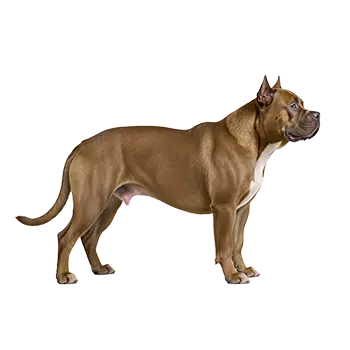
The American Bully's most immediately striking characteristic is the combination of a heavy, muscular body on a compact frame. This is a dog built low and wide - not tall, but dense. The overall impression should be one of power and substance without the structural compromises that impair movement or breathing. A correctly built American Bully moves freely and breathes easily; an incorrectly built one, usually the result of extreme breeding toward exaggerated features, does neither.

The head is a defining feature and the subject of considerable breeding focus, which has produced both impressive animals and, in extreme cases, dogs with structural problems driven by excessive exaggeration. The skull is large and broad, with a well-defined stop and a wide, deep muzzle. The head should be proportionate to the body - massive in appearance but not disproportionate to the point of creating health problems. The jaws are broad and well-muscled. A scissors bite is preferred; undershot bites occur and are accepted in some variety standards.

The eyes are medium-sized, set low in the skull and wide apart, and can be any color except albino (full white/pink). The expression should convey alertness and confidence. The ears may be natural or cropped. Natural ears typically fold and hang forward; cropped ears stand erect. Cropping is a practice that varies by regional preference and legal jurisdiction.

The neck is heavy, muscular, and of moderate length, flowing smoothly into well-developed shoulders. The topline is level or very slightly descending toward the rear. The chest is very broad, deep, and well-filled between and in front of the forelegs - this is one of the breed's most visually prominent features and one that distinguishes it most clearly from the American Pit Bull Terrier. A narrow or flat chest is a significant fault in the standard.

The body is compact, with a short back and well-sprung ribs that give the dog its characteristic barrel-chested appearance. The underline is slightly tucked. The tail is set low, natural, and tapers to a point. Tail docking is not a breed practice.

Forequarters are heavy-boned with broad, muscular shoulders and strong, straight forelegs. The feet are round, compact, and well-arched. Hindquarters are broad and heavily muscled through the thigh. Moderate angulation front and rear is appropriate - extreme angulation in either direction creates movement problems and should be faulted. The overall structure should allow the dog to trot with power and efficiency.

The coat is short, close, stiff to the touch, and glossy. There is no undercoat. All colors and color patterns are acceptable in the ABKC standard with one specific exception: the merle pattern is not accepted and is considered a disqualification. This exclusion is significant because merle, a gene pattern associated with health problems including blindness and deafness when doubled, has been deliberately introduced into some American Bully lines to produce unusual coat patterns. Merle-patterned American Bullies are sometimes sold at premium prices; buyers should understand that these dogs are not breed standard animals and carry associated health risks.

Size varies considerably by variety. The Pocket variety stands under 17 inches for males; the Standard runs 17 to 20 inches; the XL tops 20 inches. Body weight scales with size and structure - a well-muscled Standard male might weigh 60 to 80 pounds, while an XL male can run considerably heavier. Sexual dimorphism is evident: males are broader-headed, heavier-boned, and more muscular than females.

Movement should be evaluated against the breed's stated purpose as a companion dog. The gait needs to be free, balanced, and efficient - a dog that cannot trot soundly for extended periods has structural problems that go beyond appearance.

The visual impression of the American Bully is dominated by its head-to-body ratio - the head is large relative to the dog's height, and the chest is wide relative to the overall frame. This creates the distinctive low-and-wide silhouette that defines the breed. When the proportions are correct, the result is a dog that looks powerful without looking distorted. When they are incorrect - when the head is so large it strains the neck, or the chest so wide the front legs cannot move freely - the dog is showing the results of selection pressure that exceeded what is appropriate even within a breed that values substantial build.

Skin is thick and loose over the body, with wrinkles typically concentrated around the head and neck, particularly in Pocket-type and extreme-type individuals. The skin should not be so loose or heavily folded that it creates chronic hygiene problems - heavy wrinkling is a maintenance burden and, in extreme cases, a health issue that reflects breeding for appearance without regard to consequence.

Affectionate With Family
The American Bully's defining trait is its devotion to people. This is a breed that was specifically developed for human companionship, and it shows in every interaction.
Good With Young Children
Patient, tolerant, and gentle with children when raised with them from puppyhood. Their block-head appearance and their actual behavior with kids are two very different things.
Good With Other Dogs
Better with other dogs than its American Pit Bull Terrier ancestors by design, though some individuals still show dog selectivity. Early socialization is essential.
Shedding Level
The short single coat sheds lightly and consistently. It is not a heavy shedder by any standard, and regular brushing keeps loose hair well-managed.
Coat Grooming Frequency
Minimal grooming required - a weekly wipe-down or brush with a rubber mitt handles everything the coat needs under normal conditions.
Drooling Level
Heavier-headed, shorter-muzzled individuals can drool noticeably around food and water. Standard and Classic types with less exaggerated heads drool considerably less.
Coat Type
Short, close, and glossy - one of the lowest-maintenance coat types of any breed. No undercoat, no mats, no professional grooming required.
Openness To Strangers
Typically outgoing and friendly with strangers once introduced. Human aggression is a disqualifying fault in the breed standard, and good specimens are genuinely social.
Playfulness Level
Enthusiastic, high-energy players who love interaction with their people. Their play is physical and full-contact - they need a household that can match their enthusiasm.
Watchdog/Protective Nature
Their size and appearance deter casual threats, and they will alert to activity. However, they were bred away from the sharp protective instincts of their working ancestors.
Adaptability Level
Adaptable to different living situations as long as their exercise and companionship needs are met. Pocket and Micro varieties manage smaller spaces somewhat more easily than Standard types.
Trainability Level
People-oriented and food motivated, which makes training more effective than the breed's bulldog heritage might suggest. Consistent positive reinforcement produces reliable, well-mannered dogs.

American Bully History & Development

The American Bully is a recent breed by any historical measure. Its development began in the 1980s and 1990s primarily in Virginia and California, with Dave Wilson and Morpheus Kennels playing a central role in establishing the type. The founding stock was drawn primarily from American Pit Bull Terriers and American Staffordshire Terriers, with contributions from various bulldog breeds - the American Bulldog, English Bulldog, Olde English Bulldogge, and others - introduced to increase body mass, broaden the head, and moderate the terrier-sharp gameness that defined the working pit bull type.

The explicit design goal from the beginning was a companion dog. The breeders who developed the American Bully were not trying to create a better working dog or a more capable fighter - they were deliberately moving away from those qualities. The desired end product was a dog with the visual presence and physical substance of a bulldog type, combined with a temperament specifically optimized for family life: gentle, tolerant of children, affectionate with people, and without the inter-dog aggression that characterized the American Pit Bull Terrier in its working lines. The breed standard that eventually emerged from this process made human aggression a disqualifying fault - a clear statement of intent.

The American Bully Kennel Club was founded in 2004, providing the first formal registry and breed standard. This institutional foundation gave the breed definition and created a framework for organized breeding, showing, and registration. The ABKC's four variety system - Pocket, Standard, Classic, and XL - accommodated the range of physical types already present in the population while establishing height parameters for each category.

UKC recognition in 2013 represented the first acknowledgment by an established mainstream registry that the American Bully was a distinct and legitimate breed rather than simply an informal type. Placement in the Companion Dog Group reflected the breed's intentional departure from the working dog origins of its ancestors.

The breed's global spread has been rapid. American Bullies are now bred and kept across Europe, particularly in the UK and Eastern Europe, and have significant populations in parts of Asia and Latin America. International demand has driven prices for exceptional specimens to levels that rival rare working breed bloodlines, and the social media visibility of prominent individual dogs has created what amounts to a celebrity culture around certain bloodlines and breeders.

This rapid commercial growth has brought predictable consequences. The breed has attracted breeders whose primary interest is producing extreme physical characteristics that command high prices rather than healthy, sound dogs that conform to the standard's intent. Extreme-type dogs with severely shortened muzzles, exaggerated skin folds, and structural problems significant enough to impair basic function have appeared in increasing numbers. Responsible breeders and the ABKC have been clear that these extreme types fall outside the standard and represent a direction the breed should not go, but market forces have been difficult to redirect.

The contrast between the breed's intended purpose and some of its current commercial trajectory is one of the central tensions in American Bully breed development. Dave Wilson and the founders created the breed to move away from extreme physical characteristics and toward health, soundness, and family temperament. Decades later, some commercial breeding programs are producing dogs with extreme physical exaggeration that the founders specifically sought to avoid. The American Bully community is actively navigating this tension, with the ABKC and responsible breeders working to reinforce the standard's intent against market forces that reward extreme appearance.

American Bully Temperament & Personality

The American Bully was built from the inside out as a companion dog, and that design intent is visible in how these dogs actually behave with people. This is not a breed with a working drive that has been redirected toward companionship - it is a breed whose working instincts were specifically diminished in favor of human affinity. The result is a dog that is genuinely, structurally oriented toward people in a way that its ancestors were not.

With family, the American Bully is openly affectionate and physically devoted. These dogs want contact, they want participation in daily life, and they communicate their attachment enthusiastically. The breed has a documented reputation for patience and gentleness with children that surprises people unfamiliar with the actual temperament behind the physical appearance. When a well-bred, well-socialized American Bully is with children it knows, you are looking at one of the more tolerant, gentle combinations in the large dog category.

With strangers, the breed standard calls for outgoing, confident behavior rather than reserve or suspicion. Human aggression is explicitly disqualifying in the ABKC standard - this is not a breed intended to challenge or threaten unfamiliar people. A well-bred specimen will assess a new person and generally approach with curiosity rather than wariness. That said, the breed's physical presence is significant, and the appearance can be intimidating regardless of the dog's intent.

Dog-to-dog interactions are more variable. The American Bully was bred away from the pronounced dog aggression of its American Pit Bull Terrier ancestors, and many individuals are genuinely sociable with other dogs. However, the genetic influence of terrier and bulldog ancestors has not been entirely eliminated, and some American Bullies - particularly same-sex pairs - show dog selectivity or conflict. Early and consistent socialization with other dogs during the critical developmental window is important for producing adults that handle dog encounters appropriately.

Energy level is moderate to high in young dogs, tapering considerably as the breed reaches maturity around two to three years. Young American Bullies are physical, boisterous, and fully committed to play in a way that can be genuinely overwhelming in a small home without enough outlets. The mature dog is calmer, more settled, and more the relaxed companion the breed is intended to be. Getting through the juvenile phase requires consistent exercise, clear expectations, and the patience to outlast the puppy energy without abandoning the training structure.

The one temperament failure mode specific to poorly-bred or improperly-raised American Bullies is excessive territorial behavior or reactive display that is not characteristic of the breed's standard. Dogs that come from lines where guarding instincts were added back in - sometimes through breeding with protection sport dogs or high-drive working lines - may present with more edge than the companion breed template intends. This is a breeding quality issue, not an inherent breed trait, but it is common enough that sourcing from reputable breeders who test temperament matters.

Play style is worth mentioning because it is a practical consideration for households with children or other dogs. American Bullies play physically and with their full body - bumping, mouthing, and wrestling are natural play modes. This is fine in context, but young children need to develop some resilience to it, and the size of even a standard adult female makes accidental knockdowns a realistic possibility during exuberant play. Training clear play rules from puppyhood - off command, gentle play modes, structured time-outs - channels the breed's natural enthusiasm into interaction styles that work for everyone in the household.

American Bully Family Life & Living Requirements

The American Bully is one of the more genuinely family-compatible large dog breeds when properly bred and raised, and that compatibility extends across the household in ways that surprise people who approach the breed with assumptions based on appearance. The gentle, tolerant temperament the breed was designed for is real in well-bred specimens, and families that do their homework find a devoted, manageable companion.

Space requirements are moderate. The Standard American Bully does reasonably well in homes with access to a yard, but unlike some working breeds, it does not require large acreage or constant outdoor time to be satisfied. The Pocket variety is more adaptable to smaller living situations, including apartments with committed exercise routines. What the breed needs is not square footage but daily engagement - physical activity, human interaction, and enough mental stimulation to prevent boredom.

Fencing should be solid and secure. American Bullies are not escape artists in the way that some working breeds are, but they are strong enough that a fence they want to challenge poses a real question about whether the fence will hold. Six feet is appropriate; ensuring the fence is securely anchored is as important as the height.

With children, well-bred American Bullies are genuinely patient and tolerant even with younger children who have not yet learned to interact politely with dogs. This tolerance is not unlimited - no dog's is - but it is a real characteristic of the breed that distinguishes it from dogs with sharper temperaments. Supervision with very young children remains appropriate simply because of the dog's size and exuberance during play.

Heat tolerance is a practical concern, particularly for Pocket-type and shorter-muzzled individuals. The brachycephalic airway considerations that affect extreme-type dogs are real limitations: these dogs need access to air conditioning in hot weather, should not be exercised in midday heat, and show heat stress more readily than longer-muzzled dogs. Owners in warm climates should factor this into their lifestyle assessment before choosing the breed.

The American Bully is not well-suited to isolation. The breed's people-orientation means that long daily absences are hard on them emotionally, and a bored, isolated American Bully expresses its frustration through chewing, barking, and persistent destruction. If your household involves genuinely long daily absences with no enrichment or check-ins, this is not the right breed for you.

Breed-specific legislation is a practical consideration in some jurisdictions. The American Bully's physical appearance can bring it under pit bull ordinances in cities or counties with visual-based BSL. Research your local regulations before acquiring the dog, and understand that this may affect your housing options over the dog's lifetime.

Multi-dog households require thoughtful management. While many American Bullies get along well with other dogs they have been raised with, introducing an adult American Bully to an existing dog - or adding a second dog to a household with an established American Bully - should be done carefully with neutral-ground introductions and supervised early cohabitation. Same-sex pairs warrant particular attention.

American Bully Training & Exercise Needs

The American Bully is more trainable than its physical appearance or its bulldog lineage might suggest, and this surprises many first-time owners who expected a stubborn, difficult dog. The breed's people-orientation - specifically, its deliberate development toward human affinity - translates into a dog that wants to engage with its handler and is genuinely motivated by positive interaction. When training is structured around cooperation and reward rather than force and repetition, American Bullies learn reliably and retain training well.

Start training the day the puppy arrives. Basic commands - sit, stay, come, down, leave it - should be introduced in short, positive sessions from the beginning. The American Bully puppy is high-energy and physically exuberant, which can make early sessions feel chaotic, but consistency and brevity work. Keep sessions under ten minutes, end on success, and practice multiple times daily rather than in one long block. Puppy kindergarten provides the critical early socialization exposure this breed needs while establishing training habits.

Leash manners are a priority. An adult American Bully that has not learned to walk without pulling is a significant physical challenge to handle - not because these dogs are aggressive, but because they are strong and can drag an unprepared handler off their feet. Teaching loose-leash walking before the dog reaches its full size and strength is far easier than correcting it after. Front-clip harnesses are a useful management tool while the training is being established.

Socialization during the first two years is essential for producing an adult that handles novel situations, unfamiliar people, and other dogs without stress or reactivity. The breed's design intent is an outgoing, confident companion, but that temperament is fully realized only when the dog has been adequately exposed to the world during its developmental window. A poorly socialized American Bully develops anxiety or reactivity that does not reflect the breed's standard and is difficult to rehabilitate in adulthood.

Exercise needs are moderate relative to body size. Thirty to sixty minutes of real physical activity per day is appropriate for an adult Standard American Bully - brisk walks, fetch, structured play. Young dogs need more and should have multiple activity sessions throughout the day to manage their energy. Pocket-type dogs and those with brachycephalic airway concerns need exercise paced to their breathing capacity - watch for heavy panting, open-mouth breathing, or loss of coordination as signs to stop and rest.

Mental stimulation matters as much as physical exercise for keeping this breed calm and well-behaved. Puzzle feeders, training sessions, and interactive play with people engage the dog's intelligence in ways that a walk alone does not. A dog that is mentally satisfied is a dog that rests quietly when the day's activity is done.

American Bully Health Concerns

The American Bully is a young breed that carries health considerations from multiple foundation breeds and adds some concerns specific to its own development. Prospective owners should understand both the documented conditions and the structural health questions that surround extreme physical types.

Median lifespan for the breed runs approximately 10 to 12 years. Obesity is a real risk in a breed that is food motivated and often kept in relatively inactive households - maintaining a lean body condition throughout the dog's life reduces joint load and supports cardiovascular health.

Common Health Issues

  • Hip Dysplasia: Malformation of the hip joint producing pain and progressive joint deterioration. The breed's heavy body mass relative to height places additional stress on hip joints - Making structural soundness and weight management particularly important.
  • Elbow Dysplasia: Abnormal development of the elbow joint causing front-leg lameness and pain - Should be evaluated alongside hip dysplasia in any breeding program.
  • Brachycephalic Obstructive Airway Syndrome - BOAS, : Affects dogs with severely shortened muzzles, restricting airflow and limiting heat tolerance and exercise capacity. More pronounced in Pocket and extreme-type individuals. Surgical correction improves but does not resolve the condition.
  • Congenital Cardiac Defects: Heart abnormalities present from birth have been reported in American Bully lines - Cardiac examination by a board-certified cardiologist is part of responsible breeding protocol.
  • Skin Allergies and Atopy: Environmental and contact allergies manifest as itching - Recurrent skin infections, ear infections, and foot-licking. Management involves identifying and reducing exposure to triggers alongside veterinary treatment.
  • Cherry Eye: Prolapse of the third eyelid gland appearing as a red mass in the corner of the eye - Requires surgical replacement of the gland to prevent chronic dry eye.

Preventive Care & Health Monitoring

  • OFA hip and elbow evaluation of both parents before breeding - And consideration of hip radiographs for your own dog at two years of age given the breed's documented risk.
  • Cardiac examination by a board-certified cardiologist before breeding and for puppies from lines with documented cardiac history. - Cardiac examination by a board-certified cardiologist before breeding and for puppies from lines with documented cardiac history.
  • Weekly skin fold cleaning and drying for dogs with facial wrinkles and heavy skin - To prevent moisture-related bacterial and yeast infections.
  • Monitoring body condition score regularly and maintaining a lean weight throughout the dog's life to reduce joint load and cardiovascular strain. - Monitoring body condition score regularly and maintaining a lean weight throughout the dog's life to reduce joint load and cardiovascular strain.
  • CAER eye examination through a board-certified veterinary ophthalmologist - And avoidance of merle-to-merle or merle-to-carrier pairings due to documented vision and hearing risks.

American Bully Grooming & Maintenance

The American Bully's short, close coat is one of the least demanding of any breed in its size category. Weekly brushing with a rubber curry comb or soft bristle brush removes loose hair and keeps the coat looking clean. Bathing every four to six weeks is sufficient under normal conditions. The coat dries quickly, has no undercoat to hold debris or moisture, and requires no professional grooming. From a pure coat-care standpoint, this is an easy dog to maintain.

The breed-specific grooming task that requires regular attention is skin fold care, particularly in dogs with facial wrinkles and heavy skin around the muzzle and neck. These folds accumulate moisture, debris, and dead skin cells that create an ideal environment for bacterial and yeast infections. Clean the inside of each fold with a damp cloth and dry thoroughly at least once a week - more often in hot or humid conditions. Skin fold infections develop quickly, cause discomfort, and can become chronic if not managed consistently.

Ears should be inspected and cleaned weekly. The drop or semi-prick ear carriage of many American Bullies limits airflow into the ear canal, making moisture accumulation a concern. Signs of infection include redness, discharge, odor, and the dog scratching or shaking its head. These warrant a veterinary visit rather than home treatment.

Nail care is important and often underestimated. Nails should be trimmed every three to four weeks. A heavy dog with overgrown nails develops abnormal foot posture that stresses joints over time. Dogs that exercise regularly on hard surfaces will wear nails down naturally to some degree, but this varies with the individual and the activity.

Dental hygiene should be part of the weekly routine. Brushing several times a week with a dog-specific toothpaste reduces the tartar accumulation that leads to gum disease and tooth loss. Dental disease is a systemic health problem, not just an oral one, and it affects kidney and cardiac health over time. The American Bully is not uniquely prone to dental problems, but the care requirement applies equally to every breed.

The American Bully's minimal coat care requirements are a genuine quality-of-life advantage compared to many similarly-sized breeds. Time and resources that other dog owners spend on professional grooming or intensive brushing can be redirected toward training, exercise, and veterinary care - the areas where investment actually matters for this breed's health and behavior.