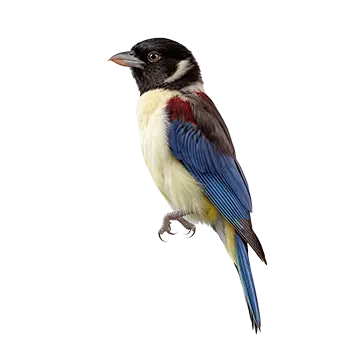
Northern Rosellas demonstrate excellent training potential despite their initially shy demeanor, responding well to patient, positive reinforcement methods that respect their cautious nature. Their intelligence and food motivation create strong foundations for training success, though progress may occur more slowly than with bolder parrot species. Begin training only after the bird has thoroughly acclimated to its new environment and shows relaxed body language around caregivers, typically 2-4 weeks after acquisition. Rushing training before trust develops can set back relationship-building significantly with these sensitive birds.
Basic handling training forms the essential foundation for all subsequent training and necessary husbandry procedures. Step-up training teaches birds to step onto an offered finger or hand-held perch on command, critical for safe handling during cage cleaning, veterinary visits, and emergency situations. Use consistent verbal cues like 'step up' while positioning your finger slightly above the bird's feet, immediately rewarding compliance with favored treats and calm praise. Practice in short 5-10 minute sessions multiple times daily, maintaining patience if progress occurs slowly. Northern Rosellas may require several weeks to master step-up reliably, considerably longer than more confident species.
Recall training provides valuable safety benefits during supervised out-of-cage time, teaching birds to fly to their owner on command. Begin in small, enclosed spaces minimizing distractions, calling the bird's name followed by 'come' while displaying a highly valued treat reward. Start with very short distances of 1-2 feet, gradually increasing as reliability improves. Northern Rosellas' natural caution means they may hesitate before responding; never punish slow responses, only reward successful recalls. Build distance and difficulty progressively over weeks or months.
Target training teaches birds to touch a designated stick or target object on command, providing foundation skills for complex behaviors while serving practical purposes during veterinary examinations or guided movement between locations. Use a chopstick or commercial target stick, presenting it near the bird's beak while saying 'touch.' Immediately reward any interaction with the target, gradually requiring more deliberate touches before delivering rewards. Target training particularly suits Northern Rosellas' temperament, allowing them to participate actively while maintaining comfortable distance from handlers during early training phases.
Trick training possibilities for Northern Rosellas include waving, turning circles, retrieving small objects, playing basketball through miniature hoops, ringing bells, navigating simple obstacle courses, and stationing on designated perches. Break complex behaviors into small successive approximations, rewarding incremental progress toward the final behavior. Training sessions should remain brief (10-15 minutes maximum) and always end on positive notes before frustration develops. Multiple short sessions throughout the day prove more effective than single lengthy sessions causing attention fatigue or stress.
Talking ability in Northern Rosellas remains minimal, with this species showing less vocal mimicry potential than most other parrots. Occasional individuals may learn to approximate a few simple words with extensive patient training, but this should not be expected or considered a characteristic feature. Their vocal talents lie instead in whistling, where they can learn melodies, tunes, and whistled phrases with practice, particularly males who generally show stronger whistling inclination than females. Owners seeking talking ability should consider other species better suited to speech.
Noise levels throughout the day follow predictable patterns aligned with natural activity cycles. Northern Rosellas vocalize most noticeably during dawn and dusk periods, producing soft whistles, gentle chirps, and melodious contact calls. Midday typically remains very quiet as birds rest and preen during the hottest hours reflecting their tropical origins. Their vocalizations rank among the quietest of all parrot species, rarely disturbing neighbors or household members. Calls carry pleasant, musical qualities rather than harsh or piercing tones, making them ideal for apartment living or noise-sensitive environments.
Socialization importance cannot be overstated for Northern Rosellas given their naturally cautious temperament. Properly socialized birds become confident, well-adjusted adults comfortable with routine handling, various people, novel situations, and necessary procedures like nail trimming or carrier training. Expose young birds gradually to different family members, gentle handling by multiple people, travel carriers, car rides, new rooms and environments, varied toys and foods, grooming procedures approached positively, and routine veterinary examinations. Rushed or forceful socialization can permanently damage trust with these sensitive birds; respect their pace throughout the process.
Bonding techniques emphasize gentle consistency over intense interaction. Spend time near the cage talking softly, reading aloud, or engaging in quiet activities allowing the bird to observe and acclimate to your presence without pressure. Offer treats through cage bars, gradually building positive associations with your approach. Move to hand-feeding treats, then progress to handling only when the bird shows relaxed body language and willing participation. Include the bird in household routines through proximity and conversation. Establish predictable daily schedules for feeding, out-of-cage time, training, and bedtime, providing security through consistency.
Behavioral challenges in Northern Rosellas typically involve fear-based responses rather than aggression. Common issues include excessive wariness of new people or objects, reluctance to leave the cage, flight response when startled, and general nervousness in novel situations. Address these challenges through patient, gradual exposure to concerning stimuli paired with high-value rewards, ensuring adequate enrichment and exercise reducing stress, maintaining environmental consistency and routine, and avoiding punishment-based approaches that increase fearfulness. Consult avian behaviorists for persistent problems affecting bird welfare. Their gentle nature means biting rarely becomes problematic; when it occurs, it typically signals fear or overstimulation rather than aggression. Respect warning signals like backing away or raised feathers, giving the bird space when uncomfortable rather than forcing interaction.