Dusky Pionus Species Guide - Furry Critter Network

Dusky Pionus

Quick Facts

🔬 Scientific Name
Pionus fuscus
📊 Care Level
Moderate
😊 Temperament
Gentle, Calm, Affectionate
📏 Adult Size
9-10 inches
⏱️ Lifespan
25-40 years
🔊 Noise Level
Low to Moderate
🗣️ Talking Ability
Limited
🍽️ Diet Type
Pellet-based
🌍 Origin
South America (Venezuela, Guianas, northern Brazil, Colombia)
🏠 Min Cage Size
24x24x30 inches minimum
📐 Size
Medium

Dusky Pionus - Names & Recognition

The Dusky Pionus is scientifically classified as Pionus fuscus, belonging to the genus Pionus which contains nine species of medium-sized, stocky parrots distributed across Central and South America. The genus name "Pionus" derives from Greek meaning "fat" or "plump," referencing the characteristic robust, chunky build shared by all members of the genus. The species name "fuscus" is Latin meaning "dark," "dusky," or "brown," directly referencing the bird's distinctive dusky purple-brown plumage that sets it apart from other more colorful Pionus species.

Common names for this species include Dusky Pionus, Dusky Parrot, Violet Pionus (referencing the purple tones in the plumage), and occasionally Sombre Parrot. In Spanish-speaking regions of their range, they're known as "loro morado" (purple parrot) or "perico morado." In Portuguese-speaking Brazil, they're called "maitaca-roxa" (purple maitaca) or "curica-roxa." The Dusky designation clearly references the subdued, dark coloration that characterizes the species, distinguishing it from brighter-colored parrots and even from other Pionus species with more vivid coloring.

Two subspecies of Pionus fuscus are recognized by some taxonomic authorities, though others treat the species as monotypic (without subspecies). The nominate subspecies, P. f. fuscus, inhabits the northern portion of the range including Venezuela, the Guianas, and northern Brazil. P. f. occidentalis occurs in western Colombia and shows slightly different proportions and subtle color variations. However, many modern ornithologists question whether these variations warrant subspecies designation, considering them part of natural clinal variation across the species' range. The taxonomic debate continues with ongoing research examining genetic differentiation.

In aviculture, Dusky Pionus are sometimes confused with other darkly-colored Pionus species, though they're actually the darkest of all Pionus species with the most subdued coloration. The Dusky's unique purple-brown color and rose-pink breast distinguish it clearly from all other Pionus species upon close examination. Unlike some parrot genera where extensive color mutations have been developed through selective breeding, Dusky Pionus are bred almost exclusively in their natural wild-type coloration. No established color mutations exist in captivity, with breeders focusing on maintaining the species' unique natural appearance, temperament, and health. This species remains relatively rare in aviculture compared to the more common Blue-Headed Pionus, contributing to their status as somewhat specialized birds for dedicated Pionus enthusiasts.

Dusky Pionus Physical Description

The Dusky Pionus is a medium-sized, stocky parrot measuring 9 to 10 inches in total length from beak to tail tip. Body weight ranges from 220 to 260 grams, giving them a solid, substantial feel despite their moderate size. Their build is compact and robust, characteristic of Pionus species, with a thick neck, broad chest, and relatively short, square tail. The overall impression is of a well-built, sturdy bird with dignified bearing and unique, subtle beauty that reveals itself upon closer observation.

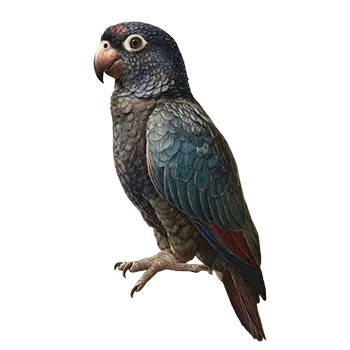
The most distinctive feature of the Dusky Pionus is its unique dusky purple-brown plumage that gives the species its common name. The overall body color is a rich, dark brownish-purple or plum color, darker and more subdued than any other Pionus species. This coloring is most intense on the head, back, and wings, creating an almost smoky or dusty appearance in certain lighting. The feathers show subtle iridescence with purple, violet, and bronze tones that shift and change in different light conditions, revealing hidden beauty that's not immediately obvious from a distance.

The upper breast displays a beautiful rose-pink to pinkish-red coloring creating a distinctive "bib" or "vest" effect. This pink breast patch contrasts beautifully with the surrounding dusky purple-brown plumage, providing the bird's most striking color accent. The extent and intensity of the pink coloring varies among individuals, with some showing deeper, more extensive rose coloring while others display paler, more subtle pink. This pink bib is most visible from the front and is one of the species' most attractive features.

The lower breast and abdomen continue the dusky purple-brown coloring, sometimes showing slightly more bronze or olive tones than the upper parts. The feathers on the breast and abdomen show subtle scalloping or scaling created by darker feather edges, adding texture and depth to the plumage. This scaled appearance is more pronounced in certain individuals and lighting conditions.

The wings are dusky purple-brown matching the back, with primary flight feathers showing darker, more blue-toned coloring. When the wings are spread during flight or stretching, the flight feathers reveal subtle blue highlights. The wing coverts match the body color. The underwing coverts show lighter coloring, visible during flight as the bird passes overhead.

The tail is relatively short and square-shaped, characteristic of Pionus species. The upper tail surface is dusky brown to greenish-brown, while the most distinctive tail feature is the brilliant red undertail coverts (the feathers underneath the base of the tail). These red undertail coverts provide a dramatic splash of bright color visible when the bird is perched and particularly striking during flight or when the tail is fanned. This red coloring is shared with other Pionus species and provides a family characteristic.

The Dusky Pionus has a distinctive bare white to pale grey eye-ring of skin surrounding the eye, typical of Pionus species and creating a wide-eyed, alert expression. The iris is dark brown to black, appearing nearly black against the pale eye-ring. The beak is dark grey to black with a paler horn-colored base, relatively small but powerful. The cere (fleshy area above the beak) is grey. The legs and feet are grey with the standard parrot zygodactyl toe arrangement and strong claws suitable for climbing and perching.

Sexual dimorphism in Dusky Pionus is minimal to absent, making visual sexing extremely unreliable. Males and females appear virtually identical in size, coloration, and markings. Some breeders suggest males may show slightly more extensive or brighter pink on the breast, but this is inconsistent and subtle at best. The only reliable method for sex determination is DNA testing through blood or feather samples, which is routinely performed by responsible breeders before selling birds.

Juvenile Dusky Pionus can be distinguished from adults by their overall duller, more brownish coloration with less purple iridescence. Young birds show minimal or absent pink on the breast, appearing more uniformly dark brown. The red undertail coverts are present but less vibrant than in adults. The plumage appears flatter and less lustrous, lacking the subtle iridescence of adult birds. As juveniles mature through their first year and undergo their first complete molt, the adult coloration develops gradually. The pink breast coloring begins appearing around 6 to 12 months and intensifies over subsequent molts. The purple iridescence develops progressively, with full adult plumage typically achieved by 18 to 24 months of age.

Affection Level
Dusky Pionus are notably affectionate birds that form strong, devoted bonds with their owners. They enjoy physical contact including head scratches and cuddling more than some other Pionus species. Once trust is established, they become sweet, loving companions who actively seek gentle interaction and show clear preferences for favorite people.
Sociability
Moderately social birds that appreciate daily interaction while maintaining independence. They can entertain themselves for reasonable periods but enjoy being part of household activities. Dusky Pionus do well as single pets with adequate attention or in pairs. They may be initially cautious with strangers but warm to trusted individuals over time.
Vocalization
Exceptionally quiet for parrots, making them outstanding for apartments and noise-sensitive environments. Their natural calls are soft chirps and gentle sounds. They rarely produce loud calls, maintaining the characteristic Pionus quietness. They may wheeze softly when excited, a normal Pionus trait. Their peaceful nature includes peaceful vocalizations.
Intelligence
Intelligent birds capable of learning tricks, understanding routines, and developing limited vocabularies. They demonstrate good problem-solving abilities and enjoy puzzle toys. Their intelligence requires regular mental stimulation through training, foraging opportunities, and environmental enrichment to prevent boredom and maintain psychological health.
Exercise Needs
Moderate exercise requirements with several hours of daily out-of-cage time needed for physical and mental health. They're less frantically active than high-energy species but still benefit from regular flight opportunities and climbing. Their calmer nature means they're content with moderate activity levels between exercise periods.
Maintenance Level
Low to moderate maintenance with relatively tidy habits compared to many parrots. Daily cage spot-cleaning and weekly thorough cleaning suffice. Their calm temperament reduces behavioral challenges. Mental enrichment needs are moderate. Grooming requirements are minimal beyond occasional nail trims. Overall care demands are manageable for dedicated owners.
Trainability
Highly trainable with gentle, patient methods. They respond well to positive reinforcement and can learn various tricks and commands. Their calm, willing temperament facilitates productive training sessions. They're eager to please and food-motivated, making training enjoyable. Consistency and gentle encouragement produce excellent results with these sensitive birds.
Independence
Moderate independence with ability to entertain themselves for periods while still appreciating regular interaction. They don't typically develop severe separation anxiety but do require daily attention for wellbeing. Their balanced nature between affection and independence makes them practical companions for working owners who can provide morning and evening interaction.

Natural Habitat & Range

The Dusky Pionus inhabits the northern regions of South America, with a range extending across southern Venezuela, Guyana, Suriname, French Guiana, northern Brazil (primarily in the states of Amazonas, Roraima, and ParĂĄ), and southeastern Colombia. This distribution is more restricted than some other Pionus species, placing them primarily in the Guiana Shield region and adjacent Amazonian areas. Their range is characterized by continuous tropical rainforest, making them true rainforest specialists more so than some other Pionus species.

Natural habitat consists primarily of lowland tropical rainforests, terra firme forests (well-drained upland forests not subject to seasonal flooding), and transitional forests at elevations from sea level to approximately 1,200 meters (3,900 feet), though they're most common below 800 meters. Dusky Pionus show strong preference for primary or mature secondary rainforest with tall canopy trees, being less adaptable to disturbed or degraded habitats than some Pionus species. They're less commonly found in forest edges, clearings, or agricultural areas, preferring the interior of continuous forest blocks. This habitat specificity makes them more vulnerable to deforestation than generalist species.

The dense, humid rainforest habitat provides the resources these birds require. The multilayered canopy offers abundant fruits, seeds, and flowers throughout the year with seasonal variations. Large old-growth trees provide essential nesting cavities. The complex forest structure offers protection from predators including harpy eagles, forest falcons, snakes, and arboreal mammals. The stable, warm, humid environment supports their physiology and year-round breeding potential. Their preference for intact forest makes them ecological indicators of forest health.

In their natural environment, Dusky Pionus are social birds living in small flocks typically numbering 6 to 20 birds, though larger congregations may gather at abundant fruiting trees or mineral licks. These flocks are generally quiet and inconspicuous, often going undetected in the dense forest canopy. They're less vocal than many parrot species, making them difficult to locate by sound alone. The social structure provides protection through collective vigilance, with the flock's quietness potentially being an adaptation to avoid attracting predators. Pairs within flocks form strong monogamous bonds.

Daily activity patterns follow typical rainforest parrot behaviors. Flocks leave roosting sites shortly after dawn, flying to feeding areas with quiet calls. They're most active during early morning hours, foraging in the forest canopy for ripe fruits and seeds. Midday brings extended rest periods as birds seek shade in dense foliage, preening, socializing quietly, and avoiding the hottest hours. Late afternoon feeding activity resumes before the flock returns to roosting sites well before dark, settling quietly for the night. Their unobtrusive habits mean they're less frequently observed than louder, more conspicuous species.

Wild Dusky Pionus diets consist primarily of fruits, seeds, berries, flowers, and nuts found in rainforest trees. They show particular preference for soft, fleshy fruits when available, including figs and various palm fruits. They feed almost exclusively in the forest canopy, rarely descending to lower levels or ground. They've been observed visiting mineral licks along riverbanks, where they consume clay that helps neutralize toxins in their fruit-heavy diet and provides essential minerals. Their feeding behavior is generally careful and deliberate, less wasteful than some species.

Breeding behavior involves pairs nesting in natural tree cavities in large rainforest trees. They show preference for cavities at mid to upper canopy levels, providing protection and appropriate microclimate for eggs and chicks. Like other Pionus, they don't construct nests but lay eggs directly on cavity debris. They may reuse successful nesting sites across breeding seasons. Breeding season varies by region but typically coincides with periods of fruit abundance, often during or following rainy seasons. Females lay 3 to 4 white eggs, which she incubates while the male provides food through regurgitation.

The conservation status of the Dusky Pionus is currently listed as Least Concern by the IUCN, though this designation requires careful interpretation. While not immediately threatened, the species faces ongoing pressures that warrant monitoring. Primary threats include deforestation and habitat loss in the Amazon Basin and Guiana Shield regions, particularly removal of large old-growth trees essential for nesting. Their preference for intact primary forest makes them more vulnerable than adaptable species. Historical trapping for the pet trade affected populations, though international regulations and captive breeding have reduced this pressure. They remain relatively common in protected areas and remote forest regions with intact habitat. The species' rarity in aviculture partly reflects both conservation awareness and the challenges of breeding this somewhat specialized rainforest species in captivity.

Temperament

Dusky Pionus possess a gentle, calm, affectionate temperament that makes them treasured companions among Pionus enthusiasts and those fortunate enough to own them. They share the characteristic Pionus traits of quietness and even temperament while being noted as particularly sweet and affectionate compared to some other Pionus species. They are notably gentle birds that rarely display aggression, combining intelligence with a willing, cooperative nature that makes them a pleasure to live with for dedicated owners who appreciate their subtle charms.

The gentle, sweet nature of Dusky Pionus is their most defining and endearing characteristic. They approach people and situations with calm curiosity rather than fear or aggression. They rarely bite even when frightened or uncomfortable, more likely to simply move away or give clear body language warnings. Their responses to handling and interaction are measured and thoughtful, lacking the impulsiveness or mood volatility seen in many parrot species. This fundamental gentleness makes them forgiving of handling mistakes, suitable for less experienced parrot owners willing to learn, and wonderful companions for those seeking peaceful coexistence.

Affection in Dusky Pionus is notably strong and openly expressed compared to some other Pionus species. While maintaining the characteristic Pionus dignity, Dusky Pionus are often more demonstratively affectionate, actively seeking physical contact and interaction with their favorite people. Many individuals enjoy extended cuddling sessions, love being petted and scratched, and may nestle against their owners contentedly. They show clear bonding preferences, often becoming devoted to one or two favorite family members while remaining friendly toward others. Their affection is genuine and touching, expressed through soft vocalizations, gentle preening of their owner's hair or clothes, and simply choosing to be near their person.

The calm temperament characteristic of Pionus species is fully present in Dusky Pionus. They maintain composure in various situations, handling changes and minor disruptions with equanimity. They're not easily startled or frightened, though they may be initially cautious with genuinely new or unusual situations. Their calm demeanor extends to their activity level—they're active and playful but at a measured, deliberate pace rather than frenetic intensity. This calmness creates a peaceful household environment, reducing stress for both bird and human family members.

Some Dusky Pionus may show initial shyness or reserve, particularly with strangers or in new environments. This tendency is typically less pronounced than in some other Pionus species but varies among individuals. Well-socialized young birds develop confidence, though they retain a thoughtful, observant nature. They may take time to assess new people before engaging, preferring gradual introductions to forced interaction. Once comfortable, they become friendly and interactive. Patience during initial bonding and respect for their pace of relationship development are important.

Social needs in Dusky Pionus are moderate and manageable. They require daily interaction for maintaining tameness and psychological wellbeing but are less demanding than many species. One to two hours of quality interaction daily, spread throughout the day when possible, generally suffices for well-adjusted individuals. They appreciate being in the same room with their family, observing activities from their cage or play stand, and participating when they choose. They can entertain themselves with toys and foraging between interaction sessions. This moderate social requirement makes them practical companions for working owners committed to providing morning and evening attention.

Intelligence in Dusky Pionus is good, demonstrating solid problem-solving abilities, capacity to learn tricks and limited vocabulary, and quick understanding of routines and patterns. Their cognitive abilities require regular mental stimulation through training sessions, foraging opportunities, puzzle toys, and environmental enrichment. However, their calm temperament means understimulated Dusky Pionus typically become quietly withdrawn or depressed rather than destructively acting out, making observation of subtle behavioral changes important for identifying boredom or inadequate enrichment.

Vocalization levels in Dusky Pionus are notably low, maintaining the characteristic Pionus quietness that makes them so appealing for noise-sensitive situations. Their natural calls are soft chirps, gentle chattering, and quiet contact calls. They rarely produce loud squawks or screams even when excited or seeking attention. Morning and evening vocalizations are brief, soft, and entirely unobtrusive. The characteristic Pionus wheeze occurs when excited—a soft, snuffling sound completely normal and harmless. Their overall quietness rivals or exceeds other Pionus species, making them among the quietest companion parrots available and ideal for apartments, condominiums, and close-quarter living.

Playfulness in Dusky Pionus is present and endearing though expressed through calm, gentle play. They enjoy toys particularly those they can manipulate, chew, and methodically take apart. They appreciate climbing, swinging, and exploring but at a deliberate pace. Play sessions are quiet and focused rather than loud and wild. They may play with their owners through gentle beak wrestling, retrieving objects, or interactive games. This gentle play style suits owners seeking activity without intensity.

The temperament of Dusky Pionus makes them suitable for various owner situations including dedicated first-time parrot owners willing to learn and commit long-term, individuals or couples seeking gentle, quiet companionship, families with older children who can be calm and respectful, apartment dwellers requiring exceptionally quiet birds, and anyone who appreciates subtle beauty and gentle affection over flashy displays. Their forgiving nature, exceptional quietness, and sweet personality create an appealing package for the right owners.

Hormonal behaviors emerge as birds reach sexual maturity around 2 to 4 years of age. During breeding season or hormonal periods, Dusky Pionus may show mild increased territoriality around cages or favorite perches, though this is typically very gentle compared to aggressive species. They may display regurgitation behavior to favorite people or objects, slight increases in vocalization (though still quiet), and occasional mood changes. Even hormonal Dusky Pionus rarely become truly aggressive, maintaining their fundamentally gentle nature. Managing hormones requires standard environmental adjustments: limiting daylight to 10-12 hours, removing potential nesting sites, restricting petting to head and neck only, and maintaining routines.

Activity levels are moderate, with Dusky Pionus being active without being hyperactive. They enjoy climbing, flying, foraging, and playing but at a calm pace. They need several hours of out-of-cage time daily for exercise and mental stimulation but are content with moderate rather than intense activity. Morning and evening activity peaks are typical with midday rest periods. Their balanced activity level makes them manageable for various owner lifestyles without requiring exceptional energy or constant engagement.

Care Requirements

Proper housing for Dusky Pionus must accommodate their medium size, moderate activity level, and need for security while providing comfort. The minimum cage size for a single bird is 24x24x30 inches, though larger is always better—30x24x36 inches or larger is ideal. Their stocky build requires adequate space for movement, wing stretching, and climbing without feeling cramped. For pairs, minimum dimensions should be 48x24x36 inches or larger. Bar spacing should be 5/8 to 3/4 inch to prevent escape or injury while allowing climbing. Choose heavy-duty powder-coated or stainless steel cages avoiding zinc, lead, or inferior materials that could cause heavy metal poisoning.

Cage location significantly impacts behavior and wellbeing. Place the cage in the main family living area where the bird can observe household activities and feel included in the family. Dusky Pionus appreciate being part of the household while maintaining their calm dignity. Avoid kitchens due to cooking fumes, particularly PTFE (Teflon) which releases instantly fatal fumes when heated. Position away from direct sunlight, drafts, heating or cooling vents, and exterior doors. The cage should be at approximately chest to eye level. Ensure at least one side is against a wall for security, which helps create a sense of safety for these somewhat cautious birds.

Perch variety promotes foot health and prevents pressure sores or arthritis. Provide natural wood branches in varying diameters from 5/8 to 1 inch, forcing feet to exercise different muscles and preventing repetitive stress. Excellent choices include manzanita, java wood, dragonwood, and safe fruit tree branches (apple, pear) that provide both perching and chewing opportunities. Include rope perches for variety and comfort, mineral or calcium perches for beak conditioning, and therapeutic perches with varied textures. Position perches at various heights throughout the cage, ensuring food and water dishes are not directly beneath them to prevent fecal contamination. Avoid sandpaper perches as primary perches, though one concrete perch placed away from sleeping areas can help with natural nail maintenance.

Toys are essential for mental stimulation in these intelligent birds. Provide destructible toys made from wood, paper, cardboard, leather, and palm leaves that they can methodically chew and take apart. Include foraging toys requiring problem-solving to access treats, puzzle toys that challenge their intelligence, swings and hanging toys for quiet play, bells and gentle noise-makers, and manipulable toys with moving parts. Dusky Pionus particularly enjoy toys they can carefully dismantle and foraging puzzles that reward their patient efforts. Rotate toys weekly to maintain novelty and interest. Ensure all toys are bird-safe with stainless steel hardware, avoiding zinc, lead, toxic dyes or paints, frayed rope that could entangle feet, and small parts that could be swallowed.

Out-of-cage time is important—Dusky Pionus require minimum 2-3 hours daily outside their cage in a bird-proofed area for exercise, flight, and mental stimulation. Their moderate activity level means they don't require constant intense engagement but still benefit greatly from regular flight opportunities and environmental exploration. Supervised time prevents accidents and allows social interaction with family members. Create a bird-safe area by covering windows and mirrors to prevent collision injuries, securing or removing electrical cords, removing toxic plants from the area, closing toilet lids and covering aquariums, turning off ceiling fans, keeping other pets separated during bird time, and protecting or removing valuables the bird could damage.

Safety hazards requiring constant vigilance include PTFE/Teflon fumes from non-stick cookware which are instantly fatal to birds, scented products including candles, air fresheners, incense, essential oil diffusers, and aerosol sprays, toxic plants (research thoroughly before introducing any plants to bird areas), heavy metals from old paint, stained glass, costume jewelry, or galvanized hardware, standing water in containers, sinks, or toilets where birds can drown, small spaces where birds can become trapped or injured, and poor air quality from any source. Given Pionus susceptibility to respiratory issues, maintaining pristine air quality is more critical than for many species.

Environmental enrichment must be varied, interesting, and appropriate for their calm, methodical nature. Provide regular bathing opportunities—many Dusky Pionus enjoy gentle misting, shallow dishes, or carefully supervised showers, particularly given their rainforest origins. Offer diverse foraging opportunities that reward patient problem-solving: hide treats in toys, wrap nuts in paper for unwrapping, scatter pellets in shredded paper or coconut fiber for searching, use commercially available puzzle feeders requiring manipulation, skewer vegetables on stainless steel kabobs for hanging treats, hide treats in small cardboard boxes or paper tubes, or create foraging layers in food dishes. Provide varied perching areas outside the cage including play gyms, T-stands, and natural branches. Training sessions teaching new tricks provide important mental stimulation and bonding opportunities. Some Dusky Pionus enjoy watching television, particularly nature programs, or observing outdoor activity through windows.

Temperature and humidity requirements are moderate, with Dusky Pionus comfortable in household temperatures of 65-80°F. They adapt reasonably well to typical indoor conditions. Critical consideration for Pionus health: maintain moderate to low humidity (40-50%) rather than high humidity which increases Aspergillosis risk. During humid seasons or in humid climates, use dehumidifiers if necessary to prevent fungal growth. Excellent ventilation with good air circulation is essential for respiratory health, more so than for many species.

Lighting plays important roles in health and behavioral regulation. Provide 10-12 hours of darkness nightly for adequate sleep, essential for immune function, hormone regulation, and overall health. Maintain consistent sleep/wake schedules that mimic natural day-night cycles. Full-spectrum UV lighting benefits vitamin D synthesis important for calcium absorption and bone health in birds without regular access to unfiltered natural sunlight (window glass blocks beneficial UV rays). Position UV lights 12-18 inches from favorite perching areas, replacing bulbs according to manufacturer recommendations as UV output decreases significantly before visible light fails.

Cage maintenance should include daily spot-cleaning of droppings and spilled food, daily water changes (potentially multiple times if water becomes contaminated with food or droppings), weekly thorough cage cleaning with bird-safe disinfectants, weekly perch cleaning to prevent buildup, and regular toy rotation, inspection, and cleaning. Dusky Pionus are relatively tidy eaters compared to many parrots, making daily maintenance easier. However, maintain constant vigilance against any mold or fungal growth anywhere in the bird's environment given their Aspergillosis susceptibility—immediately discard any moldy food, toys, perches, or cage accessories without exception.

Feeding & Nutrition

In their natural rainforest habitat, Dusky Pionus consume a varied diet of fruits, seeds, berries, flowers, nuts, and occasional insects, with specific items varying seasonally based on tropical forest productivity and availability. Their preference for soft, fleshy fruits reflects their rainforest ecology. This diverse wild diet provides balanced nutrition and demonstrates their adaptability as opportunistic rainforest feeders. Replicating this variety in captivity while ensuring proper nutrition and preventing obesity requires thoughtful dietary planning and management.

The foundation of a captive Dusky Pionus's diet should be high-quality, organic pellets formulated for medium parrots, comprising 60-70% of daily intake. Pellets provide scientifically balanced nutrition and prevent selective eating where birds consume only favorite high-fat items while ignoring nutritious options. Choose organic, dye-free pellets when possible to minimize pesticide exposure and artificial additives. Reputable brands include Harrison's, TOPS, Roudybush, and Zupreem Natural. Transitioning from seed-based diets to pellets requires patience and persistence—gradually mix increasing amounts of pellets with decreasing amounts of seeds over several weeks to months, as Pionus can be somewhat stubborn about dietary changes though generally less resistant than some species.

The seeds versus pellets debate has settled decisively in favor of pellet-based diets among avian veterinarians and nutritionists. All-seed diets are excessively high in fat, deficient in calcium and vitamin A (particularly concerning for Pionus given their vulnerability to vitamin A deficiency and respiratory issues), lack balanced nutrition, and allow selective eating where birds consume only the fattiest, least nutritious seeds. This leads to obesity, fatty liver disease, malnutrition, respiratory problems from vitamin A deficiency, weakened immune function, and significantly shortened lifespans. If feeding any seeds, strictly limit them to 10-15% of the total diet as occasional treats or training rewards only, offering quality mixes rather than sunflower seeds alone which are extremely high in fat.

Fresh vegetables should comprise 20-30% of daily intake, providing essential vitamins particularly vitamin A, minerals, antioxidants, phytonutrients, and dietary variety. Excellent vegetable choices include dark leafy greens like kale, collard greens, mustard greens, turnip greens, and dandelion greens which are rich in calcium and vitamin A. Orange and red vegetables such as carrots, sweet potato, butternut squash, red bell peppers, and pumpkin provide beta-carotene (vitamin A precursor)—particularly important for Pionus species. Other beneficial vegetables include broccoli, cauliflower, green beans, peas, snow peas, and sprouted seeds or legumes. Rotate vegetable offerings daily to ensure nutritional diversity and prevent boredom. Offer vegetables in the morning when birds are hungriest and most receptive, removing uneaten portions after 2-4 hours to prevent spoilage and mold growth which is particularly dangerous for Pionus.

Fruits should be limited to 5-10% of the diet due to high natural sugar content, though they provide valuable vitamins, antioxidants, and serve as healthy treats. Suitable fruits include berries (blueberries, strawberries, raspberries, blackberries), apple slices without seeds or core, grapes, mango, papaya, pomegranate, kiwi, and melons. Dusky Pionus may particularly enjoy soft, fleshy fruits reflecting their natural dietary preferences. Always remove pits, seeds, and cores from apples, pears, cherries, peaches, apricots, and other stone fruits as these contain cyanogenic compounds that release cyanide when digested. Never feed avocado in any amount, which contains persin, a compound highly toxic to birds even in tiny quantities.

Foods requiring strict avoidance include chocolate containing toxic theobromine, caffeine in any form (coffee, tea, energy drinks, soda), alcohol which is highly toxic to birds, high-salt foods including chips, crackers, and processed foods, high-sugar foods, avocado in any form, onions and garlic, dried uncooked beans (properly cooked beans are safe and nutritious), apple seeds and fruit pits, rhubarb leaves, mushrooms (unless verified safe species), and excessive dairy products. Birds lack enzymes to properly digest lactose, though very small amounts of plain yogurt are occasionally tolerated. PTFE/Teflon fumes from heated non-stick cookware are instantly fatal to birds, requiring complete elimination of these products from homes with birds.

Calcium and mineral needs are important for bone health, beak health, metabolic function, and particularly critical for breeding females. Provide cuttlebone or mineral blocks for supplemental calcium and beak conditioning essential for their continuously growing beaks. Dark leafy greens also supply significant dietary calcium. Breeding or egg-laying females require substantially increased calcium supplementation to prevent egg binding, weak shells, bone demineralization, and calcium depletion. Consult an experienced avian veterinarian about appropriate calcium supplementation levels and methods for breeding birds.

Vitamin supplementation may be beneficial for Dusky Pionus given Pionus species' documented susceptibility to vitamin A deficiency, though birds consuming varied, pellet-based diets with adequate orange and red vegetables typically receive sufficient vitamin A. If supplementing, use products specifically formulated for birds, following dosage instructions precisely. Never over-supplement, as fat-soluble vitamin toxicity (particularly vitamins A and D) can occur with excessive supplementation. Consult an experienced avian veterinarian before beginning any supplementation regimens to ensure appropriateness and proper dosing.

Water requirements include providing fresh, clean water changed daily (or more frequently if needed) in dishes thoroughly cleaned to prevent bacterial and algal growth. Change water at least once daily, more frequently if contaminated with food or droppings. Use stainless steel or ceramic water dishes rather than plastic which harbors bacteria in scratches and is more difficult to properly sanitize. Most municipal tap water is safe for birds unless heavily chlorinated, fluoridated, or contaminated; if concerned about water quality, use filtered or bottled water. Avoid distilled water for long-term exclusive use as it lacks essential minerals, though occasional use is safe.

Foraging opportunities are important for these intelligent birds' mental health, behavioral enrichment, and prevention of boredom. Hide vegetables in paper bags for unwrapping, wrap nuts in newspaper or brown paper for shredding, scatter pellets in shredded paper or coconut fiber for searching, use commercially available puzzle feeders requiring manipulation and problem-solving, skewer vegetables on stainless steel kabobs for hanging treats, hide treats in small cardboard boxes or paper tubes, or create foraging layers in food dishes with shredded paper. Foraging mimics natural feeding behaviors where wild birds spend hours searching for food in rainforest canopies, preventing boredom, obesity, behavioral problems, and providing essential mental stimulation. Dusky Pionus enjoy methodical, patient foraging activities that reward their calm, focused nature. Dedicate at least 15-30 minutes daily to foraging activities, varying methods regularly to maintain appropriate challenge and interest levels.

Dusky Pionus Health & Lifespan

Dusky Pionus are generally hardy birds capable of living 25 to 40 years with excellent care, their health depending significantly on diet, environmental conditions, mental stimulation, and preventive veterinary attention. Like all Pionus species, they have certain breed-specific health considerations that owners should understand and monitor carefully. Their calm, quiet temperament may make health issues less obvious than in more vocal or dramatic species, requiring particularly attentive observation of subtle behavioral changes indicating problems. Psittacosis, caused by Chlamydia psittaci bacteria, affects Dusky Pionus as it does all parrot species. This respiratory infection causes lethargy, labored breathing, nasal discharge, conjunctivitis, abnormal droppings, and is zoonotic, transmissible to humans where it causes serious illness requiring antibiotic treatment. Aspergillosis, a fungal respiratory disease, is of particular concern in Pionus species including Dusky Pionus who appear somewhat more susceptible than some other parrots. This dangerous infection develops in environments with poor air circulation, high humidity, or exposure to moldy food, bedding, or environments, causing severe respiratory distress and requiring aggressive antifungal treatment and environmental remediation. Prevention through excellent ventilation, moderate to low humidity, and scrupulous avoidance of any moldy materials is absolutely essential for Pionus health.

UV lighting benefits vitamin D synthesis necessary for calcium absorption and bone health, particularly important for birds housed exclusively indoors without access to unfiltered natural sunlight. Fresh, clean water changed daily (or more frequently if contaminated) prevents bacterial growth. Annual wellness exams should include weight checks (adult Dusky Pionus should weigh 220-260 grams), thorough visual examinations, and blood work to assess organ function, detect infections, and identify nutritional deficiencies. Fecal examinations check for parasites. Being observant to subtle changes in your Dusky Pionus's behavior, activity level, breathing patterns, appetite, droppings, or appearance enables prompt intervention when problems develop. Warning signs requiring immediate veterinary attention include changes in eating or drinking patterns, abnormal droppings in color, consistency, or frequency, labored breathing beyond normal excited wheezing, tail bobbing, open-mouth breathing, nasal or eye discharge, fluffed feathers with lethargy, decreased activity or increased sleeping, loss of balance or coordination, sudden behavior changes, decreased vocalization or interaction, feather abnormalities or plucking, beak abnormalities, and any visible injury. Distinguishing normal Pionus excited wheeze from respiratory distress is critical—abnormal breathing involves visible effort, occurs regardless of excitement, includes tail bobbing, and accompanies behavioral changes. With attentive care, proper nutrition, excellent environmental conditions particularly regarding air quality and humidity, and regular veterinary oversight, Dusky Pionus typically enjoy long, healthy lives as gentle, devoted companions.

Common Health Issues

  • Their calm, quiet temperament may make health issues less obvious than in more vocal or dramatic species - Requiring particularly attentive observation of subtle behavioral changes indicating problems.\n\nPsittacosis, caused by Chlamydia psittaci bacteria, affects Dusky Pionus as it does all parrot species.
  • This respiratory infection causes lethargy - Labored breathing, nasal discharge, conjunctivitis, abnormal droppings, and is zoonotic, transmissible to humans where it causes serious illness requiring antibiotic treatment.
  • Aspergillosis, a fungal respiratory disease - Is of particular concern in Pionus species including Dusky Pionus who appear somewhat more susceptible than some other parrots.
  • This dangerous infection develops in environments with poor air circulation - High humidity, or exposure to moldy food, bedding, or environments, causing severe respiratory distress and requiring aggressive antifungal treatment and environmental remediation.
  • Prevention through excellent ventilation - Moderate to low humidity, and scrupulous avoidance of any moldy materials is absolutely essential for Pionus health.\n\nRespiratory infections from bacteria or viruses occur in birds exposed to poor ventilation, drafts, cigarette smoke, cooking fumes, or other airborne irritants.
  • The characteristic Pionus wheeze can complicate respiratory assessment—normal excited wheezing - Soft, occurring only when excited, with no other symptoms, must be carefully distinguished from abnormal respiratory distress (labored breathing, tail bobbing, open-mouth breathing, behavioral changes, occurring regardless of excitement).
  • Polyomavirus primarily affects young birds and can cause sudden death in nestlings - Though adult birds may be asymptomatic carriers.
  • Psittacine Beak and Feather Disease - PBFD, , while relatively uncommon in Pionus species, is a serious viral infection affecting feather development, beak growth, and immune function with no cure.\n\nFeather plucking in Dusky Pionus is uncommon but can indicate boredom, insufficient mental stimulation, poor socialization, underlying medical conditions, or psychological stress.

Preventive Care & Health Monitoring

  • Vitamin A deficiency is common in birds on poor diets - Causing respiratory problems, poor feather quality, and immune suppression—particularly concerning given Pionus susceptibility to respiratory issues.\n\nFatty liver disease develops from high-fat, seed-heavy diets combined with insufficient exercise, leading to liver dysfunction and potentially fatal complications.
  • Egg binding affects female Dusky Pionus - Particularly those that are young, calcium-deficient, obese, or over-producing eggs, requiring immediate emergency veterinary intervention as this condition can be rapidly fatal.
  • Regular veterinary checkups with an experienced avian veterinarian should occur at least annually for healthy adult birds - With new birds, young birds, breeding birds, or seniors requiring more frequent examinations.
  • Finding an avian veterinarian experienced with Pionus species is beneficial given their specific health considerations particularly respiratory susceptibility.\n\nProper diet and nutrition based on high-quality pellets supplemented with fresh vegetables rich in vitamin A and limited fruits supports immune function - Maintains healthy weight, prevents nutritional diseases, and ensures long-term health.
  • Environmental enrichment through varied toys - Foraging opportunities, flight exercise, and daily social interaction prevents psychological stress and boredom that can lead to health problems.
  • Cage cleanliness, including daily spot-cleaning and weekly thorough cleaning with bird-safe disinfectants, reduces exposure to bacteria and fungi.\n\nCritical for Pionus health: ensure excellent ventilation with good air circulation, maintain moderate to low humidity - 40-50% rather than higher levels, , never expose them to moldy food, toys, bedding, or environments, ensure pristine air quality avoiding smoke, aerosols, and cooking fumes, and monitor respiratory function carefully.

Training & Vocalization

Dusky Pionus demonstrate excellent training potential, combining intelligence with a calm, willing, gentle temperament that facilitates highly productive training sessions. They respond beautifully to patient, positive reinforcement methods and genuinely seem to enjoy learning and interacting with their owners during training. Their sweet, cooperative nature makes training a pleasure rather than a challenge. Begin training early with young birds for optimal results, though older Dusky Pionus can successfully learn new behaviors with consistent, gentle methods. Keep training sessions moderate in length (10-15 minutes) but frequent (2-3 times daily) to maintain interest and enthusiasm without causing fatigue, stress, or overwhelm.

Fundamental commands every Dusky Pionus should master include "step up," the essential basic command where the bird steps onto an offered hand or perch when requested. This behavior is crucial for safe handling, routine care, cage cleaning, emergency situations, and establishing clear, gentle communication patterns. Practice step-up multiple times daily during routine interactions, rewarding compliance with soft verbal praise and favorite treats. Their generally cooperative, gentle nature typically makes step-up training straightforward and pleasant once initial trust is established. "Step down" teaches the bird to step from your hand onto designated perches or surfaces when requested, completing the basic handling repertoire.

Recall training, where the bird flies to you on command, strengthens bonds, provides excellent exercise, and offers safety if the bird accidentally escapes or flies to dangerous locations. Start recall training in a small, enclosed, bird-proofed room with very short distances initially, using high-value food rewards and gentle, encouraging calls. Gradually increase distance as the bird gains confidence, reliability, and flight strength. Dusky Pionus are capable, graceful fliers who benefit greatly from flight recall training for both physical exercise and mental stimulation.

Advanced trick training provides important mental stimulation and bonding opportunities for these intelligent birds. Dusky Pionus can learn to wave, turn in circles or spin on command, retrieve objects and return them to hand, place objects in specific containers, navigate simple obstacle courses, ring bells on command, target specific objects with a pointer stick, and perform other entertaining tricks. Their calm focus and willing nature make them excellent students who can master moderately complex behaviors with patience. Break tricks into small, achievable steps, rewarding incremental progress rather than expecting immediate perfection. Use a clicker or consistent verbal marker ("yes" or "good") to precisely mark desired behaviors at the exact moment they occur, immediately followed by a treat reward. This clear, immediate feedback dramatically accelerates learning and builds understanding.

Talking ability in Dusky Pionus is limited, with most individuals never developing significant vocabularies. Some birds may learn a handful of words or short phrases with quiet, gentle voices that match their overall calm demeanor. Others may learn only one or two words or none at all, preferring soft natural vocalizations and the characteristic Pionus wheeze. They are not prolific talkers compared to species like African Greys, Amazons, or Indian Ringnecks. Their speech when present is typically quiet and somewhat unclear, though endearing. Males may show slightly more talking inclination than females, though individual variation is substantial and unpredictable.

Teaching speech requires consistent repetition, patience, enthusiasm, and realistic expectations. Begin with simple, distinct, single-syllable words like the bird's name, "hello," "bye," and "good bird." Repeat target words frequently during appropriate contexts—say "hello" enthusiastically when entering the room, "goodbye" when leaving. Use animated, enthusiastic delivery to capture attention while avoiding overwhelming shy or sensitive individuals. Many Dusky Pionus learn words passively from household conversation without specific training, picking up frequently heard phrases. Recording yourself repeating target words can provide additional practice during times you're away, though live, interactive teaching is most effective. Accept that most Dusky Pionus will not become talkers and appreciate their many other wonderful qualities including their exceptional quietness, gentle affection, and subtle beauty.

Noise levels in Dusky Pionus are exceptionally low, representing one of the species' greatest advantages, primary appeals, and most distinctive characteristics as companion birds. Their natural calls are remarkably soft chirps, quiet chattering, and gentle sounds that are pleasant, unobtrusive, and barely noticeable. While theoretically capable of louder calls when genuinely alarmed or excited, these are extremely infrequent, brief, and still quiet compared to most parrots. Morning and evening vocalizations occur but are incredibly soft, brief, and entirely unobtrusive—nothing remotely resembling the intense calling of Amazons, cockatoos, conures, or most other parrots. Their overall quietness rivals or exceeds even the notably quiet Blue-Headed Pionus, making them among the absolute quietest companion parrots available and ideal for apartments, condominiums, townhouses, close-quarter living, and the most noise-sensitive situations.

The characteristic Pionus wheeze—soft, snuffling, or wheezing sounds when excited, happy, or engaged in pleasurable activities—is present in Dusky Pionus as in all Pionus species. This excited wheezing can initially alarm new Pionus owners unfamiliar with the trait who may interpret it as respiratory distress or illness. However, this soft wheezing is completely normal, harmless, and actually indicates the bird is happy, excited, and stimulated. It typically occurs during play, when favorite people approach, during enjoyable head scratches, when excited about favorite foods, or during other pleasurable experiences. Distinguishing normal excited wheezing from abnormal respiratory distress is important—the normal wheeze is soft, occurs only during excitement or pleasure, and the bird shows no other signs of illness. True respiratory problems involve labored breathing visible as effort, tail bobbing with each breath, open-mouth breathing, behavioral changes including lethargy, and occur regardless of excitement level.

Managing the minimal vocalization that does occur requires simply accepting normal, healthy communication as part of bird ownership. Natural soft morning greetings and evening settling sounds are typical, appropriate, and barely noticeable. Brief, quiet contact calls are normal communication. These minimal, gentle vocalizations should be accepted and appreciated as healthy bird behavior. Any excessive or loud calling is highly unusual in Dusky Pionus and typically indicates serious underlying problems such as illness, pain, fear, severe stress, or inadequate mental stimulation requiring immediate investigation and correction rather than punishment or suppression.

Socialization importance is significant for Dusky Pionus, particularly given some individuals' potential for initial shyness or caution with strangers. Expose young birds to various people of different ages, genders, ethnicities, and appearances, preventing the development of rigid one-person bonding or fear-based aggression toward strangers or less-familiar people. Handle frequently and gently by multiple people if available. Introduce new environments, sounds, experiences, and objects gradually and positively, always respecting their pace and comfort level. Well-socialized Dusky Pionus remain more confident, flexible, and friendly throughout their lives. Continue socialization throughout life to maintain social skills and prevent the development of rigid preferences or fears.

Bonding techniques that strengthen your relationship with these gentle, affectionate birds include spending quiet, calm time together allowing the bird to approach and engage on its own terms and timeline, offering favorite treats from your hand during training sessions and positive interactions, talking softly and regularly to your bird throughout the day (they appreciate gentle conversation and attention), teaching new tricks or attempting words providing mental stimulation and positive bonding experiences, including the bird in calm, appropriate family activities at safe distances, respecting when the bird wants personal space or quiet time rather than forcing unwanted interaction, and learning to read and respond appropriately to subtle body language cues. Dusky Pionus bond deeply through patient, respectful, gentle interaction that honors their sweet, calm nature.

Behavioral challenges in Dusky Pionus are generally minimal to virtually nonexistent compared to many parrot species. Their calm, gentle, sweet temperament dramatically reduces likelihood of aggression, excessive screaming, territorial behavior, or dramatic behavioral problems. However, insufficient mental stimulation or inadequate social interaction can lead to boredom or loneliness manifesting as quiet withdrawal, depression, listlessness, or eventually feather plucking rather than loud, dramatic acting out. Observation of subtle behavioral changes is important for identifying problems early. Hormonal behaviors during breeding season may cause mild increases in territoriality or possessiveness, though even hormonal Dusky Pionus remain remarkably gentle and manageable compared to most species.

Positive reinforcement methods form the exclusive foundation of all effective, ethical training with Dusky Pionus. Reward desired behaviors immediately with favorite treats, gentle verbal praise, or requested head scratches and petting. Ignore unwanted behaviors when safely possible, as attention even negative attention can reinforce behaviors. Never physically punish, hit, spray with water, shake, yell at, scold harshly, or intimidate your Dusky Pionus under any circumstances. These methods severely damage trust with these sensitive, gentle birds, increase fear and withdrawal, can create lasting psychological harm, and are completely ineffective for producing lasting positive behavior change. Their gentle, sweet, somewhat sensitive nature requires exceptionally patient, kind, respectful training approaches. Harsh treatment can permanently break the trust and damage the bond with these loving, dignified birds who deserve only gentleness in return.

Children & Other Pets

Dusky Pionus can coexist successfully with children in families deeply committed to proper education, consistent supervision, and genuine respect for the bird's gentle, calm, sometimes initially shy nature. Their exceptionally sweet temperament, remarkable quietness, and forgiving disposition make them more suitable for appropriate families than many louder, more aggressive, or unpredictable species. However, their sometimes reserved personality with strangers and preference for calm, quiet interaction requires children who can consistently be patient, gentle, and respectful rather than boisterous, loud, or demanding. Success requires realistic expectations, unwavering supervision, and teaching both children and birds appropriate, mutually respectful behavior.

Suitability for families with children depends heavily on the children's ages, individual maturity levels, temperament, and demonstrated ability to be consistently calm, quiet, gentle, and respectful. Children under 8 years typically lack the impulse control, emotional regulation, understanding of boundaries, and consistently gentle approach necessary for successful Dusky Pionus interaction. Their naturally loud voices, sudden movements, exuberant energy, and desire for constant physical interaction can frighten, stress, or overwhelm somewhat shy or sensitive Dusky Pionus. Very young children can observe and learn about the bird from a safe, calm distance under close supervision but should not handle the bird directly.

Age recommendations suggest children 8-12 years old with naturally gentle personalities, demonstrated responsibility, and patient temperaments can begin carefully supervised, limited interaction after thorough education about the bird's specific needs, preferences, and boundaries. They can participate in feeding, basic care tasks under direct supervision, and calm, quiet handling sessions when the bird is comfortable. Children should clearly understand that Dusky Pionus appreciate quiet respect, gentle approaches, and may need time to warm up to new people. Teenagers with patience, gentleness, genuine commitment, and understanding of long-term responsibility can potentially serve as primary caregivers for Dusky Pionus, though some supervision and guidance remain beneficial.

Supervision requirements are important though somewhat less critical than with aggressive, unpredictable, or highly reactive species. Never leave young children alone with the bird under any circumstances, as situations can change unexpectedly and quickly. While Dusky Pionus are exceptionally gentle and rarely aggressive, they can bite if genuinely frightened, cornered, or seriously mishandled. Their bites are painful though typically less severe than larger parrots, but still potentially harmful to small hands. Active, engaged supervision means closely watching all interactions, remaining immediately present and attentive, ready to intervene quickly if either child or bird shows any signs of stress, fear, discomfort, or inappropriate behavior.

Teaching children proper bird handling begins with comprehensive education about Dusky Pionus behavior, body language, temperament, and specific preferences. Explain clearly that these are gentle, calm, sometimes initially shy birds that need and deserve quiet, respectful, patient interaction rather than loud, rowdy, demanding engagement. Pinned eyes, raised feathers, open beak, leaning away, or backing away indicates the bird wants space and should absolutely not be approached or touched. Relaxed posture, smooth feathers, and the bird actively approaching indicate willingness and comfort with interaction. Teach consistently slow, calm, deliberate movements and soft, quiet, gentle voices. Demonstrate gentle head-only petting when and only when the bird clearly requests it through body language. Strongly emphasize patience in building trust with potentially shy or cautious individuals and respecting their individual pace of relationship development.

Family rules absolutely essential for both bird safety and child safety include always washing hands thoroughly before and after any handling to prevent disease transmission in both directions, never chasing, cornering, grabbing at, or startling the bird, maintaining consistently calm, quiet voices and slow, gentle movements at all times around the bird, always asking permission from parents or guardians before any interaction with the bird, never teasing, frightening, overwhelming, or pestering the bird, understanding clearly that even exceptionally gentle Dusky Pionus can and will bite if frightened or seriously mishandled, and genuinely respecting when the bird wants personal space, quiet time, or needs time to warm up to people. Establish clear, consistent, meaningful consequences for any rule violations to ensure absolute compliance and protect both child and bird.

Benefits of Dusky Pionus ownership for appropriate families include learning genuine responsibility through complex, long-term daily care requirements, developing patience and gentle respect for shy, reserved, or cautious personalities, gaining valuable knowledge about rare species, rainforest ecosystems, and conservation, experiencing the profound rewards of slowly building trust with initially cautious birds, and learning to appreciate and value subtle beauty, quiet companionship, and gentle affection over flashy displays or loud interactions. Their exceptionally gentle, forgiving nature and remarkable quietness make them potentially excellent teaching birds for genuinely responsible, naturally calm children in committed families.

Dusky Pionus with other pets require caution, careful management, and should never be unsupervised together under any circumstances. While their calm confidence and lack of dramatic fear responses means they're less reactive or panic-prone than some species, they remain completely vulnerable to predatory pets. Dogs and cats retain powerful natural hunting instincts that are triggered by bird movements, sounds, and presence regardless of training or apparent disinterest. Even seemingly friendly, gentle interactions can be extremely dangerous—playful grabs, bats, chases, or pounces can seriously injure or kill birds through direct trauma, crushing, stress-induced shock, or subsequent infection.

Compatibility with dogs varies tremendously by individual dog breed, individual temperament, quality of training, and strength of prey drive. Hunting breeds, terriers, hounds, and dogs with high or moderate prey drive are fundamentally incompatible and dangerous. Some exceptionally gentle, extremely well-trained dogs with very low prey drive can peacefully coexist with birds in the same household with proper management. If keeping both species, introduce extremely gradually over weeks or months with the dog securely leashed and under complete control at all times, reward exclusively calm, completely disinterested behavior, and never allow any unsupervised interaction or simultaneous free access to shared spaces. The bird should have a completely secure room that dogs cannot possibly access under any circumstances.

Compatibility with cats is extremely poor and genuinely dangerous under virtually all circumstances. Cats retain exceptionally powerful, instinctive hunting behaviors and drives that are triggered by bird movements, sounds, and mere presence. Cat saliva contains Pasteurella multocida bacteria that causes rapidly progressing, often fatal infections in birds—even seemingly minor scratches, small bites, or licks on broken skin can kill a bird within hours without immediate emergency veterinary intervention and aggressive antibiotic treatment. Declawed cats remain equally dangerous due to their retained hunting behaviors, powerful jaws, and toxic saliva. If keeping both species in the same household, maintain absolute, complete separation with the bird housed in a completely secure room that cats never access under any circumstances. Never allow the bird out of its cage when cats are present anywhere in the home, even in separate rooms.

Housing Dusky Pionus with other bird species requires extremely careful consideration, gradual introduction, and ongoing monitoring. They can potentially coexist peacefully with other Pionus species or similar-sized, comparably gentle parrot species with compatible temperaments, though all introductions must be extremely gradual, carefully supervised, and monitored continuously until harmony is definitively, consistently established over extended periods. They should absolutely not be housed with much larger, potentially aggressive birds like macaws, large cockatoos, or aggressive Amazon parrots that could seriously injure or kill them, or with very small birds like finches, canaries, or budgies that they might unintentionally dominate, frighten, or injure despite their generally gentle nature. Even genuinely compatible species should always have completely separate cages for sleeping, eating, and retreat, with supervised interaction only in neutral territory and only after successful, extremely gradual introduction over weeks or months. Their generally gentle, non-aggressive, calm nature makes them somewhat more compatible with other species than territorial or aggressive birds, though careful species matching, gradual introduction, and continuous supervision remain absolutely essential for safety.