
Origins & Discovery

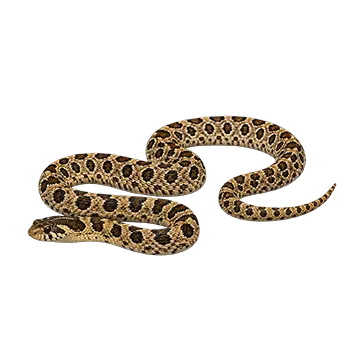
The Eastern Hognose Snake (Heterodon platirhinos) is a moderately sized, heavy-bodied colubrid native to the eastern half of North America. Its range extends from southern New Hampshire and the Great Lakes region southward through the Atlantic coastal states, across the Gulf states, and westward into the eastern portions of Texas, Kansas, and the Dakotas. The species occupies a striking variety of habitats within this range, from sandy pine barrens and coastal dune systems to deciduous forest floors, river floodplains, and agricultural margins. Its preference for loose, well-drained soils in which it can burrow and locate toad prey is a defining ecological trait.

The species was formally described by the French-American naturalist Constantine Samuel Rafinesque in 1820, though earlier naturalists had encountered and commented on the animal without assigning it a stable taxonomic name. The distinctive upturned rostral scale that gives the hognose its common name, along with its dramatic defensive displays, made it a subject of curiosity and confusion for early European settlers and traveling naturalists alike. Many early accounts conflated the Eastern Hognose Snake with venomous species due to its habit of flattening its neck into a hood, hissing loudly, and striking with a closed mouth, behaviors that earned it a host of regional folk names suggesting far greater danger than the animal actually posed.

Rafinesque placed the species within the genus Heterodon, a name derived from the Greek words for different and tooth, referencing the enlarged rear teeth that the snake uses to deflate toads during feeding. The genus was recognized as distinct from other North American colubrids relatively early in the history of American herpetology, and the Eastern Hognose Snake became its type species. Two close relatives share the genus: the Western Hognose Snake (Heterodon nasicus) and the much rarer Southern Hognose Snake (Heterodon simus), each occupying different portions of the continent.

The physical appearance of the Eastern Hognose Snake is remarkably variable, a characteristic that further complicated early attempts at classification. Individuals may display ground colors ranging from yellow and tan to olive, brown, gray, or nearly solid black, with dorsal blotching patterns that can be bold and contrasting or virtually absent. This polymorphism led some nineteenth-century herpetologists to describe what they believed were separate species, only for later researchers to demonstrate through careful morphological and geographic analysis that the variants represented a single, highly variable species.

Indigenous Knowledge & Historical Roles

Long before European naturalists attempted to catalog the reptile fauna of eastern North America, indigenous peoples across the continent had accumulated detailed practical knowledge of the Eastern Hognose Snake and its relatives. For the many nations whose territories overlapped with the species' range, the hognose was a familiar and often distinctive presence in the landscape, recognized for its unusual behaviors and its ecological associations with wetlands, sandy clearings, and the toads that formed the bulk of its diet.

Among the Algonquian-speaking peoples of the northeastern woodlands, snakes occupied complex symbolic positions that varied by species and by community. The Eastern Hognose Snake's theatrical defensive repertoire, which includes inflating its body, hissing, mock-striking, and ultimately feigning death by rolling onto its back and hanging its mouth open, was well known to indigenous observers. These behaviors were understood not as signs of aggression but as the elaborate bluff of an essentially harmless animal, a distinction that many arriving European settlers failed to appreciate for generations.

The ecological role of the Eastern Hognose Snake within its native habitats was also recognized by indigenous communities that maintained close observational relationships with local wildlife. The snake's specialization on toads, particularly American toads and Fowler's toads, positioned it within a web of relationships connecting wetland health, amphibian abundance, and the overall condition of forest and grassland ecosystems. Communities that practiced controlled burning or seasonal land management would have encountered hognose snakes regularly in the mosaic of open and wooded habitats that their stewardship maintained.

The arrival of European colonists introduced new cultural frameworks for interpreting encounters with the Eastern Hognose Snake, and these frameworks were often far less nuanced than the indigenous knowledge they displaced. Colonial-era accounts frequently described the hognose as dangerous, venomous, or demonic, projecting anxieties about the unfamiliar American wilderness onto an animal whose defensive displays seemed to confirm European expectations of a hostile natural world. The folk names that accumulated during this period, including puff adder, spreading adder, blow viper, and hissing sand snake, reflect the depth of this misidentification and the fear it generated among rural communities.

Cultural Symbolism & Folklore

The Eastern Hognose Snake occupies a unique position in the folklore of eastern North America, distinguished primarily by its death-feigning behavior, a display so dramatic and convincing that it has generated folk beliefs, tall tales, and rural legend cycles across every state in the snake's range. When threatened and unable to bluff a predator through hooding and hissing, the hognose will convulse, writhe, defecate, emit musk, and then roll onto its back with its mouth agape and tongue lolling, appearing for all purposes to be a freshly dead animal. If flipped right-side up, it will promptly roll over again, undermining its own performance in a way that has struck human observers as both comical and uncanny.

This death-feigning display, known technically as thanatosis, made the Eastern Hognose Snake a fixture of Appalachian and Southern folk zoology. Stories about the puff adder or spreading adder were passed down through generations of farming and hunting families, often embellished with exaggerated accounts of the snake's venomous bite, its ability to poison the air with its breath, or its supposed habit of mixing venom into its musk. In some regions, the hognose was believed to be among the deadliest snakes in the forest, a reputation entirely at odds with its actual biology but reinforced by the alarming spectacle of its threat display.

The tension between the Eastern Hognose Snake's fearsome appearance and its actual harmlessness has given it a symbolic resonance in American rural culture that few other snake species can match. The hognose became a natural emblem of deception, bluster, and the difference between appearance and reality. Folk sayings and proverbs in several Appalachian and Ozark communities invoked the puff adder as a metaphor for individuals who make grand threats but lack the ability or intention to follow through, a cultural function that reveals a surprisingly sophisticated folk understanding of the snake's defensive strategy even among communities that officially classified it as deadly.

In African American folk traditions across the southeastern United States, the hognose snake appeared in stories and beliefs that drew on both African cosmological frameworks and local ecological observation. Snakes held complex symbolic roles in many African-descended communities, and the hognose, with its death-and-resurrection performance, fit naturally into narrative traditions that explored themes of transformation, resilience, and the crossing of boundaries between life and death. These traditions contributed to a rich and layered cultural record surrounding the species that is only beginning to receive the scholarly attention it deserves.

Scientific Study & Taxonomic Refinement

The scientific study of the Eastern Hognose Snake advanced significantly during the late nineteenth and early twentieth centuries as American herpetology matured from a largely descriptive endeavor into a discipline grounded in systematic field research and comparative anatomy. Researchers working at institutions such as the Academy of Natural Sciences in Philadelphia, the Museum of Comparative Zoology at Harvard, and the Smithsonian Institution accumulated large series of preserved specimens from across the species' range, enabling the first comprehensive analyses of geographic variation, scalation patterns, and color morph distribution.

One of the most productive early researchers to focus on the genus Heterodon was the American herpetologist Karl Patterson Schmidt, who published influential work on the systematics and distribution of North American snakes during the early decades of the twentieth century. Schmidt and his contemporaries clarified the relationships among the three Heterodon species, established the morphological criteria for distinguishing them, and mapped their ranges with increasing precision. This foundational taxonomic work provided the framework within which all subsequent biological research on the Eastern Hognose Snake has been conducted.

The mid-twentieth century brought a new wave of interest in the Eastern Hognose Snake's most distinctive behaviors. Ethologists and behavioral ecologists began studying the death-feigning display under controlled conditions, attempting to understand the proximate mechanisms and ultimate evolutionary advantages of such an elaborate and energetically costly defensive performance. Research demonstrated that the death-feigning response appears to be at least partly innate, as captive-bred hognose snakes that have never encountered a predator will perform the full display sequence when sufficiently stressed. The biochemistry of the behavior has also attracted attention, with studies examining the hormonal and neurological pathways that mediate the transition from active threat display to apparent catalepsy.

Genetic studies conducted from the 1990s onward have refined understanding of the Eastern Hognose Snake's evolutionary relationships and population structure. Molecular phylogenetic analyses confirmed the monophyly of Heterodon and clarified its placement within the broader colubrid radiation. Population genetic research has revealed significant genetic structure across the species' range, with implications for conservation management in regions where habitat fragmentation may be isolating local populations and reducing gene flow.

The Herpetoculture Movement

The Eastern Hognose Snake entered the world of organized reptile keeping during the latter decades of the twentieth century and quickly established itself as one of the most popular and recognizable species in the North American herpetoculture community. Its manageable adult size, generally docile temperament, dramatic behavioral repertoire, and extraordinary range of color and pattern variation combined to make it an appealing captive animal for keepers at many experience levels, though its specialized dietary requirements presented a significant husbandry challenge that shaped the trajectory of its captive history.

The primary obstacle to keeping Eastern Hognose Snakes in captivity has historically been their strong dietary preference for toads. Wild hognose snakes feed almost exclusively on toads of the genera Anaxyrus and Fowleria, using their enlarged rear maxillary teeth to puncture the inflated bodies of defensive toads and their apparent resistance to toad skin toxins to consume prey that most other snake species avoid entirely. Persuading captive hognose snakes to accept commercially available feeder rodents required patience, ingenuity, and a repertoire of scent-transfer techniques that became a central topic of discussion within the hognose-keeping community.

The breakthrough that transformed the Eastern Hognose Snake from a specialist's curiosity into a mainstream pet species was the development of captive-bred lines that reliably accepted unscented rodent prey from birth. Through selective breeding over multiple generations, dedicated breeders produced hognose snakes whose feeding response had been redirected toward mice and rats, eliminating the need for toad-scenting and making the species accessible to a much broader audience of keepers. This shift, which occurred primarily during the 1990s and 2000s, paralleled the explosive growth of the reptile hobby as a whole and positioned the Eastern Hognose Snake alongside corn snakes and ball pythons as a staple of the pet trade.

The color and pattern diversity of the Eastern Hognose Snake became a major driver of interest within herpetoculture as breeders identified and isolated heritable morphs. Albino, axanthic, toffee, lavender, and numerous other color variants were established as reproducible genetic traits, and the combinatorial possibilities of pairing different morphs generated sustained commercial and hobbyist enthusiasm. Hognose snake morph breeding became a recognized specialty within the broader reptile breeding community, with dedicated expos, online marketplaces, and social media groups supporting an active and growing network of breeders and collectors.

The Species Today

The Eastern Hognose Snake today occupies a paradoxical position in the public imagination and in the conservation landscape. On one hand, it has become one of the most celebrated and widely recognized snake species in North America, beloved by reptile enthusiasts and increasingly familiar to a general audience through social media, nature documentaries, and educational outreach programs. Its death-feigning display has made it a viral sensation on multiple platforms, with videos of hognose snakes performing their dramatic collapse routine accumulating millions of views and introducing the species to audiences that might otherwise have little interest in or exposure to snakes.

On the other hand, the Eastern Hognose Snake faces genuine conservation concerns in several parts of its range. The species has experienced population declines in the northeastern United States and in portions of the upper Midwest, driven primarily by habitat loss, road mortality, and the decline of amphibian prey populations. Sandy, open habitats such as pine barrens, coastal dunes, and savanna grasslands, the environments that hognose snakes depend on most heavily, are among the most threatened landscape types in eastern North America, subject to development pressure, fire suppression, and invasive species encroachment.

Several states have responded to documented population declines by listing the Eastern Hognose Snake as a species of special concern, threatened, or endangered within their jurisdictions. These listings carry regulatory consequences for land management, development permitting, and the collection of wild specimens, and they have prompted targeted research and habitat management initiatives aimed at stabilizing and recovering local hognose populations. The species' dependence on toad prey means that hognose conservation is inherently linked to amphibian conservation, connecting the snake's future to broader efforts to protect wetland ecosystems and combat the global amphibian decline.

The cultural trajectory of the Eastern Hognose Snake from feared puff adder to beloved internet celebrity reflects a broader shift in public attitudes toward snakes that has unfolded over the past several decades. Education programs at nature centers, zoos, and wildlife rehabilitation facilities have used the hognose as an ambassador species, leveraging its charismatic defensive behaviors and harmless nature to challenge deep-seated ophidiophobia and promote appreciation for the ecological roles that snakes play. The species' story illustrates how improved scientific understanding, combined with effective public communication, can fundamentally transform a culture's relationship with an animal that was once almost universally feared and persecuted.

Always consult a qualified professional before making any health-related decisions. This content is provided for informational reference only and should not replace professional guidance specific to your animal.