
Wildlife Documentaries & Television

The Diamond Python has featured prominently in Australian wildlife documentary programming since the medium's earliest days on the continent. Australia's tradition of nature television, which stretches from pioneering programs of the 1960s through the contemporary era of high-definition streaming productions, has consistently highlighted the Diamond Python as one of the most visually compelling and accessible reptile subjects available to filmmakers working in the southeastern part of the country. The species' striking patterning, its relative tolerance of human proximity, and its presence in habitats close to major production centers have all contributed to its frequent appearance on screen.

Television personalities who built careers around presenting Australian wildlife to domestic and international audiences regularly featured the Diamond Python in their programs. The species' calm temperament made it an ideal subject for live handling demonstrations, allowing presenters to showcase a large and impressive python while discussing broader themes of reptile biology, conservation, and the importance of coexistence with native wildlife. These segments, broadcast into millions of homes over decades, played a measurable role in shifting Australian public attitudes away from reflexive fear of snakes and toward a more informed appreciation of their ecological importance.

International natural history productions have also drawn on the Diamond Python as a subject, though typically within broader treatments of Australian biodiversity or the Carpet Python species complex as a whole. Productions by major international broadcasters have filmed Diamond Pythons in their natural habitat in the Blue Mountains, Royal National Park, and the bushland fringes of Sydney, bringing the subspecies to global audiences who might otherwise never encounter Australian reptile fauna. These international treatments have generally emphasized the Diamond Python's unusual status as a large constrictor thriving within one of the world's most urbanized landscapes.

The advent of streaming platforms and short-form video has expanded the Diamond Python's documentary presence beyond traditional television. Independent wildlife filmmakers, conservation organizations, and individual naturalists now produce and distribute high-quality video content featuring the species through platforms that reach audiences directly, bypassing the editorial gatekeeping of traditional broadcast networks. This democratization of wildlife media has enabled more nuanced and specialized treatments of Diamond Python ecology, behavior, and conservation than the broad-audience format of conventional television documentaries typically allowed.

Photography & Visual Arts

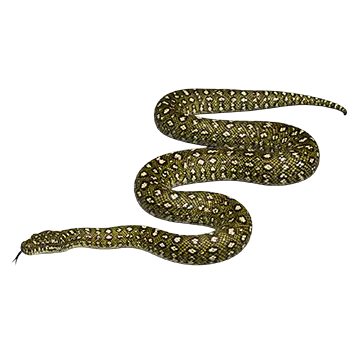
The Diamond Python is widely regarded as one of the most photogenic snake species in Australia, and its visual appeal has made it a perennial favorite among wildlife photographers working in the southeastern part of the continent. The interplay of deep black dorsal scales and bright cream or golden rosettes creates a high-contrast pattern that photographs exceptionally well in both natural light and studio conditions. Professional and amateur photographers alike seek out Diamond Pythons in the wild, and images of the species feature regularly in wildlife photography competitions, natural history publications, and online photography communities.

The species' photographic appeal extends beyond its patterning to its behavior and habitat. Diamond Pythons are frequently photographed draped across sandstone rock faces in the Blue Mountains, coiled among the branches of coastal banksia woodland, or basking in dappled sunlight on the forest floor, creating images that combine the beauty of the animal with the distinctive character of the Australian landscape. These habitat portraits serve not only as aesthetic objects but as visual documents of the ecological context in which the species lives, communicating information about vegetation structure, microhabitat selection, and seasonal behavior to viewers who may never visit the python's range.

Contemporary visual artists in Australia have drawn on the Diamond Python as a subject across a range of media beyond photography. The species' geometric patterning lends itself readily to stylized representation in painting, printmaking, textile design, and digital illustration. Aboriginal and Torres Strait Islander artists have incorporated the Diamond Python and its patterning into works that draw on deep cultural traditions of serpent imagery while engaging with contemporary artistic practice and addressing modern themes of environmental change, cultural continuity, and the relationship between human communities and the non-human world.

Museum exhibitions and public art installations have also featured the Diamond Python as a focal species. Natural history museums in Sydney and other southeastern Australian cities maintain Diamond Python specimens and displays that introduce visitors to the subspecies' biology and ecology, while public art projects in bushland suburbs and national park visitor centers have used representations of the species to create a sense of place and connection to the local environment. These installations reinforce the Diamond Python's status as a cultural emblem of the coastal woodlands and sandstone country of New South Wales.

Literature & Published Works

The Diamond Python has appeared in Australian literature across a spectrum from rigorous scientific monographs to popular natural history writing to fiction and poetry. The species' prominence in the landscape of southeastern Australia, particularly in the Sydney region, has ensured that writers working in or about that part of the country have encountered and been inspired by the python throughout the history of Australian letters. The result is a body of published work that reflects evolving attitudes toward Australian wildlife and the natural environment over more than two centuries.

Scientific literature on the Diamond Python is extensive and spans multiple disciplines. Herpetological journals, ecological research publications, and conservation biology outlets have published hundreds of papers addressing the subspecies' taxonomy, phylogenetics, population ecology, thermal biology, reproductive physiology, and disease susceptibility. Key monographs on Australian pythons, including comprehensive treatments of the Morelia spilota complex, devote substantial chapters to the Diamond Python's distinctive characteristics and the ecological factors that have shaped its evolution. These scientific works, while directed primarily at specialist audiences, have provided the factual foundation upon which popular treatments of the species are built.

Popular natural history writing in Australia has given the Diamond Python a prominent place in books aimed at general readers. Field guides to Australian reptiles invariably feature the species with detailed descriptions and high-quality photographs, and broader works on Australian wildlife, urban ecology, and bushland natural history frequently highlight the Diamond Python as a case study in successful adaptation to human-modified landscapes. Memoirs by naturalists, wildlife carers, and bush regeneration volunteers working in the Sydney Basin often include vivid accounts of personal encounters with Diamond Pythons that illuminate both the biology of the species and the emotional dimensions of living alongside large wild animals.

In Australian fiction and poetry, snakes in general and pythons in particular appear as symbols of wildness, danger, ancient presence, and the irreducible otherness of the non-human world. While few works of fiction feature the Diamond Python by name, the experience of encountering a large python in an Australian garden, bushwalk, or roof cavity is a recognizable literary motif that resonates with readers who have lived in python country. Poets working in the Australian landscape tradition have used encounters with pythons to explore themes of attention, stillness, fear, beauty, and the permeability of the boundary between the domestic and the wild.

Digital Media & Online Communities

The rise of digital media and social networking platforms has transformed the Diamond Python's cultural visibility, creating new channels through which information, imagery, and personal narratives about the species reach vast audiences. Online herpetological forums, which emerged in the late 1990s and matured through the 2000s, provided the first dedicated digital spaces where Diamond Python enthusiasts could share husbandry knowledge, breeding results, field observations, and photographs with a geographically dispersed community of fellow keepers and naturalists. These forums established a culture of detailed documentation and peer review that elevated the quality of publicly available information about the species.

Social media platforms have amplified the Diamond Python's reach far beyond the specialist herpetological community. Photographs and videos of Diamond Pythons encountered in suburban gardens, draped across washing lines, or sheltering in outdoor furniture are among the most widely shared wildlife content originating from the Sydney region. These posts frequently attract engagement from both Australian and international audiences, generating conversations about snake identification, appropriate responses to wildlife encounters, and the broader experience of living in a landscape shared with large reptiles. The viral potential of an eye-catching python photograph has made the Diamond Python an informal social media ambassador for Australian wildlife.

Citizen science platforms and wildlife recording applications have leveraged digital technology to convert casual Diamond Python observations into scientifically valuable data. Programs that invite members of the public to photograph and geolocate wildlife sightings have accumulated substantial datasets on Diamond Python distribution, seasonal activity patterns, and habitat use across the subspecies' range. These crowdsourced datasets complement traditional field research and provide a scale of geographic and temporal coverage that would be impractical to achieve through professional surveys alone. The participatory nature of these programs also strengthens community engagement with Diamond Python conservation.

Content creators specializing in herpetology and wildlife education have built substantial online followings through regular production of Diamond Python-related content. Video creators on major platforms produce detailed tutorials on Diamond Python husbandry, field herping vlogs documenting searches for wild specimens, and educational explainers covering the species' biology and conservation status. Podcast producers in the herpetological space feature Diamond Python breeders, researchers, and wildlife rehabilitators as interview subjects. This ecosystem of independent digital content ensures that accurate, engaging information about the Diamond Python remains accessible to anyone with an internet connection, supplementing and sometimes surpassing the reach of traditional media channels.

Educational Programs & Public Outreach

The Diamond Python plays a central role in reptile education and public outreach programs across southeastern Australia, serving as a live ambassador species in settings ranging from school classrooms to community festivals to national park visitor centers. Licensed wildlife educators and reptile demonstration companies frequently feature Diamond Pythons in their presentations, capitalizing on the species' calm disposition, manageable size, and spectacular appearance to create memorable encounters that reshape audience attitudes toward snakes. For many Australians, particularly children, a supervised interaction with a Diamond Python during a school wildlife incursion represents their first positive experience with a live reptile.

Wildlife rescue and rehabilitation organizations in the Sydney Basin and along the New South Wales coast handle thousands of Diamond Python calls annually, and these interactions serve as important informal education opportunities. When a wildlife rescuer responds to a call about a python found in a suburban home, the encounter provides a chance to explain the species' ecological role, its protected status, and practical strategies for coexisting with pythons in residential areas. Many wildlife rescue organizations maintain active social media presences through which they document their Diamond Python relocations, reaching audiences who might not encounter the species directly but who benefit from the educational content that accompanies each post.

Zoos and wildlife parks in southeastern Australia maintain Diamond Python exhibits that introduce visitors to the subspecies within broader narratives about Australian biodiversity, reptile conservation, and the ecological dynamics of southeastern Australian woodlands. These institutional displays typically combine live animals with interpretive signage, multimedia presentations, and keeper talks that provide context about the Diamond Python's natural history, its relationship to other members of the Carpet Python complex, and the conservation challenges it faces in a rapidly urbanizing landscape. Some institutions also incorporate Diamond Pythons into behind-the-scenes experiences and close encounter programs that offer paying visitors supervised handling opportunities.

The cumulative effect of decades of educational programming featuring the Diamond Python has been a measurable shift in public attitudes toward the species and toward non-venomous snakes generally in southeastern Australia. Surveys of community attitudes toward urban wildlife consistently find that residents in areas with active wildlife education programs express higher levels of tolerance for pythons in their neighborhoods and greater willingness to take non-lethal approaches to managing human-snake encounters. This attitudinal shift, while incomplete and unevenly distributed, represents a significant cultural achievement and a testament to the power of sustained public engagement built around a charismatic and accessible species.

Pop Culture & Brand Identity

Beyond its presence in natural history media and formal educational contexts, the Diamond Python has permeated Australian popular culture as a recognizable visual motif and cultural reference point. The species' distinctive diamond-patterned skin has inspired designs in fashion, graphic design, and commercial branding, particularly among businesses and organizations based in the Sydney region and the Blue Mountains that seek to evoke a connection to the local natural environment. While these commercial applications rarely involve the species by name, the use of diamond rosette patterns on a dark background is widely understood as a reference to the iconic python.

Sporting organizations, bushwalking clubs, environmental advocacy groups, and community associations in southeastern Australia have adopted the Diamond Python as a mascot or emblem, drawn by its combination of visual distinctiveness, regional specificity, and positive ecological associations. These adoptions reflect and reinforce the species' status as a symbol of the southeastern Australian landscape, linking the identity of human communities to the non-human inhabitants with which they share their territory. The python's connotations of strength, patience, and quiet persistence make it an appealing choice for organizations that wish to project these qualities.

The Diamond Python has also entered the broader Australian cultural conversation through news media coverage of human-python encounters. Stories about Diamond Pythons found in unexpected locations, such as car engines, Christmas trees, bathroom plumbing, and retail stores, are a reliable source of human interest content for Australian news outlets and frequently achieve wide circulation on social media. These stories, while sometimes sensationalized, generally carry an undertone of affectionate familiarity rather than genuine alarm, reflecting the species' normalized status in the communities where it is most commonly encountered. The recurring nature of these stories has established the Diamond Python as a recognizable character in the ongoing narrative of Australian suburban life.

The international perception of the Diamond Python, while less developed than its domestic profile, has grown steadily through the channels of digital media and the global herpetoculture community. For reptile enthusiasts outside Australia, the Diamond Python represents a highly desirable and aesthetically exceptional member of the Carpet Python complex, and its restricted availability outside Australian borders due to wildlife export regulations has given it an aura of exclusivity that enhances its cultural cachet. International herpetoculture publications and online communities discuss the Diamond Python with a degree of reverence that reflects both its intrinsic appeal and its status as an emblem of Australia's uniquely regulated approach to native wildlife management.

Always consult a qualified professional before making any health-related decisions. This content is provided for informational reference only and should not replace professional guidance specific to your animal.