
Origins & Taxonomic Discovery

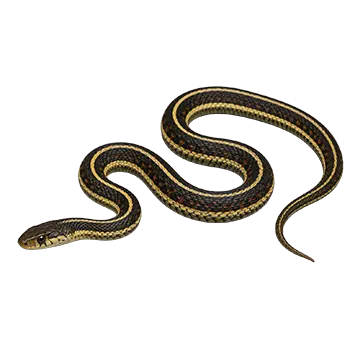
The Common Garter Snake (Thamnophis sirtalis) holds the distinction of being one of the most broadly distributed reptiles on the North American continent. Its range stretches from the Atlantic seaboard of Canada and the United States westward to the Pacific coast, and from the subarctic margins of central Canada southward into the northern reaches of Mexico. This extraordinary geographic span encompasses an equally extraordinary variety of habitats, including marshlands, meadows, forest edges, suburban gardens, vacant lots, lakeshores, and mountain slopes at elevations exceeding eight thousand feet. Few snake species anywhere in the world occupy such a diverse array of ecological niches, and this adaptability has placed the Common Garter Snake at the center of human experience with serpents across an entire continent.

The species received its formal scientific description from the Swedish naturalist Carl Linnaeus in 1758, in the landmark tenth edition of Systema Naturae. Linnaeus assigned it the name Coluber sirtalis, placing it within the broad catch-all genus that early taxonomists used for most colubrid snakes. The specimen on which the original description was based came from eastern North America, though the precise locality was not recorded with the specificity that modern taxonomy demands. Over the subsequent centuries, as herpetologists refined the classification of New World natricine snakes, the species was transferred to the genus Thamnophis, a grouping erected in 1843 by Leopold Fitzinger to accommodate the garter snakes and their close relatives.

The common name itself carries an interesting etymological history. The prevailing explanation holds that early European settlers in North America likened the snake's longitudinal stripes to the decorative garters used to hold up stockings, a ubiquitous clothing accessory in colonial-era dress. Some linguistic historians have suggested an alternative derivation from the German word for garden, reflecting the snake's frequent appearance in cultivated areas, though the garter-strap theory remains more widely accepted among herpetologists and etymologists. Regardless of its precise origin, the name became firmly established in English by the eighteenth century and has remained the standard vernacular designation ever since.

The taxonomic history of Thamnophis sirtalis is notable for the large number of subspecies that have been described over the years. At various points, herpetologists recognized more than a dozen subspecies across the species' range, distinguished primarily by differences in coloration, pattern, and geographic distribution. These included striking regional variants such as the San Francisco Garter Snake, the red-sided garter snakes of the northern Great Plains, and the melanistic populations found around Lake Erie. While modern molecular systematics has prompted some consolidation and reclassification within this complex, the sheer phenotypic diversity of the Common Garter Snake continues to fascinate taxonomists and evolutionary biologists.

Indigenous Knowledge & Pre-Colonial Roles

Long before European naturalists cataloged the Common Garter Snake within the Linnaean system, Indigenous peoples across North America possessed detailed and sophisticated knowledge of the species and its close relatives. This knowledge was embedded within broader ecological understanding systems that recognized snakes as integral components of the landscapes that Indigenous communities inhabited and managed. The garter snake's abundance, its conspicuous daytime activity, and its presence near water sources and gathering areas ensured that it was among the most frequently encountered reptiles in the daily lives of many Native peoples.

Among the Ojibwe and other Anishinaabe peoples of the Great Lakes region, snakes occupied important positions within traditional cosmological frameworks. The garter snake was generally regarded as a benign creature, distinct from the more spiritually potent or dangerous serpent figures that appeared in sacred narratives. Its presence near water connected it symbolically to the powerful underwater spirits that featured prominently in Anishinaabe cosmology, though the garter snake itself was typically viewed as a humble and industrious animal rather than a being of great spiritual authority. Traditional ecological knowledge recognized the snake's role as a consumer of insects, amphibians, and small rodents, and its seasonal patterns of emergence and hibernation were understood as reliable indicators of broader environmental cycles.

In the traditions of many Plains nations, including the Lakota and the Cheyenne, snakes were woven into creation stories and moral teachings that transmitted essential cultural values between generations. The garter snake's habit of communal hibernation, in which hundreds or even thousands of individuals share a single overwintering den, was observed and noted by Indigenous communities long before Western scientists documented the phenomenon. These aggregations were understood as expressions of the animals' social nature and were sometimes interpreted as models of communal cooperation and mutual reliance, themes that resonated with the cooperative social structures of the communities that observed them.

The practical dimensions of Indigenous knowledge about garter snakes extended to an understanding of the animals' seasonal movements, preferred habitats, and dietary habits. Communities that relied on fishing and gathering near wetlands and riverbanks would have encountered garter snakes with particular frequency, and the snakes' consumption of frogs, leeches, and fish provided observable evidence of their ecological role. Some traditions incorporated garter snakes into medicinal practices, with certain preparations using shed skins or other snake-derived materials for therapeutic or ceremonial purposes, though specific practices varied widely among nations and are in many cases considered culturally sensitive knowledge not intended for general publication.

Cultural Symbolism & Folklore

The Common Garter Snake occupies a distinctive niche in the broader cultural symbolism of serpents in North American societies. Unlike the venomous rattlesnakes and copperheads that have dominated the fearful end of the human-snake relationship on the continent, the garter snake has more often been associated with familiarity, harmlessness, and even affection. For many generations of North Americans, the garter snake has served as the archetypal first encounter with a wild reptile, shaping fundamental attitudes toward snakes and the natural world more broadly. This formative role in childhood experience has given the species a cultural significance that extends well beyond its ecological importance.

In the folk traditions of rural North America, the garter snake accumulated a rich body of beliefs, sayings, and superstitions. Among farming communities of the eastern United States and Canada, the appearance of garter snakes in spring was regarded as a reliable harbinger of warm weather, and their presence around barns and outbuildings was often tolerated or even welcomed for the pest-control services they provided. Regional folklore attributed various predictive powers to garter snakes, including the ability to forecast rainfall or to indicate the severity of an approaching winter based on the timing of their autumn retreat to hibernation dens. While these folk beliefs lacked scientific validity, they reflected a genuine attentiveness to the natural world and to the garter snake's conspicuous place within it.

The snake also figured in the darker corners of folk belief. Some rural traditions held that garter snakes could steal milk from cows, a widespread but entirely unfounded superstition that was applied to various snake species across Europe and North America. Others attributed minor medicinal properties to garter snake fat or skin, reflecting the broader folk pharmacopoeia that rural communities developed in the absence of professional medical care. These beliefs, while not supported by evidence, illustrate the degree to which the Common Garter Snake was woven into the fabric of everyday rural life and thought.

In contemporary North American culture, the garter snake has emerged as something of an ambassador for its entire order. Its small size, non-threatening demeanor, and willingness to inhabit human-modified landscapes have made it the species most likely to be encountered by people who might otherwise have no direct experience with snakes. This accessibility has positioned the garter snake as a gateway species in environmental education, with countless nature centers, school programs, and wildlife outreach efforts using live garter snakes to introduce children and adults to reptile biology and to challenge the reflexive fear of snakes that pervades much of Western culture.

Early Scientific Study & European Encounters

The arrival of European settlers in North America during the sixteenth and seventeenth centuries brought the Common Garter Snake to the attention of a naturalist tradition that was eager to catalog the unfamiliar flora and fauna of the New World. Early colonial accounts of North American wildlife frequently mentioned the abundance of small, striped snakes in settled areas, and the garter snake's visibility and approachability made it one of the first reptile species to be described in detail by European observers. These early descriptions varied in accuracy and tone, reflecting the mixed attitudes toward snakes that European colonists brought with them from cultures steeped in Judeo-Christian serpent symbolism.

The naturalist John Bartram and his son William, whose eighteenth-century explorations of eastern North America produced some of the most detailed early accounts of the continent's natural history, documented garter snakes among the many species they encountered during their travels through the colonies. William Bartram's Travels, published in 1791, included observations on the behavior and habitat preferences of various serpent species that would later be recognized as members of the Thamnophis complex. These pioneering naturalists helped establish a tradition of careful field observation that would eventually mature into the systematic herpetology of the nineteenth and twentieth centuries.

The nineteenth century saw a dramatic expansion of scientific interest in North American reptiles, driven by the establishment of major natural history museums and the professionalization of zoological research. Spencer Fullerton Baird, working at the Smithsonian Institution from the 1850s onward, undertook comprehensive surveys of North American herpetofauna that documented the geographic variation within Thamnophis sirtalis across much of its range. Baird and his contemporaries described numerous regional forms and variants, laying the groundwork for the subspecific taxonomy that would characterize garter snake classification for the next century. The sheer volume of specimens that accumulated in museum collections during this period attested to the species' abundance and to the relative ease with which it could be collected.

By the early twentieth century, the Common Garter Snake had become one of the most intensively studied reptile species in the world. Its abundance, its tolerance of captivity, its tractable temperament, and its willingness to feed and reproduce under laboratory conditions made it an ideal model organism for research in reptile physiology, ecology, and behavior. Pioneering studies on snake locomotion, thermoregulation, chemoreception, and reproductive biology drew heavily on garter snake subjects, establishing a foundation of knowledge that continues to inform herpetological research to the present day.

The Herpetoculture Movement

The Common Garter Snake's relationship with the organized herpetoculture hobby has followed a trajectory quite different from that of the large tropical constrictors and colorful exotic species that tend to dominate reptile expos and breeding markets. For much of the hobby's history, garter snakes were regarded as common, easily obtainable animals that lacked the cachet of imported species or the visual drama of larger constrictors. Many experienced reptile keepers had kept garter snakes as children but moved on to other species as their interests and resources expanded, contributing to a perception of the garter snake as a beginner's animal rather than a serious hobbyist's pursuit.

This attitude began to shift during the 1990s and 2000s as a dedicated community of garter snake enthusiasts emerged within the broader herpetoculture world. These keepers recognized the species' many virtues as a captive animal, including its manageable size, its active and diurnal behavior, its relatively straightforward husbandry requirements, and the remarkable diversity of color and pattern variants available within the species complex. Selective breeding programs targeting specific color morphs and subspecific forms gained momentum, producing animals with intensified reds, blues, and melanistic coloration that rivaled the visual appeal of far more expensive species. Online communities and dedicated garter snake forums provided platforms for breeders to share knowledge, coordinate breeding projects, and market captive-bred animals to a growing audience of appreciative keepers.

The garter snake's suitability for bioactive and naturalistic vivarium setups also contributed to its rising popularity within a hobby that was increasingly emphasizing animal welfare and environmental enrichment over minimalist rack-style housing. Keepers discovered that garter snakes thrived in planted enclosures with water features, live moss, and naturalistic substrates, displaying a wider range of natural behaviors when provided with complex habitats. This alignment between the garter snake's needs and the hobby's evolving best practices made the species a natural fit for keepers interested in creating living ecosystems rather than simply housing animals.

The herpetoculture community's engagement with Common Garter Snakes has also generated valuable contributions to the broader understanding of the species' biology. Captive breeding records have documented reproductive parameters, growth rates, longevity records, and dietary preferences with a level of detail that complements field-based research. Observations on the behavior of captive individuals, including social interactions within communally housed groups, feeding strategies, and responses to environmental stimuli, have provided insights that would be difficult or impossible to obtain through field study alone.

The Species Today

Today the Common Garter Snake remains one of the most abundant and widely encountered reptile species in North America, maintaining robust populations across the vast majority of its historical range. Unlike many of its reptilian contemporaries, the species has demonstrated a remarkable ability to persist and even thrive in landscapes that have been extensively modified by human activity. Suburban gardens, urban parks, agricultural margins, cemetery grounds, and roadside ditches all provide suitable habitat for a snake that requires little more than access to cover, moisture, and a supply of invertebrate and amphibian prey. This resilience in the face of landscape transformation has ensured that the Common Garter Snake continues to serve as the primary point of contact between most North Americans and the world of serpents.

Despite its overall abundance, the species faces genuine conservation challenges at regional and subspecific levels. The San Francisco Garter Snake (Thamnophis sirtalis tetrataenia), widely regarded as one of the most visually striking reptiles in North America, has been listed as an endangered species under the United States Endangered Species Act since 1967. Habitat loss driven by urban development on the San Francisco Peninsula, combined with the degradation of the wetland and grassland habitats on which this subspecies depends, reduced its population to critically low levels during the twentieth century. Ongoing conservation efforts, including habitat restoration, predator management, and captive breeding programs, have stabilized some populations, but the subspecies remains vulnerable and serves as a reminder that even common species can face existential threats when particular populations are isolated and exposed to intense development pressure.

The Common Garter Snake also plays an increasingly visible role in citizen science and community-based ecological monitoring. Programs such as iNaturalist, HerpMapper, and various regional amphibian and reptile atlases have enlisted thousands of volunteer observers in documenting garter snake sightings, contributing georeferenced occurrence data that supports population trend analysis and conservation planning. The garter snake's abundance and identifiability make it an ideal target for citizen science efforts, and the data generated by these programs have already yielded insights into range shifts, phenological changes, and the effects of urbanization on snake populations that would be impractical to obtain through professional survey work alone.

Looking forward, the Common Garter Snake's future appears broadly secure, though it is not without uncertainties. Climate change models predict shifts in the species' range boundaries and alterations in the timing of its seasonal activity cycles, with potential consequences for its interactions with prey species, predators, and pathogens. The ongoing global decline of amphibian populations, driven by chytrid fungus, habitat loss, and chemical contamination, poses a particular concern for a snake that depends heavily on frogs, toads, and salamanders as dietary staples. Understanding and mitigating these threats will require continued investment in research, monitoring, and public engagement, all areas in which the Common Garter Snake's cultural familiarity and scientific accessibility position it as a valuable focal species for conservation action.

Always consult a qualified professional before making any health-related decisions. This content is provided for informational reference only and should not replace professional guidance specific to your animal.