
Origins & Discovery

The Cat-Eyed Snake belongs to the genus Leptodeira, a group of mildly venomous, rear-fanged colubrid snakes distributed throughout the Neotropics and the southernmost reaches of the Nearctic. The most widely recognized species within the genus is Leptodeira septentrionalis, commonly known as the Northern Cat-Eyed Snake, whose range extends from the lower Rio Grande Valley of southern Texas through Mexico, Central America, and into northern South America. Other species within the genus, including Leptodeira annulata and Leptodeira nigrofasciata, occupy overlapping or adjacent ranges across the continent, collectively forming one of the most ecologically successful colubrid lineages in the Western Hemisphere.

The genus Leptodeira was first described by the British-American herpetologist Edward Hallowell in 1845, though individual species within the group had been recognized and described by earlier naturalists working from preserved specimens brought back from expeditions to Mexico and Central America. The species name septentrionalis, meaning northern, was applied to distinguish the more northerly-ranging populations from their southern relatives. Throughout the nineteenth century, the taxonomy of the group underwent extensive revision as new specimens arrived at European and American museums from across Latin America, and the genus at various times contained far more species than are currently recognized.

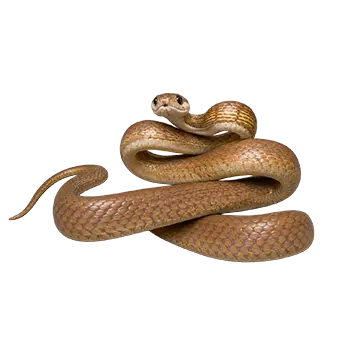
The common name Cat-Eyed Snake derives from the animal's most immediately striking feature: its vertically elliptical pupils, which closely resemble those of a domestic cat. This pupil shape is an adaptation to the snake's strongly nocturnal lifestyle, allowing the eye to open wide in low-light conditions for maximum light gathering while constricting to a narrow slit during the day to protect the sensitive retina. The distinctive eye shape made the snake immediately recognizable to indigenous peoples, early colonial naturalists, and modern field herpetologists alike, and it remains the single most reliable visual identifier for the genus in the field.

Ecologically, the Cat-Eyed Snake occupies a wide variety of habitats, from lowland tropical rainforest and semi-deciduous forest to thorn scrub, agricultural margins, and even suburban gardens throughout its range. This habitat flexibility, combined with a generalist diet that includes frogs, frog eggs, lizards, and small invertebrates, has allowed the genus to persist in landscapes that have been substantially modified by human activity. The snake's willingness to inhabit disturbed and edge habitats brought it into frequent contact with human communities throughout its evolutionary history, ensuring that it became one of the most commonly encountered nocturnal snakes in the Neotropics.

Indigenous Knowledge & Historical Roles

Throughout Mesoamerica and the broader Neotropical region, indigenous communities developed extensive practical knowledge of the Cat-Eyed Snake over millennia of coexistence. As a frequently encountered nocturnal species, the snake was familiar to agricultural communities, forest-dwelling peoples, and coastal populations alike. Its distinctive appearance, particularly the reflective vertical-pupil eyes visible in firelight or torchlight, ensured that it occupied a recognizable position in indigenous systems of natural history classification, even among communities that did not assign it the profound spiritual significance accorded to larger or more dangerous serpent species.

In the agricultural traditions of Mesoamerican peoples, including the Maya and various Nahua-speaking groups, the Cat-Eyed Snake was widely understood to be a consumer of frogs and the eggs of tree frogs. This ecological role was observed and documented in indigenous knowledge systems long before Western herpetologists formally described the snake's diet. Farmers recognized that the presence of these small nocturnal snakes in and around crop fields, irrigation channels, and water storage areas reflected the broader health of the local ecosystem, and the snakes were generally tolerated or even welcomed as indicators of productive, functioning agricultural landscapes.

The relationship between the Cat-Eyed Snake and human communities was also shaped by the snake's mild venom delivery system. As a rear-fanged colubrid, the Cat-Eyed Snake possesses enlarged, grooved teeth at the back of its upper jaw that deliver a mild venom effective against its small prey but essentially harmless to humans. Indigenous communities across the snake's range recognized that the Cat-Eyed Snake posed no meaningful threat to people, and this understanding was transmitted across generations through oral tradition, practical instruction during childhood, and the accumulated experience of communities that encountered the species on a near-nightly basis during the warm, wet months of the year.

In some lowland Maya communities, the Cat-Eyed Snake was grouped conceptually with other small, harmless nocturnal serpents and distinguished clearly from the dangerously venomous pit vipers that shared its range, such as the Fer-de-Lance and various palm vipers. This practical taxonomic knowledge, which sorted snakes by their relevance to human safety rather than by morphological criteria, represented a sophisticated system of ecological classification that served community health and safety for centuries before the arrival of European colonizers and their own systems of biological categorization.

Cultural Symbolism & Folklore

The Cat-Eyed Snake's cultural resonance in the Americas is intimately connected to the broader and deeply complex role that serpents play in Mesoamerican and South American cosmologies. In the civilizations of the Maya, Aztec, and other Mesoamerican peoples, serpents were among the most symbolically potent animals in the natural world, associated with water, fertility, the underworld, transformation, and the movement of celestial bodies. While the most prominent serpent figures in these traditions, such as the feathered serpent Quetzalcoatl or Kukulkan, were typically associated with larger or more dramatically dangerous species, the Cat-Eyed Snake contributed to the broader cultural fabric of serpent symbolism through its ubiquity and its association with the night.

The nocturnal habits of the Cat-Eyed Snake linked it symbolically to the night sky, to darkness, and to the liminal spaces between the human-managed world of the village and the wild, untamed world of the forest. In several indigenous Mesoamerican traditions, nocturnal creatures occupied a specific symbolic register associated with the underworld, with dreams, and with the spirits of the dead. The Cat-Eyed Snake, with its reflective eyes visible as two bright points in the darkness, contributed to folk beliefs about night-wandering spirits and the watchful eyes of the forest. These associations were not necessarily fearful in nature; in many cases, the nocturnal world and its inhabitants were regarded as complementary to the daytime world rather than threatening to it.

In the folklore traditions of rural communities across Mexico and Central America, the Cat-Eyed Snake appears in cautionary tales and practical narratives associated with nighttime activity, agricultural life, and the rainy season. Stories involving small nocturnal snakes often served educational purposes, teaching children to be observant and careful when moving through fields or forests after dark, while simultaneously communicating the message that not all snakes are dangerous and that many play beneficial roles in the environment. These narratives blended ecological instruction with moral and cultural teaching in ways characteristic of oral tradition across the region.

The distinctive eyes of the Cat-Eyed Snake have also inspired folk names in various languages and dialects across its range. In Mexican Spanish, the snake is sometimes referred to by local names that reference its cat-like gaze, and similar descriptive naming conventions exist in indigenous languages. These names reflect the universally striking impression made by the snake's pupils, which served as a primary identifier across cultures and languages and contributed to the species' recognizability in folk taxonomy throughout the Neotropics.

Colonial Encounters & Scientific Classification

The European colonization of the Americas from the sixteenth century onward brought the Cat-Eyed Snake to the attention of Western naturalists, though it initially received far less attention than the larger, more spectacularly dangerous species that dominated colonial accounts of New World reptiles. Spanish chroniclers and early colonial naturalists in Mexico and Central America were primarily preoccupied with documenting the venomous snakes that posed direct threats to colonists, soldiers, and missionaries, and small, mildly venomous nocturnal species like the Cat-Eyed Snake were largely overlooked in favor of the Fer-de-Lance, the bushmaster, and the coral snakes.

As the science of herpetology matured during the eighteenth and nineteenth centuries, systematic collecting expeditions began to document the full diversity of New World reptile fauna. The Cat-Eyed Snake entered the formal scientific literature through a series of descriptions by European and American taxonomists working from specimens preserved in alcohol and shipped from field collectors across Latin America. The genus Leptodeira was established mid-century, but the taxonomic history of the group proved exceptionally complex, with numerous species and subspecies being described, synonymized, resurrected, and reclassified over the following decades as more material became available and as the criteria for species delimitation evolved.

The twentieth century brought significant advances in the understanding of Cat-Eyed Snake taxonomy and biogeography. Duellman's landmark 1958 monograph on the genus Leptodeira represented the first comprehensive modern treatment of the group, synthesizing decades of accumulated specimen data with new fieldwork across the genus's range. This work established a taxonomic framework that, while subsequently refined by molecular phylogenetic studies, provided the essential foundation for all subsequent research on the group. Duellman's fieldwork also produced detailed ecological observations that revealed the Cat-Eyed Snake's importance as a predator of anuran amphibians, a dietary specialization that connected the snake to the broader dynamics of tropical amphibian communities.

Molecular phylogenetic studies in the late twentieth and early twenty-first centuries revealed that the genus Leptodeira as traditionally constituted harbored considerably more cryptic diversity than external morphology alone suggested. Several populations previously treated as subspecies or local variants of widespread species proved to represent distinct evolutionary lineages, and the taxonomy of the group continues to be refined as new genetic data become available. This ongoing taxonomic work reflects a broader pattern in Neotropical herpetology, where molecular tools have repeatedly uncovered hidden biodiversity within morphologically conservative snake lineages.

The Herpetoculture Movement

The Cat-Eyed Snake's entry into the international herpetoculture community followed a gradual path, driven less by the dramatic visual appeal that propelled species like Ball Pythons and Corn Snakes to mass-market popularity and more by the quiet enthusiasm of dedicated hobbyists with a particular interest in Neotropical colubrid diversity. Through the 1980s and 1990s, as the reptile-keeping hobby expanded rapidly in North America and Europe, Cat-Eyed Snakes began appearing with increasing regularity at reptile expos, in specialty dealer inventories, and in the collections of keepers who sought species beyond the standard roster of beginner-friendly constrictors.

The Cat-Eyed Snake's appeal within the hobby rests on several characteristics that distinguish it from more commonly kept species. Its manageable adult size, typically between eighteen and thirty inches, makes it suitable for modest enclosure setups. Its distinctive vertical pupils and attractively banded or blotched dorsal pattern give it a visual interest that belies its relatively small stature. Its nocturnal activity cycle offers keepers the opportunity to observe natural hunting and exploratory behaviors during evening hours, providing a window into the ecology of tropical night-active serpents that is unavailable with diurnal species.

Captive husbandry of the Cat-Eyed Snake presented specific challenges that the herpetoculture community addressed through shared experience and iterative refinement of care protocols. The species' strong dietary preference for frogs and frog eggs in the wild meant that transitioning wild-caught individuals to commercially available food items such as small fish or pinkie mice required patience and, in some cases, scenting techniques. Captive breeding efforts, while successful in the hands of experienced keepers, remained relatively small-scale compared to the industrial-level production seen with more popular species. The community's collective documentation of breeding triggers, incubation parameters, and neonate feeding strategies contributed meaningfully to the broader understanding of Leptodeira reproductive biology.

The herpetoculture community's relationship with the Cat-Eyed Snake has also intersected with broader conservation and regulatory conversations. As awareness of the ecological impacts of the wildlife trade has grown, responsible hobbyists have increasingly emphasized the importance of captive-bred specimens over wild-caught animals, and the relatively modest commercial demand for Cat-Eyed Snakes has helped insulate the species from the unsustainable collection pressures that have affected more heavily traded reptile species. The small but dedicated community of Cat-Eyed Snake enthusiasts continues to advocate for evidence-based approaches to both husbandry and regulation.

The Species Today

Today the Cat-Eyed Snake occupies a position of growing scientific interest as researchers increasingly recognize the genus Leptodeira as a model system for studying speciation, biogeography, and ecological adaptation in the Neotropics. The genus's broad geographic range, spanning from the arid borderlands of the southwestern United States through the lush rainforests of Central America and into the varied landscapes of South America, encompasses dramatic environmental gradients that have shaped the evolutionary diversification of the group. Ongoing molecular and morphological studies continue to reveal new species and refine our understanding of the relationships within the genus, making the Cat-Eyed Snake a subject of active taxonomic investigation.

The conservation status of the Cat-Eyed Snake varies across its extensive range, but most populations are currently considered stable. The species' ecological flexibility, its tolerance of disturbed and edge habitats, and its ability to exploit anthropogenic landscapes such as agricultural fields, gardens, and drainage channels have buffered it against the habitat loss that threatens more specialized tropical reptile species. However, localized population declines have been documented in areas of intensive agricultural development, particularly where pesticide use has reduced amphibian prey populations or where large-scale deforestation has eliminated the moist microhabitats that the snake depends on for thermoregulation and reproduction.

The Cat-Eyed Snake's role as a predator of anuran amphibians has taken on new ecological significance in the context of global amphibian declines. As the chytrid fungus Batrachochytrium dendrobatidis and other threats have devastated amphibian populations across the Neotropics, researchers have begun investigating the downstream effects on snake species that depend heavily on amphibian prey. The Cat-Eyed Snake, as one of the most thoroughly studied amphibian-specialist serpents in the Americas, has become an important indicator species for monitoring the health of tropical amphibian communities and the cascading ecological effects of amphibian loss.

Culturally, the Cat-Eyed Snake continues to occupy a familiar and generally benign position in the daily lives of rural communities across Latin America. It remains one of the most commonly encountered nocturnal snakes in much of its range, and its harmlessness to humans is widely understood even in communities without formal herpetological education. As ecotourism and nature-based tourism industries expand across Central and South America, the Cat-Eyed Snake has become a frequent subject of nighttime wildlife walks and guided herping excursions, introducing international visitors to the rich diversity of Neotropical serpent fauna and contributing to a growing public appreciation for the ecological roles played by small, non-venomous and mildly venomous snakes in tropical ecosystems.

Always consult a qualified professional before making any health-related decisions. This content is provided for informational reference only and should not replace professional guidance specific to your animal.