
Origins & Classification

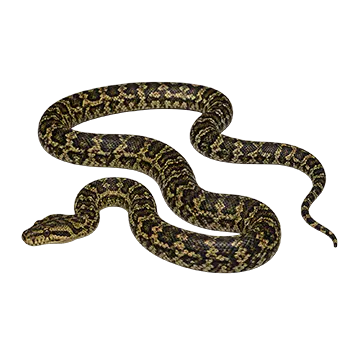
The Carpet Python (Morelia spilota) is a large, nonvenomous python native to Australia, Indonesia, and Papua New Guinea. It belongs to the family Pythonidae and the genus Morelia, a group of Australasian pythons that has diversified across a remarkable range of habitats. The species was first formally described by the French naturalist Bernard Germain de Lacépède in 1804, making it one of the earliest Australian snakes to enter the scientific record.

The Carpet Python complex encompasses several recognized subspecies, each adapted to a different region and habitat type within the species' vast range. Among the most commonly recognized are the Jungle Carpet Python (M. s. cheynei), the Coastal Carpet Python (M. s. mcdowelli), the Inland Carpet Python (M. s. metcalfei), the Darwin Carpet Python (M. s. variegata), the Diamond Python (M. s. spilota), and the Northwestern Carpet Python. This subspecific diversity reflects millions of years of adaptation to environments ranging from tropical rainforests and coastal scrublands to semi-arid woodlands and cool temperate forests.

The evolutionary history of the Morelia genus is tied to the broader radiation of pythons across Australasia. As Australia drifted northward and its climate shifted over geological time, python populations became isolated in different habitat zones, driving the subspecific diversification seen in the Carpet Python complex today. Molecular phylogenetic studies have helped clarify the relationships among these subspecies, though debate about the exact boundaries and ranking of certain populations continues.

The common name "Carpet Python" refers to the species' ornate dorsal patterning, which features bold blotches, bands, and reticulations in combinations of brown, tan, gold, cream, and black that vary dramatically among subspecies. This intricate patterning was likened to the designs found on woven carpets, and the name has stuck in both popular and scientific usage.

Historical Roles

Carpet Pythons have coexisted with human populations in Australia and the surrounding region for tens of thousands of years. For Aboriginal Australians, pythons are deeply woven into cultural life, appearing in Dreamtime narratives, ceremonial practices, and traditional ecological knowledge. The Rainbow Serpent, one of the most significant figures in Aboriginal spirituality, is often associated with large pythons, and the Carpet Python's widespread presence across the continent has made it a familiar animal in many indigenous communities.

In the practical dimension of traditional Aboriginal life, pythons served as a food source in some regions and were recognized as important components of healthy ecosystems. Indigenous understanding of python behavior, habitat preferences, and seasonal patterns represents a deep body of ecological knowledge developed over millennia. This knowledge continues to inform contemporary conservation efforts when traditional owners collaborate with wildlife researchers.

With European colonization of Australia, attitudes toward Carpet Pythons shifted considerably. Early settlers often regarded large snakes with fear and hostility, and pythons encountered in and around settlements were frequently killed. However, some rural Australians came to appreciate the Carpet Python's role as a rodent predator, particularly around farms and homesteads. The snake's habit of taking up residence in roof spaces, sheds, and chicken coops created a complex relationship with landowners — welcome for its pest control services but sometimes unwelcome for its interest in poultry and eggs.

By the twentieth century, growing environmental awareness and the development of wildlife protection legislation began to shift public attitudes toward Carpet Pythons and other native reptiles. The species' striking appearance and relatively manageable temperament made it one of the first Australian pythons to gain popularity in the keeping and breeding hobby, further changing its cultural status from nuisance animal to valued wildlife.

Cultural Symbolism

The Carpet Python holds significant cultural weight across the diverse communities of Australia and the broader Australasian region. In Aboriginal Australian cultures, large pythons carry profound spiritual significance. The Rainbow Serpent, a creator figure central to many Dreamtime traditions, is one of the oldest continuous religious motifs in human history, with rock art depictions dating back thousands of years. While the Rainbow Serpent is not a literal representation of any single snake species, the Carpet Python's size, beauty, and ubiquity across the continent make it one of the animals most closely associated with this powerful figure.

In contemporary Australian culture, the Carpet Python has become something of an icon of Australian wildlife. Alongside kangaroos, koalas, and cockatoos, pythons feature in the national narrative about Australia's unique and sometimes challenging fauna. The Carpet Python's habit of appearing in suburban backyards, swimming pools, and roof cavities has made it a regular fixture in Australian news media, often accompanied by lighthearted stories about snake catchers relocating the animals.

The species' ornate patterning has inspired artistic and design work across cultures. The geometric qualities of Carpet Python markings — particularly the bold contrasts seen in Jungle and Diamond Python subspecies — lend themselves to decorative applications, and stylized python patterns appear in textiles, visual art, and Indigenous craft traditions.

In the global reptile-keeping community, the Carpet Python has achieved an almost iconic status. Its combination of beauty, manageable size, and breeding potential has made it one of the most popular python species in captivity worldwide, and its cultural significance extends well beyond its native range through the international community of keepers and breeders who work with the species.

Herpetological Societies & Breeding Communities

The Carpet Python is one of the most popular and intensively bred python species in the world, and it has a strong presence within both academic herpetology and the organized keeping community. In Australia, state-based herpetological societies have featured Carpet Pythons prominently in their publications, field trips, and educational programs for decades. These societies play an important role in connecting amateur and professional herpetologists and in promoting responsible keeping practices.

The captive breeding of Carpet Pythons began in earnest in Australia during the 1970s and 1980s, as wildlife licensing systems were developed to regulate the keeping of native reptiles. Australian breeders were the first to produce many of the subspecific and locality-specific lines that are now established in captive collections worldwide. The development of these lines required careful record keeping, selective pairing, and a commitment to maintaining the genetic integrity of distinct populations.

Outside Australia, the Carpet Python became increasingly available in the international reptile trade during the late twentieth century. American and European breeders established their own breeding colonies, often working with animals originally exported from Australia before the country implemented strict wildlife export controls. The resulting captive populations in the United States, Europe, and Asia have developed their own breeding traditions and morph lines, including designer crosses between different Carpet Python subspecies.

Online communities and social media groups dedicated to Carpet Python keeping now connect thousands of enthusiasts worldwide. These platforms facilitate the exchange of husbandry information, breeding data, and marketplace activity. Major reptile expos on every continent feature Carpet Pythons from specialized breeders, and the species regularly ranks among the most sought-after pythons at these events.

The Carpet Python Today

In the wild, Carpet Pythons remain one of Australia's most common and widespread python species. They are not considered threatened at the national level, and their adaptability to human-modified landscapes — including suburban and even urban environments — has helped them maintain healthy populations in many areas. However, some subspecies and localized populations face pressures from habitat loss, road mortality, and predation by introduced species such as foxes and cats.

The Diamond Python, the southernmost subspecies found in the cooler forests and heathlands of southeastern Australia, has experienced population declines in some parts of its range due to urban development and habitat fragmentation. Conservation efforts for this and other vulnerable populations include habitat protection, wildlife corridor preservation, and public education campaigns aimed at reducing human-caused mortality.

In the pet trade, the Carpet Python continues to grow in popularity worldwide. The species' combination of manageable adult size, striking appearance, and reproductive productivity makes it an ideal candidate for captive breeding programs. The ongoing development of new color and pattern morphs ensures sustained interest from collectors and hobbyists, while the availability of captive-bred animals reduces pressure on wild populations.

Contemporary herpetological research on Carpet Pythons spans a wide range of topics, including thermal ecology, spatial behavior, reproductive biology, and population genetics. Long-term field studies in both natural and urban environments have provided valuable insights into how large pythons navigate human-dominated landscapes, contributing to broader conversations about wildlife coexistence in an increasingly urbanized world.

Notable Individuals

Individual Carpet Pythons have achieved local and sometimes national fame in Australia, often through encounters with human communities that capture public attention. Snake catchers across the country regularly share stories and images of exceptionally large or unusually situated Carpet Pythons, and some of these accounts gain widespread media coverage. Pythons discovered in Christmas trees, wrapped around car engines, or coiled in toilet bowls have provided memorable stories that blend humor with genuine appreciation for the species' adaptability.

In the breeding community, certain Carpet Python lineages have achieved legendary status. Foundational breeding animals that produced the first examples of highly sought-after morphs or that established new color lines are remembered by name within the hobby. The breeders who developed these lines — particularly early Australian breeders who worked with wild-caught founder animals — are recognized as pioneers whose work shaped the global captive population.

Wildlife rehabilitation and education facilities across Australia maintain Carpet Pythons as ambassador animals, and some of these individuals serve in public-facing roles for years or even decades. These long-lived education animals introduce thousands of people each year to the beauty and ecological importance of Australian pythons, playing a direct role in shifting public attitudes toward snakes.

Research programs tracking wild Carpet Pythons with radio telemetry and GPS technology have documented individual animals with remarkable life histories. Some tracked individuals have revealed complex spatial behaviors, long-distance seasonal movements, and surprising fidelity to specific shelter sites. These detailed individual records contribute not only to scientific understanding but also to a growing public appreciation for the intelligence and complexity of python behavior.

Always consult a qualified professional before making any health-related decisions. This content is provided for informational reference only and should not replace professional guidance specific to your animal.