
Origins & Taxonomic Discovery

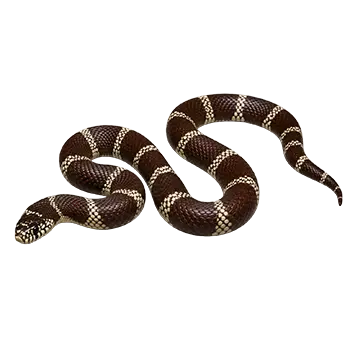
The California Kingsnake (Lampropeltis californiae) is a medium-sized, non-venomous colubrid native to the western United States and northwestern Mexico. Its natural range extends from southern Oregon through the length of California, across the arid landscapes of Nevada, Utah, and Arizona, and southward into the Baja California Peninsula and portions of Sonora. The species thrives in an exceptional variety of habitats, including coastal sage scrub, oak woodland, chaparral, grassland, desert margins, riparian corridors, and agricultural land, demonstrating a habitat generalism that has contributed significantly to its ecological success and its prominence in human encounters throughout the region's history.

Western science first formally described the California Kingsnake in 1860, when the French-American herpetologist Henri de Saussure characterized a specimen collected from the vicinity of the California coast. The species was initially placed within the broader Lampropeltis getula complex, a group of kingsnakes distributed across much of North America that share certain morphological features including smooth, glossy scales and bold banding or striping patterns. For well over a century, the California Kingsnake was treated as a subspecies under the name Lampropeltis getula californiae, a taxonomic arrangement that persisted in both scientific literature and the reptile-keeping hobby.

Molecular phylogenetic studies published in the early twenty-first century prompted a substantial revision of kingsnake taxonomy. Genetic analyses revealed that the California Kingsnake was sufficiently distinct from eastern populations of the getula complex to warrant recognition as a full species. The elevation to Lampropeltis californiae, now widely accepted by the herpetological community, formalized what many field researchers and experienced keepers had long observed: that the California Kingsnake possessed a suite of morphological, ecological, and behavioral characteristics that set it apart from its eastern relatives.

The species exhibits remarkable natural variation in color and pattern across its range. The classic wild-type form features bold white or cream bands on a dark brown or black ground color, but populations in different geographic areas display a striking array of variations. Coastal populations tend toward wider, brighter bands, while desert populations may show narrower banding or a shift toward brown ground coloration. A naturally occurring striped morph, in which the typical banding is replaced by longitudinal dorsal and lateral stripes, appears at variable frequencies in certain populations throughout the range, providing early naturalists and later herpetoculturists with one of the first examples of dramatic pattern polymorphism within a single snake species.

Indigenous Knowledge & Early Human Contact

Long before European naturalists cataloged the California Kingsnake, the Indigenous peoples of western North America possessed intimate knowledge of the species and its ecological role. The diverse Native American nations whose territories overlapped with the kingsnake's range — including the Chumash, Tongva, Cahuilla, Yokuts, Pomo, and many others — developed practical understandings of the snake's behavior, seasonal activity patterns, and place within local food webs that were embedded in broader systems of ecological knowledge passed down through oral tradition.

For many Indigenous communities of California, snakes occupied an important but carefully nuanced position within cultural and spiritual frameworks. The California Kingsnake's well-documented habit of preying on rattlesnakes and other venomous species was recognized and valued by peoples who lived in close daily contact with the landscape. Ethnographic records from several California nations reference the kingsnake's role as a predator of dangerous serpents, and some communities regarded its presence near settlements as beneficial. This practical appreciation reflected a sophisticated understanding of predator-prey dynamics that predated Western ecological science by centuries.

The Chumash people of the central California coast, whose territory encompassed prime kingsnake habitat in the coastal ranges and valleys, incorporated snake imagery into their rock art and material culture. While specific identification of snake species in ancient artistic depictions is difficult, the prominence of serpent motifs in Chumash painted caves and artifacts reflects the significant cultural attention given to snakes as a group. The boldly patterned California Kingsnake, as one of the most visually striking and commonly encountered serpents in Chumash territory, would have been among the species most familiar to these communities.

Spanish missionaries and soldiers arriving in California during the late eighteenth century recorded encounters with banded snakes that almost certainly included California Kingsnakes, though these early European observers generally lacked the herpetological knowledge to distinguish one non-venomous species from another. The disruption of Indigenous land management practices and ecological knowledge systems during the mission period and subsequent colonization represented an incalculable loss of accumulated understanding about the California Kingsnake and the ecosystems it inhabited.

Cultural Symbolism & Regional Identity

The California Kingsnake has accumulated a distinctive cultural symbolism that distinguishes it from most other North American snake species. While snakes as a group often carry negative associations in Western cultural traditions, the kingsnake genus has benefited from its well-known habit of killing and eating venomous snakes, including rattlesnakes. This ophiophagous behavior has earned the California Kingsnake a reputation as a beneficial species — a narrative that has persisted in rural California culture for generations and that stands in notable contrast to the fear and hostility directed at many other serpents.

The common name 'kingsnake' itself carries cultural weight, evoking an image of dominance and mastery within the snake world. The name derives from the genus's ability to overpower and consume other snakes, including species significantly larger than itself, and the California Kingsnake exemplifies this trait dramatically. Accounts of kingsnakes dispatching and swallowing rattlesnakes have circulated in western American folklore since the nineteenth century, becoming part of the regional mythology of rural California, Arizona, and the broader Southwest. These stories, often embellished in retelling, reinforced the kingsnake's status as a kind of natural hero in areas where rattlesnake encounters were a genuine daily concern for ranchers, farmers, and outdoor workers.

In the broader cultural imagination of the American West, the California Kingsnake has become something of a regional mascot for the idea that the natural world contains its own checks and balances. Environmental education programs throughout California and the southwestern states frequently feature the species as an ambassador animal, using its charismatic appearance and compelling predatory habits to introduce audiences to concepts of food web dynamics, predator-prey relationships, and the ecological value of non-venomous snakes. This educational role has contributed to a gradual but meaningful shift in public attitudes toward snakes in the region.

The striking visual appearance of the California Kingsnake — particularly the high-contrast black-and-white banded morph — has also contributed to its cultural footprint. The species' bold patterning has inspired graphic designers, tattoo artists, and fashion brands, sometimes in ways that blur the line between appreciation and appropriation. The alternating black-and-white bands evoke a clean, geometric aesthetic that translates effectively into visual media, and the snake's image appears on everything from regional craft brewery labels to outdoor recreation merchandise produced in the western states.

Scientific Study & Ecological Research

The California Kingsnake has been one of the most intensively studied colubrid snakes in North America, a distinction that reflects both its abundance across accessible habitats and its tractability as a research subject. From the mid-twentieth century onward, the species served as a model organism for investigations into reptilian physiology, behavior, genetics, and ecology, generating a body of scientific literature that few other non-venomous North American snakes can match.

Early ecological studies focused on the California Kingsnake's diet and foraging behavior, documenting the remarkable breadth of its prey base. Researchers confirmed that the species feeds on a wide array of vertebrates and their eggs, including rodents, lizards, birds, bird eggs, and other snakes. The kingsnake's ophiophagous tendencies received particular scientific attention, with controlled studies demonstrating that Lampropeltis californiae possesses a physiological resistance to rattlesnake venom that allows it to survive bites that would be lethal to most other colubrids of comparable size. This resistance, while not absolute, provides enough protection to allow the kingsnake to overpower and consume pit vipers through constriction, a predatory strategy that fascinated researchers and fueled decades of investigation into the biochemical mechanisms underlying venom resistance in non-venomous snakes.

The species also proved invaluable to the study of color pattern genetics in reptiles. The natural polymorphism between banded and striped morphs within wild California Kingsnake populations provided geneticists with a naturally occurring system for investigating the inheritance of pattern traits. Breeding studies conducted from the 1970s onward revealed that the striped pattern is inherited as a simple recessive trait relative to the banded wild type, and subsequent work identified additional pattern and color mutations that established the California Kingsnake as one of the foundational species for understanding color genetics in snakes.

More recent research has leveraged advances in molecular genetics to investigate population structure, gene flow, and adaptive variation across the California Kingsnake's extensive range. Studies using microsatellite markers and mitochondrial DNA sequencing have revealed significant genetic differentiation between populations separated by major geographic barriers such as the Sierra Nevada, the Mojave Desert, and the Sea of Cortez. These findings have implications not only for taxonomy and conservation but also for understanding how landscape features shape the evolutionary trajectories of widespread reptile species in western North America.

Rise in Herpetoculture

The California Kingsnake's ascent to prominence within the herpetoculture hobby represents one of the most significant stories in the history of reptile keeping. By the late twentieth century, the species had become arguably the single most popular colubrid snake in captivity worldwide, a status it achieved through a combination of manageable size, generally docile temperament, robust health in captive conditions, and extraordinary variety in selectively bred color and pattern morphs.

The roots of California Kingsnake herpetoculture extend to the 1960s and 1970s, when a small number of dedicated hobbyists in Southern California began systematically breeding wild-caught specimens and selecting for desirable traits. These early breeders recognized that the species' natural pattern polymorphism — banded versus striped morphs, variations in band width and ground color — provided raw genetic material for selective breeding programs that could produce visually distinctive captive lines. The discovery and propagation of novel color mutations, beginning with albino (amelanistic) specimens in the 1970s, accelerated this process and transformed the California Kingsnake from a locally kept curiosity into a nationally and then internationally traded commodity.

The proliferation of captive-bred morphs during the 1980s and 1990s was nothing short of explosive. Breeders isolated and combined mutations affecting melanin production, pattern expression, and background coloration to produce an ever-expanding palette of variations. Banana, lavender, chocolate, hypermelanistic, reverse-striped, mosaic, and dozens of other named morphs entered the market, each commanding premium prices when first introduced before becoming more widely available as breeding stock increased. The California Kingsnake morph market served as a template for the designer-morph phenomenon that would later reshape the Ball Python and Boa Constrictor segments of the reptile trade.

The species' suitability for captive life extended beyond aesthetics. California Kingsnakes adapted well to standardized terrarium setups, accepted commercially bred rodent prey readily, and proved relatively resistant to the respiratory and parasitic infections that plagued some other captive snake species. Their moderate adult size — typically three to four feet — made them manageable for hobbyists without dedicated reptile rooms, and their generally calm disposition after routine handling made them accessible to keepers of varying experience levels. These practical virtues, combined with the visual appeal of the many available morphs, cemented the California Kingsnake's position as a gateway species that introduced countless enthusiasts to the broader world of reptile keeping.

Herpetoculture organizations and reptile expos played a crucial role in building the community around California Kingsnake breeding and keeping. Events such as the North American Reptile Breeders Conference and numerous regional reptile shows provided venues for breeders to display their latest morph projects, exchange genetic stock, and share husbandry knowledge. The California Kingsnake was a fixture at these events from their earliest days, and the species' popularity helped drive the growth of the organized reptile hobby into a substantial economic and cultural force.

The Species Today

The California Kingsnake today occupies a secure and multifaceted position within both wild ecosystems and human culture. In its native range, the species remains broadly distributed and locally abundant across much of the western United States and northwestern Mexico. It is not currently listed as threatened or endangered at either the federal or state level in the United States, and its adaptability to disturbed and semi-urban habitats has allowed it to persist in areas where more habitat-sensitive reptile species have declined. Agricultural land, suburban edges, and even urban parks in California and the Southwest continue to support kingsnake populations, though localized declines have been noted in areas of intensive development.

In captivity, the California Kingsnake continues to rank among the most widely kept and bred snake species on the planet. The morph market has matured considerably since its explosive growth period, with common morphs now available at modest prices while novel combinations and high-quality breeding stock still command significant investment. The species remains a staple recommendation for first-time snake owners in virtually every reptile-keeping resource, and its role as an introductory species ensures a continually renewing base of keepers who begin their herpetoculture journey with a California Kingsnake.

Conservation concerns for the California Kingsnake center less on the species itself — which remains in no immediate danger of range-wide decline — than on the broader habitat and ecosystem pressures that affect all wildlife in the rapidly developing landscapes of the American West. Urbanization, road mortality, illegal collection from wild populations for the pet trade, and the secondary effects of rodenticide use in agricultural and suburban settings all exert pressure on local kingsnake populations. Conservation organizations and herpetological societies advocate for habitat corridors, wildlife-friendly land management practices, and public education campaigns that frame the California Kingsnake as a valuable component of healthy western ecosystems.

The cultural legacy of the California Kingsnake continues to evolve. The species serves as a bridge between professional herpetology and the amateur keeping community, between scientific inquiry and popular fascination with the natural world, and between the deep Indigenous knowledge systems of western North America and the modern frameworks of ecology and conservation biology. Whether encountered crossing a dusty trail in the Coast Ranges, displayed at a reptile expo under carefully calibrated lighting, or featured in an educational program at a nature center, the California Kingsnake remains one of the most recognized and culturally resonant snake species in North America.

Always consult a qualified professional before making any health-related decisions. This content is provided for informational reference only and should not replace professional guidance specific to your animal.