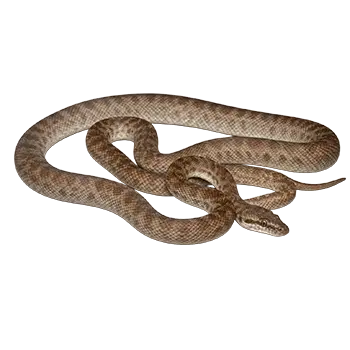

Television & Documentary Appearances

Antaresia pythons have featured in Australian wildlife television for decades, though they have rarely been the sole subject of a program. Their most frequent appearances come in broad-format natural history series that survey Australian reptile diversity, where they serve as accessible counterpoints to the large and dramatic species that tend to dominate screen time. Programs produced by the Australian Broadcasting Corporation and various state-based wildlife departments have regularly included segments on Children's pythons and spotted pythons, typically filmed in the wild during nocturnal survey work or at wildlife sanctuaries where captive individuals can be handled for the camera.

The species gained international documentary exposure through productions that focus on the unusual hunting behavior of the spotted python at cave entrances in northeastern Queensland. At sites such as Mount Etna and the Limestone Ridge caves near Rockhampton, spotted pythons have been filmed ambushing microbats as they emerge at dusk. This predatory strategy, in which the python suspends itself from the cave ceiling and snatches bats in mid-flight, is visually spectacular and has been captured by multiple film crews over the years. The footage has appeared in international wildlife series distributed across Europe, North America, and Asia, giving global audiences a memorable introduction to a snake they might otherwise never encounter.

Beyond traditional documentary formats, Antaresia pythons have appeared in Australian children's educational programming, where their calm temperament makes them ideal on-screen animals. Wildlife presenters working in the tradition of popularizing Australian fauna have frequently chosen Children's pythons as demonstration animals for segments aimed at young viewers, reinforcing the message that not all snakes are dangerous and that reptiles deserve respect and conservation attention.

The species has also been featured in regional tourism promotional material, particularly for areas of Queensland and the Northern Territory where wildlife encounters are marketed to domestic and international visitors. Short-form video content produced for tourism campaigns has showcased Antaresia pythons as part of the broader suite of unique Australian animals that travelers can expect to see during guided wildlife experiences.

Social Media & Digital Culture

The rise of social media platforms has given Antaresia pythons a cultural visibility that would have been unimaginable in the era of traditional media gatekeeping. On platforms such as Instagram, YouTube, TikTok, and Facebook, reptile keepers around the world share images, videos, and husbandry advice centered on their Antaresia pythons, creating a digital ecosystem of content that reaches millions of viewers. The photogenic qualities of these snakes, particularly the rich golden tones of some Children's python morphs and the bold patterning of spotted pythons, translate well to visual social media formats.

YouTube channels dedicated to reptile keeping have produced extensive content on Antaresia pythons, ranging from detailed care guides and feeding videos to morph showcases and breeding project updates. Several prominent reptile-focused channels with subscriber counts in the hundreds of thousands have featured Antaresia species in videos that collectively have accumulated millions of views. These videos serve as both entertainment and education, reaching audiences that might never visit a reptile expo or read a herpetological journal.

On TikTok and Instagram Reels, short-form videos featuring Antaresia pythons have contributed to a broader trend of reptile content that challenges negative stereotypes about snakes. Clips showing these small pythons resting calmly in their keeper's hands, exploring miniature enrichment setups, or feeding have introduced snake keeping to demographics that skew younger and more diverse than the traditional reptile hobby. The comment sections on these posts often reveal a mix of fascination, fear, and curiosity that mirrors the wider public's complex relationship with snakes.

Online forums and community groups dedicated to Australian herpetology and reptile keeping provide more specialized digital spaces where Antaresia content circulates. Platforms such as Reptile Forums Australia, various Facebook groups, and dedicated Discord servers host ongoing discussions about breeding outcomes, locality-specific morphological variation, and advances in husbandry practices. These communities function as repositories of collective knowledge that supplement and sometimes challenge the information found in published care sheets and books.

Print Literature & Field Guides

Antaresia pythons have been documented extensively in the herpetological literature of Australia, appearing in field guides, regional fauna surveys, and specialized monographs on Australian pythons. Harold Cogger's seminal field guide to Australian reptiles and amphibians, first published in 1975 and revised through multiple editions, includes detailed species accounts for each member of the genus, covering identification, distribution, and natural history. This work and others like it have served as foundational references for both professional herpetologists and amateur naturalists seeking reliable information about Antaresia species.

Specialized books on python biology and husbandry have given Antaresia pythons dedicated chapters or sections, reflecting their importance within both the scientific and hobbyist communities. Publications aimed at reptile keepers typically include care sheets, breeding protocols, and morph descriptions for Children's pythons and spotted pythons, while more academically oriented texts discuss the genus in the context of python phylogenetics, biogeography, and ecology. The intersection of these two publishing traditions has produced a body of literature that serves a wide readership, from university researchers to first-time snake owners.

In children's literature, Australian pythons including Antaresia species appear in educational books designed to introduce young readers to the continent's wildlife. These publications typically emphasize the snake's small size and gentle nature, using age-appropriate language and illustrations to counter fear-based narratives about serpents. Several Australian publishers have produced picture books and early readers that feature Children's pythons or spotted pythons as characters or subjects, contributing to a cultural narrative that positions these animals as friendly and fascinating rather than threatening.

Academic journals have published numerous studies featuring Antaresia pythons, covering topics from thermal biology and reproductive ecology to molecular systematics and conservation genetics. While these publications reach a relatively narrow audience compared to popular media, they form the empirical foundation upon which all other representations of the genus rest. The steady output of peer-reviewed research on Antaresia species ensures that popular accounts and care guides can be grounded in current scientific understanding.

Wildlife Education & Live Demonstrations

Perhaps no media role has been more significant for Antaresia pythons than their widespread use as live education animals in schools, zoos, wildlife parks, and community events across Australia. Their small size, predictable temperament, and hardiness in captive settings make them among the most frequently used reptile species in educational outreach programs, and they have directly shaped the attitudes of millions of Australians and international visitors toward snakes.

Wildlife education companies operating throughout Australian states and territories routinely include Children's pythons and spotted pythons in their presentation lineups. During school visits, these companies typically structure their programs to build from less confronting animals toward more challenging ones, and Antaresia pythons often serve as the first snake that students are invited to touch or hold. The impact of this tactile experience is well documented in environmental education research, with studies suggesting that positive physical contact with a non-threatening snake can significantly reduce ophidiophobia and increase willingness to support reptile conservation.

Zoos and wildlife sanctuaries across Australia feature Antaresia pythons in both static exhibits and interactive encounter programs. Institutions such as the Australian Reptile Park, Taronga Zoo, and numerous regional wildlife centers maintain Antaresia pythons specifically for handling sessions, where visitors can hold a python under staff supervision. These encounters generate considerable social media content as visitors photograph and share their experience, extending the educational reach of each interaction far beyond the physical venue.

The use of Antaresia pythons in education has also influenced how these snakes are perceived within the herpetoculture community itself. Many current reptile keepers trace their interest in herpetology back to a childhood encounter with a Children's python at a school visit or wildlife park. This pipeline from educational encounter to lifelong engagement with reptile keeping and conservation represents one of the most tangible cultural contributions of the Antaresia genus.

Photography & Visual Arts

Antaresia pythons have established a notable presence in wildlife photography, where their compact proportions and intricate scale patterns offer subjects that reward patient observation and careful composition. The spotted python in particular, with its bold chocolate-and-cream patterning and glossy iridescent sheen, has attracted the attention of photographers working in both editorial and fine art contexts. Images of spotted pythons coiled among sandstone formations or draped over weathered branches have appeared in Australian natural history magazines, photography competitions, and gallery exhibitions.

Macro photography has proven especially well suited to showcasing the physical details of Antaresia pythons. Close-up images that capture the intricate arrangement of head scales, the reflective quality of freshly shed skin, or the delicate forked tongue mid-flick reveal a level of beauty that is not immediately apparent when viewing the snake at normal distance. These images circulate widely on photography forums and social media platforms, where they contribute to a growing visual culture that celebrates the aesthetic qualities of reptiles.

In the broader visual arts, snakes have served as subjects and symbols for millennia, but Antaresia pythons specifically have appeared primarily in the work of Australian natural history illustrators. Scientific illustration projects documenting Australian fauna have included detailed plate illustrations of Antaresia species, rendered in watercolor or digital media with the precision required for taxonomic reference. These illustrations serve a dual purpose as both scientific tools and works of art, and the best examples are collected and exhibited alongside other natural history artworks.

The rise of reptile-specific photography communities online has created new venues for Antaresia imagery. Dedicated groups on platforms such as Flickr, Instagram, and specialized herpetological photography sites host curated collections of images that showcase the genus across its full range of species, localities, and color morphs. These communities have developed their own aesthetic standards and technical conventions for reptile photography, and Antaresia pythons feature prominently in discussions about lighting, background selection, and the ethics of photographing both captive and wild animals.

Shifting Cultural Narratives

The cultural trajectory of Antaresia pythons over the past several decades illustrates a broader shift in how Western societies relate to snakes and reptiles generally. In the mid-twentieth century, Australian media coverage of snakes was overwhelmingly dominated by stories of dangerous encounters with venomous species, and all snakes tended to be painted with the same brush of fear and revulsion. Non-venomous species like Antaresia pythons were largely invisible in this narrative framework, receiving attention only incidentally as part of general wildlife reporting.

The environmental movement of the 1970s and 1980s began to reshape these narratives, and Antaresia pythons benefited directly from a growing cultural interest in biodiversity and ecosystem health. As Australians became more aware of the ecological roles played by all components of their native fauna, small pythons transitioned from overlooked background animals to valued members of the natural community. This shift was supported by the parallel development of regulated reptile keeping, which gave thousands of Australians direct personal experience with non-venomous snakes and transformed them from abstract creatures of the bush into familiar companion animals.

The digital media era has further accelerated this cultural repositioning. Viral content featuring Antaresia pythons behaving in ways that audiences find endearing, surprising, or beautiful reaches people who would never seek out reptile-related content on their own. The cumulative effect of this exposure has been a gradual normalization of snakes in popular culture, particularly among younger demographics who have grown up with reptile content integrated into their social media feeds alongside cats, dogs, and other conventionally popular animals.

Looking ahead, the cultural narrative around Antaresia pythons is likely to continue evolving in response to developments in conservation policy, captive breeding technology, and media formats. As virtual and augmented reality technologies mature, new opportunities will emerge for audiences to experience these animals in immersive contexts that go beyond what traditional photography or video can offer. Whatever form future media takes, the Antaresia genus is well positioned to remain a prominent and positive presence in the ongoing cultural conversation about humans and reptiles.

Always consult a qualified professional before making any health-related decisions. This content is provided for informational reference only and should not replace professional guidance specific to your animal.