
Origins & Discovery

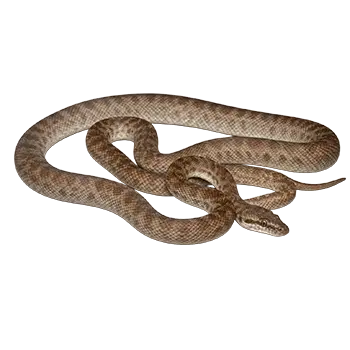
The genus Antaresia encompasses the smallest pythons on Earth, a group of four recognized species confined entirely to the Australian continent. These species are Antaresia childreni (Children's python), Antaresia maculosa (spotted python), Antaresia stimsoni (Stimson's python), and Antaresia perthensis (pygmy python). Together they represent a lineage that has evolved in isolation across Australia's diverse landscapes for millions of years, adapting to habitats ranging from tropical monsoon forests and rocky escarpments to arid spinifex grasslands and semi-desert scrublands.

The first member of the group to receive formal scientific description was Children's python, named by the English zoologist John Edward Gray in 1842. Contrary to popular assumption, the common name does not reference the snake's suitability for young keepers but rather honors John George Children, a curator at the British Museum's zoological department during the early nineteenth century. Gray described the species from a preserved specimen that had been collected in northern Australia and shipped to London as part of the Museum's growing herpetological collection. The description appeared during a period of intense cataloging activity as European institutions raced to classify the fauna of newly explored territories.

The remaining species were described at various points over the following century and a half. The spotted python was formally recognized in the mid-nineteenth century, while Stimson's python was not described as a distinct species until 1985, when Lochlan A. Smith separated it from Children's python based on morphological and distributional differences. The pygmy python, the smallest of the four and indeed the smallest python species in the world, was described by Laurie A. Smith in 1985 as well. These relatively late descriptions reflect how overlooked small, cryptic snake species can be even in a continent where herpetological research has a long history.

Aboriginal Knowledge & Historical Roles

Aboriginal Australians have shared the landscape with Antaresia pythons for tens of thousands of years, accumulating a body of ecological knowledge about these snakes that far predates Western scientific study. Across the Top End, the Kimberley, and the arid interior, various Aboriginal language groups recognized small pythons as distinct animals with specific behavioral traits, seasonal patterns, and ecological roles. Many communities understood that these snakes frequented rocky crevices and cave entrances, where they preyed on small mammals, geckos, and frogs, helping to regulate prey populations in delicate desert and savanna ecosystems.

In several Aboriginal cultural traditions, snakes hold cosmological importance connected to the Dreaming, the foundational spiritual framework through which the creation and ongoing life of the land is understood. While the great serpent figures of Aboriginal mythology, such as the Rainbow Serpent, are typically associated with water and the creation of landforms, smaller snakes including Antaresia species occupied more localized roles in story and ceremony. Their presence near rock shelters and waterholes, places of cultural and practical significance, meant that encounters with them were woven into everyday life and seasonal knowledge systems.

Aboriginal peoples also possessed practical knowledge about the behavior and disposition of small pythons that paralleled later scientific observations. The docile temperament that makes Antaresia species popular in modern captivity was well understood by communities who encountered these snakes regularly. Children in some groups learned to handle small pythons without fear, an experience that contributed to a cultural comfort with non-venomous snakes that contrasts with the generalized fear of serpents found in many other cultural traditions around the world.

This deep indigenous knowledge was largely unrecorded in written form during the colonial period, and much of it was disrupted or lost as European settlement displaced Aboriginal communities from their traditional lands. In recent decades, collaborative research between herpetologists and Aboriginal knowledge holders has begun to document and integrate indigenous ecological understanding with Western scientific frameworks, enriching the overall picture of how Antaresia pythons fit into Australia's ecosystems.

Taxonomic History & Classification

The taxonomic journey of the Antaresia pythons is a case study in how advances in methodology reshape scientific understanding of species boundaries. For much of the twentieth century, the small Australian pythons now placed in Antaresia were classified within the genus Liasis, a broader grouping that also included larger species such as the olive python and the water python. This arrangement reflected a morphology-based approach to classification that grouped pythons primarily by gross anatomical similarities.

The genus Antaresia was erected by Horace Wells in 1984, drawing on detailed examination of scalation, skeletal morphology, and hemipene structure to argue that the small Australian pythons formed a natural group distinct from Liasis. The genus name derives from the star Antares, the brightest star in the constellation Scorpius, a fitting astronomical reference for a group of snakes that inhabits some of Australia's most sun-scorched landscapes. Wells's reclassification was initially controversial, as taxonomic revisions in herpetology often are, but subsequent molecular phylogenetic analyses have broadly supported the monophyly of Antaresia.

Molecular studies conducted from the late 1990s onward confirmed that the four Antaresia species form a clade that is sister to the genus Morelia, which includes the carpet pythons and the green tree python. This phylogenetic placement was significant because it demonstrated that small body size in Antaresia represents a derived condition within the Australasian python radiation rather than a primitive feature. The ancestor of Antaresia pythons was likely a larger animal, and the miniaturization of the lineage occurred as these snakes adapted to exploit ecological niches unavailable to their larger relatives.

Within the genus, species boundaries have occasionally been debated. The relationship between Antaresia childreni and Antaresia stimsoni has received particular scrutiny, as the two species are morphologically similar and their ranges approach each other across northern and central Australia. Hybridization in areas of range overlap has been documented, and some authors have questioned whether the two should be regarded as full species or as subspecies of a single variable taxon. Ongoing genetic sampling across their distributions continues to refine understanding of the evolutionary history within this compact but scientifically important genus.

Cultural Symbolism & Public Perception

Unlike the large and often feared pythons of global popular imagination, Antaresia pythons have generally occupied a quieter cultural niche defined by approachability and charm. In Australia, where venomous snakes dominate public consciousness and media coverage, small non-venomous pythons have served as important ambassadors for the broader message that not all snakes are dangerous. Wildlife educators and park rangers across Australia have long relied on Children's pythons and spotted pythons as demonstration animals during school visits and public programs, leveraging their calm disposition to give audiences hands-on experience with a living snake.

This educational role has shaped public perception of Antaresia pythons in a distinctly positive direction. For many Australians, a Children's python draped calmly over a ranger's arm at a nature center represents their first direct encounter with a snake, an experience that can transform abstract fear into informed respect. The snakes' small size, smooth scales, and tendency to remain placid during handling make them uniquely effective at bridging the gap between humans and reptiles in a country where snakebite anxiety runs deep.

Internationally, Antaresia pythons have acquired a reputation within the reptile-keeping community as ideal entry-level pythons. This perception, while generally accurate in terms of husbandry difficulty, has also generated cultural conversations about responsible marketing and the risk of trivializing the commitment involved in keeping any reptile. Breeders and keepers have debated whether labeling a species as a beginner snake adequately communicates the decades-long lifespan and specific environmental requirements that Antaresia pythons demand.

In Australian art and literature, small pythons appear less frequently than their larger and more dramatic relatives such as the scrub python or the iconic carpet python. However, they feature in children's books and regional natural history publications, where their gentleness and attractive patterning make them appealing subjects for young audiences learning about Australian wildlife.

The Herpetoculture Movement

Antaresia pythons entered the organized reptile-keeping hobby in Australia during the 1970s and 1980s, a period when state and territory wildlife regulations were beginning to establish frameworks for the legal keeping of native reptiles. Prior to this era, keeping any native reptile in Australia required navigating a patchwork of prohibitions and exemptions that varied dramatically between jurisdictions. The gradual liberalization of reptile-keeping regulations, particularly in Queensland, New South Wales, and Victoria, opened the door for hobbyists to legally acquire and breed small pythons under license.

Within the Australian herpetoculture community, Antaresia pythons quickly became foundational species. Their manageable size, relatively simple husbandry requirements, and willingness to breed in captivity made them accessible to newcomers while still offering enough behavioral and genetic complexity to sustain the interest of experienced breeders. Children's pythons and spotted pythons, in particular, became staples of reptile expos and classifieds, and their affordability compared to larger python species further broadened their appeal.

Selective breeding programs targeting color and pattern variation emerged during the 1990s and accelerated through the 2000s. Breeders identified and refined a range of morphs, including hypomelanistic, albino, and patternless variants, particularly in Children's pythons and spotted pythons. The development of these morphs mirrored trends in the broader python-breeding world, where selective breeding for visual traits had already transformed species such as the ball python and carpet python into canvases for genetic experimentation.

Outside Australia, Antaresia pythons gained a following among keepers in Europe and North America, though availability was constrained by Australia's strict ban on the export of native wildlife. Animals established in overseas collections were typically descended from specimens that left the country before export restrictions tightened, and the limited genetic diversity of these founding populations became a topic of concern among serious breeders. This scarcity also elevated prices for Antaresia pythons in international markets, giving them a cachet that their modest appearance and quiet demeanor might not otherwise have commanded.

The Genus Today

Today, Antaresia pythons occupy a secure position in both wild ecosystems and captive collections. In the wild, all four species maintain stable populations across much of their natural range, though localized pressures from habitat clearing, road mortality, and predation by invasive species such as feral cats present ongoing challenges. The pygmy python, with its restricted range in the Pilbara region of Western Australia, is the most vulnerable member of the genus to habitat disturbance, particularly from mining activity in its iron-ore-rich homeland.

In Australian herpetoculture, Antaresia pythons remain among the most commonly kept and bred reptile species. State and territory licensing systems now provide well-established pathways for legal ownership, and the availability of captive-bred animals has virtually eliminated demand for wild-caught specimens. The diversity of morphs available has continued to expand, and online communities and social media platforms have given breeders new avenues for sharing knowledge, trading animals, and showcasing their breeding projects to national and international audiences.

Scientific interest in the genus continues to generate new findings. Recent studies have examined the thermal ecology of Antaresia species, revealing how these small pythons regulate their body temperature in environments that can fluctuate dramatically between scorching daytime heat and cool desert nights. Research into the visual systems of Antaresia pythons has contributed to broader understanding of how pythons detect and process visual information, a field that challenges older assumptions about the sensory limitations of snakes.

Conservation education programs across Australia continue to feature Antaresia pythons as ambassador animals. Their role in introducing the public to positive interactions with reptiles has arguably done more to shift cultural attitudes toward snakes in Australia than any media campaign or policy initiative. As understanding of their biology deepens and their cultural footprint grows, Antaresia pythons stand as a testament to how a group of small, unassuming animals can achieve outsized significance in both ecological and human terms.

Always consult a qualified professional before making any health-related decisions. This content is provided for informational reference only and should not replace professional guidance specific to your animal.